Ever stared at your windshield after a heavy rain and wondered why your wipers are smearing, skipping, or leaving streaks-even though you replaced them just last year? You’re not alone. Most people treat windshield wipers like a cheap, forgettable part. But here’s the truth: windshield wipers are one of the most critical safety components in your car. And yes, it absolutely matters what you buy.
Not All Wiper Blades Are Created Equal
You might think all wiper blades are the same because they all fit the same arm. But that’s like saying all shoes are the same because they have laces. The materials, design, and engineering vary wildly. Cheap blades often use rubber that hardens in cold weather, metal frames that rust, and uneven pressure that causes chattering. Premium blades use advanced rubber compounds, aerodynamic frames, and even silicone coatings that last longer and perform better in rain, snow, and dust.
In the UK, where weather changes from drizzle to ice in hours, this isn’t just about comfort-it’s about visibility. A 2023 AA study found that drivers with degraded wipers took 30% longer to react to hazards in wet conditions. That’s the difference between stopping in time and hitting a pedestrian at a crosswalk.
The Three Main Types You’ll See
There are three common types of wiper blades on the market today. Each has pros and cons.
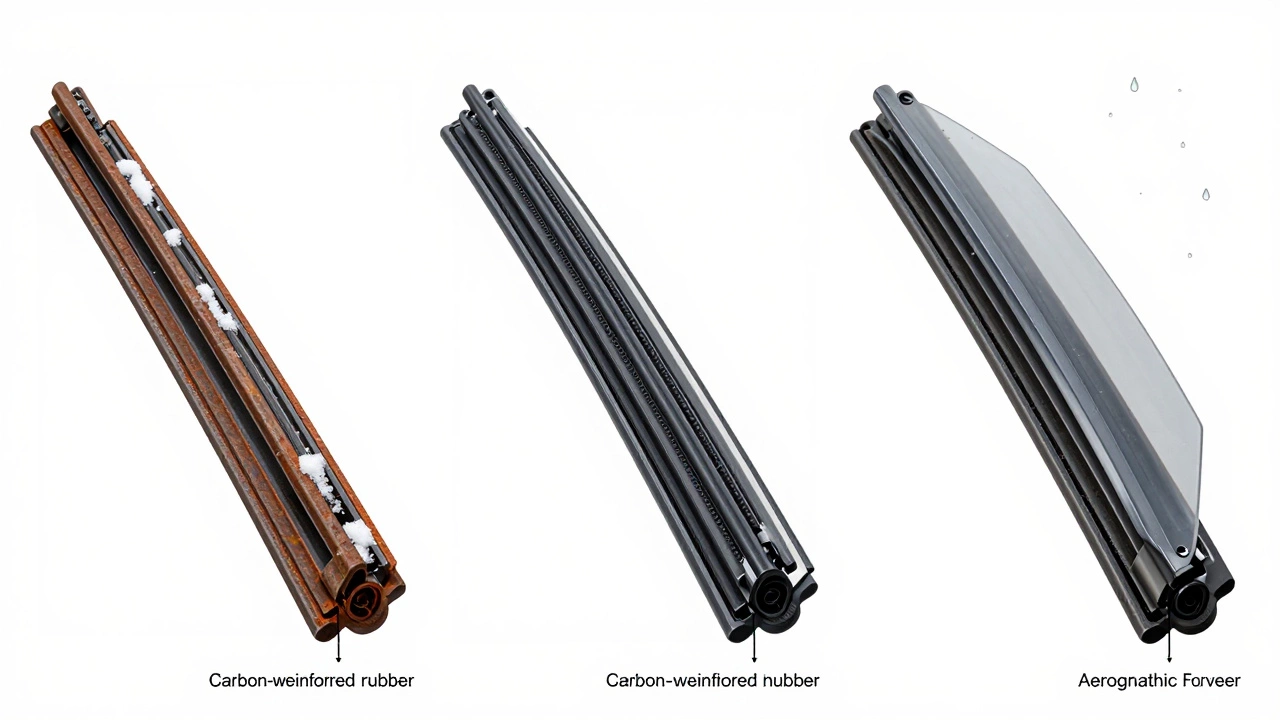
- Traditional frame blades - These are the old-school metal-and-rubber ones. They’re cheap and easy to find, but the metal frame collects snow, rusts, and can warp over time. They’re fine for light use, but not ideal for UK winters.
- Beam blades - These have no exposed metal. Instead, they use a flexible, one-piece rubber strip that hugs the curve of your windshield evenly. They’re better in snow, less prone to lifting at high speeds, and resist freezing. Most premium brands like Bosch, Michelin, and Rain-X use this design.
- Hybrid blades - A mix of beam and frame. They have a protective cover over the frame to reduce ice buildup but still use some metal support. They’re a good middle ground if you want durability without the premium price.
If you live in Manchester or anywhere with frequent rain and occasional frost, beam blades are the smart choice. They’re designed to stay flat against the glass, even when wind pushes up at 60 mph. That’s something cheap blades simply can’t do.
Why Cheap Wipers Fail Faster Than You Think
Let’s say you buy a £5 pair of wipers from a supermarket. They work fine for a few weeks. Then, you notice streaks. You ignore it. A month later, they start skipping. You think, “I’ll wait until it rains harder.” By then, the rubber has cracked from UV exposure and cold. You’ve already damaged your windshield’s coating from the dry scraping.
Windshield glass isn’t just glass-it has a hydrophobic coating that helps water bead off. Bad wipers scrub that coating away over time. Replacing it costs £80-£150. A £15 pair of quality wipers saves you that. Plus, they last 6-12 months longer.
And don’t fall for the myth that “all wipers are the same if they fit.” Wiper blades are engineered for your car’s specific windshield curve. A blade that fits mechanically might not match the curvature, leading to uneven pressure. That’s why universal fit blades often perform worse than OEM or model-specific ones.
What to Look for When Buying
Here’s what actually matters when you’re choosing wipers:
- Material - Look for natural rubber with carbon or graphite additives. These resist cracking and maintain flexibility in freezing temps.
- Frame design - Avoid exposed metal. Go for beam or hybrid blades to prevent ice buildup.
- Brand reputation - Bosch, Michelin, Rain-X, and Anco are reliable. Avoid no-name brands sold in bulk packs.
- Climate rating - If you get frost or snow, pick blades labeled “winter” or “all-season.” They have rubber boots to keep ice out of the mechanism.
- Size - Check your owner’s manual or use a wiper size lookup tool. Don’t guess. Wrong size = poor contact = blind spots.
Don’t just buy the cheapest option because it’s on sale. Buy the one that matches your driving conditions. If you drive on motorways daily, aerodynamics matter. If you park outside in winter, cold resistance is non-negotiable.
When to Replace Them (Even If They Look Fine)
Most people wait until the wipers are visibly damaged. That’s too late. Replace them every 6 to 12 months, no matter what. Rubber degrades from sunlight, pollution, and temperature swings-even if you don’t use them often.
Here’s a simple test: Spray water on your windshield and turn on the wipers. If you see streaks, smears, or hear a squeak, it’s time. If the blade lifts off the glass at higher speeds, it’s worn. If water doesn’t bead up anymore, your windshield’s coating is gone-and your wipers are part of the reason why.

Installation Isn’t Rocket Science
Changing wipers takes under 10 minutes. Most modern blades use a hook, pin, or bayonet connector. Just lift the arm, press the release tab, slide the old one off, and snap the new one on. No tools needed.
But here’s a pro tip: Always lift the wiper arm gently and support it with a towel before removing the blade. Letting it snap back onto the glass can crack the windshield. I’ve seen it happen too many times.
What Happens If You Ignore This
Ignoring wiper quality isn’t just about bad visibility. It’s a safety chain reaction:
- Streaks → you squint → slower reaction time
- Skipping → you panic → sudden braking
- Scratches on glass → glare from headlights → night driving becomes dangerous
- Worn blades → damaged windshield → expensive repair
Insurance claims for wet-weather accidents are 40% higher in winter months. And in 2024, UK police reported over 12,000 incidents where poor visibility due to faulty wipers was a contributing factor.
You wouldn’t drive on bald tyres. Don’t drive with bald wipers.
Final Recommendation
For most UK drivers, the best choice is a set of beam-style wiper blades from Bosch or Michelin. They cost £15-£25 per pair, last 10-12 months, and perform reliably in rain, sleet, and light snow. They’re not the cheapest-but they’re the most cost-effective over time.
Don’t buy based on price. Buy based on performance. Your eyes, your passengers, and every other driver on the road depend on it.
Can I use any wiper blade that fits my car?
No. Just because a blade fits the arm doesn’t mean it matches your windshield’s curve. Poor fit causes uneven pressure, streaking, and lifting at speed. Always check the exact size and type recommended for your car model.
How often should I replace my windshield wipers?
Replace them every 6 to 12 months, even if they look okay. Rubber degrades from UV light, pollution, and temperature changes. Waiting until they streak means you’ve already reduced your visibility and risked damaging your windshield.
Are expensive wipers worth it?
Yes-if you drive in the UK’s weather. Premium blades use better rubber, have aerodynamic designs, and last longer. A £20 pair that lasts 12 months is cheaper than a £5 pair you replace every 3 months, plus the cost of a scratched windshield.
Can I use winter wipers in summer?
Yes. Winter blades have rubber boots to block ice, but they work fine in summer too. They’re just more durable. The reverse isn’t true-summer blades freeze and crack in frost.
Do I need to replace both wipers at the same time?
Always. Even if one looks fine, the other is likely worn. Using mismatched blades causes uneven wiping, which creates blind spots and puts extra strain on the motor.