Exhaust Comparison: How to Pick the Best System for Your Car
When working with exhaust comparison, the process of evaluating different exhaust designs, materials, and sound characteristics to find the ideal fit for a vehicle. Also known as exhaust system comparison, it lets owners balance power, noise, and emissions. A solid muffler, the component that reduces exhaust noise and influences back‑pressure and a properly sized catalytic converter, the emissions‑control device that converts harmful gases into less toxic substances are two core pieces that shape any comparison.
Key Factors to Look at When Comparing Exhausts
First, think about exhaust comparison as a set of three measurable attributes: flow, sound, and durability. Flow is driven by pipe diameter, bend radius, and the internal coating – stainless steel offers low resistance and long‑term corrosion resistance, while aluminized steel stays cheap but can rust faster. Sound depends on muffler design: chambered, straight‑through, or turbo‑style mufflers each produce a distinct tone, from deep growl to high‑pitched whistle. Durability ties back to material choice and coating; stainless steel beats carbon steel in coastal areas where salt accelerates rust. Next, evaluate the performance exhaust, a system tuned for higher flow, often with larger diameter piping and less restrictive mufflers to boost horsepower. Performance exhausts usually raise sound levels, so you need to weigh legal noise limits against the thrill factor. Finally, don’t ignore emissions: a high‑flow catalytic converter can keep your car street‑legal while still offering noticeable power gains.
Practical steps make the comparison concrete. Start by checking fitment – the exhaust must bolt to your car’s exhaust manifold and tailpipe without needing custom brackets. Listen to each option on the road; a simple smartphone recorder can capture decibel levels so you can compare them side‑by‑side. If you have access to a dyno, measure the horsepower before and after the swap; a 5‑10% gain is typical for a well‑matched performance exhaust. Cost is another reality check: cheap mufflers may save £30 but could wear out in six months, while a premium stainless‑steel system might cost £300 but last a decade. Don’t forget installation time – some systems are plug‑and‑play, others require welding and professional labour.
All of these angles – material, sound, flow, emissions, fitment and price – form the backbone of a thorough exhaust comparison. Below you’ll find articles that dive deeper into each of these topics, from how muffler designs affect back‑pressure to the legal limits on exhaust noise in the UK. Whether you’re hunting for a quieter daily driver or a track‑ready roar, the insights here will help you pick the right system without guessing.
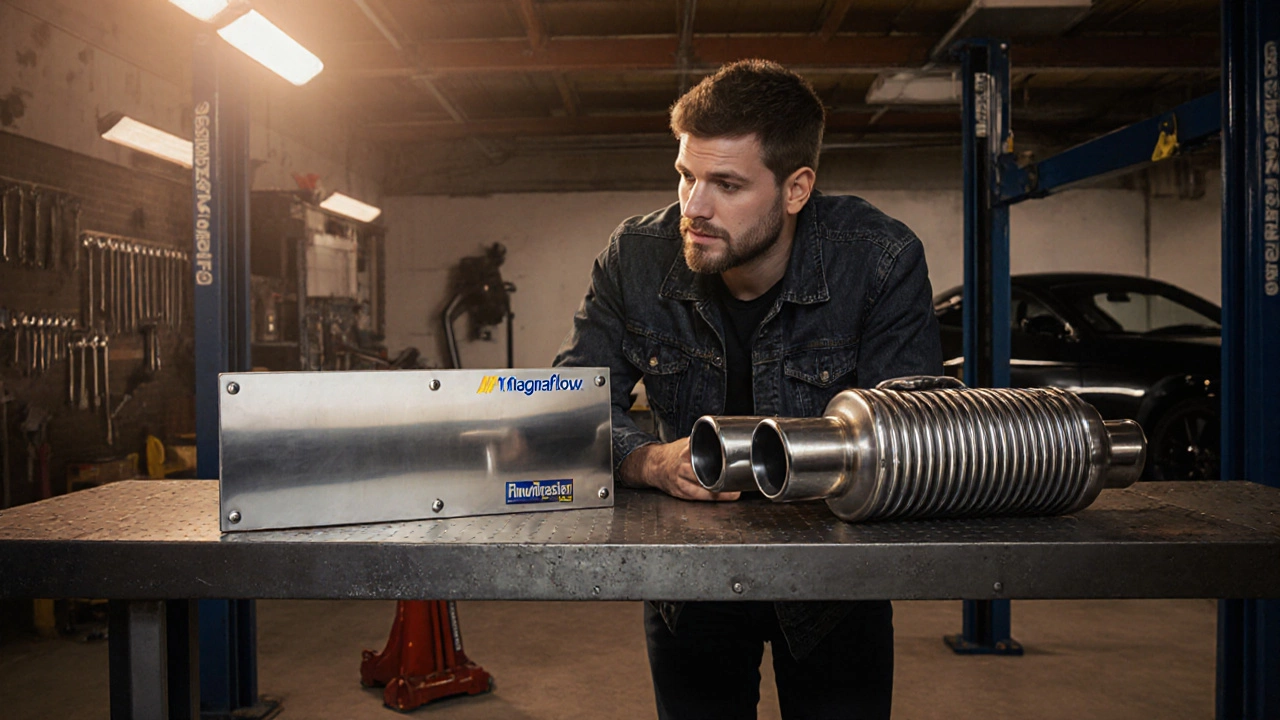
Magnaflow vs Flowmaster: Which Exhaust Reigns Supreme?
Oct 23 2025 / AutomotiveDiscover the strengths of Magnaflow and Flowmaster exhausts, compare performance, sound, price, and learn which fits your car and driving style best.
VIEW MORE
Borla vs Flowmaster: Which Exhaust System Wins in 2025?
Oct 18 2025 / AutomotiveCompare Borla and Flowmaster exhausts in 2025: sound, material, power gains, price, warranty, and fitment to help you choose the right system.
VIEW MORE