Flywheel Noise Diagnostic Tool
Identify Your Flywheel Issue
Select the sounds you're experiencing to determine potential causes and next steps
Diagnostic Results
When your car starts making strange noises coming from the engine or clutch area, it’s easy to panic. But not every clunk, rattle, or grinding sound means a full engine rebuild. One of the most common - and often overlooked - culprits behind weird noises in manual transmission vehicles is a bad flywheel. If you’ve been hearing unusual sounds when shifting gears, idling, or even just letting off the gas, your flywheel might be the issue.
What a flywheel actually does
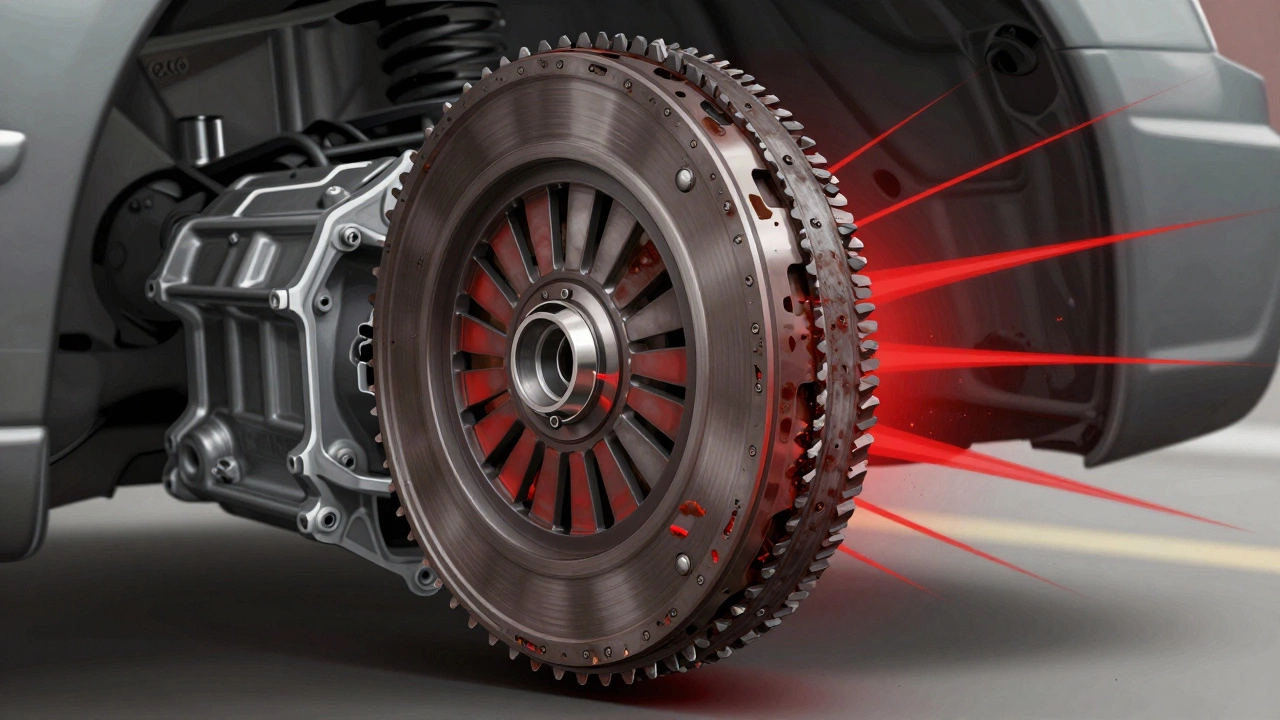
The flywheel is a heavy metal disc bolted directly to the back of your engine’s crankshaft. It’s not just a piece of metal - it’s a critical part of your clutch system. Its job? To store rotational energy from the engine and smooth out the power pulses from the cylinders. Without it, your engine would feel jerky, and your clutch wouldn’t engage smoothly. It also provides the surface that the clutch disc presses against to transfer power from the engine to the transmission.
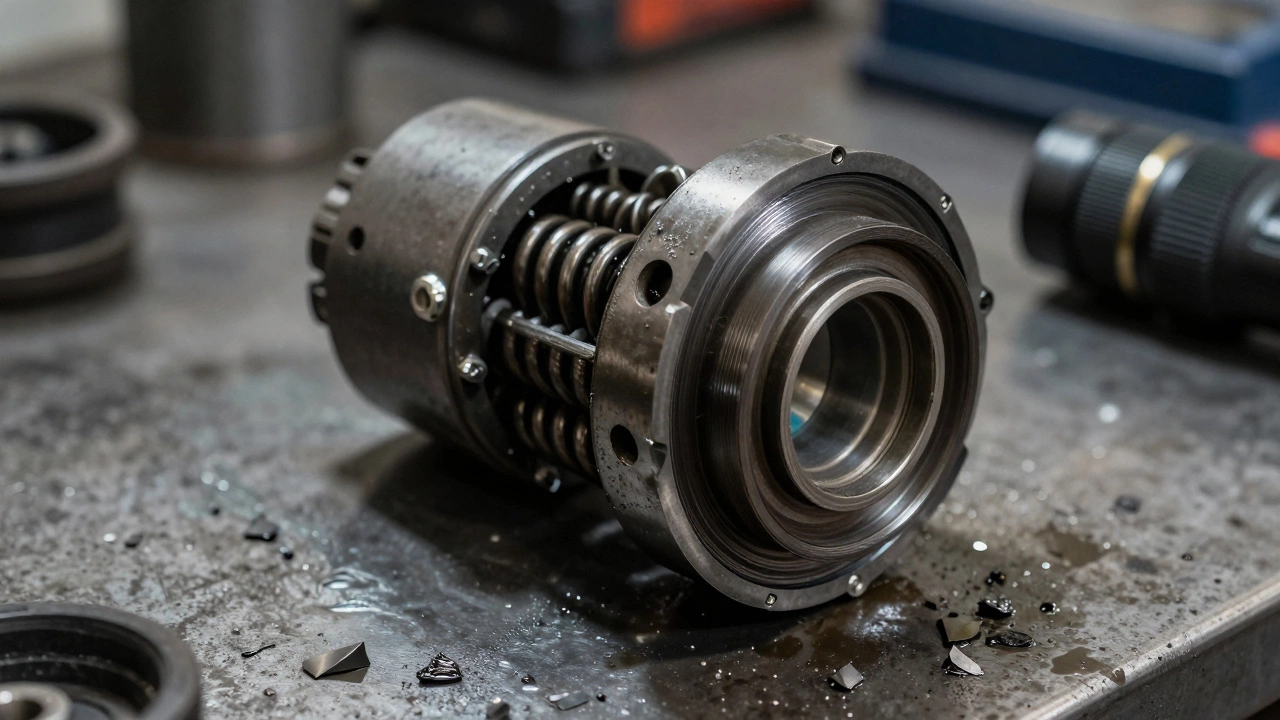
Modern flywheels come in two main types: single-mass and dual-mass. Single-mass flywheels are simpler, heavier, and found in older or performance cars. Dual-mass flywheels (DMF) have two parts connected by springs and dampers. They’re designed to absorb vibrations from the engine, especially in diesel engines or those with fewer cylinders. But those springs and dampers? They wear out. And when they do, they make noise.
The top 5 sounds a bad flywheel makes
Not all noises are the same. Each sound tells you something different about what’s wrong. Here are the most common sounds linked to a failing flywheel, and what they mean.
- Clunking or knocking when shifting gears - This is one of the clearest signs. If you hear a loud thud or clunk when you press the clutch pedal and shift into gear, especially from neutral into first or reverse, the flywheel’s friction surface might be cracked or the damping system in a dual-mass flywheel has broken. The metal parts are hitting each other instead of sliding smoothly.
- Grinding or scraping noise during clutch engagement - A worn or glazed flywheel surface can cause the clutch disc to slip or grab unevenly. This creates a high-pitched scraping or grinding sound, similar to metal on metal. It’s often worse when the engine is cold or under load.
- Rattling or buzzing at idle - If your car vibrates or makes a metallic rattle when idling in neutral (especially with the clutch out), the internal springs in a dual-mass flywheel have likely collapsed. This isn’t just annoying - it’s a sign the flywheel is disintegrating internally.
- Chirping or squealing when releasing the clutch - This usually points to a glazed or overheated flywheel surface. The clutch disc sticks briefly before slipping, creating a high-pitched noise. It often happens after heavy towing or stop-and-go driving that overheated the clutch.
- Intermittent clattering when accelerating or decelerating - If the noise comes and goes depending on engine RPM, it’s likely a cracked flywheel. The crack opens and closes as the flywheel spins, changing the sound. This is dangerous - a cracked flywheel can fail catastrophically.
Why a bad flywheel doesn’t always scream for help
Here’s the tricky part: many drivers don’t connect the noise to the flywheel because it’s hidden. You can’t see it without pulling the transmission. That’s why people replace clutches over and over, only to have the same problem return in a few months. If you replace the clutch disc and pressure plate but leave a worn, cracked, or glazed flywheel in place, the new clutch will wear out fast. It’s like putting new tires on a bent rim - it just won’t last.
Most mechanics will tell you: always replace the flywheel when replacing the clutch. It’s not a suggestion - it’s a rule. Especially if your car has over 80,000 miles. Dual-mass flywheels typically last between 80,000 and 120,000 miles. After that, the internal dampers fatigue. The springs lose their tension. The friction surface gets scored. And the noise? It starts small. A faint rattle. Then it gets louder.
How to tell if it’s the flywheel - not the clutch
It’s easy to blame the clutch. After all, it’s the part that moves and grinds. But here’s how to tell the difference:
- If the noise only happens when the clutch is engaged (foot off the pedal), it’s likely the flywheel or pressure plate.
- If the noise happens when the clutch is disengaged (foot on the pedal), it’s more likely a bearing or input shaft issue.
- If you smell burning clutch material and hear grinding, the clutch disc is worn - but if the flywheel surface is shiny or glazed, it’s contributing to the problem.
- Try this: when the car is idling and the noise is present, shift into neutral and rev the engine slightly. If the noise gets louder with RPM, it’s coming from the flywheel or crankshaft. If it disappears, it’s likely in the clutch assembly.
Another quick check: look at the clutch disc when you replace it. If the friction material is worn unevenly, or if you see dark spots or shiny patches on the flywheel surface (visible through the inspection hole), that’s a dead giveaway. A healthy flywheel looks like brushed metal - uniform, slightly rough, no cracks or grooves.
What happens if you ignore it
Ignoring a bad flywheel doesn’t just mean more noise. It can lead to:
- Complete clutch failure - the disc burns out from slipping against a damaged surface.
- Transmission damage - metal shavings from a cracked flywheel can get into the gearbox and wreck gears or synchros.
- Engine vibration - a cracked or unbalanced flywheel can cause the crankshaft to flex, leading to oil leaks or bearing failure.
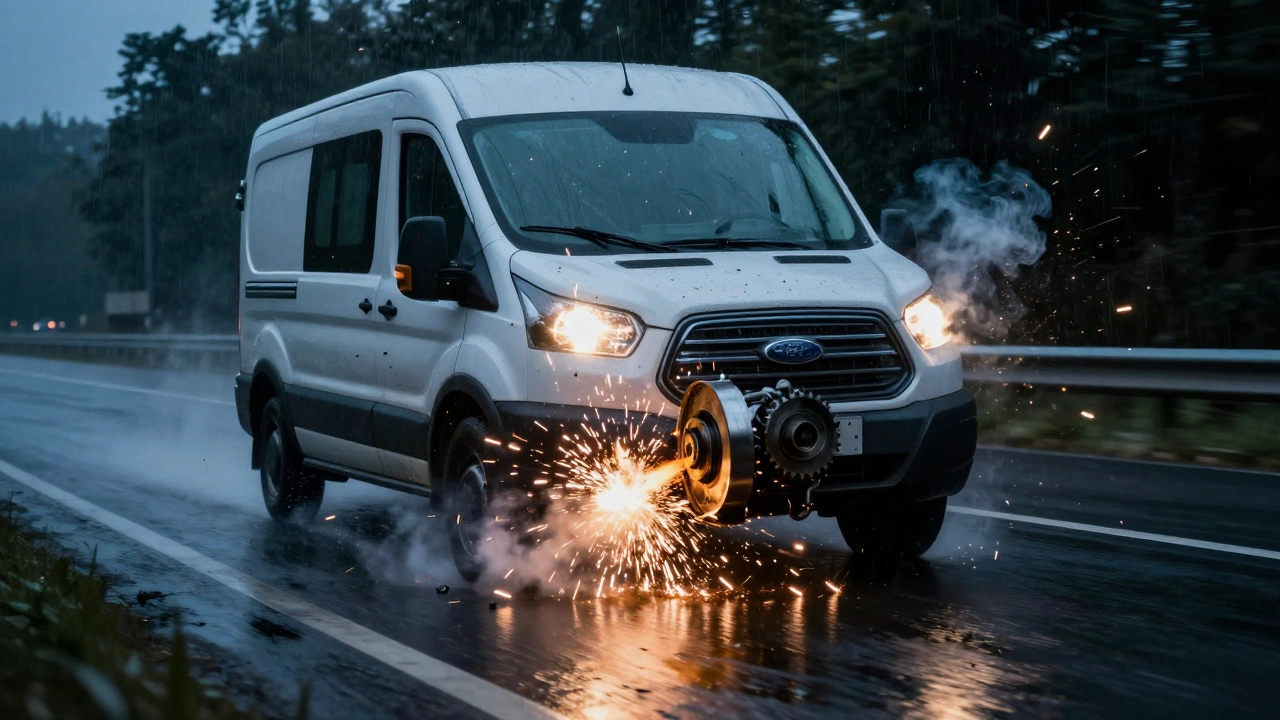
- Catastrophic failure - in extreme cases, a cracked dual-mass flywheel can shatter. The pieces can punch through the bellhousing, damage the starter, or even break the transmission housing. This isn’t rare - there are documented cases in UK garages where drivers lost control after a flywheel broke while driving.
One mechanic in Manchester told me about a Ford Transit van that lost all power on the M60. The driver thought it was a fuel pump. Turns out, the dual-mass flywheel had fractured. One of the segments flew into the clutch housing, jammed the input shaft, and tore the transmission apart. Repair bill? Over £3,200. A new flywheel and clutch together? £750.
What to do next
If you suspect your flywheel is failing:
- Don’t keep driving. The longer you wait, the more damage you risk.
- Get a professional inspection. A good mechanic can check for play, cracks, or heat damage without fully removing the transmission - using a borescope or by removing the starter.
- Replace the flywheel and clutch as a set. Never reuse an old flywheel with a new clutch. It’s false economy.
- Choose the right replacement. If your car originally had a dual-mass flywheel, you can replace it with a single-mass unit for better durability - but expect more engine vibration. Some drivers prefer this for towing or performance. Others stick with OEM-spec DMFs for comfort.
Most aftermarket flywheels come with a 12- to 24-month warranty. That’s how confident manufacturers are in their designs. If a flywheel fails within a year, it’s usually because it was installed on a worn clutch or not torqued correctly. Always use a torque wrench. Over-tightening can warp the flywheel. Under-tightening lets it spin loose - and that’s how you end up with a hole in your bellhousing.
How to prevent flywheel failure
Prevention isn’t just about parts - it’s about driving habits:
- Avoid riding the clutch. Keep your foot off the pedal unless you’re shifting.
- Don’t stall in traffic repeatedly. Each stall overheats the clutch and flywheel.
- Use the right gear. Running in too high a gear under load (like 5th gear at 20 mph) puts stress on the flywheel.
- Get your clutch inspected every 40,000 miles if you drive hard or tow.
Most flywheel failures happen because of neglect - not age. A well-maintained clutch system can outlast the car. But if you’ve been ignoring strange noises, it’s time to listen.
Can a bad flywheel cause the clutch to slip?
Yes. A glazed, cracked, or warped flywheel surface doesn’t grip the clutch disc properly. This causes slipping, especially under load like climbing hills or accelerating. You’ll notice the engine revs without a matching increase in speed. If clutch slippage returns after replacement, the flywheel is almost certainly the cause.
How much does it cost to replace a flywheel?
The cost varies by car. A single-mass flywheel replacement with clutch can run £500-£800. Dual-mass flywheels are more expensive - £700-£1,200 - because they’re more complex. Labor takes 4-6 hours, since the transmission must be removed. In the UK, expect to pay £80-£120 per hour for labor. Always get quotes that include both parts and labor.
Can you drive with a bad flywheel?
Technically, yes - but you shouldn’t. You might get a few hundred miles, but you risk total transmission failure, engine damage, or even loss of control if the flywheel breaks apart. The noise will get louder, the clutch will worsen, and you’ll end up paying far more to fix secondary damage. It’s not worth the risk.
Do all cars have flywheels?
Only manual transmission vehicles. Automatic cars use a torque converter instead of a clutch and flywheel. If your car has an automatic, the noise you’re hearing is likely coming from the torque converter, transmission fluid, or a bearing - not a flywheel.
Is a dual-mass flywheel better than a single-mass one?
It depends. Dual-mass flywheels reduce engine vibration and make driving smoother - great for daily drivers, especially diesels. But they’re more complex, wear out faster, and cost more to replace. Single-mass flywheels are tougher, cheaper, and last longer, but they transmit more engine vibration. Performance drivers and those who tow often prefer single-mass for durability. Choose based on your driving style, not just what came stock.