Suspension Noise Diagnostic Tool
Select the type of noise you are hearing to get a preliminary diagnosis.
Diagnosis Results
Urgency: UnknownLikely Culprit
When It Occurs
Why It Matters
Quick Check
Note: This is an educational tool. Always consult a certified mechanic for definitive repairs.
You’re driving down a familiar road, maybe heading to work or picking up groceries, and suddenly you hear it. A clunk. Or perhaps a high-pitched squeak that makes your skin crawl. You glance at the dashboard-no warning lights. The steering feels normal. But that sound? It’s telling you something is wrong under there.
Most drivers ignore these noises until they become impossible to miss. That’s a mistake. Your suspension system is the bridge between your heavy metal car body and the rubber tires on the ground. When it starts making noise, it’s usually crying for help before it fails completely. And trust me, you don’t want a suspension component snapping while you’re taking a sharp corner at 40 mph.
Let’s break down the three most common types of abnormal noises caused by faulty suspension parts. We’ll look at what causes them, how to spot them, and why they matter for your safety and wallet.
The Clunk: Loose Components and Worn Bushings
If you hear a distinct "thud" or "clunk" when going over bumps, potholes, or speed bumps, you are likely dealing with loose hardware or worn-out bushings. This is arguably the most common complaint in older vehicles.
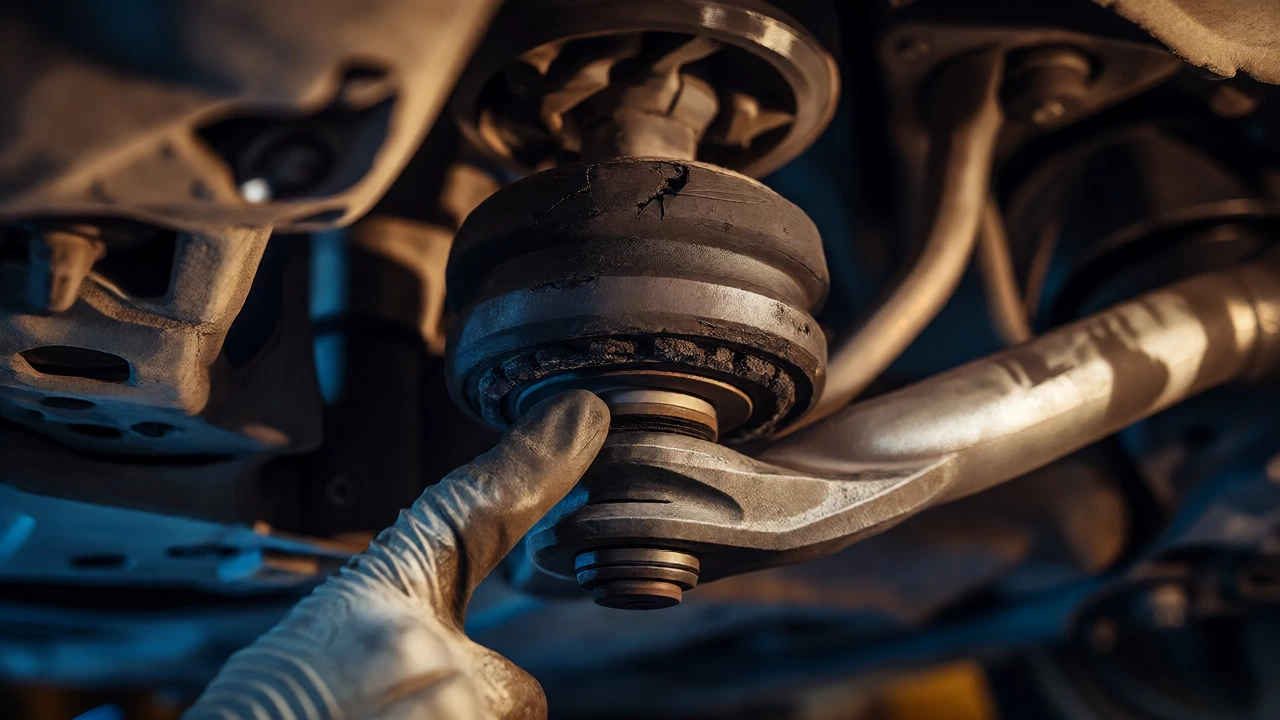
Think about how your suspension works. Metal arms connect to the chassis using rubber bushings. These rubber pieces act as cushions, absorbing vibration and keeping metal from grinding against metal. Over time, heat, oil leaks, and general wear cause this rubber to harden, crack, and eventually disintegrate. Once the cushion is gone, the metal control arm hits the subframe directly. That impact creates the clunk.
Sway Bar Links are another frequent culprit. These small rods connect the anti-roll bar to the suspension arms to keep the car flat during turns. They have ball joints at each end. If those joints get dry or rusty, they click and clack every time the wheel moves up or down independently. It sounds louder than it actually is, but it’s annoying and signals impending failure.
How do you test this? Park your car on a flat surface. Grab the top of one tire and push/pull it firmly (the "12 o'clock to 6 o'clock" test). Listen for clicking. Then try the same side-to-side (9 to 3). Excessive play often points to bad tie rods or ball joints, which also cause clunks during turning. If the noise happens only when braking, check your brake caliper brackets-they can rattle if the slide pins are worn.
The Squeak: Dry Rubber and Friction Points
A rhythmic squeak or creak that changes pitch with speed is almost always friction-related. Unlike the violent impact of a clunk, a squeak is subtle but persistent. It’s the sound of rubber rubbing against metal without lubrication, or two metal surfaces touching where they shouldn’t be.
The primary suspect here is the Shock Absorber Mount. This component secures the top of the strut assembly to the vehicle’s body. Inside the mount, there’s usually a rubber isolator. When that rubber dries out or tears, the metal strut shaft rubs against the metal housing. Every time the suspension compresses, you hear a squeak. It’s worse in cold weather because rubber contracts and becomes harder.
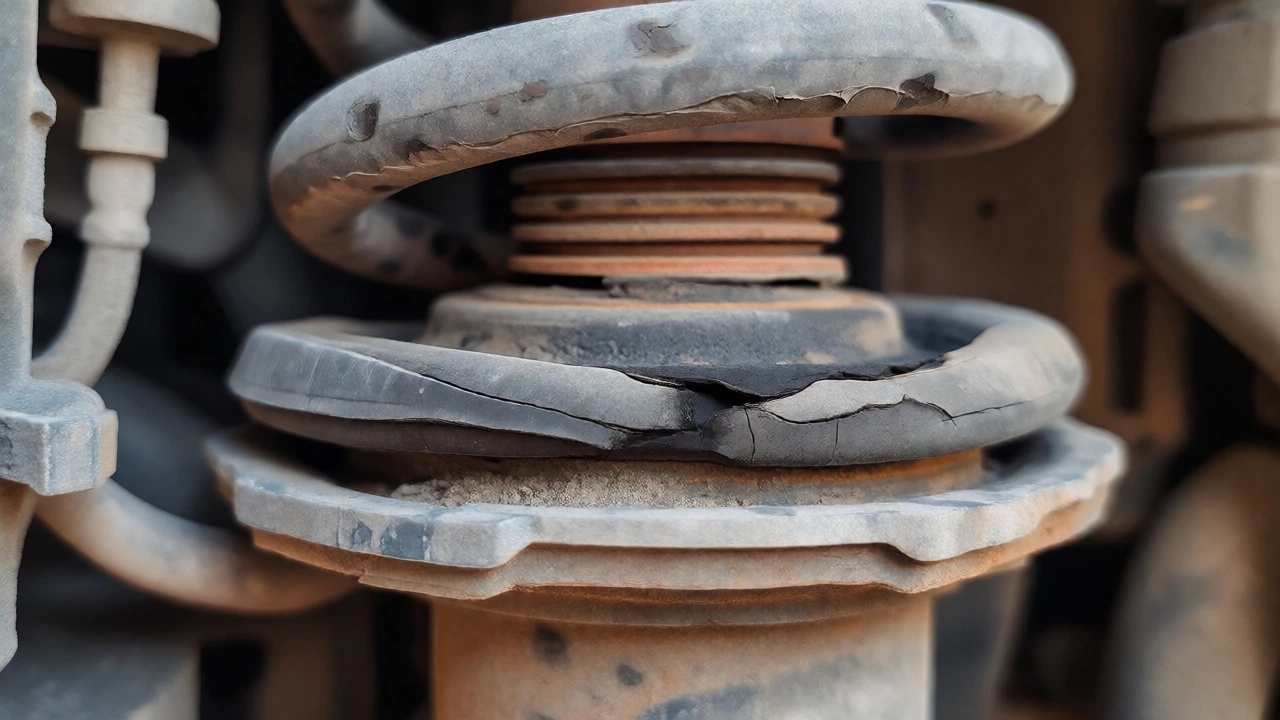
Another common source is the spring seat. Coil springs sit in a cup at the bottom of the strut tower. If the rubber pad underneath the spring wears through, the steel spring grinds against the metal cup. This doesn’t just squeak; it can eventually crack the spring perch, leading to a much more expensive repair.
Don’t forget the stabilizer bar bushings. These large rubber sleeves hold the sway bar to the frame. If they lose their grease or degrade, the bar twists inside them with a groaning or squeaking noise. You might notice this sound specifically when you turn into a driveway or make a slow U-turn.
The Rattle: Broken Springs and Loose Hardware
A continuous rattling sound, especially over rough pavement, suggests something is physically broken or extremely loose. This isn’t just wear; it’s structural damage or missing parts.
The classic example here is a Broken Coil Spring. A coil spring supports the vehicle's weight and absorbs shock impacts. If one coil snaps, the remaining coils can shift position. Instead of compressing smoothly, the broken ends bang against each other or the surrounding components. This creates a metallic rattle that gets louder as you drive faster over uneven roads.
Check your dust boots too. These rubber covers protect the shock absorber rod from dirt and water. If a boot tears off or falls away, it can flap around in the wind, creating a plastic-like rattle. While less critical than a broken spring, it exposes the shock to debris, which will destroy its seals within weeks.
Loose heat shields are also notorious rattlers. While not strictly part of the suspension, exhaust heat shields often vibrate near suspension components. If a bolt holding a shield comes loose due to rust, it buzzes against the muffler or nearby struts. Always rule this out first-it’s a cheap fix compared to suspension repairs.
Diagnosing the Noise: A Practical Guide
You don’t need a mechanic’s lift to get a good idea of what’s wrong. Here is a simple workflow to identify the issue:
- The Bounce Test: Push down hard on one corner of the car and let go. The car should bounce once and settle. If it bounces multiple times like a pogo stick, your shock absorbers are dead. Dead shocks often cause rattles because the spring oscillates violently.
- The Visual Inspection: Look behind the wheels. Do you see oil streaks on the shock absorber shaft? That means the seal has blown. Leaking shocks lose damping ability, causing harsh rides and potential rattles from uncontrolled movement.
- The Turn Test: Drive slowly in a tight circle. If the noise occurs primarily during turning, focus on CV joints (if front-wheel drive) or sway bar links. If it happens when going straight over bumps, look at bushings and mounts.
| Noise Type | Likely Culprit | When It Occurs | Urgency Level |
|---|---|---|---|
| Clunk / Thud | Worn Control Arm Bushings | Hitting bumps or potholes | Medium - Handle carefully |
| Clunk / Click | Bad Sway Bar Link | Turning or uneven road | Low - Annoying but safe short term |
| Squeak / Creak | Dry Shock Mount or Bushing | Compression/Rebound cycles | Low - Cosmetic initially |
| Rattle / Bang | Broken Coil Spring | Constant over rough roads | High - Risk of further damage |
| Grinding | Failed Wheel Bearing | Speed-dependent hum/grind | High - Can lock wheel |
Why Ignoring These Sounds Costs Money
It’s tempting to live with a squeak. After all, the car still drives. But suspension components work as a team. If your shock absorbers are leaking and failing, they aren’t dampening the spring’s energy. This puts extra stress on the spring itself, the mounting points, and even the tires.
For example, a worn lower control arm bushing allows the wheel to move back and forth excessively. This misalignment causes rapid, uneven tire wear. You might replace a $50 bushing later, but you’ll also pay $800 for new tires because you ignored the clunk six months ago.
Furthermore, safety is non-negotiable. A snapped sway bar link can disconnect, causing the car to roll excessively in corners. A failed ball joint (which causes clunks and wobbles) can separate entirely, causing the wheel to fold inward. That leads to loss of control. The cost of diagnosing and fixing a noise early is always less than the cost of an accident or a cascading mechanical failure.
Final Thoughts on Maintenance
Your ears are powerful diagnostic tools. Modern cars are quiet, so any new noise deserves attention. Start with the simplest checks: tighten loose license plates, check for dangling mudflaps, and inspect visible rubber parts for cracks.
If the noise persists, document it. Does it happen only when cold? Only when braking? Only when turning left? This information helps your mechanic pinpoint the fault quickly, saving you labor hours. Don’t wait for the car to fall apart. A little vigilance now keeps your ride smooth, safe, and quiet.
Is it safe to drive with a clunking suspension?
It depends on the severity. A minor clunk from a sway bar link is generally safe for short distances, though you should get it fixed soon. However, if the clunk is accompanied by steering wobble, pulling to one side, or excessive bouncing after a bump, stop driving immediately. This could indicate a failed ball joint or control arm, which risks losing wheel control.
Can I fix suspension noises myself?
Some fixes are DIY-friendly. Replacing sway bar links or applying silicone spray to dry bushings can be done with basic tools. However, replacing shock absorbers, struts, or control arms usually requires specialized equipment like spring compressors and torque wrenches. If you lack experience, professional installation is safer and ensures correct alignment.
Do all suspension noises mean the part needs replacement?
Not always. Sometimes a noise is caused by lack of lubrication rather than physical wear. Applying appropriate grease to pivot points or bushings can eliminate squeaks. However, if the rubber is cracked, torn, or hardened, no amount of lube will restore performance, and replacement is necessary.
How long do suspension bushings last?
On average, suspension bushings last between 50,000 and 100,000 miles. Harsh conditions accelerate wear. Driving frequently on gravel, hitting deep potholes, or exposing the car to road salt and oil leaks can reduce lifespan significantly, sometimes requiring replacement in as few as 30,000 miles.
What does a bad wheel bearing sound like?
A bad wheel bearing typically produces a humming, growling, or grinding noise that increases with vehicle speed. It may change pitch when you turn the steering wheel slightly left or right, as the load shifts across the bearing. Unlike suspension clunks, this noise is constant and related to rotation, not vertical movement.