Suspension Repair vs. Replacement Cost Calculator
Your car feels bouncy over every bump. It leans hard in corners. You hear clunking when you hit a pothole. Maybe the steering feels loose, or the tires are wearing unevenly. These aren’t just annoyances-they’re signs your suspension is failing. And the big question on your mind: can car suspension be repaired? The answer isn’t yes or no. It’s more like: sometimes, but not always.
What’s Actually Broken?
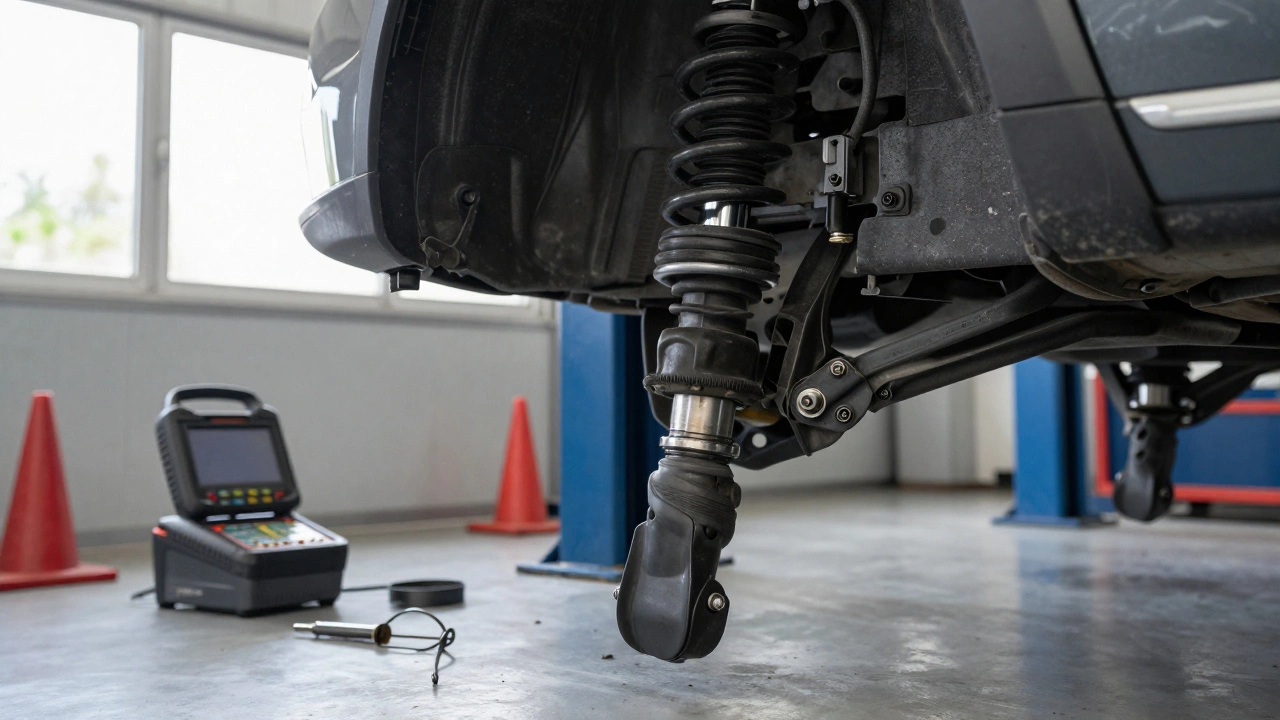
Before you even think about repair, you need to know what part is worn out. Car suspension isn’t one single part. It’s a system made up of several key components, each with its own lifespan and failure mode.- Shock absorbers and struts control spring movement. They don’t support weight-they dampen bounce. When they fail, your car rides like a trampoline.
- Control arms connect the wheels to the frame. Ball joints at the ends wear out, causing clunks and wandering steering.
- Stabilizer bars (or sway bars) reduce body roll. Their end links often fail first, making corners feel floaty.
- Spring coils or leaf springs carry the vehicle’s weight. They rarely break unless damaged by a major impact.
- Bushings are rubber mounts that absorb vibration. They crack and harden over time, leading to noise and sloppy handling.
Most of these parts aren’t designed to be repaired. They’re replaced. But that doesn’t mean you’re stuck with a full system overhaul. Sometimes, fixing just one or two parts brings your ride back to life.
When Repair Is Possible
You can fix some suspension issues without replacing entire assemblies. Here’s where you can save money:- Replacing ball joints: On many cars, the ball joint is a separate part from the control arm. You can press out the old one and press in a new one. It takes a hydraulic press and some skill, but it’s cheaper than swapping the whole arm.
- Swapping end links: These are small, cheap parts that connect the sway bar to the control arm. They wear out fast and are easy to replace with basic tools. A £20 part can fix a loud clunk.
- Changing bushings: Rubber bushings on control arms, sway bars, and even shock mounts can be replaced individually. Some kits let you press out the old rubber and install new polyurethane ones for longer life.
- Rebuilding struts: Some shops offer strut rebuild services. They replace the internal damper and seals, then refill with oil. It’s not common, but it works for older cars where new struts are expensive.
These fixes aren’t DIY for everyone. But if you’ve got a mechanic you trust-or you’re handy with tools-you can avoid paying £300 for a new control arm when a £40 ball joint was the real culprit.
When You Must Replace
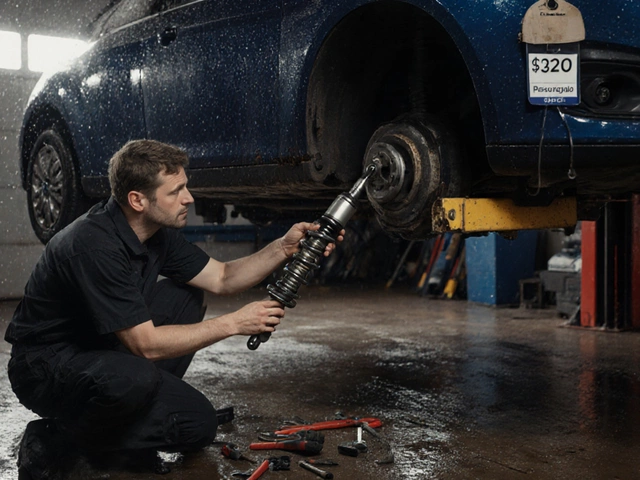
Some parts aren’t meant to be fixed. They’re sealed units. When they go, you replace the whole thing.- Struts: Most modern cars use integrated strut assemblies. You can’t open them. If the damper is worn, the spring is sagging, or the mount is cracked-you need a new strut. No workaround.
- Shock absorbers: While some older cars had replaceable cartridges, most modern shocks are sealed units. Replace the whole unit.
- Complete control arm assemblies: On many newer cars, the ball joint is riveted or welded in. Replacing just the joint isn’t possible. You buy the whole arm.
- Coil springs: If one spring is broken or sagging, you should replace both sides. Uneven springs throw off alignment and cause uneven tire wear.
Replacing these parts isn’t optional. Driving with bad struts or broken springs isn’t just uncomfortable-it’s dangerous. Your brakes take longer to stop. Your tires wear out faster. You lose control on wet roads.
Cost Breakdown: Repair vs. Replace
Here’s what you’re likely to pay in the UK as of early 2026:
| Part | Repair Option | Replacement Cost (Parts + Labour) | Labour Time |
|---|---|---|---|
| Ball joint | Press out and replace | £80-£150 | 1-1.5 hours |
| Control arm (whole) | Replace assembly | £250-£500 | 2-3 hours |
| Strut assembly | Replace entire unit | £300-£600 per corner | 2-2.5 hours |
| Shock absorber | Replace unit | £150-£350 per corner | 1-1.5 hours |
| End link | Replace link only | £40-£80 | 0.5 hours |
| Control arm bushings | Replace rubber inserts | £60-£120 | 1.5-2 hours |
Notice the pattern? Simple, small parts cost a fraction of full assemblies. That’s why diagnosis matters. A £50 repair could save you £500.
How to Know If It’s Worth Fixing
Not every worn suspension part needs fixing. Ask yourself:
- How old is the car? If it’s over 12 years old and has over 120,000 miles, consider the whole system. Replacing one strut now? You’ll likely need another in 12 months.
- What’s the resale value? Spending £800 on suspension for a car worth £1,500 doesn’t make financial sense.
- Are other parts worn too? If your struts are gone, your control arm bushings are probably cracked, and your tires are bald. Fixing one thing won’t fix the whole problem.
- Are you planning to keep it? If you’re holding onto the car for another 3-5 years, investing in suspension makes sense. If you’re trading it in next year? Skip it.
There’s no rule that says you must fix everything. Sometimes, the smartest move is to drive it safely until you’re ready to replace the car.
What Happens If You Don’t Fix It?
Ignoring bad suspension isn’t just about comfort. It’s a safety risk.
- Longer stopping distances: Worn struts reduce tire contact with the road. On wet pavement, your car can hydroplane sooner.
- Uneven tire wear: A misaligned suspension can eat through tires in 6,000 miles instead of 40,000. That’s £400+ in new tires you didn’t plan for.
- Damage to other parts: Bad shocks put extra stress on steering components, wheel bearings, and even the chassis.
- Failing an MOT: Suspension issues are a major MOT failure point. Worn ball joints, broken springs, or leaking struts will fail you outright.
The UK’s MOT test is strict on suspension. Inspectors check for movement in ball joints, cracks in springs, and fluid leaks in shocks. You won’t pass with visible damage.
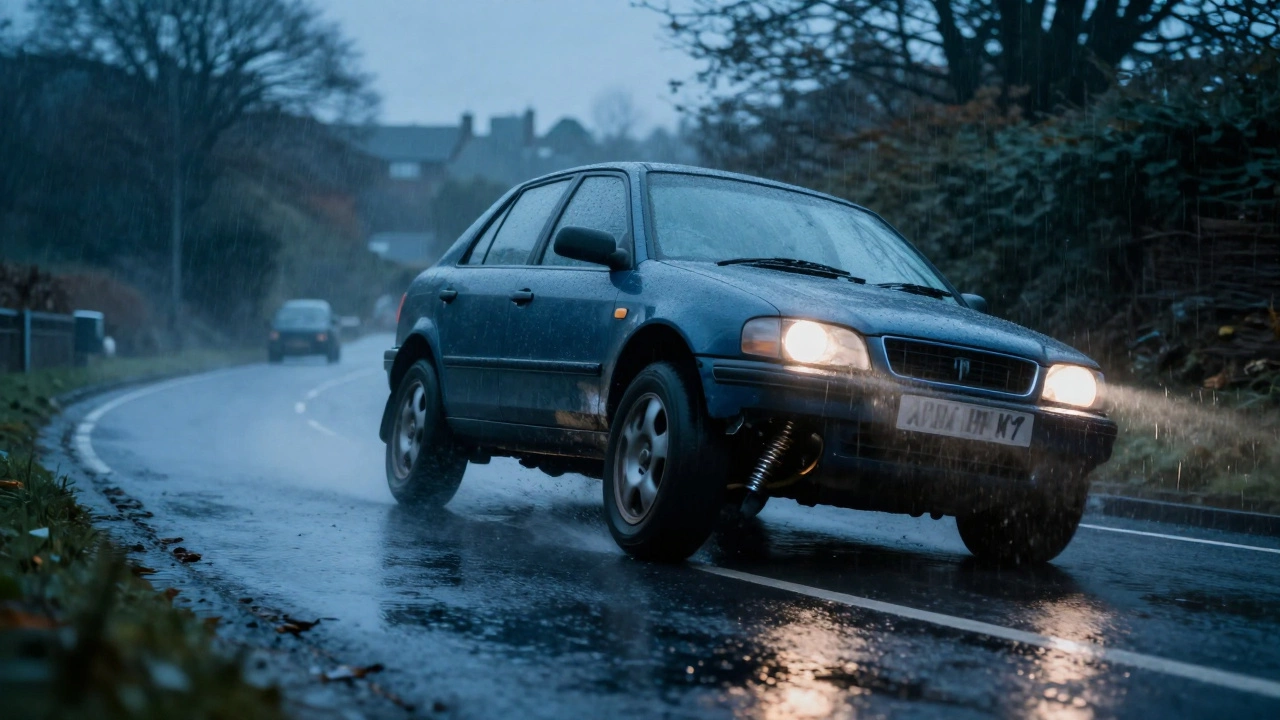
How to Get It Checked Right
Don’t guess. Get a proper inspection.
- Ask for a suspension diagnostic-not just a visual check. A good mechanic will bounce each corner, check for play in joints, and test shock rebound.
- Request a wheel alignment report before and after repairs. Misalignment often follows suspension wear.
- Ask if they use OEM or quality aftermarket parts. Cheap parts fail faster and can be dangerous.
- Get a written quote that breaks down parts vs. labour. Avoid vague estimates like “£400 for suspension.”
Many garages in Manchester offer free suspension checks. Use them. A 15-minute inspection could save you hundreds.
Final Answer: Can Car Suspension Be Repaired?
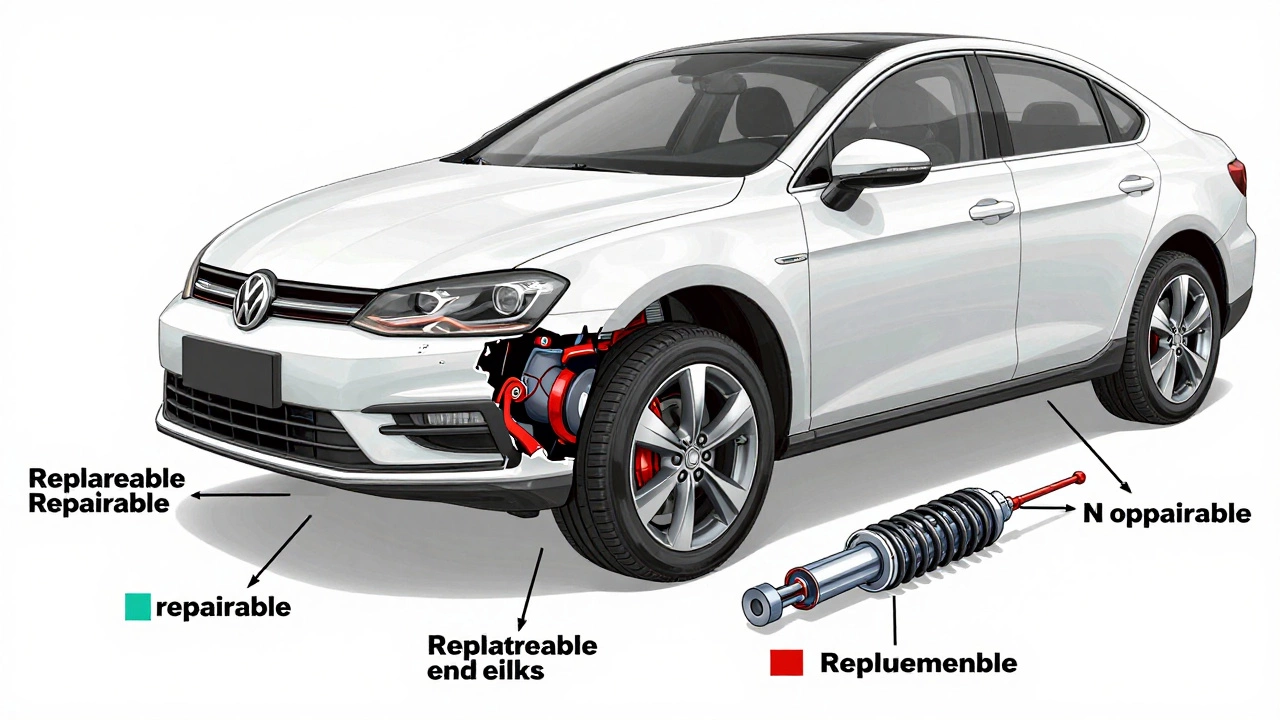
Yes-but only parts of it. You can repair bushings, end links, and ball joints. You can’t repair struts, shocks, or springs. You replace them.
The real question isn’t whether it can be fixed. It’s whether it’s worth fixing. If your car is young, reliable, and you plan to keep it, fix the small stuff. Replace the big stuff when needed. If the car is old and the repair bill is high? Save your money. Drive it carefully. Start saving for the next one.
Suspension isn’t glamorous. But it’s one of the most important systems you’ll ever ignore. Fix it right, and your car handles like it should. Ignore it, and you’re not just risking your ride-you’re risking your safety.
Can I drive with a broken suspension?
Driving with a broken suspension is dangerous. It reduces control, increases stopping distance, and can cause sudden loss of handling-especially in wet or emergency conditions. You might get away with it for a few days, but you risk an accident, further damage to your car, or failing an MOT. Don’t risk it.
How long do suspension parts last?
Shock absorbers and struts typically last 50,000 to 100,000 miles. Control arm bushings and end links wear out faster-often between 70,000 and 90,000 miles. Rubber parts degrade faster in cold, wet climates like the UK. Heavy driving on rough roads cuts lifespan by up to 40%.
Is it cheaper to repair or replace suspension?
It depends. Replacing small parts like end links or bushings is cheaper than replacing entire assemblies like struts or control arms. But if multiple parts are worn, replacing the whole system may be more cost-effective in the long run than doing multiple repairs over time.
Can I replace suspension parts myself?
You can replace end links, shock absorbers, and some bushings with basic tools. Strut replacement requires a spring compressor and can be dangerous if done wrong. Ball joint replacement needs a hydraulic press. If you’re not experienced, leave complex jobs to professionals. Safety comes first.
Do I need to replace both sides at once?
Yes-for shocks, struts, springs, and control arms. Replacing only one side creates imbalance. Your car will pull to one side, handle unevenly, and wear tires faster. Always replace in pairs unless the other side is brand new.
Will new suspension improve my ride?
Absolutely. New shocks and struts restore ride control, reduce bouncing, and improve tire grip. You’ll notice better handling in corners, shorter braking distances, and less noise from bumps. It’s one of the most noticeable upgrades you can make to an older car.
What brands of suspension parts are reliable?
For OEM quality, stick with parts made by the original manufacturer (like Monroe, KYB, Sachs, or Bilstein). Aftermarket brands like TRW, Lemförder, and Meyle offer good value. Avoid no-name brands from eBay or Amazon-they often fail within 10,000 miles.
How do I know if my suspension is worn out?
Signs include: bouncing after hitting a bump, clunking noises over rough roads, uneven tire wear, steering that feels loose or wanders, and the car leaning heavily in turns. A simple test: push down hard on each corner of the car. If it bounces more than once, the shocks are worn.
What to Do Next
If you’re unsure, get a professional inspection. Most garages in Manchester offer free suspension checks. Bring your car in before your next MOT. Don’t wait for a warning light-suspension doesn’t have one.
Fix what you can. Replace what you must. And remember: good suspension isn’t about luxury. It’s about control. It’s about safety. It’s about making sure your car responds when you need it to.