Spark Plug Diagnosis Tool
Diagnose Your Starting Issues
If your car struggles to start in the morning, especially when it’s cold, you’ve probably wondered: spark plugs could be the fix. But is replacing them really worth it? Or are you just throwing money at a symptom instead of the real problem?
The short answer? Yes, new spark plugs can improve starting - but only if your old ones are worn out, fouled, or damaged. If they’re still in decent shape, swapping them won’t make your car start any faster. And that’s where most people get it wrong.
How Spark Plugs Actually Work
Spark plugs are the final link in your engine’s ignition chain. They take high-voltage electricity from the ignition coil and create a tiny, precise spark across a small gap. That spark ignites the fuel-air mixture inside the cylinder. No spark? No combustion. No combustion? The engine won’t start - or it’ll sputter, misfire, or stall.
Modern spark plugs are designed to last 60,000 to 100,000 miles, depending on the type. Standard copper plugs wear out faster. Platinum and iridium plugs last longer and burn hotter, which helps with cold starts and fuel efficiency.
But here’s the thing: spark plugs don’t just wear down. They also get dirty. Oil leaks, rich fuel mixtures, or short trips that never let the engine fully warm up can coat the electrodes with carbon or oil residue. That’s called fouling. A fouled plug can’t spark properly - even if it’s only 20,000 miles old.
Signs Your Spark Plugs Are Causing Starting Problems
Not every hard start means bad spark plugs. But if you’re seeing these signs, they’re a strong suspect:
- Your car turns over slowly or takes multiple tries to start, especially in cold weather
- The engine sputters or hesitates right after starting
- You hear a clicking noise from the engine when cranking - not the starter, but a misfire sound
- Check engine light is on with codes like P0300 (random misfire) or P0301-P0308 (cylinder-specific misfires)
- Gas mileage dropped suddenly, and the engine feels sluggish
These aren’t just random symptoms. They’re direct results of weak or inconsistent sparks. When the spark is too weak, the fuel doesn’t ignite cleanly. That means incomplete combustion, which makes starting harder and increases emissions.
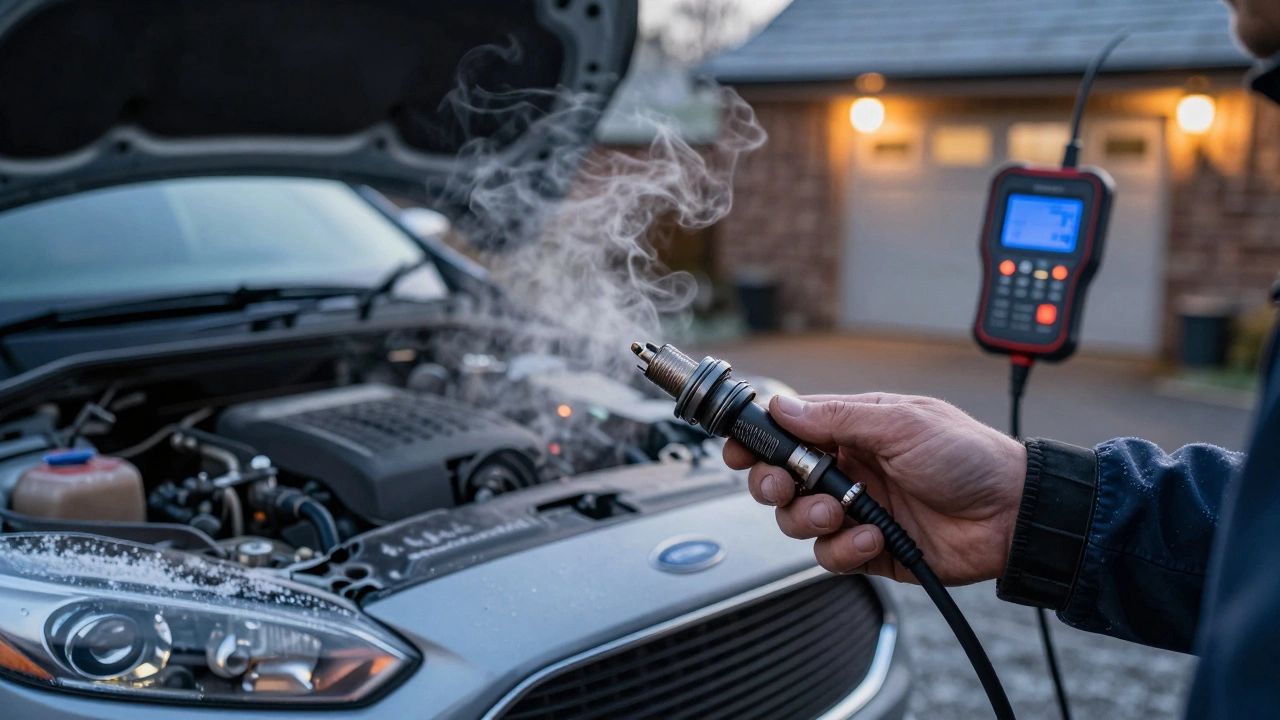
One real-world example: a 2018 Ford Focus in Manchester, with 78,000 miles, kept refusing to start on frosty mornings. The battery tested fine. The fuel pump was working. The starter cranked strong. But after pulling the spark plugs, three of them were covered in thick, black carbon. Replacing them with iridium plugs fixed the problem instantly. No more cranking. No more waiting.
Why New Spark Plugs Help - And When They Don’t
New spark plugs improve starting because they restore the spark’s strength and precision. A fresh plug has a clean, sharp gap. The electrodes haven’t eroded. The insulator isn’t cracked. That means the spark jumps reliably every time, even in cold, dense air.
But if your car starts fine after one or two cranks, or only struggles in freezing temperatures (below 0°C), the issue might be the battery, not the plugs. Cold weather thickens engine oil and drains battery power. A weak battery won’t push enough voltage to the coils, so even perfect spark plugs can’t help.
Same goes for fuel system problems. A clogged fuel filter, failing fuel pump, or dirty injectors can starve the engine of fuel. No amount of new spark plugs will fix that. You’ll still get sparks - but no fuel to burn.
So here’s the rule: if your car takes more than two cranks to start, and you’ve had the same spark plugs for over 60,000 miles, replace them. If you’re under that mileage and the car starts fine most of the time, wait. Don’t replace them just because you think it’s “due.”
What Happens If You Ignore Bad Spark Plugs
Ignoring worn spark plugs doesn’t just make starting harder. It causes chain reactions:
- Unburned fuel washes down cylinder walls and dilutes engine oil
- Carbon buildup on pistons and valves reduces compression
- Excessive misfires can overheat and damage the catalytic converter
- Long-term misfiring can warp valves or crack pistons
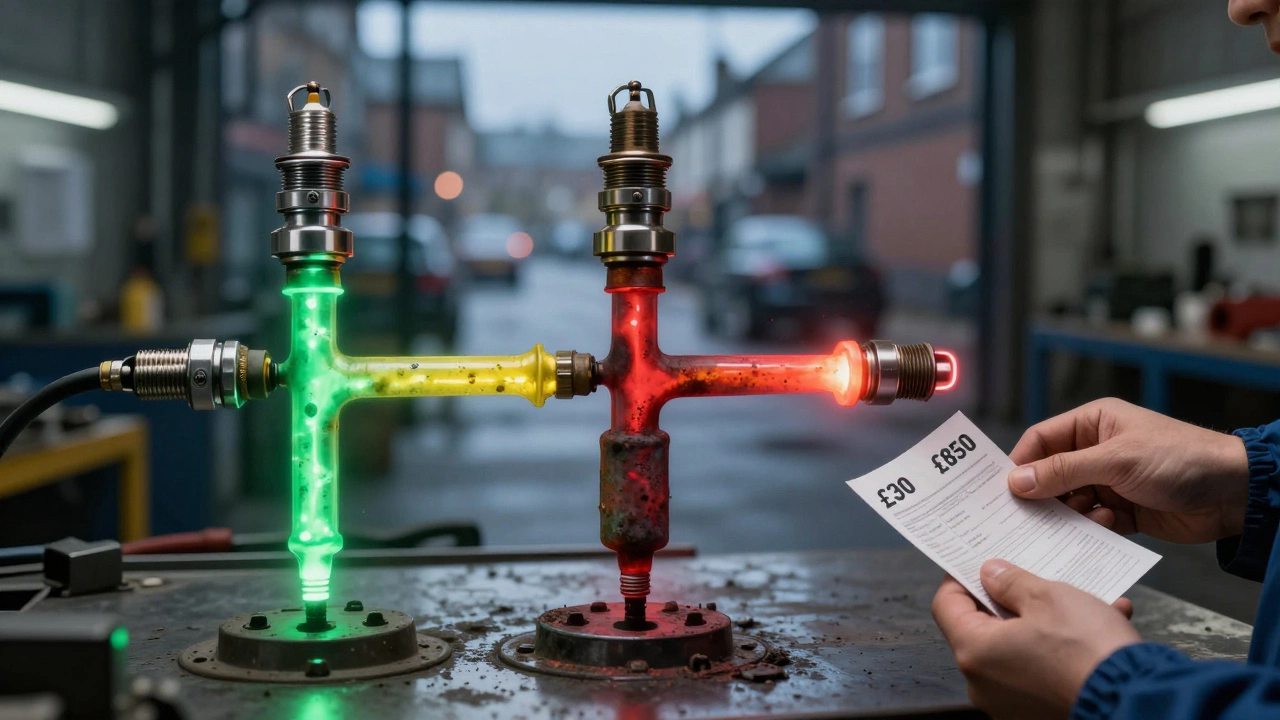
One mechanic in Salford told me about a customer who drove for 18 months with fouled plugs. The car started fine when warm, but refused to start in the cold. The owner kept cranking it, thinking the battery was dying. By the time they brought it in, the catalytic converter was glowing red-hot and had to be replaced. The spark plugs? £30. The converter? £850.
That’s why timing matters. Don’t wait for the car to fail completely. If you’re approaching 70,000 miles and notice any hesitation, get them checked.
Choosing the Right Spark Plugs
Not all spark plugs are the same. Your car’s manual will specify the exact type. But here’s what to look for:
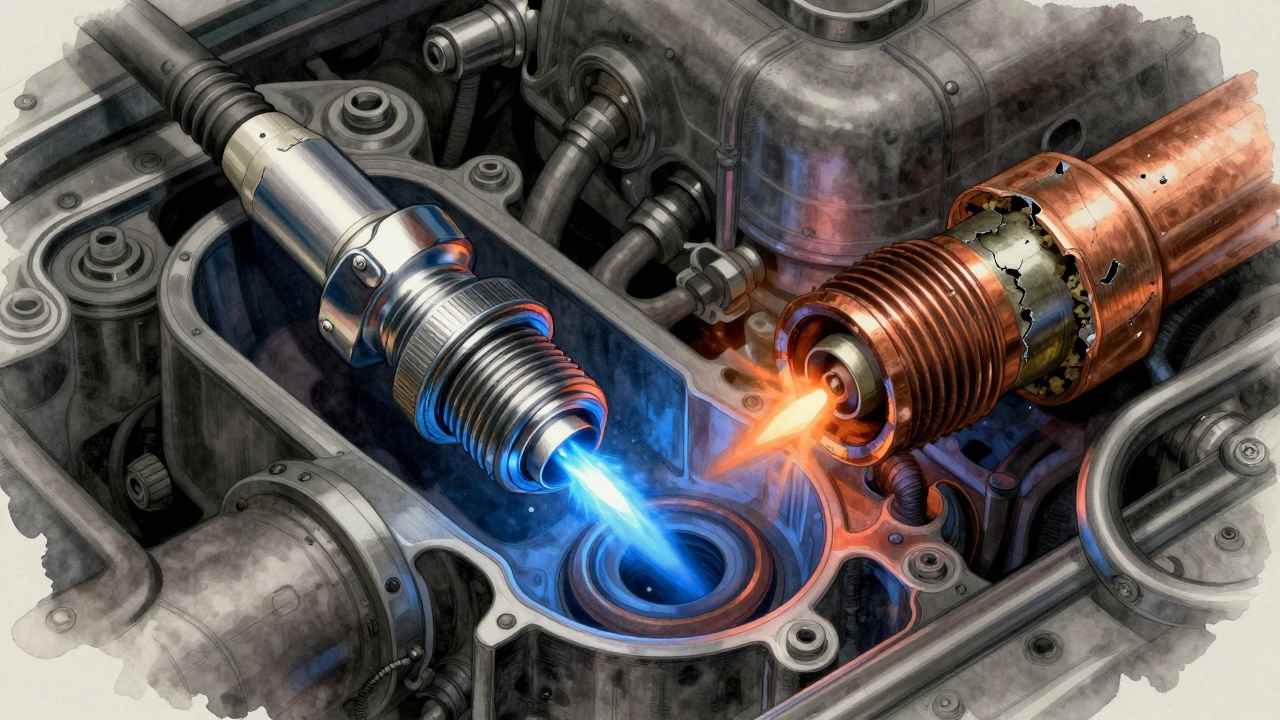
- Copper: Cheapest, good for older cars. Lasts 20,000-30,000 miles. Not ideal for modern engines.
- Platinum: Better durability. Lasts 60,000-100,000 miles. Good balance of cost and performance.
- Iridium: Most durable, hottest spark. Lasts 100,000+ miles. Best for modern direct-injection engines. Worth the extra cost if your car recommends it.
Don’t go cheaper than what your manufacturer recommends. A plug with the wrong heat range can overheat or foul faster. And never mix brands or types. Use the same model across all cylinders.
Also, check the gap. Even new plugs can arrive with the gap misadjusted. Use a feeler gauge to verify it matches your car’s spec - usually between 0.6mm and 1.1mm. A gap that’s too wide won’t spark. Too narrow, and the spark is weak.
When to Replace Spark Plugs - A Simple Guide
Here’s a quick decision tree:
- Is your car taking more than two cranks to start? → Yes → Check spark plugs
- Have you had them for 60,000+ miles? → Yes → Replace them
- Is the check engine light on with misfire codes? → Yes → Replace them
- Do you mostly do short trips in cold weather? → Yes → Replace them sooner - every 40,000 miles
- Is the car starting fine, but you’re just due for a service? → No → Wait until symptoms appear
If you’re unsure, have a mechanic pull one plug and inspect it. Carbon? Oil? Eroded electrodes? Replace all of them. Clean and shiny? Leave them.
DIY or Professional?
Changing spark plugs is one of the few engine jobs a DIYer can handle safely. You’ll need:
- Spark plug socket (with rubber insert)
- Extension bar
- Feeler gauge
- Torque wrench (optional but recommended)
Always replace them when the engine is cold. Hot engines can warp the threads. Remove one plug at a time to avoid mixing up ignition wires or coil packs. Clean the area around each plug hole before removing the plug - dirt falling in can destroy your engine.
If your car has coil-on-plug ignition (most cars made after 2005), you’ll need to unplug the coil before removing the plug. Don’t yank the wire - pull the boot, not the cable.
And don’t overtighten. Most plugs need 15-20 Nm torque. Tighten until snug, then turn a quarter-turn more. Over-tightening cracks the ceramic insulator. Under-tightening lets gases leak and causes misfires.
Final Verdict
New spark plugs can absolutely improve starting - if they’re the root cause. They’re not magic. They won’t fix a dying battery, a clogged fuel filter, or a broken starter. But if your engine is struggling to ignite because the spark is weak, dirty, or inconsistent, fresh plugs will bring it back to life.
The key is diagnosis, not replacement. Don’t guess. Look for the signs. Check the mileage. Inspect the old plugs. If they’re worn or fouled, replace them. If they’re fine, save your money and look elsewhere.
And remember: in Manchester’s damp, chilly winters, a reliable start isn’t a luxury - it’s a necessity. Don’t wait for your car to leave you stranded on a frosty morning. Keep your spark plugs in good shape, and you’ll never have to wonder if they’re the problem again.
Do new spark plugs improve fuel economy?
Yes, if your old plugs were worn or fouled. Poor sparking leads to incomplete combustion, meaning more fuel goes unburned. Fresh plugs restore efficient ignition, which can improve fuel economy by 5-10% in cars with bad plugs. But if your plugs are still in good condition, new ones won’t make a noticeable difference.
Can bad spark plugs cause the check engine light to come on?
Absolutely. Misfires from weak or failed spark plugs trigger codes like P0300 (random misfire) or P0301-P0308 (cylinder-specific misfires). These are among the most common reasons for the check engine light. Replacing faulty plugs often clears the code - but always clear it with a scanner after replacement.
How often should spark plugs be replaced?
It depends on the type and your driving. Copper plugs: every 20,000-30,000 miles. Platinum: 60,000-100,000 miles. Iridium: 100,000+ miles. But if you drive mostly short trips, in cold or wet conditions, replace them 10,000-20,000 miles earlier. Short trips don’t let the engine reach full operating temperature, which leads to carbon buildup.
Is it safe to drive with bad spark plugs?
You can, but you shouldn’t. Driving with misfiring plugs puts extra stress on the catalytic converter, which can overheat and fail. It also increases emissions and can damage valves or pistons over time. If your car is misfiring badly or the check engine light is flashing, stop driving and get it checked immediately.
Can I use any spark plug brand?
No. Spark plugs must match your car’s specifications: thread size, reach, heat range, and electrode type. Using the wrong plug can cause overheating, pre-ignition, or poor performance. Always follow the manufacturer’s recommendation. Brands like NGK, Denso, Bosch, and Champion are all reliable - but only if they’re the correct part number for your engine.
Why does my car start fine when warm but not when cold?
Cold air is denser, so it takes more energy to ignite the fuel-air mix. Worn spark plugs struggle to produce a strong enough spark under these conditions. A weak battery or thick oil can make it worse. But if the plugs are old or fouled, cold starts are the first thing to go. Replacing them often fixes this exact problem.