Pleated Air Filter Airflow Calculator
How Your Filter Affects Airflow
Pleated air filters don't inherently restrict airflow when properly designed. This calculator shows if your specific filter meets OEM standards based on vehicle type and filter specifications.
Airflow Assessment
Within SpecificationsIf you’ve ever swapped out a flat panel air filter for a pleated one, you’ve probably heard the warning: pleated air filters restrict airflow. But is that true-or just an old myth passed down from mechanics who never measured anything? The answer isn’t simple. It depends on what you’re comparing, how the filter is made, and what your engine actually needs.
How Pleated Air Filters Work
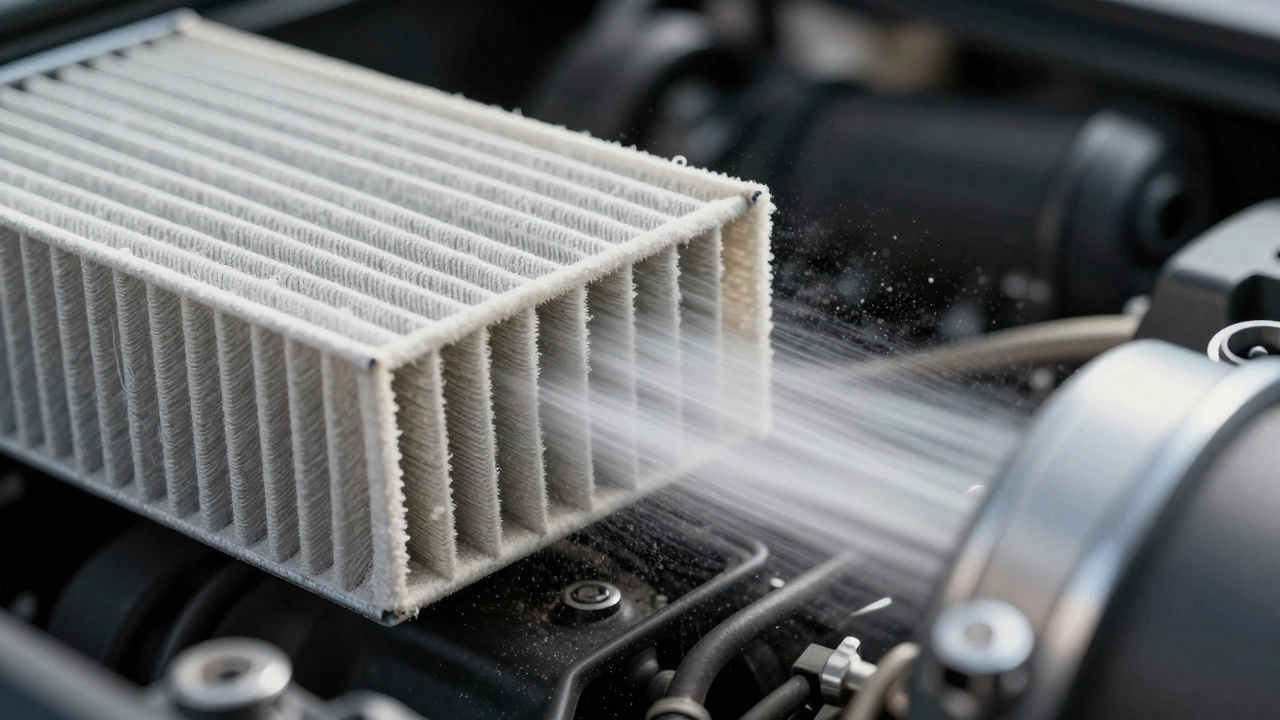
Pleated air filters are made by folding filter media-usually synthetic fibers or cotton gauze-into accordion-like pleats. This design increases surface area without adding bulk. More surface area means more room to trap dust, pollen, and dirt before it reaches your engine. A typical flat panel filter might have 100 square inches of filtering area. A pleated filter of the same size can offer 300 to 500 square inches. That’s three to five times more filtering capacity in the same space.
This isn’t just about dirt trapping. It’s about longevity. A pleated filter can last 2 to 3 times longer than a standard paper filter before it clogs. That’s why most OEMs now use pleated designs in factory-installed air filters. If they restricted airflow too much, car manufacturers wouldn’t use them.
Does More Surface Area Mean Less Airflow?
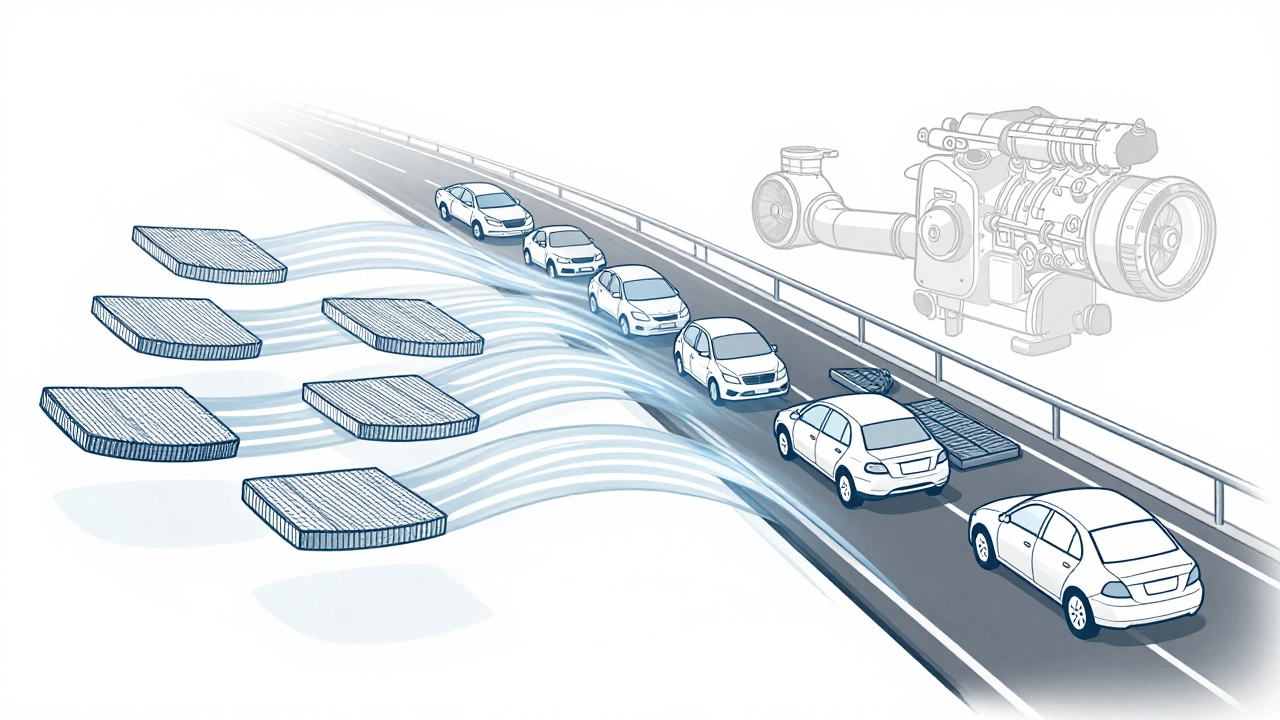
Here’s where the confusion starts. People assume more material = more resistance. But airflow isn’t just about how thick the filter is-it’s about how much open space the air can pass through. Think of it like a highway. A single-lane road with a toll booth (flat filter) gets backed up fast. A six-lane highway with smart tolling (pleated filter) lets traffic flow smoothly, even with more cars.
Modern pleated filters are engineered for low resistance. Brands like K&N, Mann-Filter, and Bosch design their media to be porous enough to let air through easily while still capturing particles as small as 5 microns. Independent tests by the Society of Automotive Engineers (SAE) show that high-quality pleated filters have pressure drop values under 1.5 inches of water at peak engine demand. That’s within OEM specifications.
Low-quality pleated filters, especially cheap aftermarket ones made with dense, resin-coated paper, can cause problems. But that’s not the fault of pleating-it’s the fault of bad materials.
When Pleated Filters Actually Do Restrict Airflow
There are three real cases where pleated filters cause airflow issues:
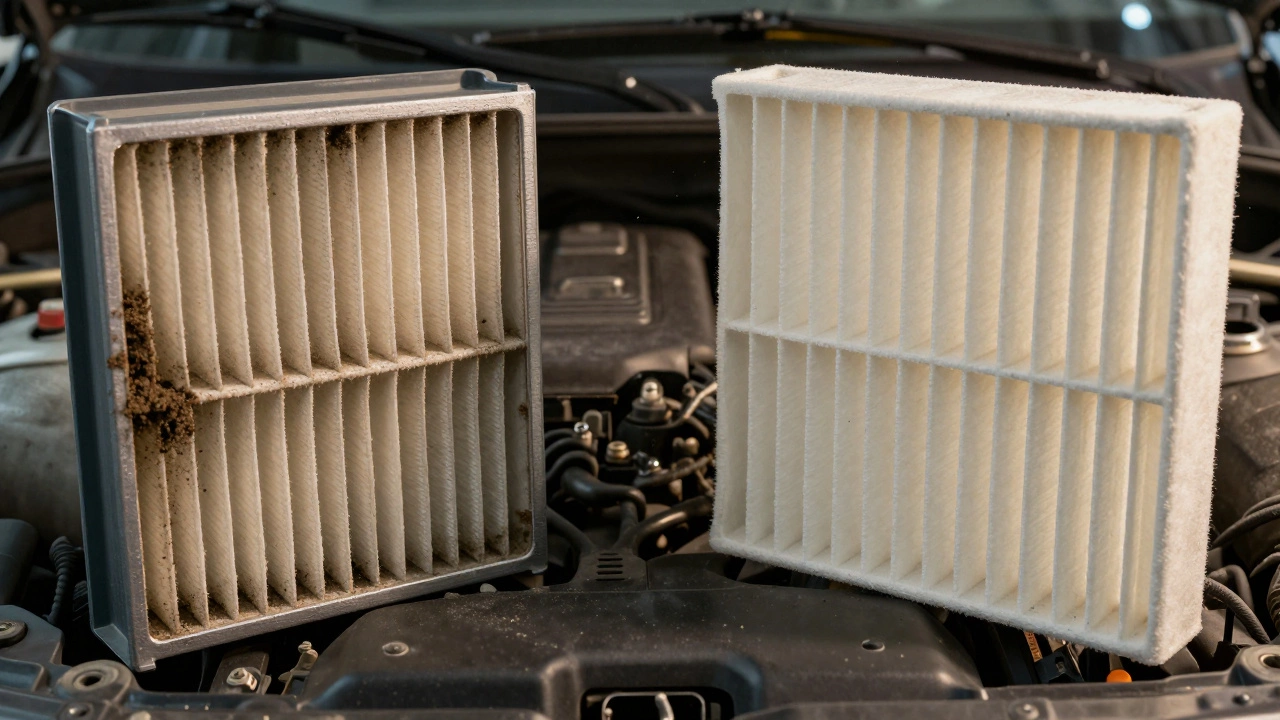
- They’re clogged. All filters restrict airflow as they collect dirt. A dirty pleated filter will restrict more than a clean one-but so will a dirty flat filter. The difference? A pleated filter stays clean longer. You might go 30,000 miles before needing to replace it, versus 15,000 for a standard filter.
- It’s the wrong fit. If a pleated filter is compressed too tightly in the housing, or if it’s not seated properly, air can’t flow evenly. This is common with aftermarket filters that don’t match the OEM dimensions exactly.
- It’s designed for extreme filtration. Some high-efficiency pleated filters (like those used in clean rooms or industrial settings) are built to capture 99.9% of particles. These are not meant for car engines. They’re too dense. If you’re using a filter labeled for "HEPA-grade" or "medical use," it’s likely too restrictive for your intake system.
For 95% of drivers, standard pleated air filters-whether OEM or reputable aftermarket-won’t reduce airflow. In fact, they often improve it over time because they maintain consistent flow as they age, unlike paper filters that collapse and create uneven resistance.
Performance Gains: Real or Imagined?
Some people swear that switching to a performance pleated filter (like K&N’s reusable cotton filters) gives them better throttle response or even more horsepower. The truth? In most stock engines, you’ll see less than a 1-2% gain in horsepower-barely measurable on a dyno.
But here’s what you do notice: smoother acceleration at low RPMs. Why? Because a clean, low-restriction filter reduces the vacuum load on the engine. Less effort to pull air in = less strain on the intake system. That translates to better fuel efficiency, especially in stop-and-go traffic.
A 2023 study by the University of Michigan Transportation Research Institute found that vehicles with clean, high-surface-area pleated filters showed a 1.7% average improvement in city fuel economy over those with clogged stock filters. The gain wasn’t from more power-it was from less wasted energy.
What About HVAC Systems?
The same logic applies to home air filters. Pleated HVAC filters (MERV 8-13) are standard in modern homes because they balance efficiency and airflow. A MERV 16 filter might catch more allergens, but it can overload your furnace blower, causing it to run longer, use more electricity, or even overheat.
Manufacturers design HVAC systems around specific filter resistance levels. Going beyond the recommended MERV rating without upgrading your blower motor is a recipe for reduced airflow and higher bills. The same applies to cars: don’t assume "better filtration" always means better performance.
How to Choose the Right Pleated Filter
Not all pleated filters are created equal. Here’s how to pick one that won’t hurt your engine:
- Stick to OEM specs. If your car came with a pleated filter, replace it with the same type. The manufacturer tested thousands of combinations to find the right balance.
- Check the MERV or ISO rating. For cars, look for filters rated to capture 99% of particles 5 microns and larger. That’s the sweet spot.
- Avoid "high-flow" marketing hype. Terms like "race-grade" or "competition performance" mean nothing unless backed by SAE test data. Look for filters that publish pressure drop numbers.
- Don’t reuse dirty filters. Even reusable cotton filters need cleaning. A clogged cotton filter can shed fibers into your intake-worse than a paper filter.
- Replace on schedule. Don’t wait until your engine starts running rough. Most pleated filters should be inspected at 30,000 miles and replaced by 45,000.
The Bottom Line
Pleated air filters don’t restrict airflow-bad ones do. The pleated design itself is an engineering improvement, not a compromise. Used correctly, they offer better filtration, longer life, and more consistent airflow than older flat-panel designs.
If your engine feels sluggish after installing a new pleated filter, the problem isn’t the pleats. It’s either a poor-quality filter, a wrong fit, or one that’s already dirty. Check the installation. Compare the part number. Look at the manufacturer’s airflow specs.
For most drivers, the best choice is a factory-recommended pleated filter, replaced on time. No need to overthink it. No need to chase "performance" myths. Just keep it clean, keep it correct, and let the engine breathe.
Do pleated air filters reduce engine power?
No, not if they’re properly designed and maintained. High-quality pleated filters are engineered to allow sufficient airflow while trapping more dirt. In fact, they often improve engine efficiency by reducing intake vacuum load. Power loss only happens with clogged, low-quality, or incorrectly fitted filters.
Are pleated air filters better than paper filters?
Yes, in most cases. Pleated filters have more surface area, capture smaller particles, and last longer. Paper filters are cheaper but clog faster and can collapse under high airflow, creating uneven resistance. Most modern cars come with pleated filters from the factory because they’re more reliable.
Can I use a pleated filter in my older car?
Absolutely. Older cars benefit even more from pleated filters because their intake systems weren’t designed for high-efficiency paper filters that clog quickly. A pleated filter will help keep the engine cleaner longer and reduce the risk of dirt entering the combustion chamber.
Do reusable pleated filters (like K&N) need special care?
Yes. Reusable filters must be cleaned with the manufacturer’s kit and re-oiled properly. Skipping oiling reduces filtration efficiency. Over-oiling can contaminate the mass airflow sensor. Always follow the cleaning schedule-usually every 30,000 to 50,000 miles, depending on driving conditions.
What happens if I install a filter with too high a MERV rating?
Too high a MERV rating (above 13 for cars, above 13 for HVAC) can restrict airflow enough to cause the engine or blower motor to work harder. This leads to reduced fuel economy, potential overheating, or sensor errors. Stick to the filter rating recommended by your vehicle or HVAC manufacturer.