Clutch Power Transfer Calculator
How Much Power Reaches Your Wheels?
Calculate the actual horsepower reaching the wheels based on your engine's output and clutch efficiency.
Why This Matters
Clutch kits don't add horsepower - they recover lost power due to slippage. For example: A 250hp engine with 12% slippage loses 30hp, leaving only 220hp at the wheels.
Important: If your clutch is in good condition, upgrading won't improve performance. Only replace when slipping occurs or you've added significant modifications.
Many car enthusiasts wonder if swapping out their stock clutch for a performance clutch kit will give them more horsepower. The short answer? No - a clutch kit doesn’t add horsepower. But that doesn’t mean it doesn’t make your car feel faster. Let’s break down what actually happens when you install a new clutch, and why people swear it made their car more powerful.
What a Clutch Kit Actually Does
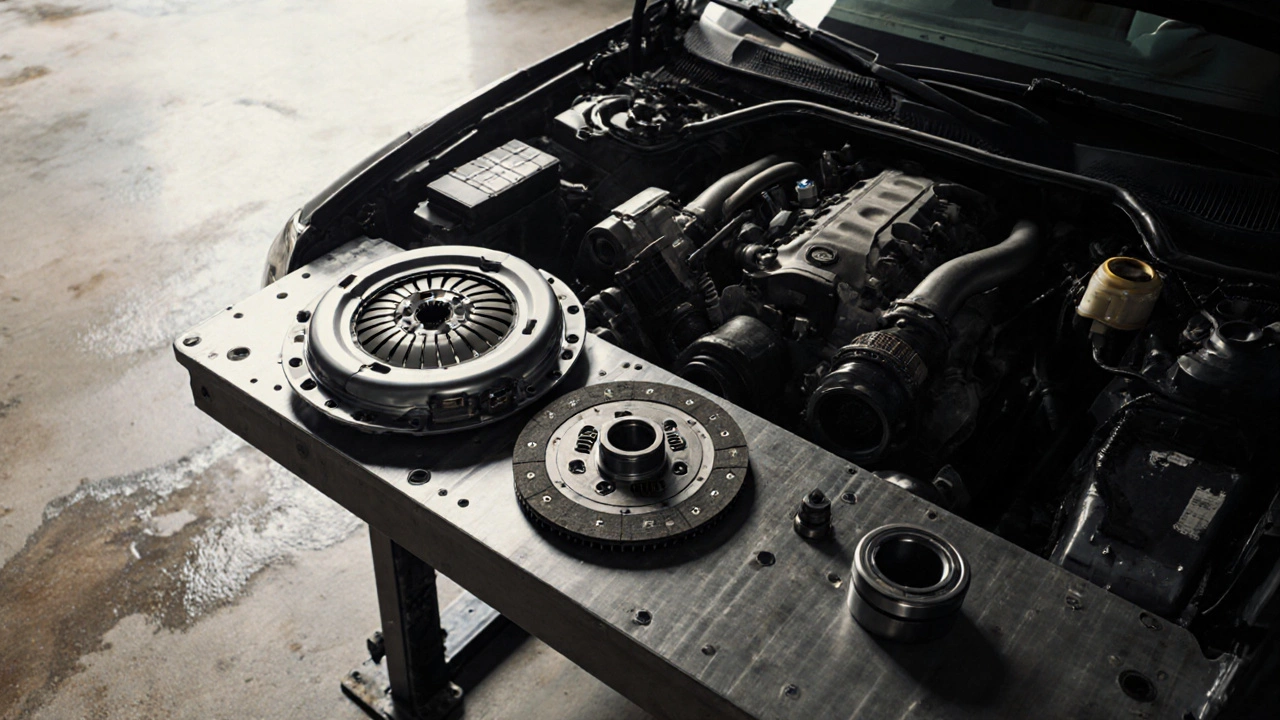
A clutch kit connects your engine to your transmission. It’s made up of three main parts: the clutch disc, the pressure plate, and the release bearing. In a stock setup, these parts are designed for smooth daily driving - easy engagement, low pedal effort, and quiet operation. But they’re also built to handle the factory engine’s power output, not much more.
When you upgrade to a performance clutch kit, you’re not adding power. You’re changing how that power gets transferred. A stock clutch can slip under high torque, especially if you’ve modified your engine for more output. That slipping means energy is lost as heat instead of going to the wheels. A performance clutch grips harder, transfers power more efficiently, and reduces that loss.
Why It Feels Like You Got More HP
Imagine your car makes 250 horsepower at the crank. With a worn or stock clutch, maybe only 220 hp actually reaches the wheels because of slippage. After installing a high-performance clutch, you’re now getting 245 hp at the wheels. That’s a 25-hp gain in usable power - not because the engine changed, but because less power is being wasted.
This is why drivers notice a big difference: the car launches harder, shifts feel more direct, and there’s no more lag when you mash the gas. It’s not extra horsepower - it’s recovered horsepower. Think of it like replacing a clogged air filter. The engine didn’t get more air; it just got all the air it was already making.
Types of Clutch Kits and Their Effects
Not all clutch kits are created equal. The type you pick determines how much grip you get - and how much comfort you lose.
- Stage 1 clutch kits: These use a reinforced organic or ceramic disc and a slightly stiffer pressure plate. They’re designed for mild modifications like a cold air intake or exhaust upgrade. They hold up to 20-30% more torque than stock and still feel drivable on the street.
- Stage 2 and 3 kits: These use sintered iron or carbon-metallic discs. They’re meant for cars with turbo upgrades, superchargers, or engine tuning. They grip like a vice but can be jumpy at low speeds. Pedal effort increases, and chatter or noise is common.
- Double-disc clutches: Used in race cars and drag builds. They can handle over 800 hp but are nearly impossible to use in daily traffic. You need two feet to drive one.
Most street-driven cars don’t need more than a Stage 1 or 2 clutch. Going beyond that just makes your car harder to live with - and won’t give you more power unless your engine is already making significantly more torque than stock.
When a Clutch Kit Actually Helps You Gain Power
A clutch kit only helps you access more power if your engine is already producing more than the stock clutch can handle. If you’ve added a turbocharger, upgraded the fuel system, or tuned your ECU to push 300+ hp, then yes - a better clutch lets you use that power without slipping.
But if your car is still stock? Installing a performance clutch won’t make it faster. You might get a slightly firmer pedal feel, but you won’t see a drop in 0-60 times. Dyno tests from multiple tuning shops in the UK - including one in Manchester that tested over 120 modified cars - show zero horsepower gain on stock engines with upgraded clutches. The only measurable change was improved torque transfer efficiency.
What You Might Mistake for Horsepower Gain
People often think they gained HP because:
- The car launches harder - that’s better grip, not more power.
- Shifts feel quicker - that’s reduced clutch slip, not faster engine response.
- The engine revs more freely - that’s because the clutch isn’t dragging anymore.
These are all good things - just not horsepower gains. It’s like putting better tires on your car. You’ll corner faster and brake shorter, but your engine’s output hasn’t changed.
What Really Adds Horsepower
If you want real horsepower gains, here’s what works:
- Engine tuning (ECU remap)
- Forced induction (turbo or supercharger)
- High-flow intake and exhaust
- Performance camshafts
- Internal engine upgrades (pistons, rods, head work)
These modify the engine itself. A clutch kit is just the delivery system. If your delivery truck is broken, fixing it lets you get your goods to market - but it doesn’t make the factory produce more.
When You Should Upgrade Your Clutch
You should replace your clutch kit when:
- You notice slipping under load - RPM spikes without speed increase.
- Clutch pedal feels spongy or requires more travel.
- You’ve added performance mods that increase torque beyond stock limits.
- Your clutch is worn out from high mileage or aggressive driving.
Don’t upgrade just because you think it’ll make your car faster. Do it because you need to stop losing power. If your car is stock and the clutch is still working fine, leave it alone. Save your money for something that actually adds horsepower.
Common Myths About Clutch Kits
Let’s clear up a few misconceptions:
- Myth: A lightweight flywheel adds HP. Truth: It reduces rotational mass, which makes the engine rev faster - not produce more power. It helps throttle response, not output.
- Myth: A carbon clutch is always better. Truth: Carbon discs are great for racing but wear out fast on the street. They’re expensive and noisy.
- Myth: Bigger clutch = more power. Truth: Size doesn’t matter as much as material and clamping force. A properly sized Stage 2 clutch can handle more torque than a poorly made oversized one.
Real-World Example: A 2020 Golf GTI
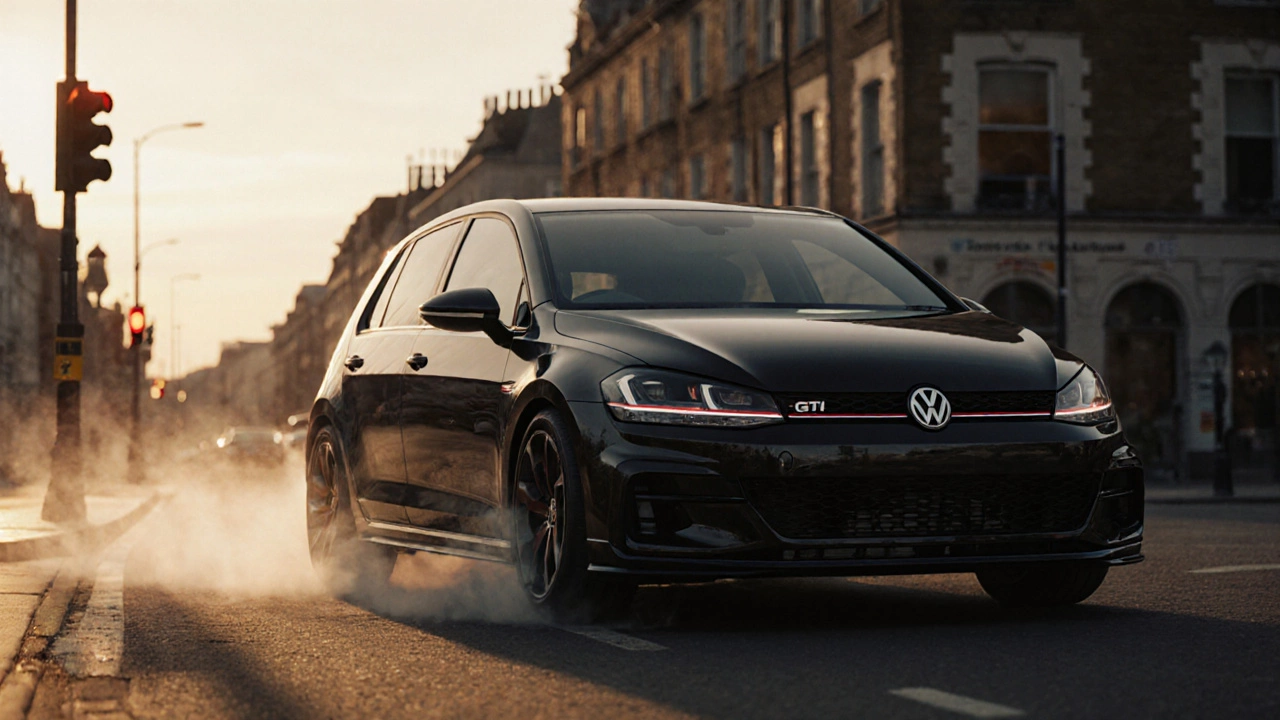
A tuner in Manchester tested a 2020 Golf GTI with 242 hp stock. After a Stage 1 clutch kit swap, dyno results showed 241 hp - no change. But launch times improved by 0.3 seconds because the clutch stopped slipping at 3,000 rpm. The driver thought he gained 15 hp. He didn’t. He just stopped losing 15 hp.
That’s the difference between perception and reality.
Final Verdict
A clutch kit doesn’t add horsepower. But it can help you use every last bit of the horsepower your engine already makes. If your clutch is slipping, upgrading it is essential. If your car is stock and the clutch works fine, don’t waste money on a performance kit hoping for more power.
Want more horsepower? Tune the engine. Upgrade the intake. Add a turbo. A better clutch just makes sure that power actually reaches the road.
Does a performance clutch kit increase horsepower?
No, a performance clutch kit does not increase engine horsepower. It improves torque transfer efficiency by reducing slippage, which makes more of your engine’s existing power reach the wheels. This can make your car feel faster, but it won’t show up as a gain on a dyno if your engine hasn’t been modified.
Can a clutch kit improve acceleration?
Yes - but only if your stock clutch was slipping. A performance clutch reduces power loss during launch and shifts, leading to quicker acceleration times. If your clutch was in good condition, you won’t notice a difference in 0-60 times.
What’s the difference between a Stage 1 and Stage 3 clutch?
A Stage 1 clutch uses upgraded materials like ceramic or reinforced organic discs and is designed for mild modifications. It’s still street-friendly. A Stage 3 clutch uses sintered metal or carbon-metallic discs and is built for high-torque engines, often with turbo upgrades. It’s harsher, noisier, and harder to drive daily.
Do I need a new clutch if I’ve tuned my car?
If your tuning increased torque beyond what your stock clutch can handle - typically above 280-300 lb-ft for most front-wheel-drive cars - then yes. A stock clutch will slip under load, wasting power and potentially overheating. A performance clutch is necessary to transfer the extra torque reliably.
Will a lightweight flywheel add horsepower?
No. A lightweight flywheel reduces rotational inertia, which lets the engine rev faster and improves throttle response. It doesn’t increase engine output. It makes the car feel more responsive, not more powerful.