Fuel Pump Failure Diagnostic Tool
Check if your fuel pump is failing
Select the symptoms you're experiencing. This tool will help you determine if your fuel pump might be failing based on the 7 key signs from our article.
Your car sputters on the motorway. It hesitates when you step on the gas. Then one morning, it just won’t start-no click, no crank, nothing. You check the battery, the spark plugs, even the fuel gauge. Everything looks fine. But deep down, you know something’s wrong with the fuel system. More often than not, the culprit isn’t the tank, the filter, or the injectors. It’s the fuel pump.
What a fuel pump actually does
The fuel pump is a small but critical part hidden inside or near your fuel tank. Its job? Push petrol or diesel from the tank to the engine at the right pressure. Modern cars need steady, high-pressure fuel flow-usually between 30 and 60 psi-so the injectors can spray the exact amount of fuel needed for combustion. If the pump can’t keep up, the engine starves. And that’s when trouble starts.
Sign #1: Your car won’t start, even with a good battery
You turn the key. The dashboard lights up. The starter turns over. But the engine never catches. No smoke, no sputter, just silence. You check the fuel level-half a tank. You swap in a known-good battery. Still nothing.
This is the classic sign of a dead fuel pump. Unlike a bad starter or alternator, a failed fuel pump doesn’t make noise. It just stops delivering fuel. Try tapping the bottom of the fuel tank gently while someone cranks the engine. If it fires up for a second, that’s a strong hint the pump is struggling. It’s not a fix, but it confirms the issue.
Sign #2: Engine sputters at high speeds
You’re cruising at 70 mph on the M6. Everything’s smooth-until suddenly, the engine stutters. Like it’s running out of air. You ease off the gas, then press again. It catches, then stutters again. This isn’t a clogged air filter. It’s not the spark plugs. It’s the fuel pump.
At high speeds, the engine demands more fuel. A weak pump can’t keep up under load. It delivers fuel in bursts instead of a steady stream. You might notice this most on long motorway drives or when climbing hills. If it only happens under load, the pump is the likely suspect.
Sign #3: Loss of power during acceleration
When you press the pedal to overtake, your car doesn’t respond. It feels sluggish, like driving through syrup. You rev the engine, but the power doesn’t come. This isn’t a transmission issue-it’s a fuel delivery problem.
A failing fuel pump can’t increase pressure fast enough when you demand more fuel. The result? Delayed acceleration, flat spots in the power band, or even sudden drops in speed. It’s not the same as a dirty throttle body. Those usually cause rough idling. This is a lack of fuel under pressure.
Sign #4: Engine stalls at high temperatures
You’ve been stuck in traffic on a hot day. The engine temperature gauge is climbing. Then, without warning, the car dies. You pull over, wait ten minutes, and it starts again. Same thing happens tomorrow. Same conditions.
Fuel pumps are sensitive to heat. When they overheat, internal components can expand or fail temporarily. Once cooled, they work again-until the next time. This isn’t a coolant leak or thermostat issue. It’s a heat-related failure in the pump’s motor or wiring. If it only stalls when hot, the pump is overheating.
Sign #5: Loud whining noise from the fuel tank
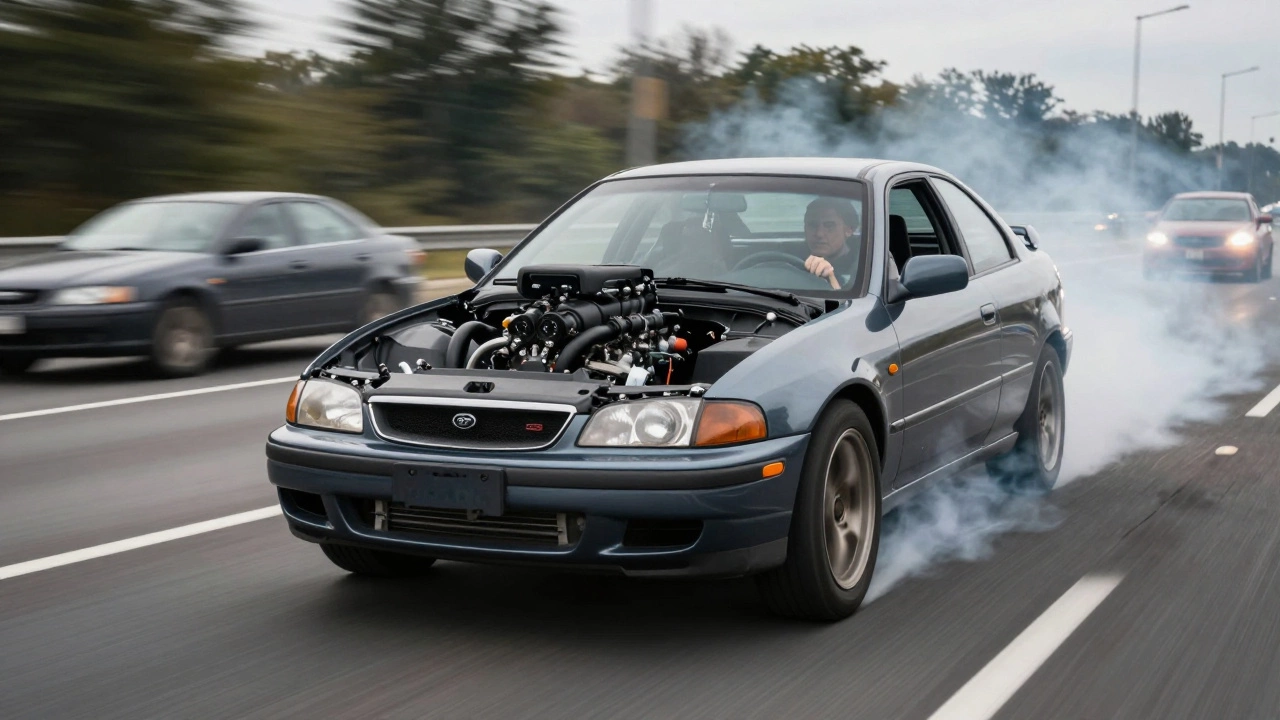
When you turn the ignition on-before starting the engine-you hear a brief whirring sound. That’s normal. The pump primes the fuel line. But if you hear a loud, high-pitched whine that lasts longer than two seconds, or if it’s constant while driving, something’s wrong.
A healthy fuel pump hums quietly. A failing one whines, screams, or buzzes like a dying insect. This noise comes from worn bearings, a clogged strainer, or low fuel levels causing the pump to run dry. Running the tank low often accelerates this failure. If you hear this sound, don’t ignore it.
Sign #6: Fuel economy suddenly drops
You’ve been filling up every 350 miles. Now it’s 280. You haven’t changed your driving habits. No extra weight in the car. No new tyres. But your mpg has tanked.
A failing fuel pump can leak internally or run too rich, forcing the engine control unit to compensate by injecting more fuel than needed. The result? Higher fuel consumption. This often happens without warning lights. The ECU doesn’t always detect a weak pump-it just tries to keep the engine running by flooding it with fuel.
Sign #7: The car dies and won’t restart until it cools down
This one’s scary. You’re driving. The engine cuts out completely. You coast to the side of the road. Try restarting. Nothing. You wait 20 minutes. Then it starts like nothing happened.
This is the hallmark of a pump on its last legs. The motor overheats, shuts down, and needs time to cool before it can work again. It’s not a sensor glitch. It’s not a relay. It’s the pump’s internal components failing under heat stress. This pattern repeats. And each time, it gets worse.
What to do next
If you’re seeing one or more of these signs, don’t wait for the car to leave you stranded. A failing fuel pump doesn’t always give you a warning light. The check engine light might come on-but only if the ECU detects a major imbalance, like a lean or rich condition. Most of the time, it doesn’t.
Start by checking the basics: make sure your fuel tank isn’t below a quarter full. Low fuel causes overheating. Then, listen for the pump when you turn the key. If you hear nothing, it might be dead. If you hear a weak whine, it’s struggling.
For a definitive test, a mechanic can hook up a fuel pressure gauge to the fuel rail. Normal pressure varies by model, but if it’s below 20 psi under load, the pump is failing. Some cars have a test port under the hood. Others require removing a fuel line. Either way, it’s a quick diagnostic.
How long do fuel pumps last?
Most fuel pumps last between 100,000 and 150,000 miles. But that’s not a guarantee. Running your tank low often, using dirty fuel, or driving in dusty conditions can cut that lifespan in half. In the UK, where diesel fuel quality varies and older cars are common, many pumps fail before 80,000 miles.
There’s no scheduled replacement. You don’t change it like an oil filter. You replace it when it fails. But if you’re hitting 80,000+ miles and you’ve noticed any of the signs above, it’s worth getting it checked now.
What happens if you ignore it?
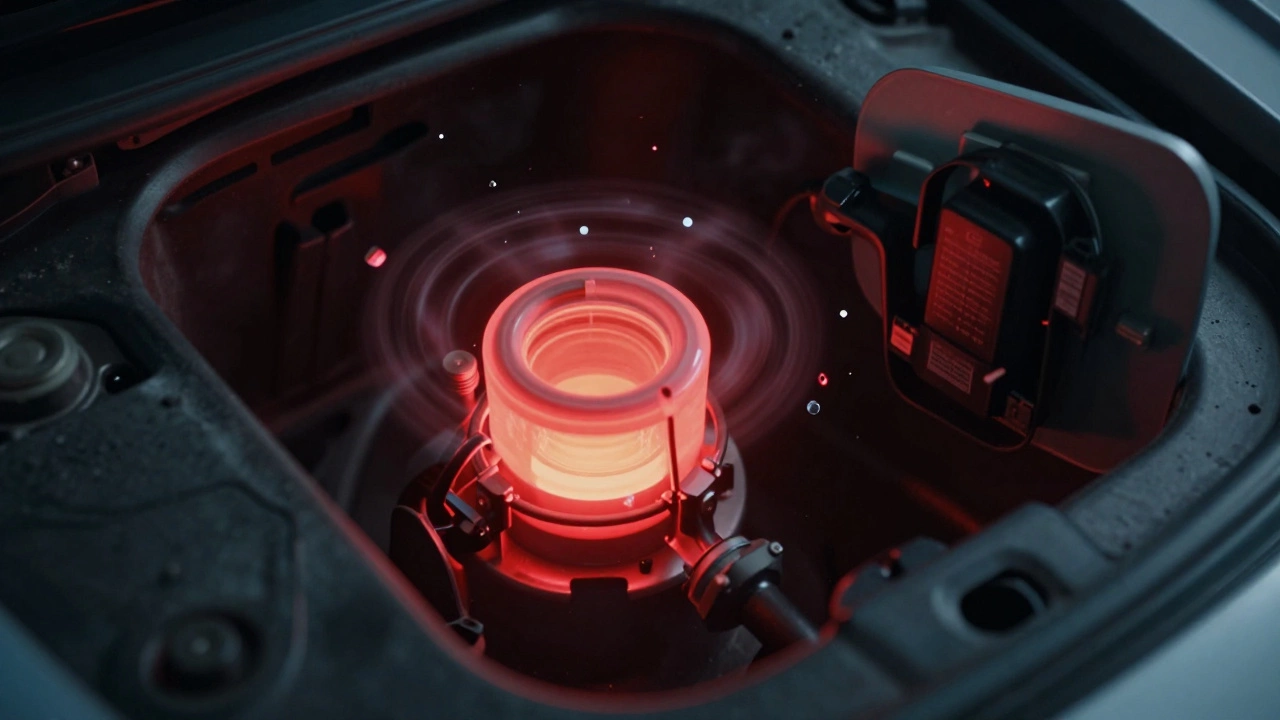
Ignoring a bad fuel pump doesn’t just mean a breakdown. It can damage other parts. If the pump runs dry, it can overheat and melt internal seals. Metal shavings from a worn motor can get sucked into the fuel injectors. Those are expensive to replace. And if the pump stops mid-drive, you could lose power on a busy road.
It’s not a luxury fix. It’s a safety issue.
Can you drive with a bad fuel pump?
Technically, yes. But you’re playing Russian roulette. One minute, it works. The next, it doesn’t. You could be stuck on a cold, dark road in December. Or worse-on a motorway with no hard shoulder.
Some people try to stretch it out. They keep driving, hoping it’ll last. But fuel pumps don’t get better. They only get worse. And when they fail, they usually fail completely.
How much does a replacement cost?
In the UK, a new fuel pump costs between £150 and £400, depending on your car. Labour takes 2 to 4 hours, so expect £150 to £300 more. Total? Around £300 to £700. It’s not cheap. But it’s cheaper than a tow truck, a rental car, and a missed workday.
Some cars have the pump inside the tank, which means the tank has to be dropped. That adds time and cost. Others have an access panel under the rear seat. Those are easier. Check your model’s repair guide before you decide.
Prevention tips
- Never let your fuel tank drop below a quarter full. Keep it topped up.
- Use quality fuel from reputable stations. Cheap fuel often has more water and contaminants.
- Replace your fuel filter every 30,000 to 40,000 miles. A clogged filter forces the pump to work harder.
- Avoid driving through deep puddles or flooded roads. Water in the tank can corrode the pump.
- If your car has been sitting for months, run a fuel stabiliser before storage.
These aren’t just tips. They’re cheap insurance. A £15 fuel filter every few years saves you £500 on a pump.
Final thought
A failing fuel pump doesn’t scream. It whispers. A hesitation. A sputter. A delay. A whine. If you’ve noticed any of these, especially in an older car, don’t wait. Get it checked. You’re not just saving money-you’re saving yourself from being stranded on a winter morning in Manchester, with no heat, no phone signal, and no help in sight.
Can a bad fuel pump cause the check engine light to come on?
Yes, but not always. A failing fuel pump can trigger the check engine light if it causes the engine to run too lean (not enough fuel) or too rich (too much fuel). Common codes include P0171, P0174, or P0087. But many fuel pump failures don’t set a code at all. The ECU can’t always detect a drop in pressure-it just tries to compensate. So no warning light doesn’t mean the pump is fine.
Can I test my fuel pump myself?
You can do a basic check. Turn the ignition to ‘on’ without starting the engine. Listen near the fuel tank for a brief humming sound-this means the pump is priming. If you hear nothing, the pump might be dead or the relay is faulty. You can also tap the tank gently while someone cranks the engine. If it starts briefly, the pump is likely failing. For a real test, you need a fuel pressure gauge, which most mechanics have.
Does the fuel pump run all the time?
No. The fuel pump runs only when the engine is cranking or running. When you turn the key to ‘on’, it runs for 2-3 seconds to build pressure. Once the engine starts, it runs continuously. If you hear it running constantly after the engine is off, that’s a fault-likely a stuck relay or wiring issue.
Can a clogged fuel filter cause the same symptoms?
Yes, a clogged fuel filter can mimic a failing fuel pump. Both cause low fuel pressure, hesitation, and poor acceleration. That’s why mechanics always check the filter first. If the filter is old or dirty, replace it before assuming the pump is bad. It’s cheaper and easier. But if the filter is clean and symptoms remain, the pump is the likely issue.
Is it safe to drive with a bad fuel pump?
It’s risky. A failing fuel pump can leave you stranded at any moment-especially on a motorway or in bad weather. It can also damage your fuel injectors or engine if metal particles from the pump enter the system. Don’t risk it. Get it checked as soon as you notice symptoms.