Clutch Replacement Time Calculator
How Long Will Your Clutch Replacement Take?
Estimated Labor Time
Professional mechanic time for your vehicle type. DIY projects typically take 2-3 times longer.
Important Considerations
This estimate doesn't include potential delays from corrosion, damaged parts, or complex disassembly. Always have a professional mechanic verify your specific vehicle's requirements.
Replacing a clutch isn’t like changing oil or swapping brake pads. It’s one of the most labor-intensive repairs you can do on a car. If you’ve noticed grinding when shifting, a spongy pedal, or the car slipping out of gear, your clutch is likely worn out. But before you panic about the cost, the real question most people ask is: how many hours does it take to replace a clutch? The answer isn’t simple-it depends on your car, your skill, and whether you’re doing it in a garage or your driveway.
Typical Clutch Replacement Time: 4 to 8 Hours
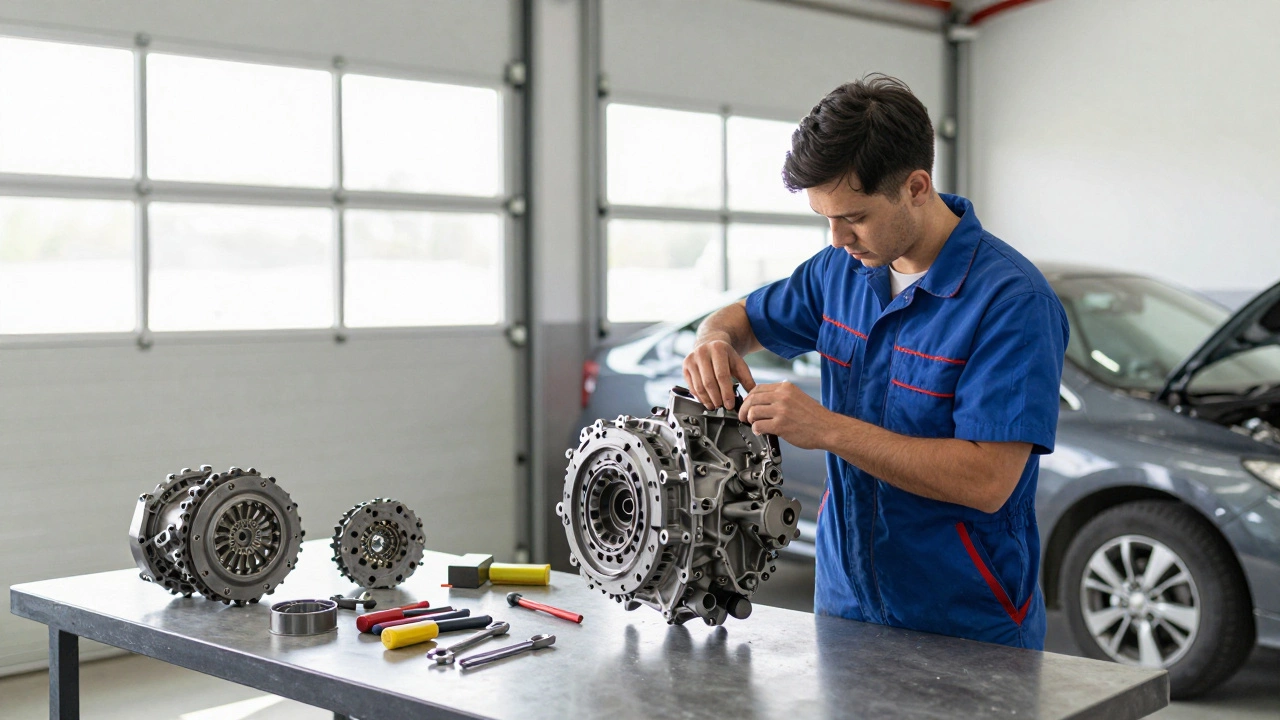
For most standard passenger cars, a professional mechanic will take between 4 and 8 hours to replace a clutch. That’s a full workday. Why so long? Because the clutch isn’t a single part you just unplug. It’s buried under the transmission, and getting to it means removing the gearbox, the starter, the shift linkage, and sometimes even the exhaust or subframe. Even if you’ve done other repairs before, this job is different.
Take a Honda Civic or Toyota Corolla from the last 10 years. These are relatively simple designs. A skilled tech can get the job done in about 5 to 6 hours. But if you’re working on a rear-wheel-drive car like a Ford Mustang or a BMW 3 Series, you’re looking at 6 to 8 hours. The transmission is heavier, the access is tighter, and the alignment process takes more care.
Why Clutch Replacement Takes So Long
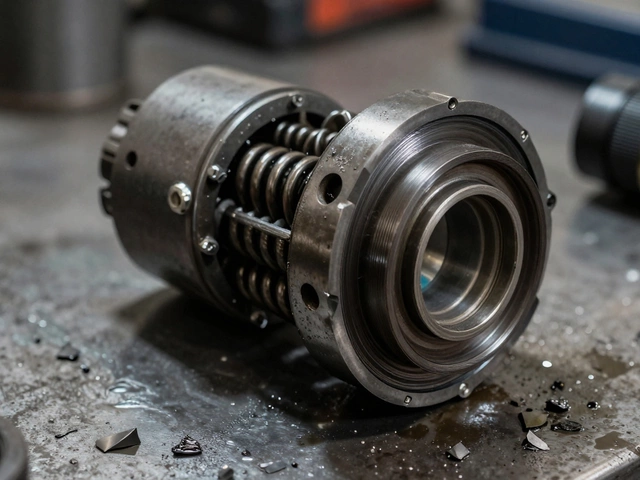
It’s not just about swapping parts. The clutch assembly includes the pressure plate, clutch disc, release bearing, and sometimes the pilot bearing. But here’s what most people don’t realize: you can’t just pull the transmission out and slap a new clutch in. You have to:
- Drain the transmission fluid
- Disconnect the battery and shift cables
- Remove the starter motor and clutch slave cylinder
- Support the engine with a jack
- Unbolt the transmission from the engine
- Slide the transmission back (sometimes out the bottom)
- Remove the old clutch and clean the flywheel surface
- Inspect and possibly resurface or replace the flywheel
- Install the new clutch kit with precise alignment
- Reinstall the transmission and reconnect everything
- Bleed the hydraulic system if it’s a hydraulic clutch
- Test the pedal feel and shift quality
Each step requires care. A misaligned clutch disc can cause vibration or premature wear. A dirty or warped flywheel will ruin a brand-new clutch in weeks. That’s why good shops always inspect the flywheel-even if it looks fine. Most manufacturers recommend replacing the flywheel if it’s been overheated or shows signs of scoring.
DIY vs. Professional: Time Differences
If you’re thinking of doing this yourself, be honest with yourself. If you’ve never removed a transmission, you’re looking at 12 to 16 hours, maybe longer. You’ll need a transmission jack, engine hoist, torque wrench, and a lot of patience. One wrong move-like cross-threading a bolt or dropping the transmission-can turn a $500 repair into a $2,000 disaster.
Real-world example: A 2018 Volkswagen Golf GTI owner tried to replace the clutch over a weekend. He spent 10 hours just getting the transmission out. He didn’t realize the clutch slave cylinder had to be bled with a special tool. He ended up spending another day troubleshooting a clutch that wouldn’t engage. He finally took it to a shop, paid $300 for labor, and had it done in 3 hours.
Professionals have the tools, experience, and shop manuals. They know which bolts come off first, how much torque to use, and which parts are prone to seizing. They also have access to OEM specs and can spot hidden issues-like a worn input shaft bearing-that you might miss.

Vehicle-Specific Time Estimates
Not all cars are created equal. Here’s a breakdown of average clutch replacement times by vehicle type:
| Vehicle Type | Typical Labor Time | Notes |
|---|---|---|
| Compact Sedan (Honda Civic, Toyota Corolla) | 5-6 hours | Front-wheel drive, accessible transmission |
| Compact SUV (Honda CR-V, Toyota RAV4) | 6-7 hours | Heavier transmission, tighter engine bay |
| Rear-Wheel Drive (Ford Mustang, BMW 3 Series) | 7-8 hours | Heavier components, more disassembly |
| Performance Car (Mazda MX-5 Miata, Subaru WRX) | 6-8 hours | Lightweight but complex clutch design |
| Light Truck (Ford F-150, Chevrolet Silverado) | 8-10 hours | Heavy-duty clutch, often requires dropping the frame |
| Modern Automatic Clutch (DCT, Dual-Clutch) | 10-14 hours | Extremely complex; requires diagnostic tools and calibration |
Modern dual-clutch transmissions (DCT) are especially time-consuming. Cars like the Volkswagen Golf R or Porsche 718 use these systems. Replacing the clutch isn’t just mechanical-it’s electronic. The car’s computer must be reprogrammed, and the clutch must be calibrated using factory-level software. That’s why shops charge $1,200-$2,000 for a DCT clutch job, even if the parts cost less than $500.
What You Can Do to Speed Up the Process
If you’re planning to replace your clutch, here’s how to make it faster and cheaper:
- Replace the clutch kit and flywheel together. Even if the flywheel looks okay, it’s been worn by the old clutch. Replacing both at once saves you from paying labor twice.
- Buy a complete clutch kit. Kits include the disc, pressure plate, release bearing, and pilot bearing. You’ll save time and avoid buying the wrong part.
- Check your alignment tools. A clutch alignment tool costs $15 but prevents misalignment that can ruin the new disc.
- Use OEM or high-quality aftermarket parts. Cheap clutches fail faster. You’ll end up paying for labor twice.
- Drain the transmission fluid before starting. It’s messy and time-consuming to do it while the transmission is hanging.
When to Expect More Time
Some situations will push the job past 8 hours:
- Corroded bolts or seized components
- Broken or missing bolts (you’ll need to extract them)
- Accidentally damaging the input shaft or transmission input bearing
- Missing a step in the service manual
- Working without proper tools
One mechanic told me about a 2005 Honda Accord where the clutch slave cylinder had fused to the transmission. It took him 3 extra hours just to cut it free without breaking the housing. That’s why experienced shops charge a flat rate-not an hourly rate-for clutch jobs. They know what they’re getting into.

What’s the Cost? Labor vs. Parts
Parts for a clutch kit range from $200 to $600, depending on the car and brand. Labor runs $500 to $1,200. So a total job can cost anywhere from $700 to $1,800. If you’re quoted more than $2,000 for a standard car, ask if the flywheel is included and if they’re using OEM parts.
Don’t be fooled by cheap quotes. A $400 clutch job might mean they’re skipping the flywheel, using a low-quality release bearing, or not bleeding the hydraulic system properly. That clutch might last 6 months instead of 6 years.
How Often Do Clutches Need Replacing?
Most clutches last between 50,000 and 100,000 miles. But driving habits matter more than mileage. If you ride the clutch pedal, creep in traffic, or launch hard from a stop, you’ll wear it out faster. A clutch in a city taxi might need replacing at 30,000 miles. A well-driven sedan might last 150,000 miles.
Signs it’s time: slipping gears, burning smell, high engine revs with low speed, or a clutch pedal that feels softer than usual. If you’re unsure, have a mechanic check the clutch free play. It should be about 0.5 to 1 inch of movement at the top of the pedal.
Can you drive with a bad clutch?
You might be able to drive short distances, but it’s risky. A slipping clutch can leave you stranded. A failing release bearing can seize and lock the transmission. If you hear grinding when shifting or the clutch pedal feels loose, get it checked immediately. Driving on a bad clutch can damage the flywheel, transmission input shaft, or synchronizers-costing you thousands more.
Do you always need to replace the flywheel?
Not always, but you should. Most mechanics recommend replacing it because the old clutch has worn a groove into its surface. Even a slight warp or heat damage can cause the new clutch to chatter or overheat. Resurfacing is an option if the flywheel is thick enough, but many modern flywheels are lightweight and can’t be resurfaced. Check the manufacturer’s specs.
Is it worth replacing a clutch on an old car?
It depends on the car’s value and condition. If the car is in good shape and you plan to keep it for a few more years, yes. A clutch replacement can add 50,000+ miles to its life. But if the car has other major issues-transmission leaks, engine problems, rusted frame-it might be better to sell it or trade it in. Compare the repair cost to the car’s resale value.
Can you replace just the clutch disc and not the pressure plate?
Technically, yes-but you shouldn’t. The pressure plate and clutch disc wear together. Replacing only one means the new part will wear unevenly against the old one. You’ll get vibrations, noise, or premature failure. Clutch kits exist for a reason: they’re designed to work as a matched set.
How long does a new clutch last after replacement?
A quality clutch, installed correctly, should last 60,000 to 100,000 miles. Heavy use-like towing, frequent stop-and-go driving, or aggressive launches-can cut that in half. Light driving and smooth shifting can extend it beyond 120,000 miles. The key is using the right parts and avoiding bad habits like resting your foot on the pedal.
Next Steps: What to Do Now
If your clutch is failing, don’t wait. The longer you drive on it, the more damage you risk to other parts. Start by:
- Getting a second opinion-ask for a clutch free play test
- Checking your car’s service history-did the clutch ever get replaced?
- Comparing quotes from two reputable shops
- Asking if they include the flywheel and release bearing
- Choosing a clutch kit from a trusted brand like Sachs, LUK, or OEM
Replacing a clutch isn’t a weekend project unless you’re experienced. But when done right, it gives you back smooth shifts, reliable performance, and peace of mind. Don’t cut corners-this isn’t the place to save a few bucks.