Low Oil Emergency Calculator
Check Your Oil Emergency
Answer the questions below to determine the urgency of your low oil situation. Based on your symptoms, we'll show how critical it is and what you should do immediately.
When your car runs low on oil, it doesn’t just sputter and stop-it starts screaming in ways you can’t ignore. You might hear a rattling noise from under the hood, feel the engine shudder, or see a warning light blink on your dashboard. These aren’t random glitches. They’re the engine begging for help before it breaks down for good.
The First Signs: Noise and Vibration
One of the earliest clues your oil level is dropping is sound. A metallic clattering or ticking noise coming from the engine is often the first red flag. This isn’t normal engine noise. It’s the sound of metal parts grinding together because there’s not enough oil to lubricate them. The lifters, rocker arms, and camshaft bearings all need a constant film of oil to move smoothly. When oil gets low, those parts start knocking. It’s like trying to ride a bike with no grease on the chain-eventually, it breaks.
You might also feel vibrations through the steering wheel or floorboard. That’s not suspension trouble. It’s the engine struggling to turn over under friction. If you’ve ever noticed your car shaking more than usual after a long drive, especially when idling, that’s a sign the oil isn’t doing its job anymore.
Warning Lights and Dashboard Alerts
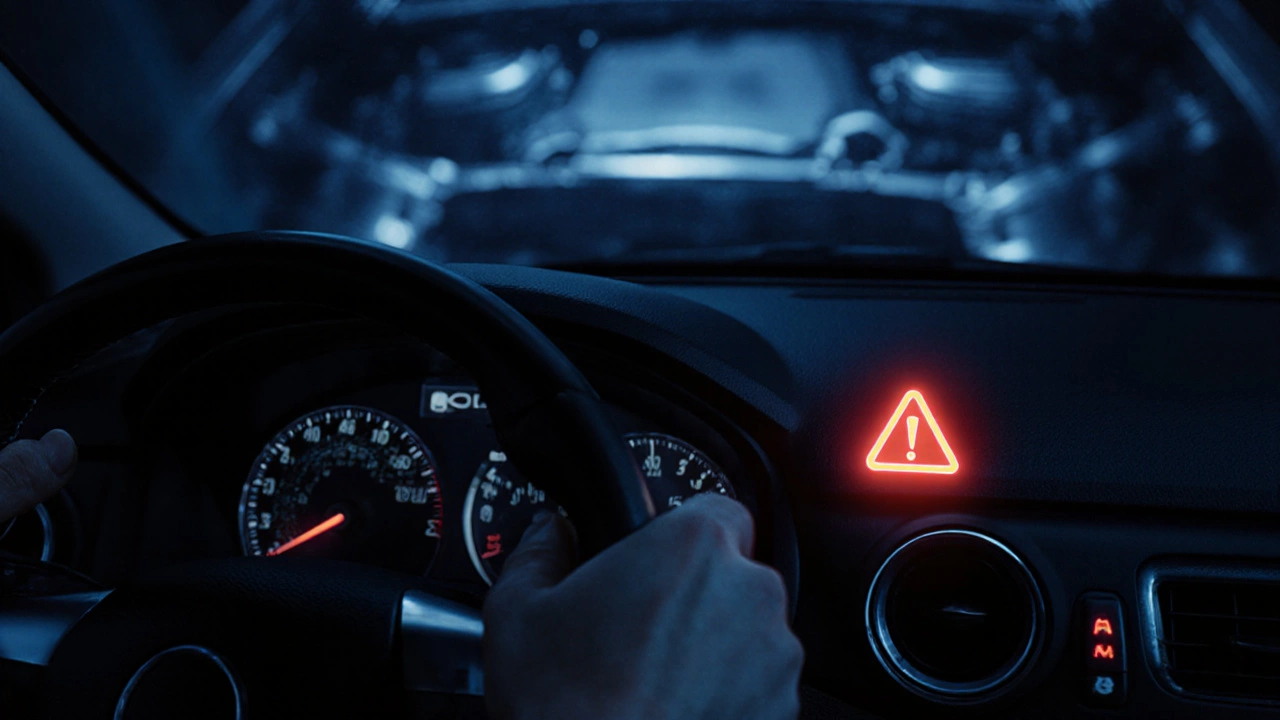
Most modern cars have an oil pressure warning light-a small icon that looks like an oil can. If it flashes or stays on while driving, you’re in immediate danger. This light doesn’t mean your oil is low-it means the oil pressure has dropped below safe levels. Low oil causes low pressure. But here’s the catch: by the time the light comes on, your engine may already be damaged.
Some newer cars also show a message like “Engine Oil Low” or “Add Oil Now.” These are more direct, but they’re not always accurate. If the message appears after you’ve just filled the oil, it could be a faulty sensor. But if it shows up after a long drive with no recent oil check, treat it like an emergency.
Overheating and Strange Smells
Oil doesn’t just lubricate-it helps cool the engine too. When oil levels drop, the engine runs hotter. You might notice the temperature gauge creeping into the red zone, even if your coolant is full. That’s because without enough oil, internal parts generate more heat from friction, and the engine can’t shed it fast enough.
There’s also a smell. Burning oil has a sharp, acrid odor, like burnt toast mixed with plastic. If you catch that smell while driving, it’s likely oil leaking onto hot engine parts because there’s too little left to stay where it belongs. It could also mean the oil has broken down from overheating, which happens faster when levels are low.
Loss of Power and Poor Performance
When oil is running low, your car doesn’t just make noise-it loses muscle. You might notice sluggish acceleration, especially when merging onto a highway or climbing a hill. The engine feels heavy, unresponsive. That’s because friction from dry parts steals energy. It’s like trying to run with weights strapped to your legs.
Some drivers report rough idling or stalling at stoplights. That’s not a fuel issue. It’s the engine’s internal components fighting to move without proper lubrication. The pistons, valves, and crankshaft aren’t moving freely anymore. They’re sticking, slipping, and skipping. The result? Uneven combustion and power loss.
What Happens If You Keep Driving?
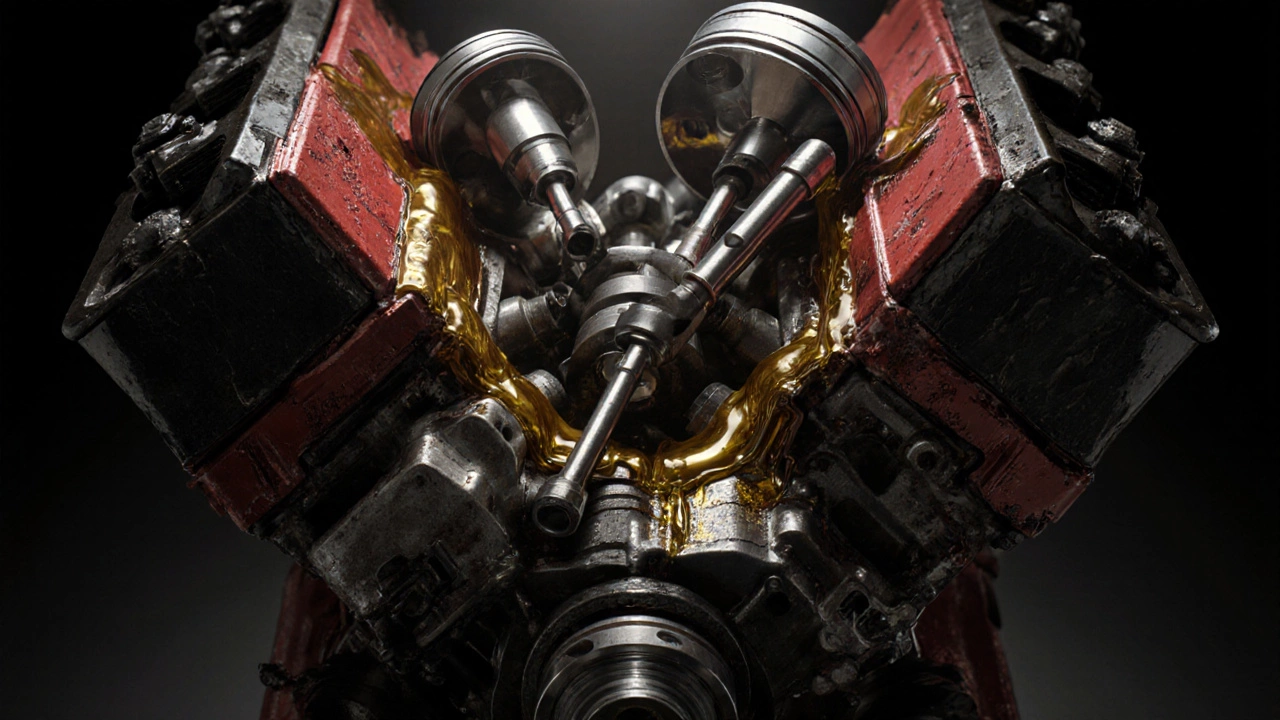
Driving with low oil for even a few minutes can cause irreversible damage. Here’s what happens step by step:
- Increased friction: Metal parts rub against each other, wearing down surfaces.
- Overheating: Without oil to carry heat away, components expand and warp.
- Seizure: Pistons can stick in cylinders, or the crankshaft can lock up completely.
- Catastrophic failure: The engine may seize mid-drive, leaving you stranded-or worse, cause a fire.
Engine rebuilds cost between £2,000 and £5,000 in the UK. A new engine? That’s £4,000 to £8,000. A simple oil top-up? Under £20. The math is obvious.
How Often Should You Check Your Oil?
Check your oil at least once a month-and before any long trip. Do it when the engine is cold and the car is on level ground. Pull out the dipstick, wipe it clean, reinsert it, then pull it out again. The oil should be between the minimum and maximum marks. If it’s below the minimum, add half a litre at a time until it’s in range.
Don’t wait for warning lights. Many drivers only check oil after something goes wrong. But by then, it’s too late. Cars lose oil slowly over time-even if there’s no leak. A typical engine can burn a quarter of a litre every 1,000 miles. That adds up fast.
What Oil Should You Use?
Not all oils are the same. Your car’s manual will tell you the right viscosity-usually something like 5W-30 or 10W-40. Using the wrong type can make things worse. Thicker oil might not flow fast enough when cold. Thinner oil might not protect under high heat.
Full synthetic oil lasts longer and performs better under stress. If your car is over five years old, switching to synthetic can help reduce oil consumption and protect older engine parts.
What to Do If You’re Low on Oil
If you notice low oil while driving:
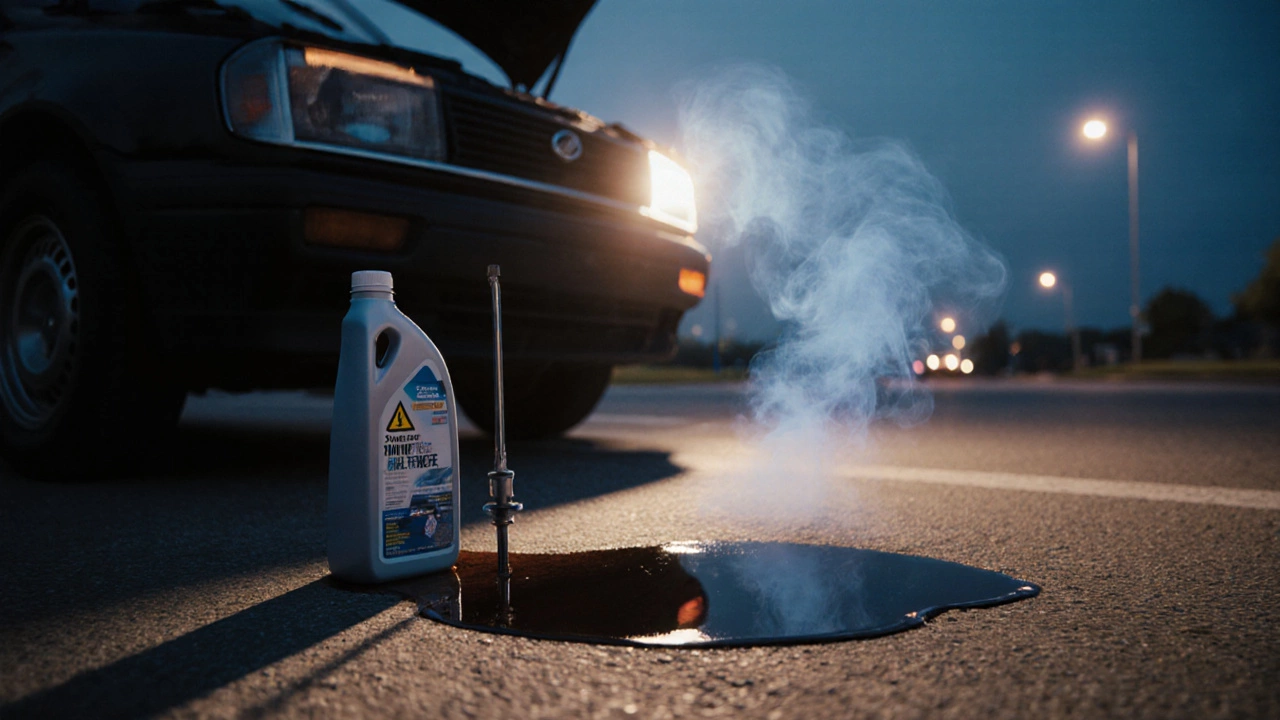
- Stop safely as soon as possible.
- Turn off the engine and wait 10 minutes for it to cool.
- Check the dipstick. If it’s below the minimum, add oil immediately.
- Use the same type and grade of oil already in the engine.
- If you don’t have oil on hand, drive only to the nearest garage-no more than a mile or two, and only if the engine isn’t making noise.
Never ignore a low oil warning. Even if the car seems to run fine after adding oil, you should get it checked. Internal damage might not show up right away.
Why Do Cars Lose Oil?
There are two main reasons:
- Leaks: A worn gasket, loose drain plug, or cracked oil pan can let oil escape. Look under the car for dark stains on the ground.
- Consumption: Older engines burn oil as they age. Worn piston rings or valve seals let oil slip into the combustion chamber and burn off. You’ll see blue smoke from the exhaust if this is happening.
If you’re topping up every 500 miles, you have a problem that needs fixing-not just more oil.
Prevention Is Cheaper Than Repair
Checking your oil takes two minutes. Adding oil takes five. Getting your engine replaced takes weeks and thousands of pounds. The difference between a quick top-up and a total engine failure is as simple as lifting a dipstick.
Make it a habit. Keep a bottle of your car’s recommended oil in your trunk. Check it every time you fill up with fuel. If you hear a new noise, don’t shrug it off. Listen. Your engine is talking.
Can a car run without oil at all?
No. A car cannot run without oil for more than a few minutes. Even a few seconds of zero oil pressure can cause metal parts to weld together inside the engine. Most engines seize completely within 10 to 15 minutes without oil. Driving without oil will destroy the engine.
Is it safe to drive if the oil light is on?
Absolutely not. If the oil pressure light is on, stop the car immediately and turn off the engine. Continuing to drive can cause permanent, expensive damage. The light means oil isn’t reaching critical parts. Even driving a few hundred yards could ruin your engine.
Why does my car use oil but show no leaks?
If your car is burning oil but there’s no leak, it’s likely due to worn piston rings or valve seals. These parts allow oil to enter the combustion chamber and burn with the fuel. You’ll often see blue smoke from the exhaust, especially during acceleration. This is common in older cars but still needs attention to prevent engine damage.
Can low oil cause the check engine light to come on?
Yes. Low oil pressure can trigger the check engine light because it affects engine performance and sensor readings. The car’s computer detects abnormal operation-like misfires or uneven RPM-and assumes there’s a fault. Often, the fix is simple: add oil. But if the light stays on after topping up, there may be deeper issues.
How long can you drive after the oil light comes on?
You shouldn’t drive at all. Even 10 minutes of driving with the oil light on can destroy an engine. Some engines fail within 30 seconds if completely out of oil. Don’t test it. Pull over, shut off the engine, and call for help.
Most people think engine trouble is about fuel, spark, or belts. But the quietest killer is oil. It doesn’t make headlines. It doesn’t explode. It just slowly, quietly, wears your engine away. And by the time you notice, it’s too late. Check your oil. Every month. Before every long drive. Before you panic, before you pay, before you lose everything. One dipstick check could save you thousands.