Spark Plug Lifespan Calculator
How long should your spark plugs last?
Enter your vehicle details below to calculate when you should replace your spark plugs.
Estimated Spark Plug Lifespan
Most drivers don’t think about spark plugs until their car sputters, misfires, or refuses to start. But spark plugs are one of the most critical parts of your engine - and they don’t last forever. So how many years do spark plugs last? The answer isn’t as simple as "five years" or "100,000 miles." It depends on the type of plug, your driving habits, and even the climate where you live.
Spark Plug Types and Their Lifespan
Not all spark plugs are made the same. There are three main types you’ll find in modern cars, and each has a very different lifespan.
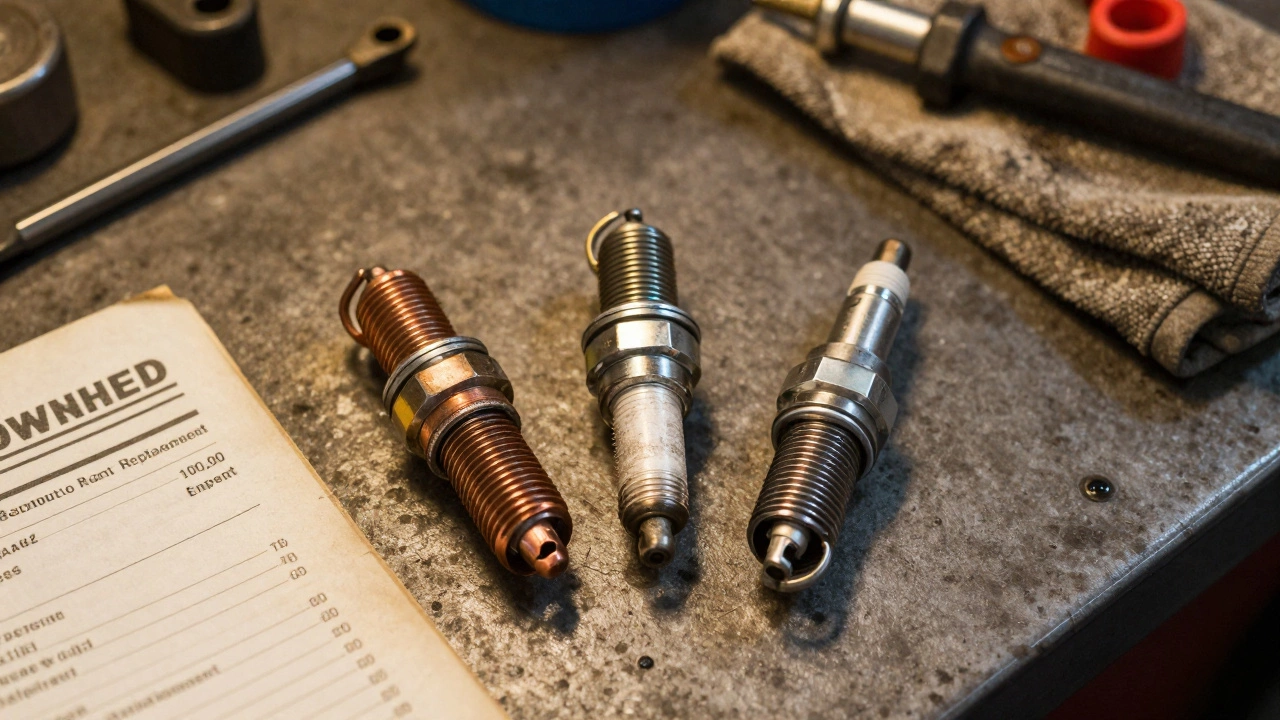
- Standard copper spark plugs - These are the oldest and cheapest type. They usually last between 20,000 and 30,000 miles, which translates to about 2 to 3 years for the average driver. They’re still used in older cars and budget models, but they wear out fast because copper doesn’t handle high heat well.
- Platinum spark plugs - These last longer thanks to a platinum tip that resists erosion. Most last between 60,000 and 100,000 miles, or roughly 5 to 8 years. You’ll find these in many mid-range vehicles from the 2000s to early 2020s.
- Iridium spark plugs - The current gold standard. Iridium is even harder and more heat-resistant than platinum. These can go 100,000 to 120,000 miles, meaning they often last 8 to 10 years - sometimes even longer if you drive gently. Most new cars since 2015 come with iridium plugs installed from the factory.
The manufacturer’s recommendation is always the best starting point. Look in your owner’s manual. If it says "replace at 100,000 miles," that’s the target. But real-world conditions can change that number.
What Actually Wears Out Spark Plugs?
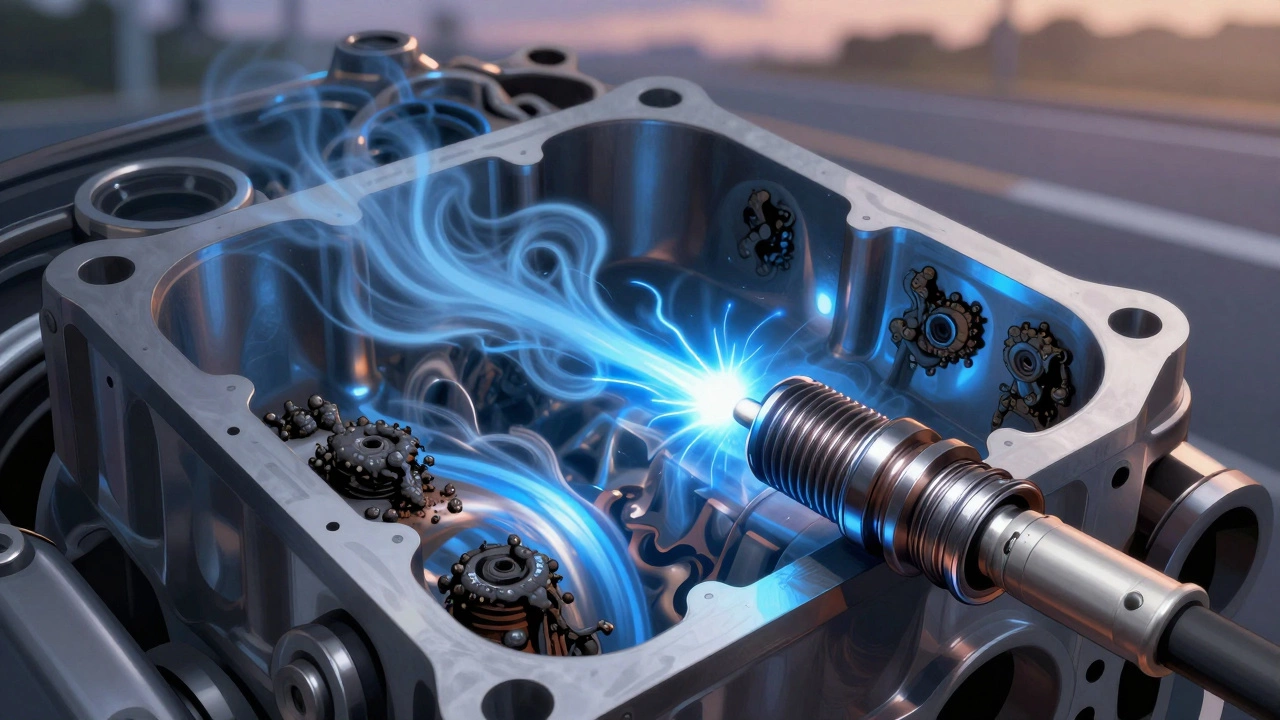
It’s not just mileage. Spark plugs fail because of how they work. Every time your engine fires, a tiny electrical arc jumps across the gap between the center electrode and the ground electrode. That arc burns at over 3,000°C. Over time, that heat and electrical stress slowly eats away at the metal.
Here’s what speeds up the wear:
- Short trips - If you mostly drive under 5 miles at a time, your engine never reaches full operating temperature. That causes carbon buildup on the electrodes, which can foul the plug.
- Rich fuel mixtures - A clogged air filter, leaking fuel injector, or bad oxygen sensor can flood the combustion chamber with unburned fuel. This leaves soot and residue on the plug.
- Oil leaks - If your valve cover gasket or piston rings are worn, oil can seep into the combustion chamber. Oil burns differently than fuel and leaves thick, sticky deposits on the plug.
- Extreme heat - Living in a hot climate like southern Spain or Arizona? Your engine runs hotter. That accelerates electrode erosion.
- Low-quality fuel - Fuel with too many additives or contaminants can leave deposits that coat the plug tip.
One driver in Manchester I spoke to replaced his plugs at 92,000 miles - even though his manual said 120,000. Why? He did a lot of stop-and-go commuting in winter. The carbon buildup was so bad, his car was hesitating on cold starts. He didn’t know it until he pulled the old plugs out and saw them coated in black, greasy sludge.
Signs Your Spark Plugs Are Done
You don’t need a scan tool to know when it’s time. Here are the most common signs:
- Engine misfires - You feel a jerking or shaking, especially when accelerating. The check engine light might flash.
- Hard starting - The engine turns over but takes longer than usual to catch. Cold mornings make it worse.
- Reduced fuel economy - You notice you’re filling up more often. Bad plugs mean incomplete combustion, so you’re burning more fuel to go the same distance.
- Loss of power - Your car feels sluggish. Passing on the highway takes longer. It’s not your transmission - it’s the engine not firing properly.
- Unusual engine noises - A rattling or pinging sound under load (like climbing a hill) can mean pre-ignition, which is often caused by worn or overheated plugs.
Some people wait until the car won’t start at all. That’s a bad idea. By then, you’ve likely damaged other parts - like the catalytic converter - which costs ten times more to replace than a set of spark plugs.
Can Spark Plugs Last 15 Years?
Technically, yes - but only under perfect conditions. If you drive less than 5,000 miles a year, use premium fuel, avoid short trips, and live in a moderate climate, an iridium plug might last 15 years. But that’s rare.
Most mechanics in the UK recommend replacing plugs every 8 years, even if you haven’t hit the mileage. Why? Because rubber and ceramic components degrade over time. Heat cycles, moisture, and vibration take their toll. A plug that looks fine on the outside might have a cracked insulator or a widened gap that’s killing efficiency.
One garage in Salford tested 12 old iridium plugs from cars with 110,000 miles and 11 years of age. Nine of them had gaps wider than the manufacturer’s spec. Two had cracked porcelain. Only three were still in perfect shape. Age matters as much as mileage.
What Happens If You Don’t Replace Them?
Ignoring worn spark plugs doesn’t just hurt performance - it can cost you big.
- Increased emissions - Incomplete combustion releases more unburned hydrocarbons and CO2. Your car will fail its MOT easily.
- Catalytic converter damage - Unburned fuel can overheat and melt the inside of your catalytic converter. Replacement cost? £1,000 to £2,500.
- Engine damage - In rare cases, a misfiring plug can cause a backfire that damages valves or pistons.
- Stranded - A completely failed plug can leave you stuck on the side of the road.
Replacing spark plugs is one of the cheapest maintenance tasks you can do. A set of iridium plugs costs £30-£60. Labor at an independent garage is usually £50-£80. That’s less than a tank of fuel.

When to Replace: Mileage vs. Time
Here’s the simple rule most UK mechanics follow:
- If you drive 10,000-15,000 miles a year - replace based on mileage. Follow your manual.
- If you drive less than 8,000 miles a year - replace based on time. Every 8 years, even if you’ve only driven 50,000 miles.
- If you have a turbocharged engine, a high-mileage car, or you drive in stop-and-go traffic - replace 10,000-20,000 miles early.
For example, if you own a 2018 Honda Civic with iridium plugs and you’ve driven 65,000 miles over 7 years, you’re still within the recommended range. But if you have a 2015 Ford Focus with 45,000 miles on it and you use it only for weekend runs to the supermarket, it’s time to swap them out.
Pro Tip: Check Your Plugs Every 3 Years
You don’t have to replace them every time - but it’s smart to have them pulled and inspected. A mechanic can check the gap, look for deposits, and see if the electrodes are worn. It takes 15 minutes and costs £10-£20. You’ll know exactly where you stand.
And if you’re replacing them yourself? Use the right torque. Over-tightening cracks the ceramic. Under-tightening causes leaks. Always use a torque wrench. Most spark plugs need 15-20 Nm. Your manual will say exactly.
Spark plugs are cheap. Ignoring them isn’t. Your engine depends on them to ignite the fuel - and if they fail, everything else suffers. Don’t wait for the car to break down. Replace them before they do.
How long do spark plugs last in years?
Most spark plugs last between 5 and 10 years, depending on the type. Copper plugs last 2-3 years, platinum plugs last 5-8 years, and iridium plugs last 8-10 years. But age matters too - even if you drive little, heat and moisture can degrade them. Many mechanics recommend replacing them every 8 years, regardless of mileage.
Can spark plugs last 15 years?
It’s possible but extremely rare. Only if you drive very little (under 5,000 miles per year), use high-quality fuel, avoid short trips, and live in a mild climate. Most iridium plugs degrade over time due to heat cycles and moisture, even without high mileage. Real-world testing shows that after 10 years, most plugs show signs of wear, even if they still fire.
Do spark plugs go bad if not used?
Yes. Spark plugs sit in a hot, moist, and corrosive environment inside the engine. Even if the car is parked, moisture can seep into the combustion chamber. Over time, this causes corrosion on the electrodes and cracking in the ceramic insulator. A plug that’s been sitting for 5+ years without use is likely degraded.
Is it worth replacing spark plugs early?
Yes, if you notice symptoms like rough idling, poor fuel economy, or hard starts. Even if you haven’t hit the recommended mileage, early replacement can prevent bigger problems - like a damaged catalytic converter or misfires that stress the engine. Replacing plugs is cheap. Repairing the damage they cause isn’t.
What happens if you don’t replace spark plugs?
Your engine will run poorly - misfires, rough idle, poor acceleration. Over time, unburned fuel can damage the catalytic converter, which costs over £1,000 to replace. In extreme cases, a misfire can lead to valve or piston damage. You’ll also fail your MOT due to high emissions. Waiting too long is a false economy.