Suspension Diagnostic Helper
Select the symptoms you are experiencing with your vehicle to identify potential faulty components.
You’re driving down a familiar stretch of road, maybe the one with those nasty potholes near the industrial estate, and suddenly your car feels… wrong. It’s not quite a crash, but it’s not smooth either. Maybe the steering wheel shimmies when you hit 50 mph, or perhaps there’s a clunking noise every time you go over a speed bump. This is the classic start of suspension trouble. But how do you know which part is actually failing? Is it the shock absorbers that have lost their damping ability, or are the control arm bushings completely shot?
Diagnosing suspension issues doesn’t require a degree in mechanical engineering, but it does require paying attention. Your car talks to you; you just need to learn its language. In this guide, we’ll break down exactly how to identify bad suspension parts through sight, sound, and feel, so you can fix the right component and save money on unnecessary repairs.
The Bounce Test: Checking Shock Absorbers and Struts
The most common complaint about a tired suspension is a bouncy ride. If your car feels like it’s floating or if it continues to bounce after you hit a bump, your dampers are likely done for. You can test this yourself in under two minutes without getting under the car.
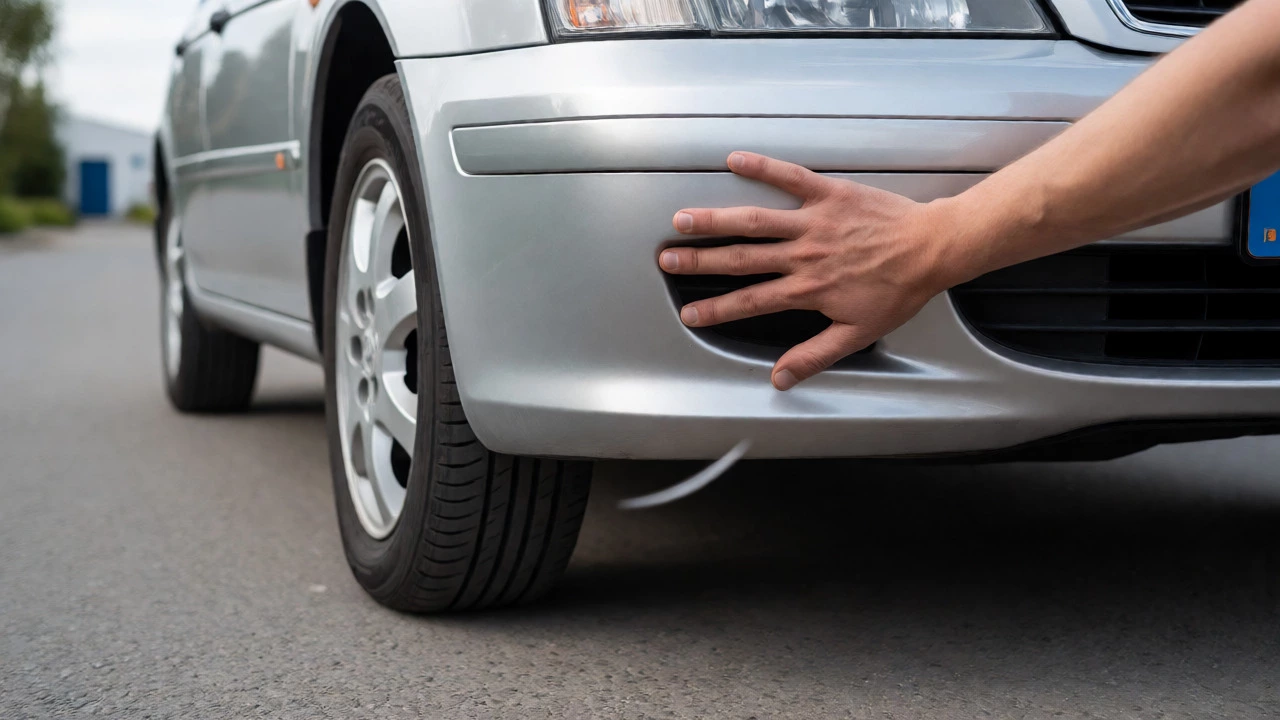
Find a flat, safe area and park your car. Go to one corner of the vehicle-say, the front left-and press down firmly on the bumper or fender until it bottoms out slightly. Then, let go abruptly. Watch how the car reacts. A healthy suspension will return to its normal height and settle immediately. If it bounces up and down more than once or twice before settling, the shock absorber or strut at that corner is worn out.
| Observation | Likely Issue | Action Required |
|---|---|---|
| Bounces >2 times | Worn Damping Fluid | Replace Shocks/Struts |
| Oily residue on shaft | Seal Leak | Immediate Replacement |
| Cupped Tire Wear | Inconsistent Contact | Inspect All Corners |
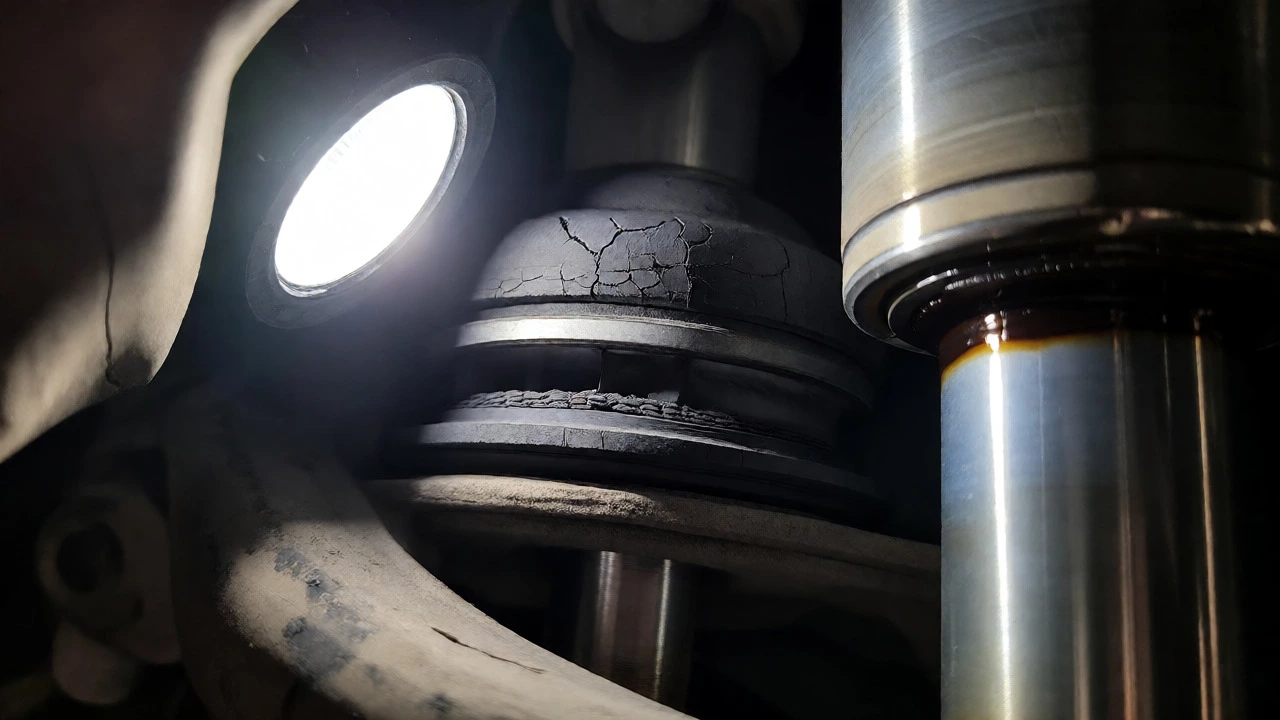
While you’re looking at the wheel well, check for oil leaks. Modern shocks are sealed units. If you see dark, oily fluid coating the piston rod (the shiny metal stick coming out of the top), the internal seal has failed. Once that happens, the gas pressure escapes, and the damper becomes useless. Don’t ignore this; leaking shocks also spray oil onto other components, accelerating wear elsewhere.
Listen for Clunks and Knocking Noises
Noise is often the first sign of failure because vibrations travel through the chassis differently than visual cues appear. However, different noises point to different culprits. You need to isolate when the noise happens.
If you hear a sharp "clunk" when going over bumps, especially at low speeds, suspect the sway bar links. These small connecting rods stabilize the car during turns. When their ball joints wear out, they rattle against the sway bar itself. They are cheap to replace but annoyingly noisy.
A deeper, heavier thud usually points to larger components like control arms. The rubber bushings inside control arms degrade over time due to heat and ozone exposure. When the rubber cracks or separates from the metal sleeve, the metal-on-metal contact creates that heavy knocking sound. This is dangerous because a failed control arm can collapse, causing loss of steering control.
Another common noise is a creaking or groaning sound when turning the steering wheel while stationary. This often indicates dry or worn strut mounts. The mount sits between the strut and the car body. If the bearing inside it seizes up, the spring cannot rotate freely, leading to binding noises and uneven tire wear.
Feel the Steering Play and Handling Changes
Your hands are sensitive diagnostic tools. Pay attention to how the steering wheel behaves. Excessive play-meaning you can turn the wheel a few degrees before the tires actually move-is a major red flag. While some slack is normal in power steering systems, significant looseness suggests worn tie rod ends or ball joints.
To check for tie rod end wear, jack up the front of the car safely using axle stands. Grab the tire at the 3 o’clock and 9 o’clock positions and try to wiggle it horizontally. There should be minimal movement. If the tire moves side-to-side easily, the outer tie rod end is loose. Next, grab the tire at 12 o’clock and 6 o’clock and wiggle vertically. Excess vertical play indicates a bad ball joint. Ball joints are critical safety components; if they fail completely, the wheel can fold under the car.
Handling characteristics change subtly before things get catastrophic. Does your car wander on the highway? Do you feel like you’re fighting the steering wheel to keep it straight? This could mean worn bushings are allowing the wheels to shift alignment dynamically as you drive. It could also indicate a collapsed coil spring, though that’s usually visible.
Visual Inspection: What to Look For Under the Car
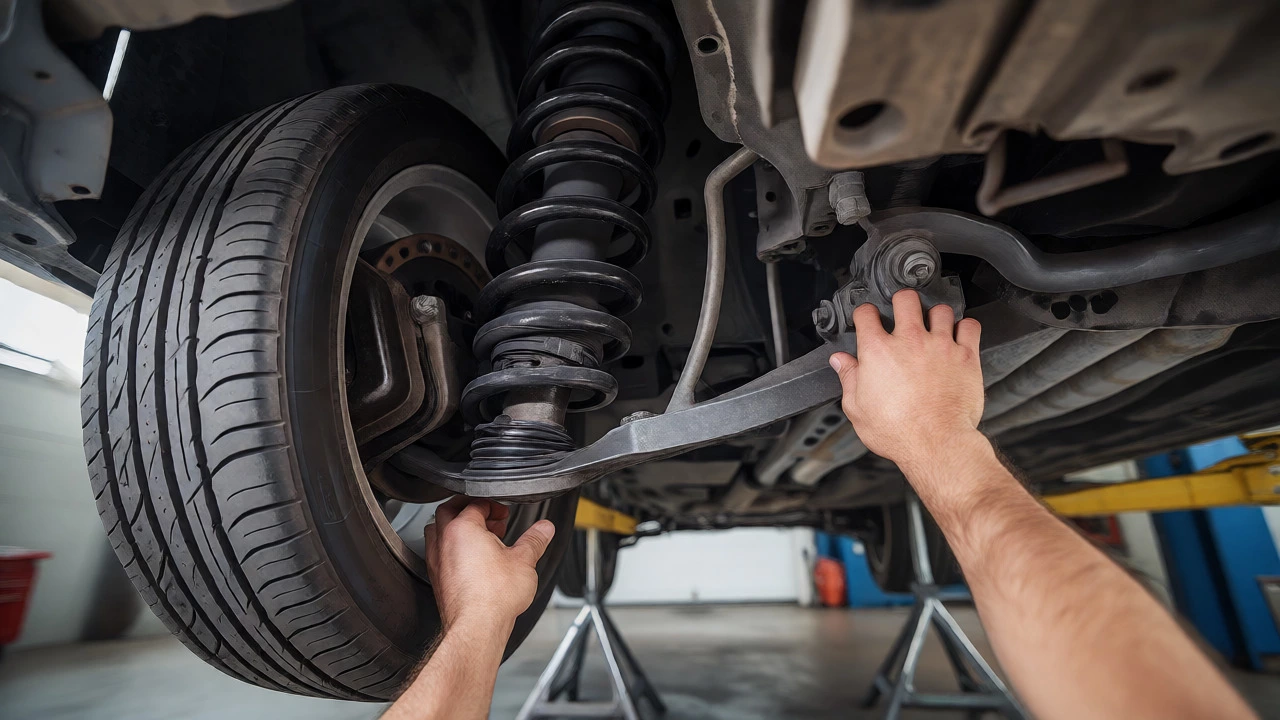
Sometimes, you don’t need to drive to find the problem. A quick look under the wheel wells can reveal obvious failures. Use a flashlight and get comfortable. You’re looking for physical damage, corrosion, or missing pieces.
- Rubber Bushings: Inspect the rubber sleeves where control arms attach to the frame. Look for cracking, splitting, or complete separation of the rubber from the metal. If you see gaps, the bushing is dead.
- Ball Joint Boots: These are rubber covers protecting the ball joint grease. If the boot is torn, dirt gets in and grease gets out. A torn boot means the joint is already wearing rapidly, even if it doesn’t feel loose yet.
- Coil Springs: Check for rust pitting or actual breaks. A broken spring often makes a loud bang and causes the car to sit lower on one side. Rust alone isn’t always fatal, but severe corrosion weakens the steel.
- Tie Rod Ends: Look for dust caps that are missing or damaged. Also, check for excessive grease leakage around the joint.
Don’t forget to check the tires themselves. Uneven wear patterns are a fingerprint of suspension problems. Cupping (scalloped dips across the tread) almost always points to worn shocks. Inner edge wear often suggests negative camber caused by sagging springs or bent control arms. Outer edge wear might indicate positive camber or toe-out issues related to tie rods.
Common Misconceptions About Suspension Diagnostics
Many people blame the brakes for suspension noises. A rattling heat shield can sound exactly like a loose sway bar link. Before buying expensive parts, ensure the noise isn’t coming from something simple like a loose exhaust clamp or a detached mud flap flapping against the wheel arch.
Another myth is that you only need to replace the bad side. Suspension components wear symmetrically because they experience similar loads. If the left shock is blown, the right one is probably close behind. Replacing them in pairs ensures balanced handling and braking performance. Mixing old and new shocks can lead to unpredictable behavior, especially in wet conditions.
Finally, remember that alignment is not a repair for bad parts. An alignment shop can adjust angles to make the car drive straight, but they cannot tighten a loose ball joint. If you have play in the joints, fix the hardware first, then align the car. Otherwise, the new alignment specs won’t hold, and you’ll be back in the shop within weeks.
When to Seek Professional Help
DIY diagnostics are great for identifying symptoms, but some jobs require specialized tools. Pressing out control arm bushings, for example, often requires a hydraulic press. If you suspect structural damage like a bent subframe or cracked mounting points, take it to a professional. Safety is paramount here. A suspension failure at highway speeds can be disastrous.
If your car pulls violently to one side under hard braking, this could be a seized caliper (brakes) or a collapsed bushing (suspension). A mechanic can distinguish these quickly with a lift. Trust your instincts-if the car feels unsafe, stop driving it and get it inspected.
Can I drive with bad suspension parts?
It depends on the severity. Worn shocks or noisy sway bar links are uncomfortable but generally safe for short distances. However, loose ball joints, torn control arm bushings, or broken springs compromise stability and braking distance. If you hear loud clunks or feel steering looseness, limit your speed and avoid highways until repaired.
How much does it cost to replace suspension parts?
Costs vary widely by vehicle model. Sway bar links are inexpensive ($20-$50 per part), while control arms with integrated ball joints can cost $100-$300 each. Labor is often the biggest expense, ranging from $150 to $400+ per corner depending on complexity. Always ask for a written estimate before work begins.
Do bad shocks affect fuel economy?
Yes, indirectly. Worn shocks cause the tires to bounce rather than roll smoothly, increasing rolling resistance. This forces the engine to work harder to maintain speed, potentially reducing fuel efficiency by 2-5%. Additionally, poor alignment resulting from worn suspension increases drag.
How long do suspension parts last?
Most modern suspension components last between 50,000 and 100,000 miles. Harsh roads, frequent potholes, and aggressive driving shorten this lifespan significantly. Rubber bushings degrade faster than metal parts, often showing signs of wear around 60,000 miles.
What is the difference between struts and shocks?
A shock absorber is purely a damper; it controls spring oscillation. A strut is a structural part of the suspension assembly that supports the vehicle's weight and provides a mounting point for the upper ball joint. Struts are integral to the steering geometry, so replacing them often requires an alignment afterward.