Radiator vs Head Gasket Diagnostic Tool
This tool helps determine if your car's overheating is caused by a radiator leak or head gasket failure. Answer the questions based on your symptoms to get a clear diagnosis.
Symptom Assessment
Do you see coolant on the ground under your car?
What does your engine oil look like?
Does your exhaust smell sweet (antifreeze-like)?
How does the overheating happen?
If your car is overheating and you see coolant on the ground, your first thought might be: radiator or head gasket? It’s a common confusion, and mixing them up can lead to expensive mistakes. You don’t need a mechanic’s diagnostic tool to start ruling things out. With a few simple checks, you can figure out what’s really going on before you waste money on the wrong repair.
Check for Coolant Outside the Engine
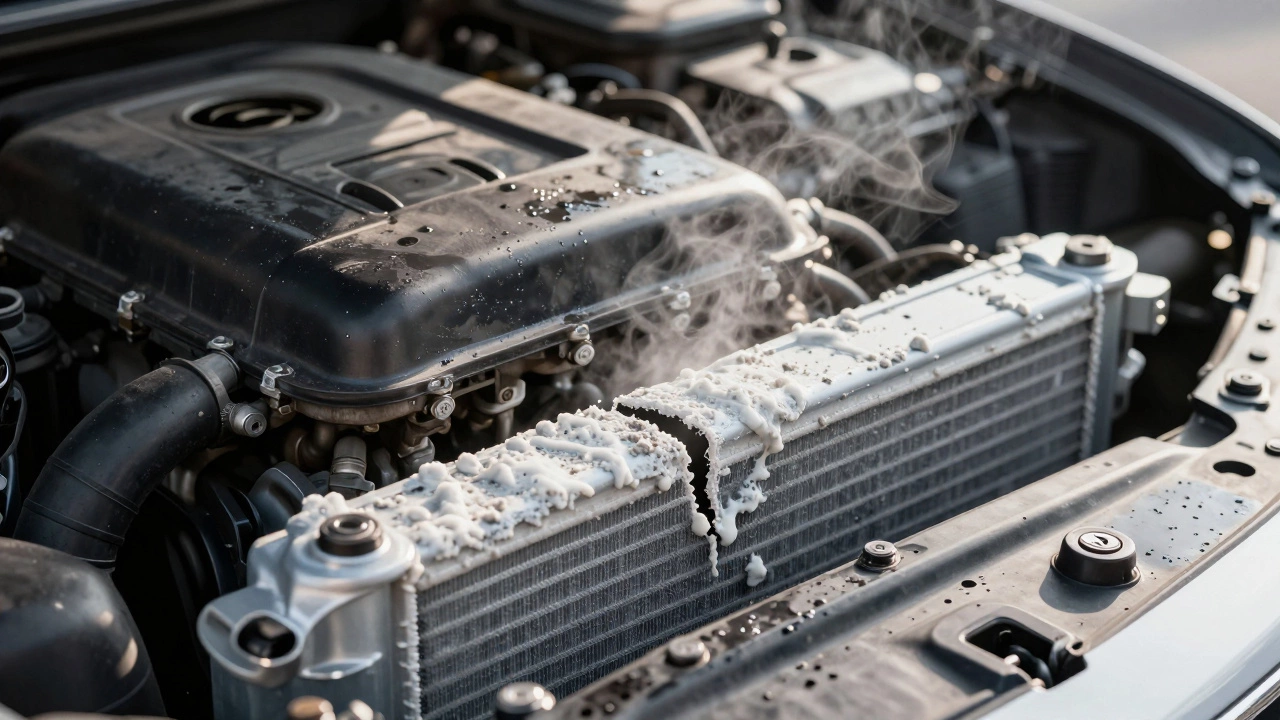
Start by looking where the coolant is leaking. If you see wet spots or dried white crusty residue under the front of your car-especially near the radiator or lower radiator hose-it’s likely a radiator issue. Radiators are made of thin metal and plastic tanks, and they crack over time from vibration, corrosion, or overheating. A cracked radiator won’t just drip; it’ll spray coolant when the engine is hot and pressurized. You might even hear a hiss.Check the radiator cap too. If it’s loose, cracked, or doesn’t seal properly, pressure escapes and coolant boils out. A bad cap can mimic a head gasket problem because it causes the system to lose pressure and overheat. But here’s the key: if the leak is only on the outside of the engine and you can trace it back to the radiator or hoses, you’re probably dealing with a cooling system component, not the head gasket.
Look Inside the Engine Oil
This is the most reliable way to spot a blown head gasket. Pop the oil dipstick. If the oil looks milky, frothy, or has a creamy brown consistency-like a chocolate milkshake-it’s coolant mixing with the oil. That’s not normal. The head gasket seals the combustion chamber from the coolant passages. When it fails, high-pressure coolant gets forced into the oil galleries. That’s why your oil turns into sludge. You might also notice thick white smoke from the exhaust, especially when the engine is cold. That’s steam from coolant burning in the cylinders.Open the oil filler cap while the engine is off and cool. If you see a thick, mayonnaise-like substance under the cap, that’s another sign. This is called ‘mayo’ by mechanics, and it’s a dead giveaway. Radiator leaks don’t do this. Only a head gasket failure lets coolant enter the oil system.
Check the Coolant Reservoir
Look at your coolant overflow tank. Is it full? Or is it empty even though you topped it off recently? If the coolant level drops fast and you don’t see any external leaks, that’s a red flag. A bad head gasket lets coolant escape into the combustion chamber and burn off. You won’t see puddles, but your reservoir keeps running dry. You might also notice bubbles in the reservoir when the engine is running. That’s exhaust gases pushing into the cooling system through a cracked head gasket.With a radiator leak, the coolant level drops because it’s leaking out. You can usually find the spot. With a head gasket, the coolant vanishes without a trace. It’s being burned. You’ll need to add coolant every few days, even if the radiator looks bone dry.
Smell the Exhaust
Stand behind your car when it’s warm (not hot) and take a sniff. A bad head gasket often smells sweet, like antifreeze, coming out of the tailpipe. That’s because coolant is being burned along with fuel. It’s a distinct odor-syrupy, almost candy-like. It’s not the same as burning oil, which smells acrid and smoky. A radiator leak doesn’t affect the exhaust smell at all. If your exhaust smells sweet, it’s not the radiator.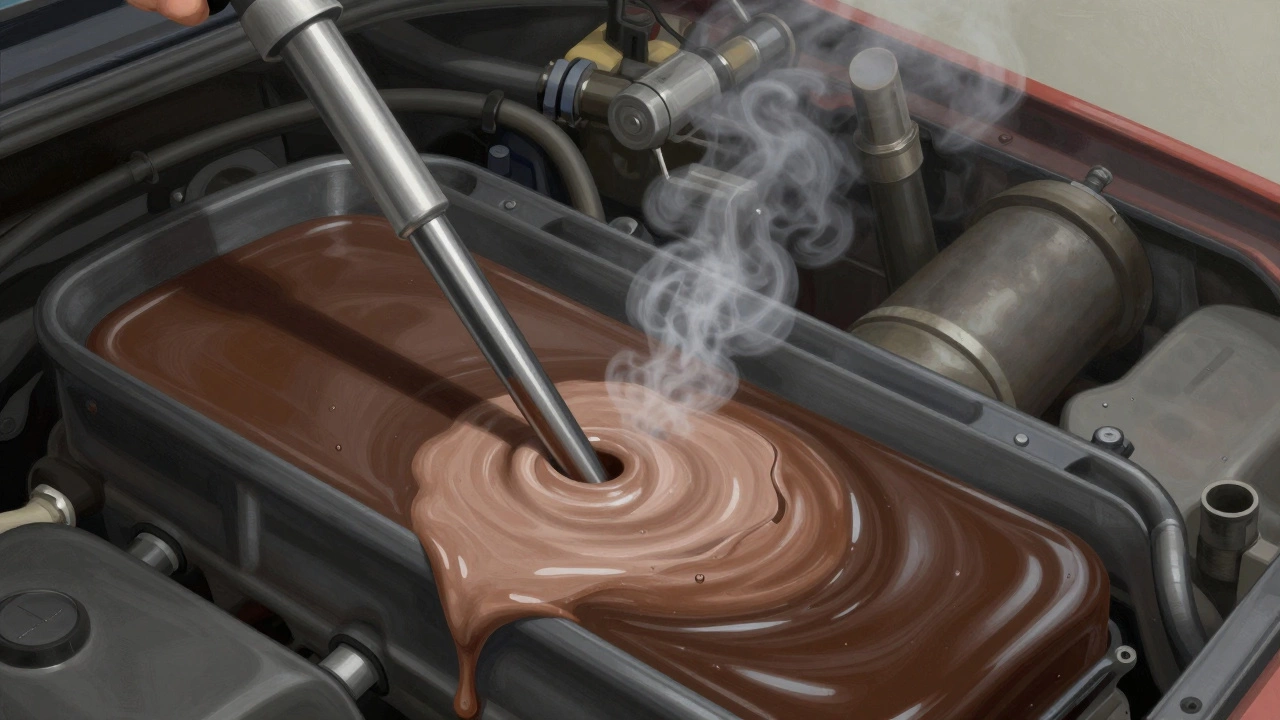
Watch the Temperature Gauge
Both problems cause overheating, but they behave differently. A radiator leak causes gradual overheating. The engine gets hot because it’s losing coolant. You’ll notice the temperature rising slowly over a few miles. You can usually stop, let it cool, and add coolant to get you home.A head gasket failure causes sudden, violent overheating. The engine might run fine for 10 minutes, then spike to red-hot in seconds. That’s because combustion gases are entering the cooling system, creating air pockets that block coolant flow. It’s like having a bubble trapped in your radiator-no matter how much coolant you add, it can’t circulate. This is dangerous. Driving with a blown head gasket can warp the cylinder head or crack the engine block.
Do a Compression Test or Block Test
If you’re still unsure, you need tools. A compression test measures pressure in each cylinder. A blown head gasket will show low or uneven compression. One cylinder might read 100 psi while another reads 180 psi. That’s not normal. A radiator leak won’t affect compression at all.Or try a block test. It’s a $20 kit you can buy online. You place a special fluid in a glass tube and hold it over the coolant reservoir while the engine runs. If exhaust gases are in the coolant, the fluid turns from blue to yellow. That’s a positive test for head gasket failure. No mechanic needed. This test is reliable and fast. If it turns yellow, you’ve got a head gasket problem. If it stays blue, the radiator or hoses are the issue.
What Happens If You Ignore It?
Fixing a radiator leak costs between £150 and £400, depending on the car. It’s a straightforward job. But if you ignore a head gasket problem, you’re playing Russian roulette with your engine. Within weeks, you could be facing a £2,000+ engine rebuild or replacement. The longer you drive with coolant in the oil, the more damage it does to bearings and pistons. Metal shavings from worn parts will circulate through the engine, grinding everything down.Some people try stop-leak additives for head gaskets. Don’t. They clog the radiator, the heater core, and the oil passages. They might temporarily stop a small leak, but they make the real problem worse. They’re a band-aid on a broken bone.
Quick Checklist: Radiator vs Head Gasket
- Radiator leak: Coolant on the ground under the front of the car, visible cracks or wet hoses, no change in oil, no sweet exhaust smell, coolant level drops slowly.
- Head gasket failure: Milky oil, white smoke from exhaust, sweet smell from tailpipe, coolant disappearing without visible leaks, bubbles in the coolant reservoir, sudden overheating, positive block test.
If you see even one of the head gasket signs, don’t drive the car. Get it towed. If you only see external coolant leaks and clean oil, you’ve got a radiator or hose issue-and that’s the cheaper fix.
Common Misconceptions
A lot of people think if the engine overheats, it’s always the radiator. Not true. A thermostat stuck closed, a water pump failure, or a head gasket leak can all cause the same symptom. That’s why checking the oil and exhaust matters more than just seeing steam.Another myth: ‘If I can see the leak, it’s not the head gasket.’ That’s backwards. The head gasket leak doesn’t show up on the ground-it leaks inside the engine. That’s why it’s harder to spot. You need to look at the oil and the exhaust, not the pavement.
And no, a radiator cap isn’t a head gasket. A bad cap causes overheating too, but it won’t mess up your oil. It’s a $15 part. Always check it first before assuming the worst.
Can a bad radiator cause white smoke from the exhaust?
No. White smoke from the exhaust comes from coolant burning inside the engine cylinders. That only happens if the head gasket fails and allows coolant to enter the combustion chamber. A radiator leak causes coolant to escape outside the engine, not inside. If you see white smoke, the problem is inside the engine-likely the head gasket.
Is it safe to drive with a small head gasket leak?
No. Even a small head gasket leak lets coolant into the oil and exhaust gases into the cooling system. Over time, this causes overheating, sludge buildup, and engine damage. The longer you drive, the more expensive the repair becomes. What starts as a £500 repair can turn into a £2,500 engine rebuild. Don’t risk it.
How do I know if my coolant reservoir is leaking or if the head gasket is burning coolant?
If the coolant level drops and you see puddles under the car, it’s a leak. If the coolant disappears without any visible leaks, and you notice white smoke or milky oil, coolant is being burned. Check the oil dipstick and exhaust smell. No puddles + sweet smell + milky oil = head gasket. Puddles + clean oil = radiator or hose leak.
Can a radiator cap cause the same symptoms as a head gasket?
A faulty radiator cap can cause overheating by letting pressure escape, which lowers the coolant’s boiling point. But it won’t make your oil milky, cause white smoke, or create bubbles in the reservoir. Those are signs of internal engine failure. Always check the cap first-it’s cheap-but if the oil looks wrong, it’s not the cap.
How long does a head gasket repair take?
A professional head gasket replacement takes 6 to 12 hours, depending on the engine. It’s not just swapping a part-it requires removing the cylinder head, checking for warping, resurfacing, replacing bolts, and resealing everything. Many mechanics recommend replacing the water pump and thermostat at the same time since the engine is already apart. Budget for a full day or two of downtime.
Next Steps
If you’re still unsure after checking the oil, coolant, and exhaust, get a block test kit. They’re affordable, easy to use, and definitive. If the test is positive, take the car to a mechanic for a compression test and to assess cylinder head damage. If the test is negative, inspect the radiator, hoses, and cap. Replace the radiator if you see cracks or corrosion. Replace the hoses if they’re soft or bulging.Don’t guess. Test. Fix the right thing the first time. A radiator leak is a simple repair. A head gasket failure is serious-but catching it early saves you thousands.