Tire Tread Depth Calculator
Tire Condition Checker
Check if your tires are safe using the quarter test or direct measurement. Remember: 4/32" is the recommended safety threshold for wet conditions.
Tires are Safe
Your tread depth is sufficient for safe driving. Recommended to rotate tires every 6,000-8,000 miles.
Driving on worn or damaged tires isn’t just risky-it’s dangerous. Every year, thousands of accidents are linked to tire failure. But most drivers don’t know how to tell if their tires are done until it’s too late. You don’t need a mechanic to spot the warning signs. With a little attention, you can catch tire problems before they turn into a roadside emergency.
Check the tread depth
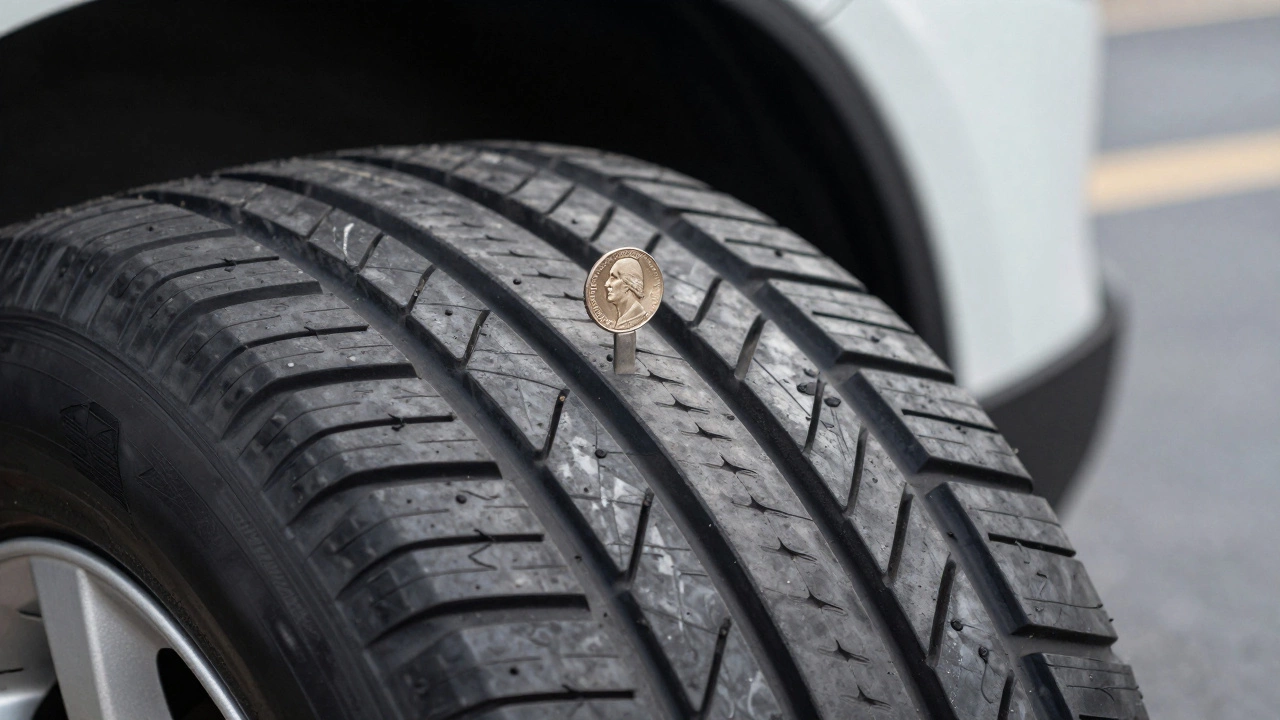
The tread on your tires is what keeps you from sliding on wet or icy roads. When it wears down, your car loses grip. The legal minimum in most places is 2/32 of an inch, but you should replace tires before they get that low. A simple trick? Use a quarter. Put it into the tread with George Washington’s head facing down. If you can see the top of his head, your tread is below 4/32 of an inch. That’s the point where braking on wet roads starts to get risky. At 2/32, stopping distance can double compared to new tires.
Check multiple spots across each tire. Tires don’t wear evenly. If one side is smooth and the other still has deep grooves, you likely have an alignment or inflation issue. Don’t just guess-measure.
Look for uneven wear patterns
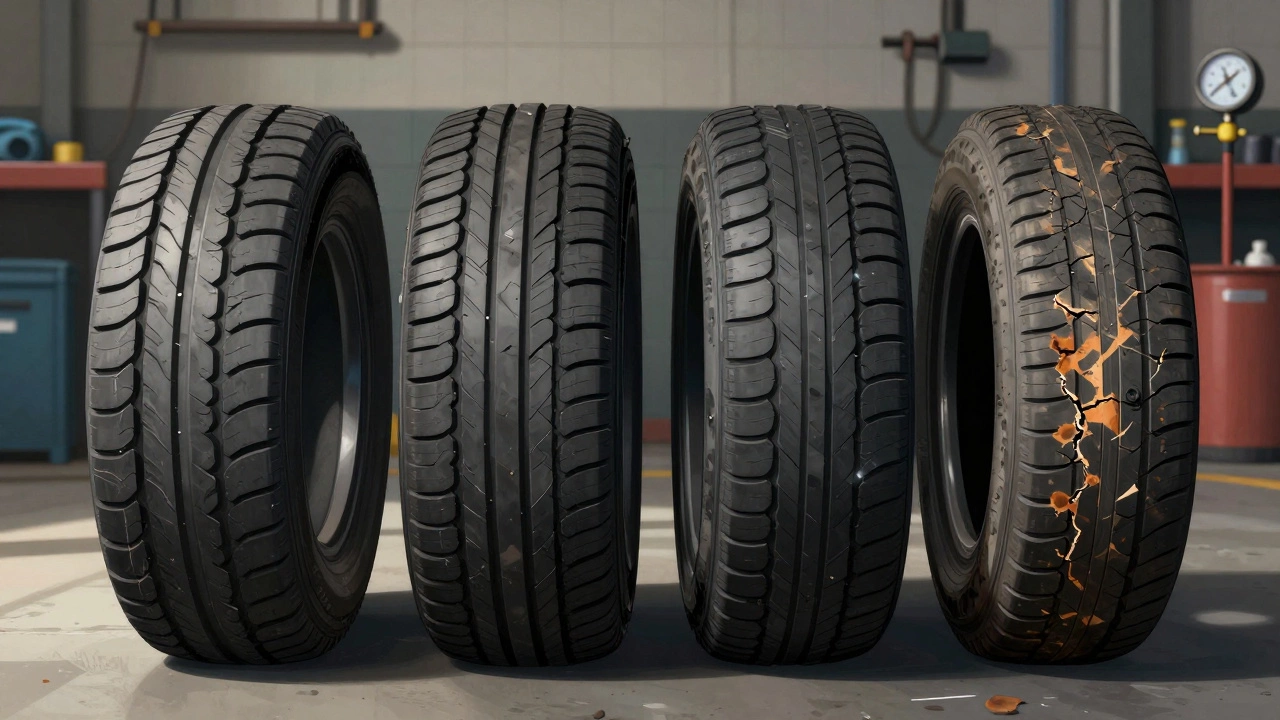
Normal wear means the tread wears down evenly across the width of the tire. If it doesn’t, something’s off. Here’s what different patterns mean:
- One side worn more than the other → Poor alignment or worn suspension parts.
- Center worn down → Tires are overinflated. The middle bulges and takes all the pressure.
- Edges worn out → Tires are underinflated. The sides flex too much and overheat.
- Shallow patches or cupping → Bad shocks or worn suspension. The tire bounces instead of rolling smoothly.
These patterns aren’t just signs of tire wear-they’re clues about other parts of your car that need attention. Fixing the root cause stops you from burning through new tires too fast.
Check for cracks and bulges
Tires don’t just wear out from driving. They also age. Rubber breaks down over time, even if you don’t drive much. Look closely at the sidewalls. If you see small cracks like spiderwebs, especially near the rim, the tire is getting brittle. That’s called dry rot. It can cause sudden blowouts, even at low speeds.
Bulges or bubbles on the sidewall are even worse. That means the internal layers have separated. It’s not fixable. Drive with a bulging tire, and you’re one pothole away from a blowout. If you see one, replace the tire immediately. Don’t wait for it to fail on the highway.
Know your tire age
Most tire manufacturers recommend replacing tires after six years, no matter how much tread is left. The rubber degrades from sunlight, heat, and ozone-even if the car sits in the garage. The date code is stamped on the sidewall. Look for a four-digit number. The first two digits are the week, the last two are the year. So “2220” means it was made in the 22nd week of 2020.
If your tires are older than six years and you’ve never replaced them, you’re driving on aging rubber. It doesn’t matter if they look fine. Cold weather makes old rubber brittle. Rain makes it slippery. The risk isn’t worth it.
Feel the vibration
If your steering wheel shakes or the car wobbles at highway speeds, it’s not just your suspension. Uneven tire wear, out-of-balance wheels, or a bent rim can cause this. A small vibration might seem harmless, but over time, it stresses your suspension, steering, and even the tires themselves. It also makes your ride uncomfortable and uses more fuel.
Get your tires balanced and rotated every 6,000 to 8,000 miles. If the vibration comes back after balancing, the tire itself might be damaged or worn unevenly. Replace it instead of trying to fix it again.
Listen for unusual sounds
When tires are worn or damaged, they start to make noise. A rhythmic thumping or humming sound that gets louder as you speed up? That’s often a sign of uneven wear or a flat spot. A high-pitched squeal during turns? Could mean the tread is too smooth to grip the road. A sharp hissing or popping sound? That’s air escaping-probably a nail or puncture.
Don’t ignore these sounds. They’re your tires screaming for help. Most people wait until they feel a problem. By then, it’s usually too late.

Use the penny test (but don’t rely on it alone)
The penny test is common: stick a penny into the tread with Lincoln’s head upside down. If you can see his whole head, the tread is below 2/32 inch. But here’s the catch: that’s the legal minimum. It’s not a safety recommendation.
Studies from the AAA Foundation for Traffic Safety show that braking distance on wet roads increases dramatically once tread drops below 4/32 inch. At 3/32, your car takes 50% longer to stop than with new tires. That’s the real threshold. Don’t wait for the penny test to fail. Replace your tires when you can still see part of Lincoln’s head.
What about spare tires?
Many people forget their spare. If you’ve got a compact spare, it’s not meant for long drives or highway speeds. Most are rated for 50 miles at 50 mph. Check its age too. A spare tire from 2018 is probably unsafe now.
Full-size spares are better, but they still age. If you’ve never checked your spare, you’re risking being stranded if you get a flat. Make it part of your tire check routine.
When in doubt, get a professional check
Even if you’re good at spotting signs, a tire shop can give you a full inspection. They’ll measure tread depth with a gauge, check for hidden damage, and tell you if your tires are balanced and aligned. Most places do this for free.
Don’t wait until a tire blows out. Replacing tires before they fail saves money, prevents accidents, and keeps you from being stuck on the side of the road.
How often should I replace my tires?
Most tires last between 25,000 and 50,000 miles, but age matters too. Replace them every 6 years, even if they look fine. If you drive in harsh conditions-like extreme heat, snow, or rough roads-they may need replacing sooner.
Can I drive on a tire with a nail in it?
It depends. If the nail is small and the tire isn’t losing air, you can drive carefully to a repair shop. But don’t drive long distances or at high speeds. A puncture can lead to internal damage that’s not visible. If the tire is old or worn, replacing it is safer than patching it.
Do I need to replace all four tires at once?
Not always, but it’s best. If you replace just one or two, the new tires will grip better than the worn ones. This can throw off your car’s handling, especially in rain or snow. For all-wheel drive vehicles, mismatched tread depth can damage the drivetrain. If two tires are worn, replace them as a pair on the same axle. For safety, replacing all four is the smartest move.
Is it safe to buy used tires?
Generally, no. Used tires carry hidden risks: unknown damage, old age, or improper repairs. Even if the tread looks good, the internal structure could be weakened. A tire that’s 8 years old with 80% tread left is still a liability. Stick with new tires unless you’re absolutely certain of the history-and even then, proceed with caution.
What’s the best way to extend tire life?
Check your tire pressure monthly. Underinflation is the #1 cause of premature wear. Rotate your tires every 6,000 to 8,000 miles. Get alignments checked once a year or after hitting a major pothole. Avoid speeding and hard braking. And don’t overload your car-excess weight stresses tires.
Replacing tires isn’t a luxury-it’s a safety must. You don’t need to be a mechanic to spot the signs. Look at the tread. Check the age. Feel for vibrations. Listen for sounds. If any of those raise a red flag, act. Your next trip could depend on it.