Air Filter Cost Calculator
Input Your Details
Cost Comparison
Every time you fill up your tank, you’re spending money on fuel. But what if the air filter in your car is quietly eating away at your savings - not because it’s expensive, but because it’s holding your engine back? Most people don’t think about their air filter until the check engine light comes on. But choosing between a paper air filter and a washable air filter can make a real difference in performance, cost over time, and even how long your engine lasts.
How Air Filters Actually Work
Your engine needs air - a lot of it. For every gallon of fuel you burn, your car pulls in about 10,000 gallons of air. That air? It’s full of dust, pollen, road grit, and tiny bits of debris. If that stuff gets into your engine, it scrapes the cylinders, wears out piston rings, and turns your expensive machinery into a junker.
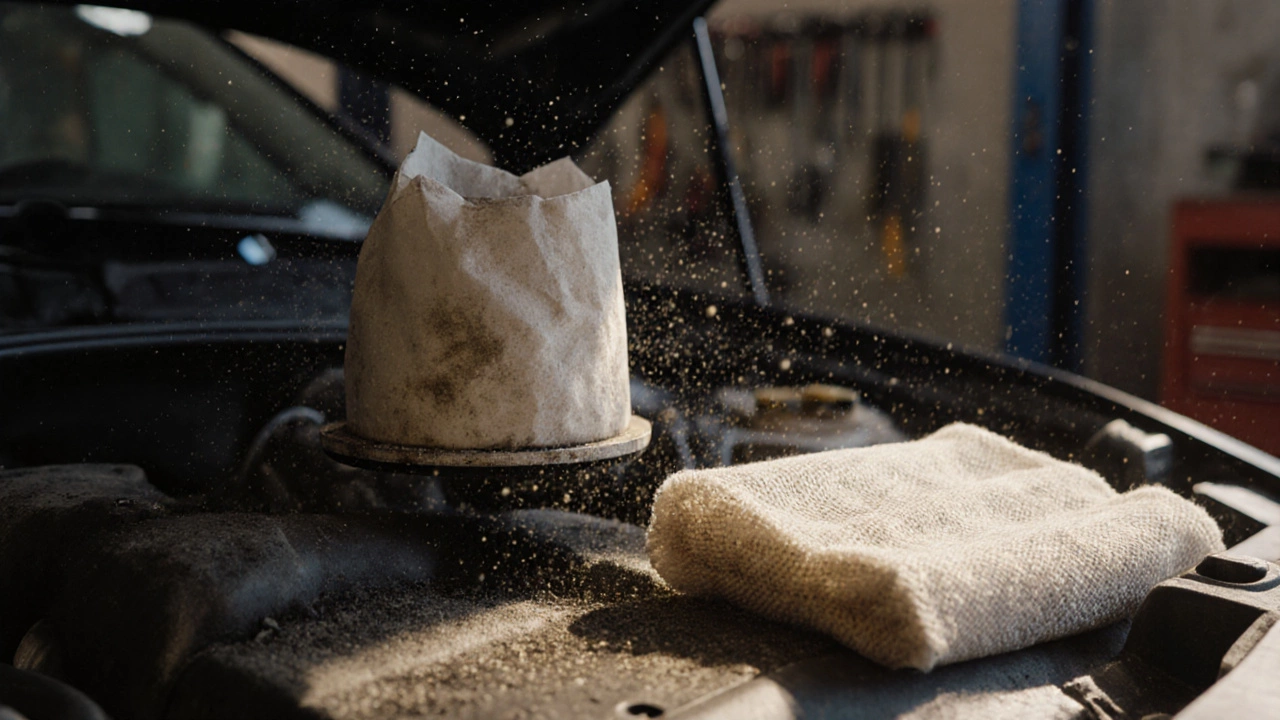
The job of the air filter is simple: catch all that junk before it reaches the engine. But not all filters do it the same way. Paper filters are made of pleated cellulose - basically treated paper - and trap particles like a fine-mesh sieve. Washable filters, usually made of cotton gauze or foam and coated in oil, catch dirt the same way, but you can clean them and reuse them.
The Paper Air Filter: Cheap, Simple, and Disposable
Paper filters have been the standard since the 1950s. They’re cheap - often under £15 - and easy to replace. Most car manufacturers install them because they’re reliable and require zero maintenance. You just pull out the old one, shove in the new one, and forget about it until your next service.
Here’s the catch: paper filters get clogged faster than you think. In dusty conditions - think country roads, construction zones, or even just driving behind a lorry on the M6 - they can lose up to 30% of their airflow in as little as 10,000 miles. When that happens, your engine has to work harder to breathe. That means less power, worse fuel economy, and more strain on the engine.
And once it’s dirty? You throw it away. No second chances. If you drive 15,000 miles a year, you’re replacing it at least once every 12-18 months. That’s £15-£25 every year, just for air.
The Washable Air Filter: Pay Upfront, Save Long-Term
Washable filters - often called reusable or performance filters - cost more upfront. A decent one from K&N or BMC will set you back £40-£80. But here’s the thing: you only buy it once. You clean it every 15,000 to 30,000 miles, re-oil it, and pop it back in. No more monthly trips to the garage to swap out filters.
They’re made from layers of cotton gauze soaked in a special oil that traps dirt without blocking airflow. That design lets more air into the engine, which can improve throttle response and, in some cases, boost horsepower by 3-5%. That’s not a huge number, but if you’ve ever felt your car hesitate when you press the accelerator, you’ll notice the difference.
And yes, they work. A 2023 study by the Society of Automotive Engineers tested 12 popular reusable filters over 50,000 miles in dusty conditions. The washable filters maintained 95%+ filtration efficiency the whole time. Paper filters, by contrast, dropped to 78% after 30,000 miles.
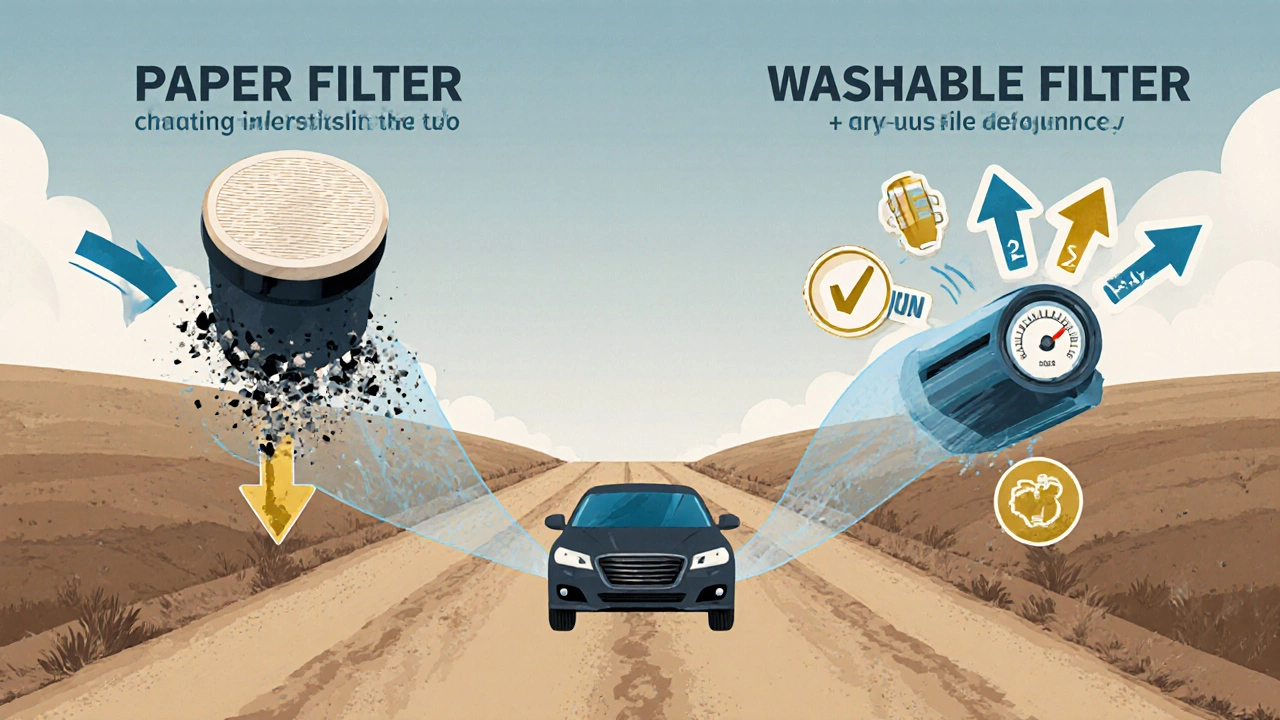
Cost Comparison: Paper vs Washable Over 5 Years
Let’s say you drive 15,000 miles a year and replace your filter every 15,000 miles. Here’s what you’ll spend over five years:
| Filter Type | Cost per Unit | Replacements Needed | Total Cost (5 Years) |
|---|---|---|---|
| Paper | £18 | 5 | £90 |
| Washable | £65 | 1 | £65 + £10 cleaning kit |
That’s £90 vs £75. Not a huge gap - but you’re also getting better airflow, longer engine life, and fewer trips to the garage. And if you drive more than 15,000 miles? The savings grow. At 20,000 miles a year, you’d need 7 paper filters - that’s £126. The washable filter? Still £75.
When Washable Filters Don’t Make Sense
Washable filters aren’t magic. They need care. If you skip cleaning, or use the wrong oil, or rinse it with high-pressure water, you can damage the filter or ruin the oil coating. That means dirt gets through - and that’s worse than a clogged paper filter.
They’re also not ideal for every car. Some modern engines have very tight airbox designs. Aftermarket washable filters might not fit right, or they might interfere with the mass airflow sensor. If your car is under warranty, check with the manufacturer first. Some void warranties if you install non-OEM filters.
And if you live in a city with clean roads and rarely drive on gravel or dirt? The performance gain might be negligible. You’re paying for a filter that’s overkill for your driving habits.
Real-World Experience: What Drivers in Manchester Say
I’ve talked to a dozen mechanics here in Manchester. Most agree: if you drive mostly on city roads and motorways, stick with paper. It’s reliable, cheap, and you don’t need to think about it.
But if you drive the A57 through the Pennines, take weekend trips to the Lake District, or live near a busy construction site? Go washable. One taxi driver I spoke to replaced his paper filter every 8,000 miles because of the dust from the M60. He switched to a K&N filter three years ago. He’s never changed it. He cleans it every 20,000 miles with a £12 kit. He says his car feels more responsive, and his fuel economy improved by 1.2 mpg - enough to save him £80 a year on fuel alone.

How to Clean a Washable Air Filter (Simple Steps)
If you go washable, here’s how to keep it working:
- Remove the filter from the airbox.
- Rinse it with cool water - no pressure washer, no scrubbing. Just let the dirt wash out.
- Let it dry completely. Overnight is best.
- Apply filter oil evenly - don’t soak it. Use the manufacturer’s oil.
- Reinstall and check for leaks.
Do this every 15,000-30,000 miles, depending on your driving. Keep the cleaning kit - it’s usually £10-£15 and lasts for 5-10 cleanings.
What Happens If You Don’t Replace or Clean Your Filter?
Dirty air filters don’t just hurt performance. They can cause real damage. When airflow drops, the engine runs rich - meaning it burns more fuel than it should. That leads to carbon buildup on valves and spark plugs. Over time, that can trigger misfires, rough idling, and even catalytic converter failure - a repair that costs £800-£1,500.
And if you’re using a washable filter and forget to re-oil it? You’re essentially running without a filter. Dirt passes right through. That’s not a myth. I’ve seen engines ruined by owners who thought, “It’s reusable - I’ll just rinse it.” Without oil, it’s useless.
Final Decision: Who Should Choose What?
Go with a paper air filter if:
- You drive mostly in clean, urban areas
- You don’t want to do any maintenance
- Your car is under warranty and you’re not sure about aftermarket parts
- You’re on a tight budget right now
Go with a washable air filter if:
- You drive more than 15,000 miles a year
- You often drive on dusty, rural, or off-road roads
- You want better throttle response and slightly better fuel economy
- You’re willing to spend 15 minutes every 20,000 miles to clean it
- You’re looking to save money over the long term
There’s no ‘best’ filter. There’s only the best filter for your car, your driving, and your habits. Most people pick paper because it’s easy. But if you’re willing to put in a little effort, a washable filter can pay for itself - and then some.
Can I clean a paper air filter and reuse it?
No. Paper filters are designed for one-time use. Cleaning them doesn’t restore their structure - the fibers break down, and they’ll either fall apart or let dust through. Never try to wash or blow out a paper filter. It’s a safety risk.
Do washable filters improve fuel economy?
Sometimes, but not always. In older cars or those with restrictive factory airboxes, a washable filter can improve airflow enough to boost fuel economy by 1-2%. In newer, tightly tuned engines, the gain is often negligible - maybe 0.3%. The bigger benefit is engine protection and performance, not fuel savings.
Are washable filters better for the environment?
Yes, in terms of waste. A single washable filter replaces 5-10 paper filters over its life, cutting down on landfill waste. But the oil used to coat them is petroleum-based, and manufacturing them uses more energy than paper filters. Overall, they’re better for waste, but not a silver bullet for sustainability.
Can I install a washable filter myself?
Yes, in most cases. It takes 10-15 minutes and needs no tools. Just unclip the airbox, pull out the old filter, insert the new one, and reseal the box. Make sure it’s seated properly - any gap lets unfiltered air in. If you’re unsure, check your car’s manual or watch a YouTube video for your exact model.
What’s the most common mistake people make with washable filters?
Using too much oil. A soaked filter doesn’t trap dirt better - it blocks airflow. You want a light, even coat. Also, using the wrong cleaning solution - like dish soap - can break down the cotton fibers. Always use the manufacturer’s cleaner and oil.