Clutch Power Recovery Calculator
How Clutch Slippage Affects Your Power
A stock clutch can lose 5-20% of your engine's horsepower through slippage. This calculator shows how much power you're losing and how much you could recover with a performance clutch kit.
Results
Actual Power Delivered to Wheels: 0 HP
Power Recovered with Performance Clutch: 0 HP
This means you're currently losing 0 HP due to clutch slippage.
Many people think swapping out a stock clutch for a performance clutch kit will give you a sudden boost in horsepower-like adding a turbo or tuning the ECU. But that’s not how it works. A clutch kit doesn’t add horsepower. Not directly. What it does is let your engine deliver the power it already has to the wheels, without slipping or losing energy.
Why Clutch Kits Don’t Add Horsepower
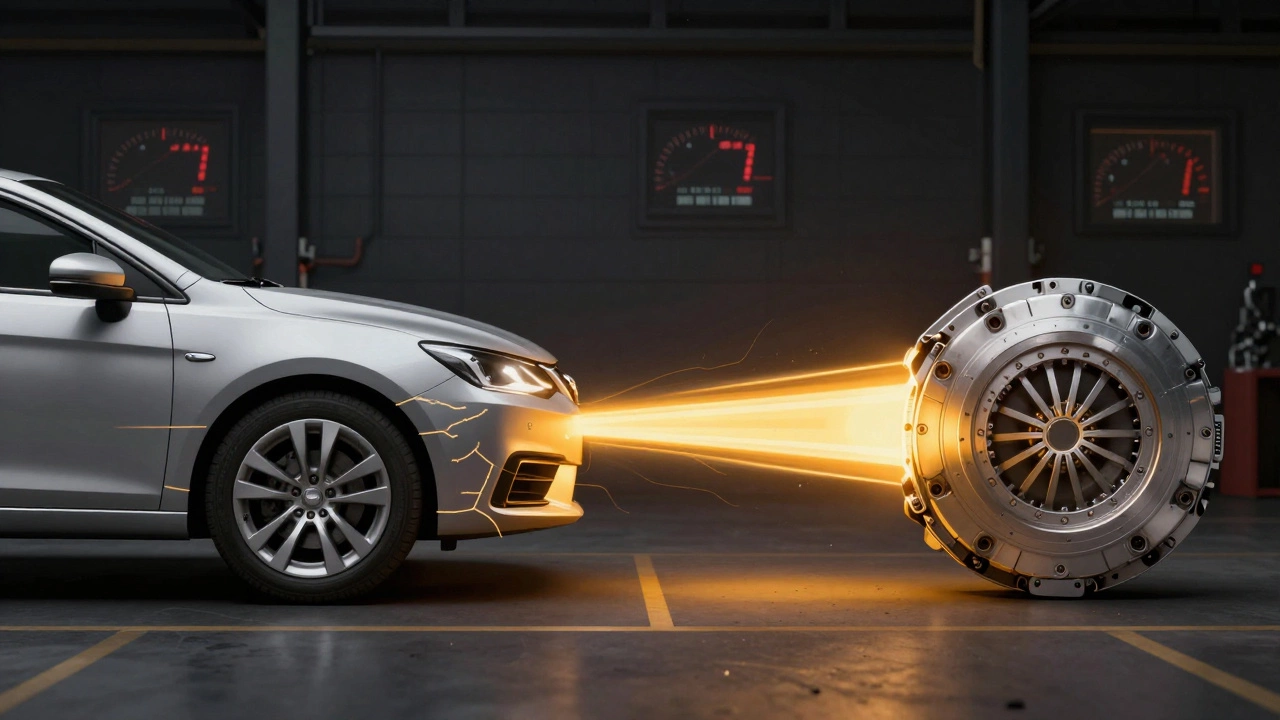
Horsepower is a measure of how much work your engine can do in a given time. It’s determined by things like airflow, fuel delivery, compression, and exhaust efficiency. A clutch is just a mechanical link between the engine and the transmission. It doesn’t make the engine produce more power-it just transfers it.
Think of it like this: if your car has 300 horsepower at the crank, but your stock clutch is slipping under hard acceleration, maybe only 250 horsepower actually reaches the wheels. That’s not because the engine is weak-it’s because the clutch can’t hold the torque. A performance clutch kit fixes that gap.
What a Performance Clutch Kit Actually Does
Stock clutches are designed for smooth daily driving, not high-torque launches or track use. They use softer friction materials and lighter pressure plates to make shifting easy and reduce chatter. But under stress-like when you’ve added a cold air intake, a performance exhaust, or a tune-they start to slip.
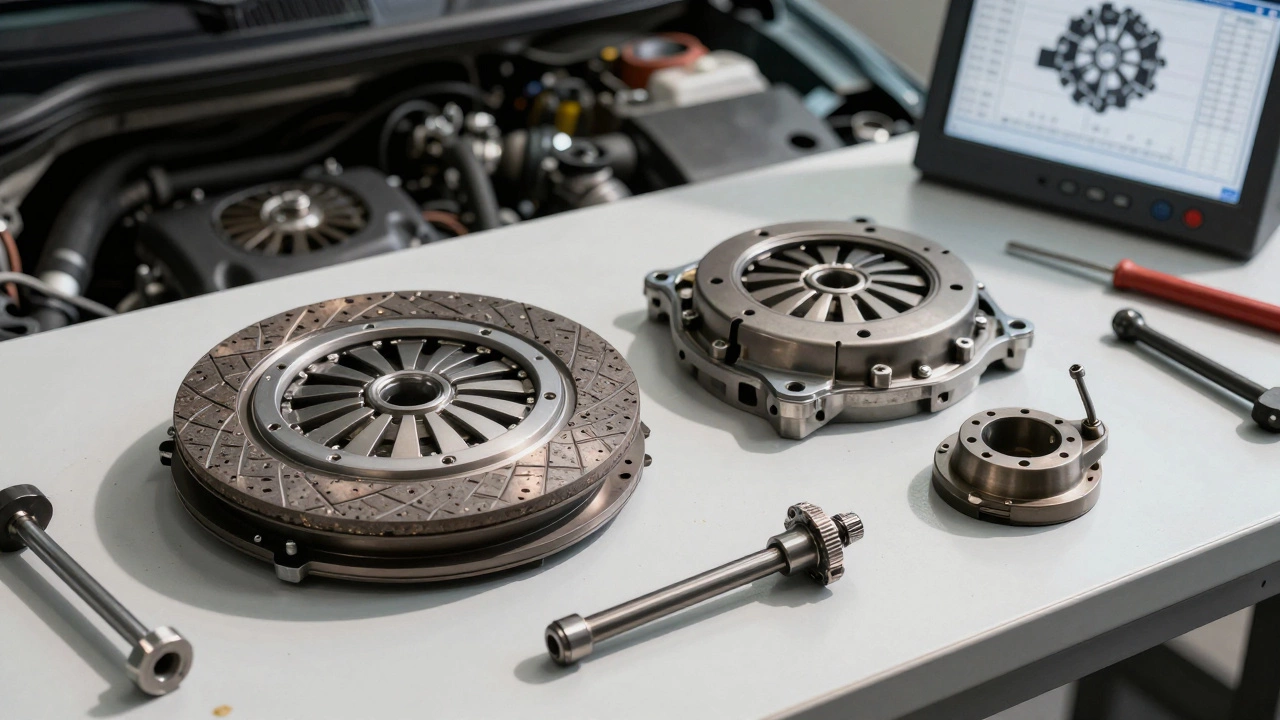
A performance clutch kit upgrades three main parts:
- Friction disc: Made from materials like ceramic, Kevlar, or carbon composite instead of organic material. These handle higher temperatures and grip harder.
- Pressure plate: Stronger springs and better leverage create more clamping force to hold the disc tight.
- Release bearing and pilot bearing: Often upgraded for durability under repeated high-load shifts.
Together, these changes eliminate slip. That means more of your engine’s power gets to the ground. You won’t see a number like “+40 HP” on a dyno chart. But you’ll feel it-faster launches, sharper shifts, and no more power loss during hard acceleration.
Real-World Power Gains: What You Can Expect
On a stock engine, you won’t see any measurable horsepower increase from a clutch swap alone. But if your car has modifications, the difference becomes obvious.
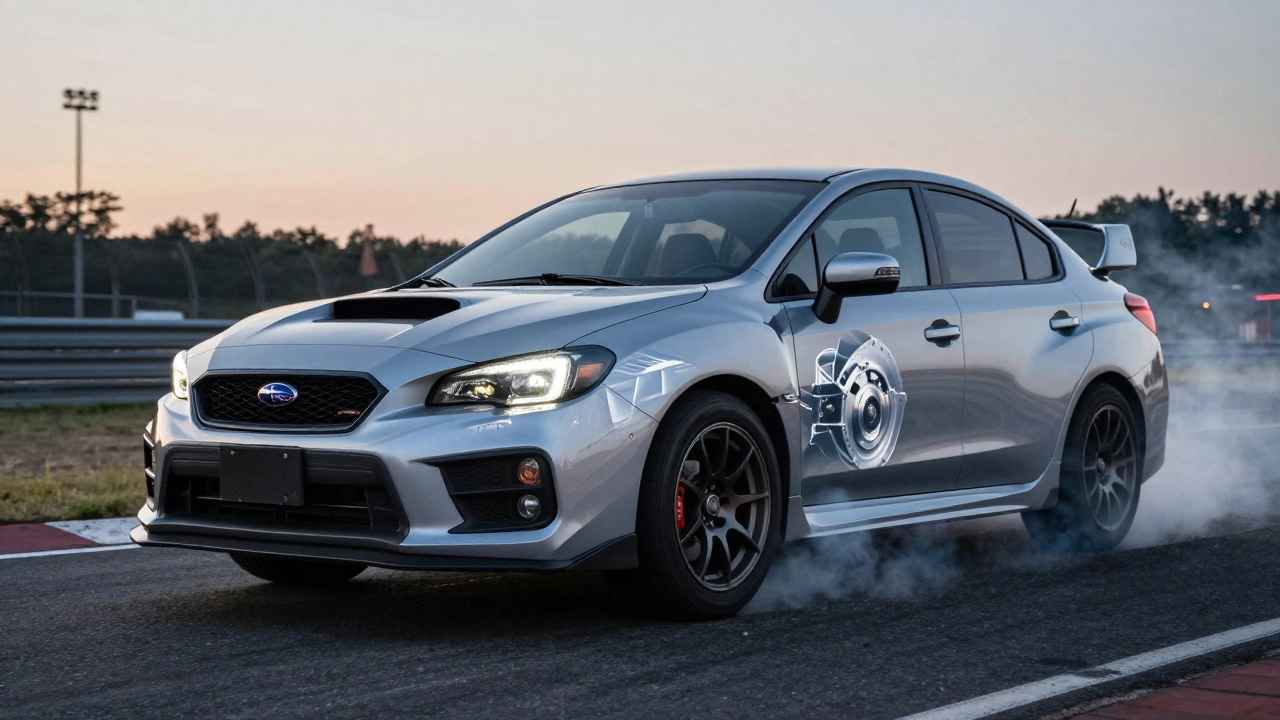
Take a 2023 Subaru WRX with a stage 2 tune (320 hp at the crank). With a stock clutch, it might slip under full throttle in 3rd gear, losing 15-20 hp to slippage. After installing a heavy-duty clutch kit, that same car hits 315 hp on the dyno-no engine changes, just a better clutch. The extra 15-20 hp? That’s not new power. It’s recovered power.
Another example: a modified Ford Mustang EcoBoost with 350 hp at the crank. Stock clutch slips at 80% throttle. After a dual-disc clutch kit, the car holds full throttle through all gears. Dyno results go from 290 hp at the wheels to 335 hp. Again, no engine mods. Just less wasted energy.
When a Clutch Kit Makes the Biggest Difference
Clutch upgrades matter most when you’ve already modified your engine. Here’s when you’ll feel the impact:
- You’ve installed a turbocharger or supercharger.
- You’ve tuned the ECU for more fuel and timing.
- You’ve added a performance exhaust or intake.
- You drag race or track your car regularly.
- You notice clutch slip when accelerating hard, especially in higher gears.
If you’re driving a stock car with no mods, a performance clutch won’t make it faster. It might even make it harder to drive smoothly in traffic. The stiffer pedal, louder engagement, and harsher chatter are trade-offs for durability under load.
Clutch Kits vs. Other Power Upgrades
Let’s compare what actually adds horsepower:
| Upgrade | Typical Power Gain (HP) | Does It Add Horsepower? |
|---|---|---|
| Performance Clutch Kit | 0-25 (recovered, not added) | No-prevents loss |
| Intake System | 5-15 | Yes |
| Exhaust System | 10-25 | Yes |
| ECU Tune | 30-80 | Yes |
| Downpipe | 20-40 | Yes |
| Supercharger Kit | 100-200+ | Yes |
Notice something? The clutch kit doesn’t show up as a power adder. It shows up as a requirement. You need a strong clutch to use the power from those other upgrades.
What Happens If You Skip the Clutch Upgrade?
Running a tuned engine with a stock clutch is like putting a race car engine in a family sedan’s transmission. It’ll work-for a while. But it won’t last.
Clutch slip generates heat. Heat breaks down the friction material. Over time, the clutch gets glazed, loses grip, and starts to chatter. Eventually, it fails completely. You might burn through a clutch in 5,000 miles if you’re pushing a modified engine with a stock setup.
Replacing a failed clutch costs more than installing a good one upfront. Labor alone can be £600-£900. Add the price of a performance clutch kit-£400-£1,200-and you’re looking at £1,000-£2,000 total. Better to do it right the first time.
Choosing the Right Clutch Kit
Not all performance clutches are the same. Here’s what to look for:
- Single-disc clutch: Good for street/track hybrids. Smooth enough for daily driving, strong enough for moderate mods.
- Dual-disc clutch: For serious power (400+ hp). Holds more torque, but heavier pedal and slower engagement.
- Material: Ceramic or Kevlar for street use. Carbon for track-only. Avoid organic-it won’t last.
- Brand: Exedy, ACT, Clutchmasters, and LUK are reliable. Avoid no-name brands on eBay.
Match the clutch to your power level. A 250 hp car doesn’t need a 700 hp clutch. You’ll end up with a pedal that feels like a brick and a car that’s hard to park.
Bottom Line
A clutch kit doesn’t add horsepower. It unlocks it. If your engine makes 300 hp and your clutch lets 40 hp slip away, you’re driving a 260 hp car. Swap the clutch, and you’re back to 300. That’s not magic-it’s efficiency.
Don’t buy a clutch kit to get more power. Buy it to stop losing the power you already have. It’s not an upgrade for speed-it’s an upgrade for reliability, control, and getting the most out of your other modifications.
If you’re running mods and your clutch slips, replace it. If you’re planning mods, install a strong clutch before you tune. That’s the smart way to build performance.
Does a clutch kit increase horsepower on a stock engine?
No. A clutch kit doesn’t make a stock engine produce more power. It only prevents power loss from clutch slip. If your stock clutch isn’t slipping, a performance clutch won’t change your dyno numbers.
Can a clutch kit improve acceleration?
Yes-if your current clutch is slipping. A performance clutch transfers power more efficiently, so launches feel quicker and shifts feel more direct. It’s not adding speed; it’s removing lag.
Is a performance clutch good for daily driving?
Some are, some aren’t. Single-disc clutches with Kevlar or organic-composite friction materials are designed for street use and can be driven daily. Dual-disc or carbon clutches are too harsh for regular traffic and require more pedal effort.
How long does a performance clutch last?
It depends on driving style and power level. A single-disc clutch in a 300 hp car driven gently can last 60,000-80,000 miles. In a 500 hp track car used hard, it might last 20,000 miles. Always match the clutch to your usage.
Do I need to upgrade other parts when installing a clutch kit?
Not always, but it’s smart. If your flywheel is worn or cracked, replace it. A lightweight flywheel can improve throttle response, but it makes idle rougher. Also, check your transmission input shaft and pilot bearing-these wear out too.