Car Oil Change: What You Need to Know About Engine Oil and Maintenance
When you hear car oil change, the routine service that keeps your engine lubricated and running smoothly. Also known as motor oil change, it’s one of the most basic—but also most critical—tasks for any vehicle owner. Skip it, and you’re not just risking a warning light—you’re risking a seized engine. It’s not magic. It’s physics. Oil reduces friction, cools parts, and cleans debris. Without it, metal meets metal at high speeds, and your engine turns into scrap.
Not all engine oil, the fluid that circulates through your engine to protect moving parts is the same. You’ve got conventional, synthetic, and blends. Synthetic oil, a man-made lubricant designed for better performance under extreme heat and pressure lasts longer, flows better in cold weather, and protects better over time. But if your car manual says 5W-30 conventional, don’t assume synthetic is automatically better. Follow the specs. The wrong viscosity—like putting 10W-40 in a car that needs 0W-20—can cause poor fuel economy, increased wear, or even engine damage. Oil viscosity, a measure of how thick or thin the oil is at different temperatures isn’t just a number on the bottle. It’s a match for your engine’s design.
Most people think oil changes are about mileage alone. But if you drive short trips in cold weather, stop-and-go traffic, or haul heavy loads, your oil breaks down faster. That’s why time matters too. Even if you’ve only driven 3,000 miles in six months, your oil is still aging. Moisture builds up. Contaminants collect. The additives wear out. A 6-month rule is just as important as the 5,000- or 7,500-mile rule. And if you’re seeing dark, gritty oil on the dipstick, or your engine sounds louder than usual, don’t wait for the next scheduled change. That’s your engine screaming for help.
You’ll find posts here that dig into exactly what type of oil your car needs, how low oil affects performance, and why mixing oil types can backfire. You’ll also see how oil connects to bigger issues—like fuel pump failure, engine overheating, and even air filter efficiency. Because oil doesn’t work in isolation. It’s part of a system. Change it right, and you’re not just extending engine life. You’re avoiding costly repairs down the road. Change it wrong, and you’re gambling with thousands of pounds.
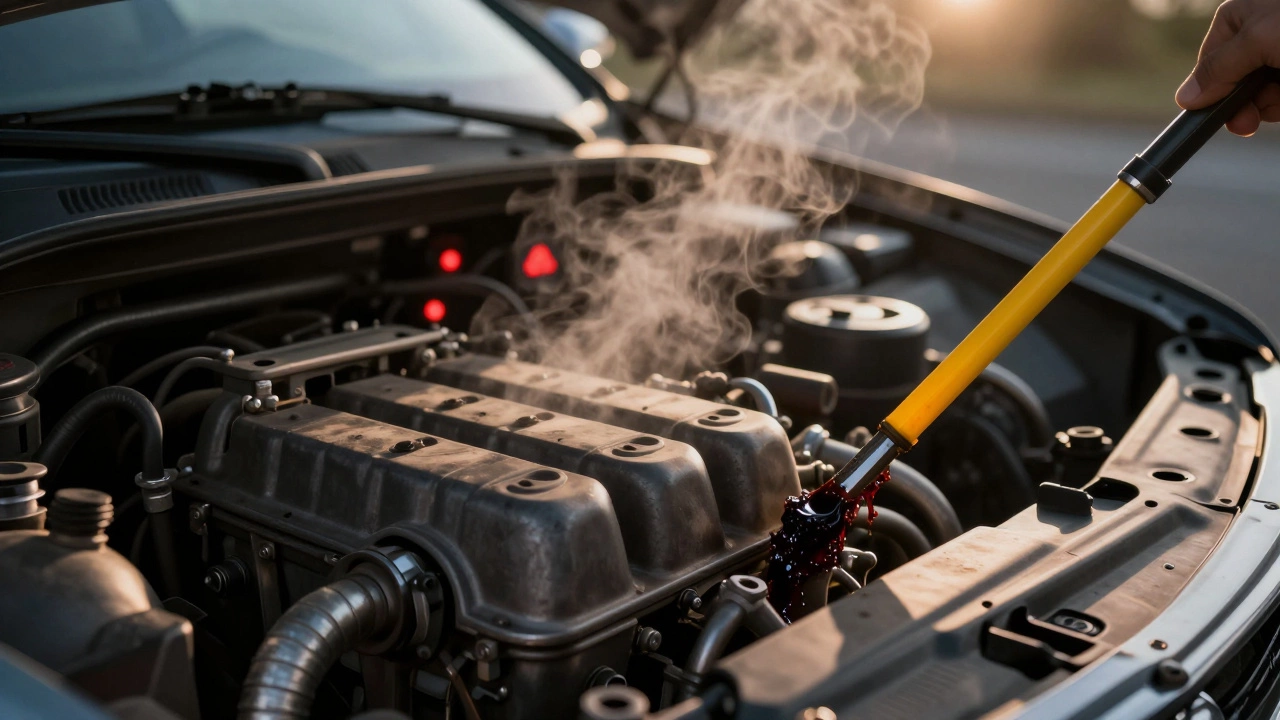
What Happens When Your Car Needs Engine Oil? Signs, Risks, and What to Do
Dec 1 2025 / Engine OilWhen your car needs engine oil, it's not just a maintenance task-it's an emergency. Learn the signs of low oil, the damage it causes, and what to do before your engine fails for good.
VIEW MORE