Clutch Upgrade: Signs You Need One, What to Replace, and How It Improves Performance
When your clutch upgrade, a system that replaces worn or underperforming clutch components to restore or enhance power transfer from engine to transmission. Also known as clutch replacement, it’s not just about swapping a worn disc—it’s about fixing the whole chain of parts that work together to make your car move. A worn clutch doesn’t just slip; it makes your car feel sluggish, wastes fuel, and can leave you stranded if ignored. Most people think a clutch lasts 100,000 miles, but if you drive in stop-and-go traffic, tow trailers, or ride the clutch pedal, it can fail in half that time.
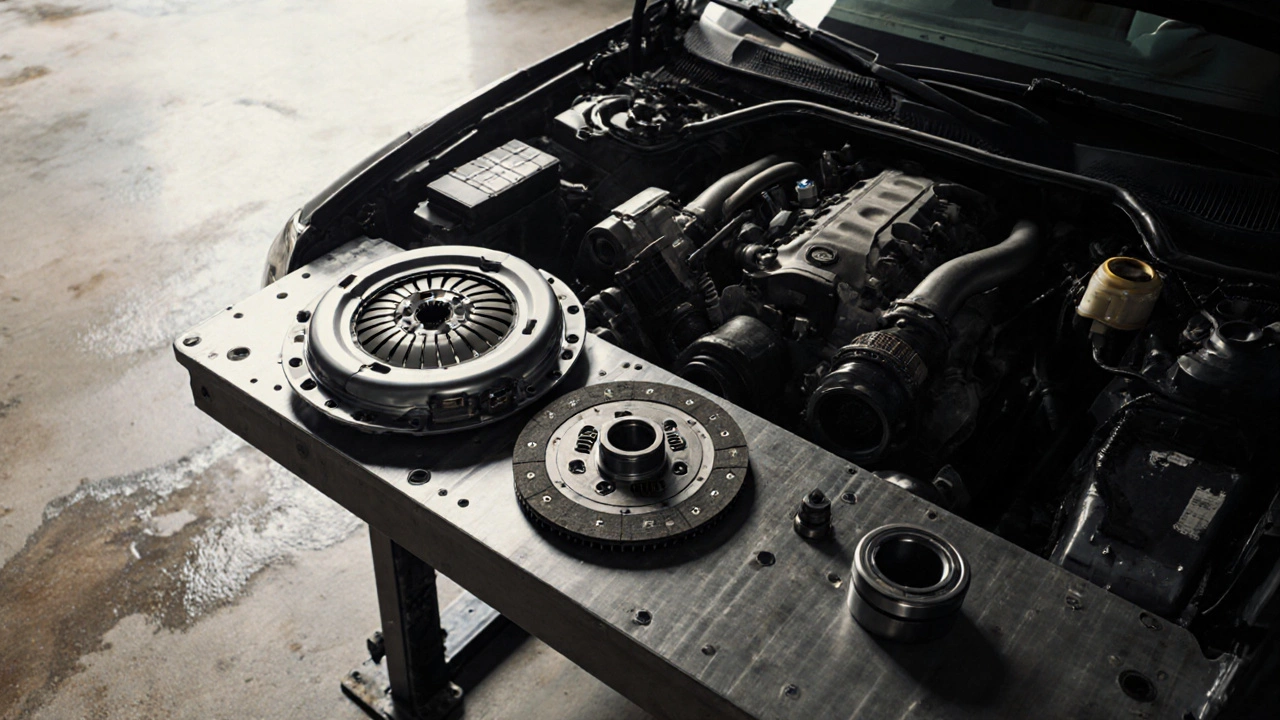
Upgrading your clutch isn’t just for performance cars. If you’ve added more power, tow regularly, or just want smoother shifts, a better clutch kit makes a real difference. A standard clutch kit includes three core parts: the clutch disc, the friction surface that connects engine to transmission, the pressure plate, the spring-loaded clamp that presses the disc against the flywheel, and the release bearing, the component that disengages the clutch when you press the pedal. But here’s the catch—when you replace one, you should replace them all. A new clutch disc with an old pressure plate? That’s asking for trouble. The pressure plate can lose tension over time, and a worn release bearing can grind the new disc to dust in weeks.
And don’t forget the flywheel, the heavy metal disc bolted to the engine crankshaft that smooths out power delivery. If it’s cracked, warped, or worn grooved from a slipping clutch, no new clutch kit will fix that. Many people skip resurfacing or replacing the flywheel to save money—until their new clutch fails early. A flywheel isn’t cheap, but it’s cheaper than replacing a clutch twice.
You’ll know you need a clutch upgrade if your car hesitates when you accelerate, smells like burning toast after heavy driving, or if the pedal feels softer than it used to. You might also notice the gear shift feels notchy or the engine revs higher than it should without a matching speed increase. These aren’t just "normal wear"—they’re red flags. A clutch upgrade isn’t a luxury; it’s a repair that restores control, safety, and efficiency.
What you find below are real-world guides on how to spot clutch failure before it leaves you stranded, what parts to replace at the same time, and how much it actually costs. You’ll see what a typical clutch kit contains, why some people replace the flywheel even when it looks fine, and how driving habits shorten clutch life. Whether you’re planning a DIY job or just trying to understand what a mechanic is telling you, these posts give you the facts—no fluff, no upsells, just what works.
Does a Clutch Kit Add Horsepower? The Real Impact on Performance
Nov 16 2025 / Transmission PartsA clutch kit doesn't add horsepower, but it can help you use all the power your engine makes by reducing slippage. Learn when an upgrade actually matters - and when it's just a myth.
VIEW MORE