Engine Damage from Low Oil: Signs, Risks, and How to Prevent It
When your car runs low on engine oil, a vital fluid that lubricates moving parts inside your engine to prevent friction and overheating. Also known as motor oil, it’s not just a suggestion—it’s the lifeline of your engine. Without enough of it, metal meets metal, and things go south fast. You might not notice right away, but the damage starts the moment the oil level drops below the safe zone.
Oil starvation, when the engine doesn’t get enough lubricant to function is one of the most common causes of sudden engine failure. It doesn’t always come with a warning light. Sometimes, the first sign is a knocking sound from the bottom of the engine—a sign that bearings are wearing out. Other times, it’s the engine overheating, losing power, or stalling on the highway. These aren’t random glitches. They’re red flags tied directly to low engine oil, a condition where the oil level falls below what the pump can reliably draw. And if you keep driving, you’re not just risking a repair—you’re risking a total engine replacement, which can cost thousands.
What makes this worse is that many people check their oil only when something’s already wrong. But by then, it’s often too late. The real trick is checking it weekly, especially if you drive older cars, tow heavy loads, or drive in hot weather. A dipstick check takes 30 seconds. It’s cheaper than a coffee. And it could save you from a tow truck bill that costs more than your monthly phone bill.
It’s not just about adding oil when it’s low. You need to know why it’s low. Is it leaking? Burning? Or just not being changed often enough? A worn seal, a cracked gasket, or old oil that’s turned to sludge can all lead to the same result: not enough oil where it matters. That’s why engine oil level, the amount of oil in your engine at any given time isn’t just a number—it’s a health indicator. Think of it like your blood pressure. Low? Something’s wrong. High? Also a problem. Just right? You’re good to go.
And here’s the thing: modern engines run tighter tolerances than ever. They’re more efficient, yes—but also more sensitive. A drop of oil that wouldn’t have hurt a 1990s engine can now cause serious damage in a 2020s model. That’s why ignoring a warning light, or waiting until the oil looks dark, is a gamble you can’t afford.
Below, you’ll find real-world guides from drivers who’ve been there. Some learned the hard way. Others caught it early and saved themselves thousands. You’ll see what the symptoms actually look like, how to tell if your oil is low before it’s critical, and what steps to take next—whether you’re a weekend mechanic or someone who just wants to avoid being stranded.
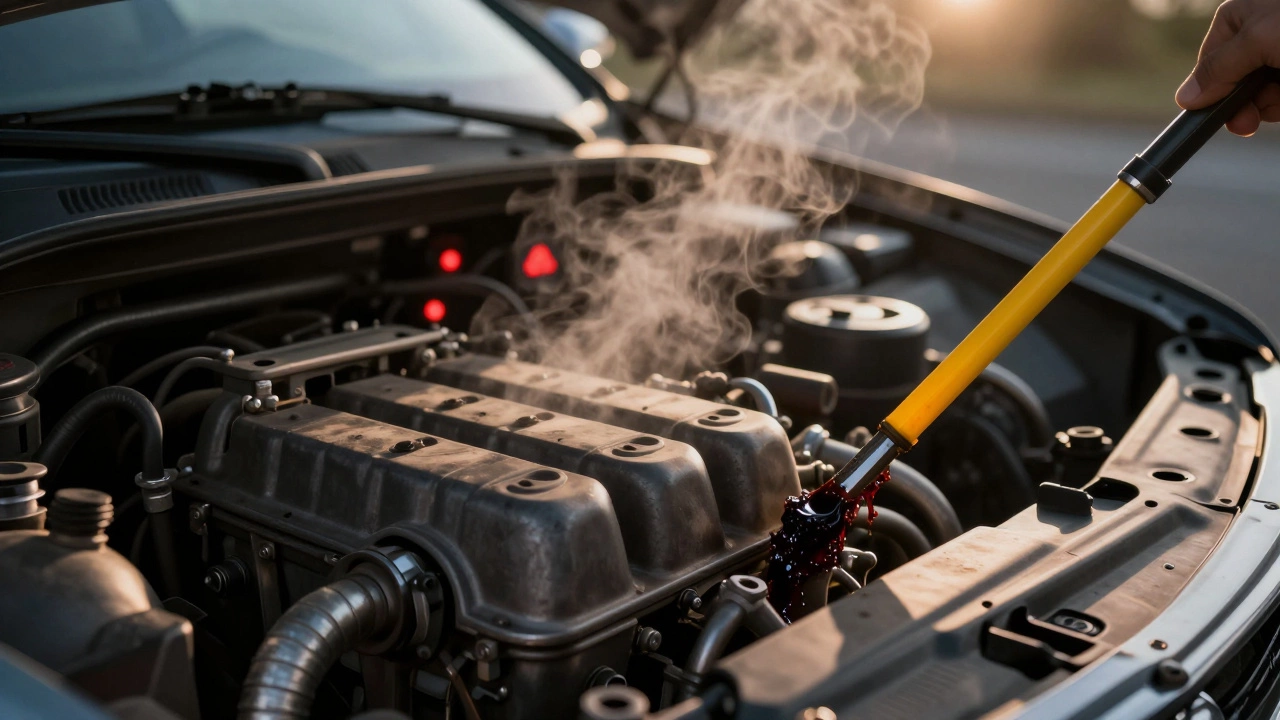
What Happens When Your Car Needs Engine Oil? Signs, Risks, and What to Do
Dec 1 2025 / Engine OilWhen your car needs engine oil, it's not just a maintenance task-it's an emergency. Learn the signs of low oil, the damage it causes, and what to do before your engine fails for good.
VIEW MORE