Engine Oil Levels: What They Mean and Why They Matter for Your Car and Boat
When your engine oil levels, the amount of lubricating oil circulating in your engine to reduce friction and prevent overheating. Also known as motor oil level, it’s one of the most critical but often ignored checks you can make on any vehicle—whether it’s a daily driver or a fishing boat. If it drops too low, your engine doesn’t just run poorly—it starts tearing itself apart from the inside.
Low engine oil levels don’t just happen overnight. They’re the result of leaks, burning oil, or simply forgetting to check. And when they get bad, your engine starts making noise—knocking, ticking, or clattering like a broken washing machine. It loses power, overheats, and eventually stalls. You might think it’s a fuel pump or spark plug issue, but more often than not, it’s just not enough oil. A low engine oil warning isn’t a suggestion—it’s a final call before catastrophic failure. And once that happens, repair costs can hit thousands, especially on marine engines that are harder to access and more sensitive to contamination.
What’s worse? Many people don’t check their oil until something goes wrong. They trust the dashboard light, but that light comes on when damage is already happening. The real fix? Get in the habit of checking your oil every time you fill up. Pull the dipstick, wipe it clean, put it back, then pull it out again. If the oil is below the minimum mark, you’re running on borrowed time. And don’t assume synthetic oil means you can go longer without checking—it still burns, leaks, and evaporates. Even boats, which sit idle for weeks, lose oil to evaporation and condensation. That’s why marine engines need special attention: salt air, moisture, and long storage periods make oil degradation faster.
Knowing your engine oil type matters too. Using the wrong viscosity or synthetic blend can make low oil levels worse. Your car’s manual says 5W-30? Don’t guess. Don’t use whatever’s cheapest. Wrong oil doesn’t flow right when cold, doesn’t protect under load, and can cause faster wear if levels are already low. And if you’re running an older engine or a marine engine with high mileage, you might need a thicker oil or one with added seal conditioners to stop leaks.
There’s no magic fix. No gadget. No app. Just a dipstick, a rag, and five seconds of your time. But that small habit can save you from being stranded on the side of the road—or worse, sinking your boat because the engine seized while you were out on the water. The posts below show you exactly what to look for when your oil is low, how to spot the early signs before it’s too late, and what other systems are connected to this simple check. You’ll find real stories from people who ignored the warning, what happened next, and how to avoid the same mistake. This isn’t theory. It’s survival.
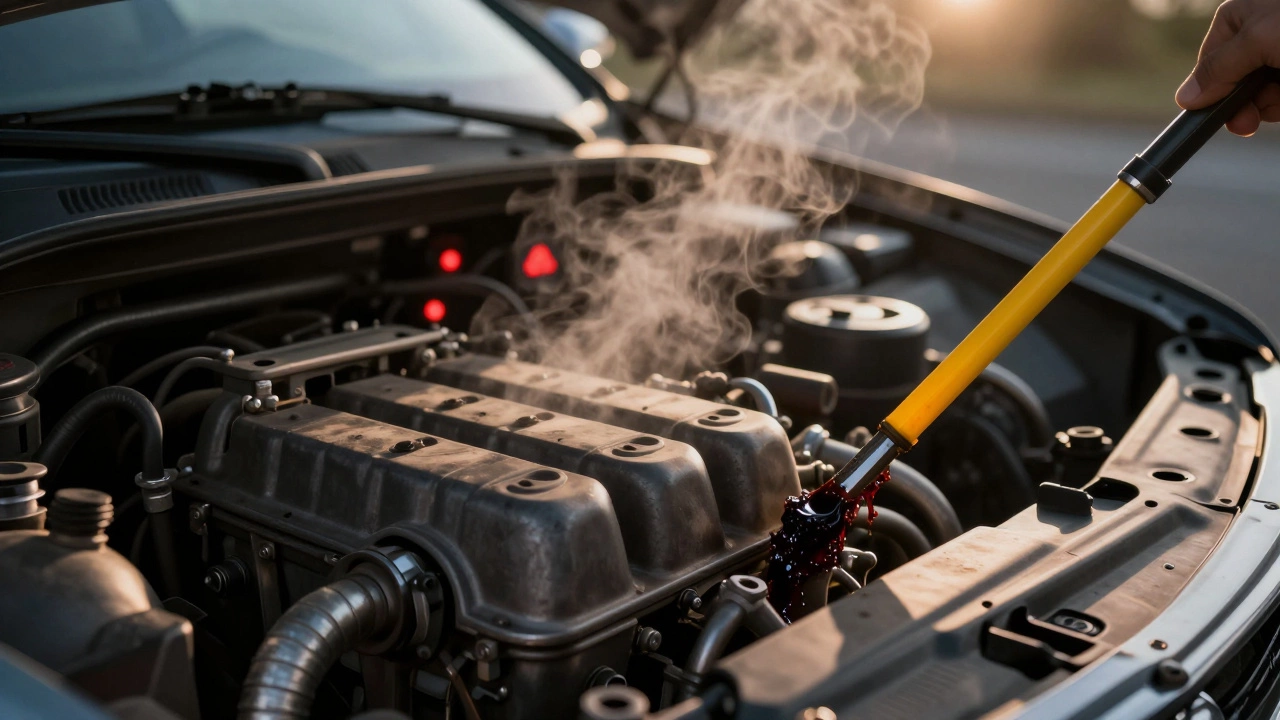
What Happens When Your Car Needs Engine Oil? Signs, Risks, and What to Do
Dec 1 2025 / Engine OilWhen your car needs engine oil, it's not just a maintenance task-it's an emergency. Learn the signs of low oil, the damage it causes, and what to do before your engine fails for good.
VIEW MORE