Engine Start Problems? Fix Common Issues and Understand What’s Really Going On
When your engine start, the process of getting a vehicle’s engine running using the starter motor, ignition system, and fuel delivery. Also known as cranking over, it’s supposed to be simple—but when it fails, it’s never convenient. A car that won’t start isn’t always a broken starter. More often, it’s a chain reaction: a weak battery, a dying fuel pump, the component that pushes gasoline from the tank to the engine under pressure, or even low engine oil, the lubricant that keeps internal engine parts from grinding together. These aren’t random failures—they’re connected. If your fuel pump is fading, your engine might turn over but never catch. If your oil is too low, the engine could seize before it even tries to start.
People blame the battery first, but that’s not always the culprit. You hear a click? That’s often the starter trying and failing. No sound at all? Could be the battery, the ignition switch, or a bad connection. Sputtering then dying? That’s usually fuel delivery. And if your car starts fine when it’s warm but struggles in the cold, you’re likely dealing with a weak fuel pump or old spark plugs. These problems show up in the same way—no start, rough start, or sudden stall—but the fixes are totally different. A clutch kit won’t fix a no-start issue, even if you’ve heard people say it "unlocks power." Clutches manage power delivery after the engine’s already running. They don’t help it turn over. Same with air filters: a clogged one can make your engine run poorly, but it rarely stops it from starting entirely. The real culprits for engine start failure are simpler and more direct: fuel, spark, air, and compression.
What you’ll find below are real, tested fixes from drivers who’ve been there. No guesswork. No fluff. Just what actually works when your car won’t start—whether it’s a fuel pump giving out, oil levels dropping too low, or something as simple as a corroded battery terminal. These posts cover the signs you can’t ignore, the mistakes people make when diagnosing the problem, and how to tell if you need a mechanic—or if you can fix it yourself in 20 minutes. This isn’t theory. It’s what happens on the side of the road, in the driveway, and in the garage when your engine refuses to start—and how to get it running again.
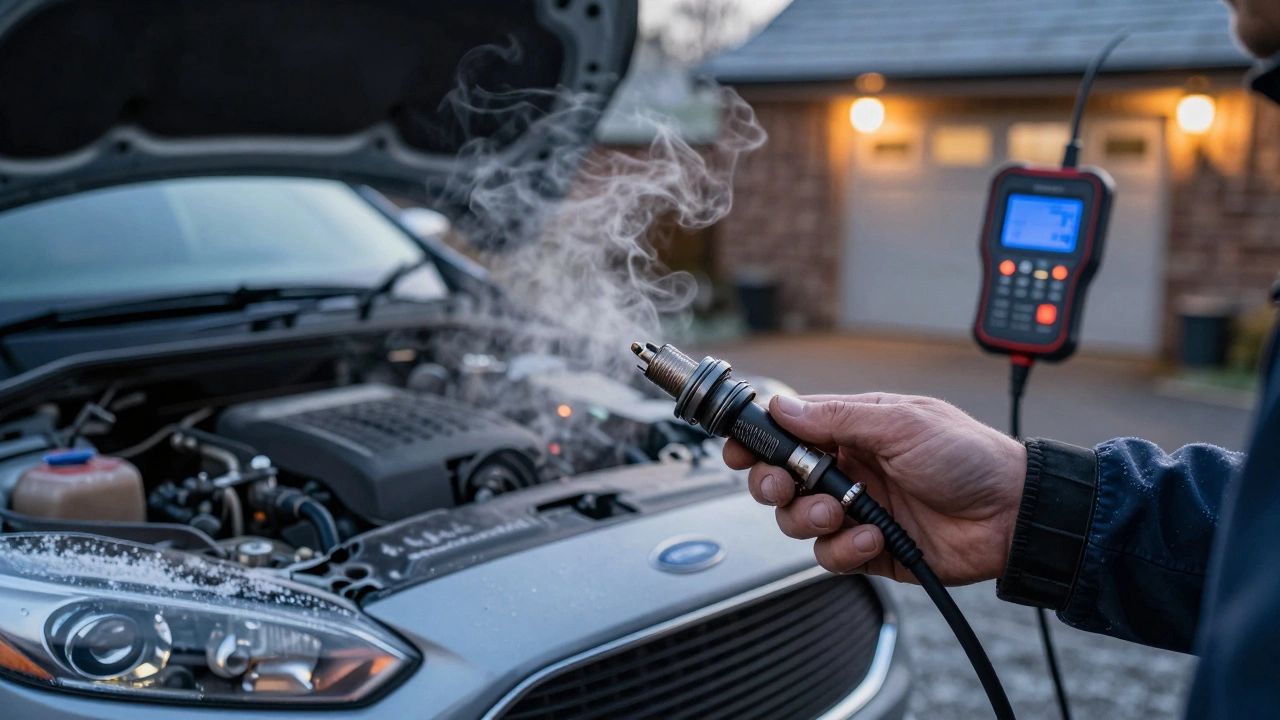
Will New Spark Plugs Improve Starting? Here’s What Actually Happens
Dec 4 2025 / Ignition PartsNew spark plugs can improve car starting - but only if your old ones are worn or fouled. Learn the signs, when to replace them, and what else could be causing hard starts.
VIEW MORE