Flywheel: What It Is and Why It Matters
When dealing with vehicle power transfer, flywheel, a heavy rotating disc attached to the engine crankshaft that stores rotational energy. Also known as engine damper, it smooths out power pulses and provides a solid surface for the clutch to engage. The flywheel works hand‑in‑hand with the clutch, a set of friction plates that connect and disconnect the engine from the transmission. Together they form the core of the drivetrain, passing power from the engine, the power‑producing heart of the vehicle to the wheels. Understanding the flywheel’s role helps you spot problems before they spiral into costly repairs.
Key Parts Linked to the Flywheel
The flywheel doesn’t work alone. A pressure plate, the metal plate that presses the clutch disc against the flywheel sits directly on its face, ensuring the clutch can transmit torque when engaged. The release bearing, a bearing that allows the clutch fork to pull the pressure plate away from the flywheel, enables smooth disengagement. Meanwhile the transmission, the gearbox that adjusts torque and speed for the wheels receives the engine’s output through this assembly. Each component influences the flywheel’s efficiency, so wear in one area often shows up as noise or vibration from another.
One practical sign that the flywheel might be out of shape is a noticeable shudder when you press the clutch pedal or when the car is in gear at low speeds. That shudder often points to a warped flywheel surface, which prevents the clutch disc from making even contact. Another clue is a rattling sound that changes pitch with engine revs, hinting at a loose or broken flywheel bolt. Because the flywheel is bolted directly to the crankshaft, a failed bolt can damage the engine block, turning a simple fix into a major overhaul. Spotting these symptoms early saves both time and money.
If you’re planning a performance upgrade, the flywheel becomes a focus point. Lightweight flywheels reduce rotational inertia, letting the engine rev quicker and improving acceleration. However, they also store less energy, which can make the car feel twitchy at low speeds. Choosing the right balance depends on your driving style: daily commuters benefit from a heavier flywheel for smoother starts, while track enthusiasts may prefer a lighter unit for rapid throttle response. In either case, the pressure plate and clutch disc must match the flywheel’s mass to avoid premature wear.
Maintenance wise, inspecting the flywheel during clutch replacement is a smart move. Look for hot spots, scoring, or cracks on the friction surface. A clean, flat surface ensures the clutch disc seats correctly and extends its life. If you notice uneven wear, resurfacing the flywheel might be an option, but only if the metal thickness is still within specifications. Too thin a flywheel can lead to vibration and reduced braking efficiency, as the flywheel also helps dampen engine braking forces.
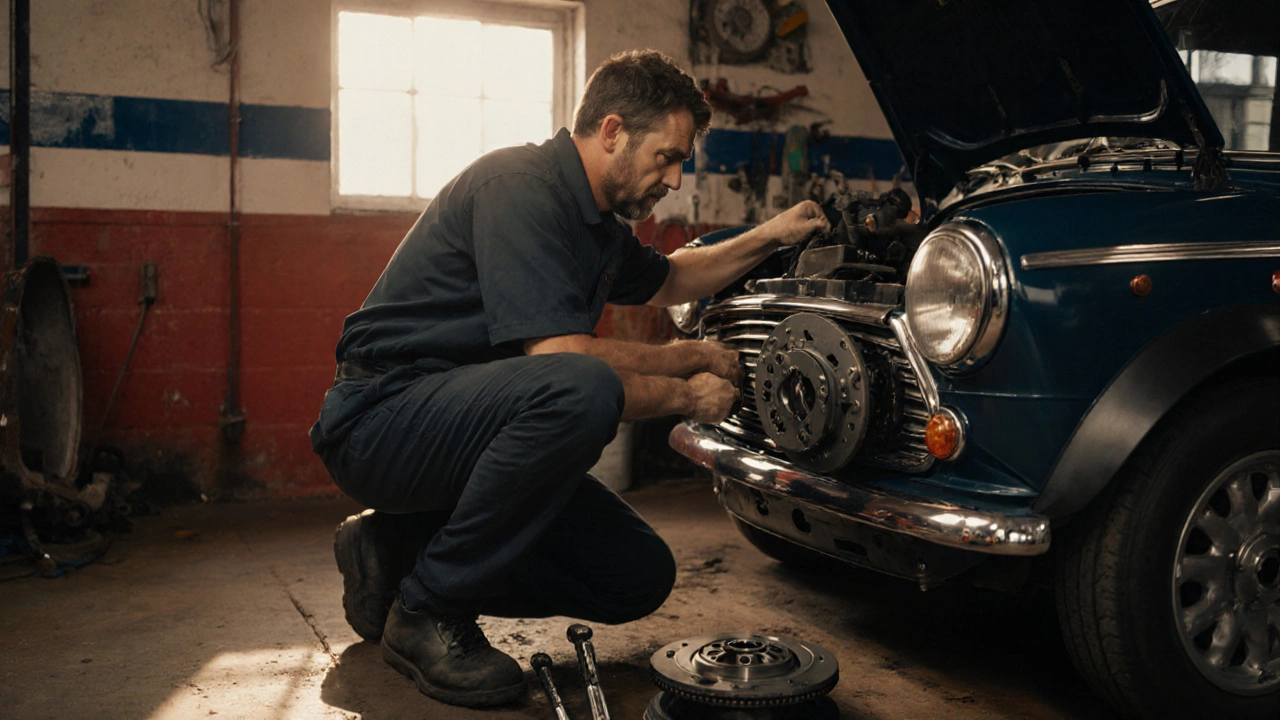
When the flywheel fails, the repair process typically involves removing the transmission, the clutch assembly, and then the flywheel itself. Because the crankshaft is the anchor point, mechanics must lock it in place to avoid misalignment. This is why many DIYers choose to have a professional handle the job; a misplaced bolt can cause the engine to run rough or even seize. After replacement, a proper break‑in period—driving gently for the first 100‑200 miles—helps the new flywheel seat with the clutch disc and pressure plate.
Beyond the core drivetrain, the flywheel also interacts with the vehicle’s flywheel‑related accessories. For instance, the starter motor engages the flywheel’s ring gear to crank the engine. A worn ring gear can cause starter failures or noisy startups. Additionally, the flywheel’s mass can affect the performance of the engine’s harmonic balancer, which is designed to reduce vibrations. Choosing a quality flywheel that works with these accessories promotes overall engine health.
Now that you’ve got a clear picture of what a flywheel does, the parts it works with, and the signs of trouble, you’re ready to dive deeper. Below you’ll find a curated set of articles that break down clutch kits, brake maintenance, spark plug issues, and more—each touching on aspects that influence or are influenced by the flywheel. Use them as a toolbox to keep your drivetrain running smooth and avoid unexpected breakdowns.
What else to replace when you replace a clutch? Essential parts & tips
Sep 26 2025 / Transmission PartsDiscover the key components you should replace alongside a clutch, learn their lifespans, costs, and get practical tips to avoid common pitfalls.
VIEW MORE