Horsepower Gain: How to Actually Increase Your Engine's Power
When you hear horsepower gain, the measurable increase in an engine’s output, often expressed in horsepower units, that results from modifications or maintenance. Also known as power increase, it’s not just about louder exhausts or flashy stickers—it’s about making your engine work more efficiently. Most people think adding a cold air intake or a new exhaust will magically give you 50 extra horsepower. The truth? It rarely does. But the right changes, done right, can give you real, noticeable gains—especially if your car is already due for maintenance.
Let’s break down what actually moves the needle. First, the exhaust system, the pathway that carries exhaust gases out of the engine, which can reduce backpressure and improve flow. Also known as performance exhaust, systems like Magnaflow or Flowmaster don’t just sound good—they help the engine breathe better, which directly affects how much power it can make. Then there’s the air filter, the component that cleans air before it enters the engine, impacting combustion efficiency. Also known as intake filter, a clogged or low-quality paper filter can rob you of 5 to 10 horsepower. Replacing it with a clean, high-flow version—especially if your car is older—can make a real difference. And don’t forget the fuel system, the network that delivers fuel to the engine, including injectors, pump, and lines. Also known as fuel delivery system, dirty injectors or a weak fuel pump can starve your engine of fuel, killing power even if everything else is perfect. These aren’t upgrades for show—they’re fixes for hidden problems.
What you won’t see in most YouTube videos: a dirty throttle body, worn spark plugs, or a failing oxygen sensor can kill horsepower faster than any aftermarket part. That’s why the best horsepower gains often come from fixing what’s already broken. If your car’s been running rough, sputtering, or losing power under acceleration, those symptoms aren’t just annoying—they’re signs your engine isn’t making the power it should. Replacing spark plugs, cleaning the fuel injectors, or checking for vacuum leaks can give you more real-world power than a $1,000 exhaust kit.
And here’s the thing: horsepower gain isn’t just about adding parts. It’s about removing restrictions. Your engine is designed to work within limits. When you clear those limits—by improving airflow, fuel delivery, or exhaust flow—you unlock hidden performance. You don’t need a full tune or a turbocharger to start seeing results. Often, it’s as simple as replacing an old air filter, cleaning your throttle body, or fixing a leaky vacuum line. These are low-cost, high-reward fixes that most people overlook.
Below, you’ll find real-world guides on what actually works: how exhaust systems like Magnaflow and Flowmaster compare, why your air filter matters more than you think, and what happens when your fuel pump starts to fail. These aren’t theory pieces—they’re based on what drivers experience on the road, in the garage, and under the hood. Whether you’re trying to squeeze more power out of a daily driver or just want your car to feel more responsive, the answers are here.
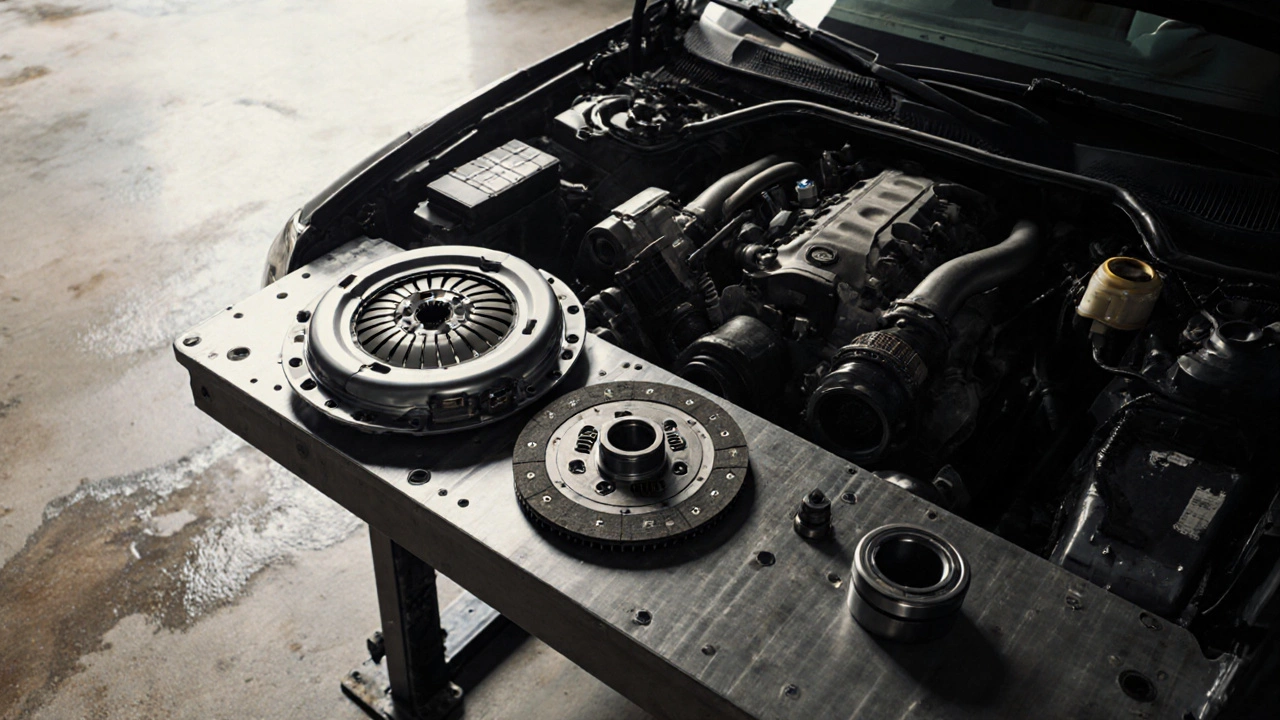
Does a Clutch Kit Add Horsepower? The Real Impact on Performance
Nov 16 2025 / Transmission PartsA clutch kit doesn't add horsepower, but it can help you use all the power your engine makes by reducing slippage. Learn when an upgrade actually matters - and when it's just a myth.
VIEW MORE