Oil Warning Light: What It Means and What to Do Next
When the oil warning light, a red or yellow dashboard symbol that signals low engine oil pressure or level. Also known as engine oil light, it’s not a suggestion—it’s an emergency signal. If this light comes on, your engine is at risk of seizing. It doesn’t mean you’re low on oil yet—it means the oil isn’t flowing properly to critical parts like the crankshaft, camshaft, and valves. Even a few seconds of driving with this light on can cause permanent damage.
What causes it? It could be something simple like low oil levels, which happens when you forget to check it or have a slow leak. Or it could be something serious: a failing oil pump, a clogged oil filter, worn engine bearings, or even a broken sensor. The engine oil level, the amount of lubricant circulating inside your engine needs to stay within the safe range marked on the dipstick. If it’s below the minimum, you’re running on borrowed time. And if your oil pressure, the force pushing oil through your engine’s internal passages drops too low, even with enough oil, the engine can’t protect itself.
You might think, "I’ve driven with this light on before and nothing happened." That’s luck, not skill. Modern engines run tight tolerances—metal parts are barely millimeters apart. Without oil, they grind together. That’s how you end up with a $5,000 engine rebuild instead of a $40 oil change. The car warning lights, dashboard indicators that alert drivers to critical system failures exist for a reason. They’re not there to scare you—they’re there to save you money and keep you safe.
What should you do? Stop driving immediately. Turn off the engine. Wait a minute. Check the oil level with the dipstick. If it’s low, top it up with the right type—check your owner’s manual. But if the light stays on after adding oil, don’t try to drive it. Call a tow truck. The problem isn’t solved by just adding oil. It’s a symptom. And the cause could be hiding under the hood in a way you can’t see.
Some people ignore the light because they don’t hear noise or feel a loss of power. But that’s the worst mistake. By the time you hear knocking or feel hesitation, the damage is already done. The oil warning light is your early warning system—use it. Regular oil checks, timely changes, and paying attention to dashboard alerts are the cheapest ways to protect your engine. You don’t need fancy tools or technical degrees. Just a dipstick, a few minutes, and the sense to act.
Below, you’ll find real-world guides on what causes low oil, how to spot a failing oil pump, why synthetic oil matters, and how to prevent this warning from ever coming on again. No fluff. Just what works.
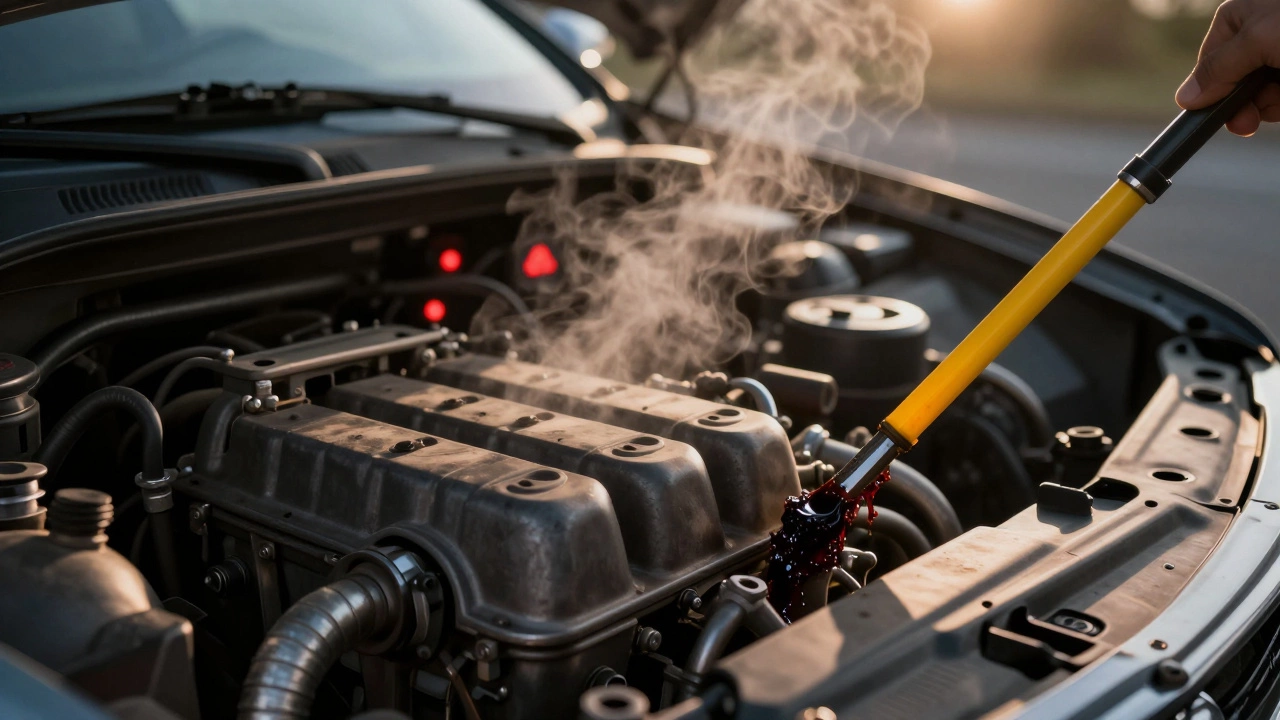
What Happens When Your Car Needs Engine Oil? Signs, Risks, and What to Do
Dec 1 2025 / Engine OilWhen your car needs engine oil, it's not just a maintenance task-it's an emergency. Learn the signs of low oil, the damage it causes, and what to do before your engine fails for good.
VIEW MORE