When to Change Air Filter: Signs, Mileage, and What Happens If You Don't
When working with a air filter, a component that traps dirt and debris before they enter your engine or cabin. Also known as an engine air filter, it’s one of the simplest parts to check—and one of the most ignored. Most drivers don’t think about it until their car starts running rough, sputtering, or losing power. But a dirty air filter isn’t just about performance—it’s about protecting your engine’s life and saving money on fuel.
The engine air filter, the main filter that cleans air before it mixes with fuel in the combustion chamber usually needs replacing every 12,000 to 15,000 miles, but that’s just a guess. If you drive on dusty roads, near construction, or in heavy traffic, you might need to swap it every 6,000 miles. A clogged filter forces your engine to work harder, which burns more fuel. You’ll notice it in your wallet—your MPG drops by up to 10% with a dirty filter, according to the U.S. Department of Energy.
Then there’s the cabin air filter, a separate filter that cleans the air coming into your car’s interior through the HVAC system. This one doesn’t affect engine performance, but it’s the reason your car smells musty or your allergies flare up on the highway. Most manufacturers recommend replacing it every 15,000 to 30,000 miles—or yearly if you live in a city with high pollution. Skip it, and you’re breathing in pollen, soot, and even mold spores.
How do you know it’s time? Look for these signs: reduced airflow from vents, a noticeable drop in fuel economy, engine misfires or hesitation when accelerating, or a dusty smell when you turn on the AC. If you can’t see light through the filter when you hold it up to a lamp, it’s time to replace it. No need to wait for a warning light—your car won’t give you one.
Some people think they can clean and reuse a paper air filter. Don’t. Once it’s clogged, the fibers are damaged. Replacing it costs less than a tank of gas and takes less than ten minutes. Most modern cars have the filter under a plastic cover in the engine bay—no tools needed. Even if you’ve never changed a part before, this is one of the easiest repairs you can do yourself.
And here’s the thing: skipping this isn’t just about efficiency. A dirty air filter lets grit into your engine. That grit wears down pistons, valves, and cylinders over time. That’s not a $50 fix—that’s a $2,000 engine rebuild. You wouldn’t skip an oil change. Don’t skip the air filter either.
Below, you’ll find real-world guides from drivers and mechanics who’ve dealt with failing filters, misfires from restricted airflow, and how to spot the difference between a dirty cabin filter and a failing HVAC system. Whether you drive a daily commuter, a weekend off-roader, or a boat trailer hauler, knowing when to change your air filter saves you time, money, and headaches.
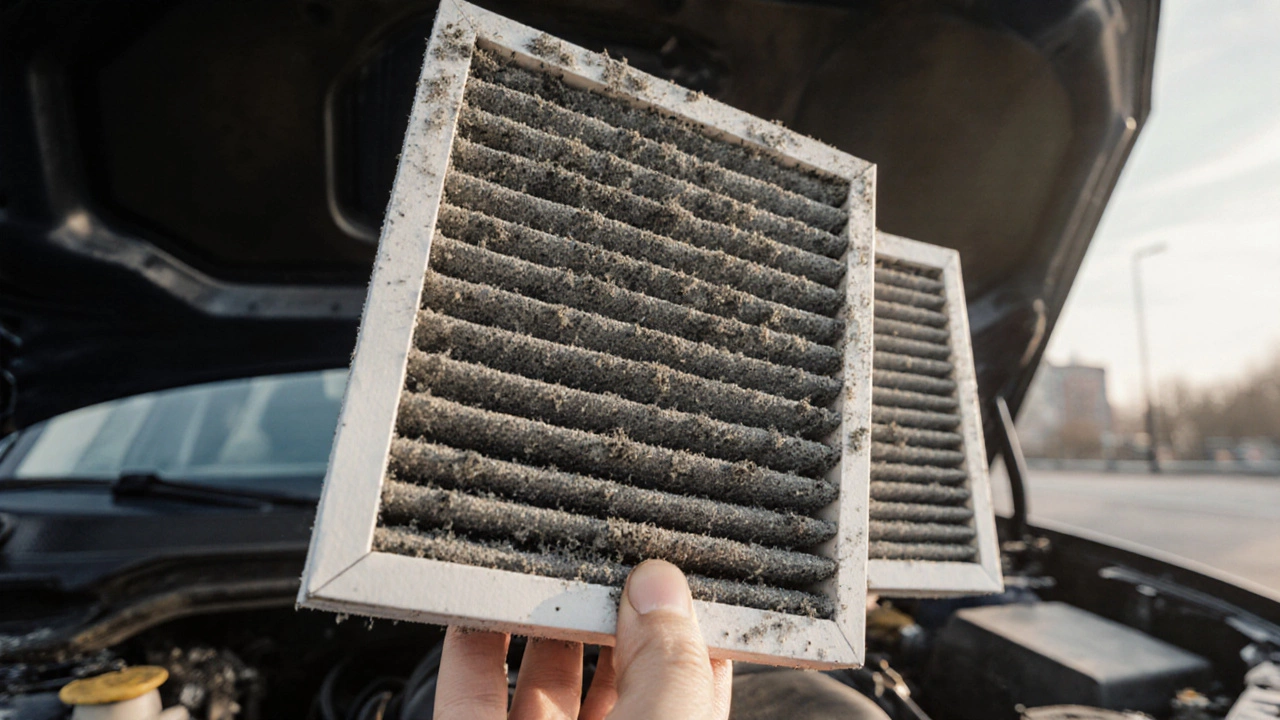
How Do I Know If My Air Filter Needs Changing? Signs You Can't Ignore
Oct 28 2025 / Air FiltersLearn the real signs your air filter needs replacing-rough idle, poor acceleration, higher fuel bills, and more. Don’t wait for the check engine light. A simple check can save you hundreds.
VIEW MORE