Air Filter Health Checker
Check your air filter condition
Select symptoms you're experiencing to get your personalized filter health assessment.
Symptoms to check
Your Filter Assessment
Based on your selections
Most drivers don’t think about their air filter until their car starts acting strange. But a clogged air filter isn’t just a minor annoyance-it can hurt your fuel economy, reduce engine power, and even cause long-term damage. If you’re wondering whether it’s time for a new one, you don’t need to wait for a warning light. There are clear, everyday signs that tell you your air filter is done.
Your engine sounds rougher than usual
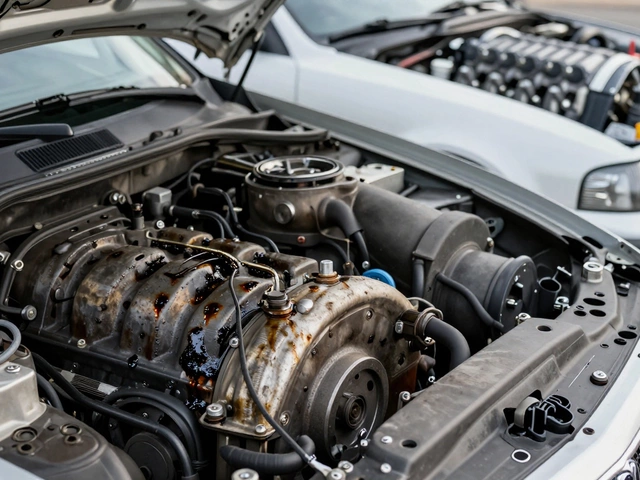
If your car’s idle feels shaky or the engine stumbles when you stop at traffic lights, it could be starved for air. A dirty air filter restricts airflow into the engine, forcing it to work harder to pull in what it needs. This isn’t just about noise-it’s about performance. In cold, damp weather like Manchester winters, a clogged filter makes the problem worse because moisture and dirt stick together more easily. You might hear a slight sputtering or even a coughing sound from the engine bay. It’s not the spark plugs or fuel injectors yet-it’s often the filter.
Acceleration feels sluggish
Remember when your car used to zip forward when you pressed the gas? Now it feels like you’re driving through syrup. That’s not just your imagination. A clean air filter lets the engine breathe freely, mixing air with fuel efficiently. When the filter is clogged, the engine’s air-to-fuel ratio gets thrown off. The result? Less power. You’ll notice it most when merging onto a highway or climbing a hill. A 2023 study by the Society of Automotive Engineers found that a severely dirty air filter can reduce acceleration by up to 11% in modern petrol engines. That’s not a small drop-it’s the difference between safely merging and being stuck behind a truck.
Fuel economy takes a nosedive
You filled up last week and already you’re down to a quarter tank? If your driving habits haven’t changed and you’re not hauling heavy loads, your air filter might be to blame. When airflow is restricted, the engine’s computer tries to compensate by adding more fuel. This is called running rich. It’s like driving with the choke on. Over time, that adds up. Drivers in the UK report an average 5-10% drop in MPG when their air filter hasn’t been changed in over 12,000 miles. That’s £20-£40 extra every few months on fuel alone. If you’ve noticed your fuel costs creeping up without a clear reason, check the filter before you blame the petrol station.
You see visible dirt or debris
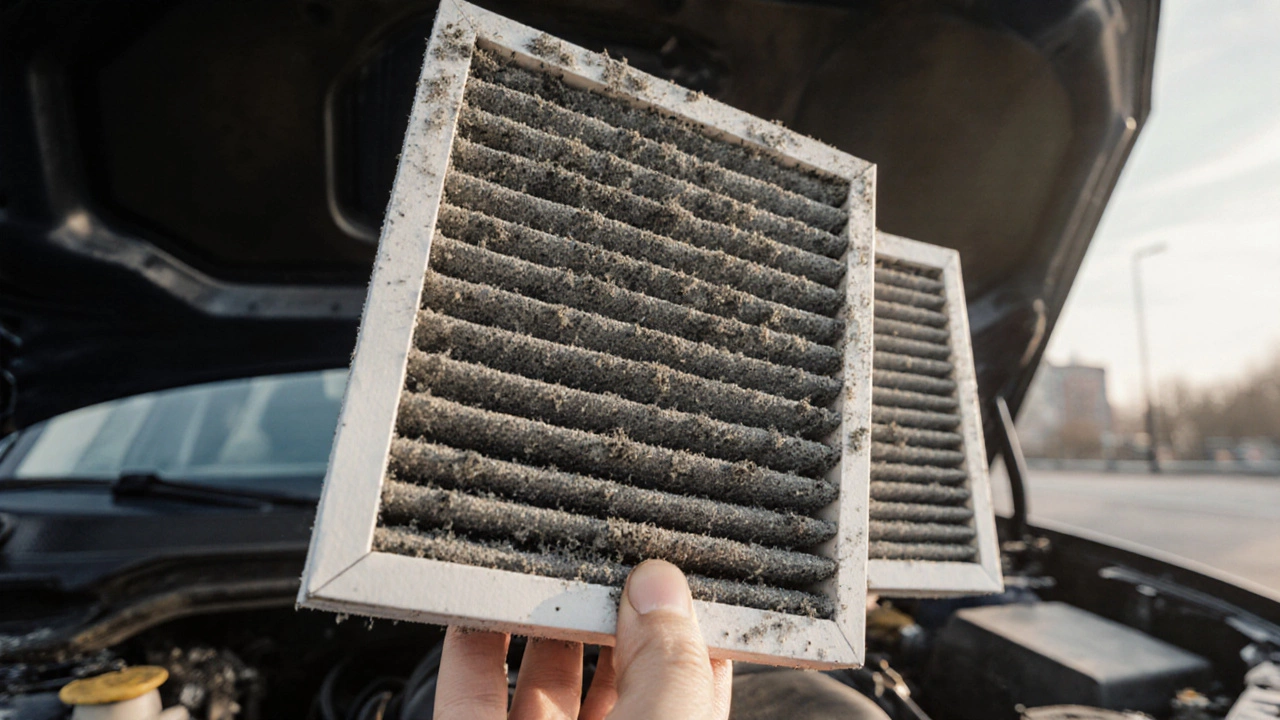
Pop the hood. Find the air filter housing-it’s usually a black plastic box near the front of the engine. Open it. Pull out the filter. Hold it up to the light. If you can’t see light through it, it’s time to replace it. A clean air filter looks like white or off-white foam or paper with fine, even fibers. A dirty one looks like a sponge caked in mud. Dust, pollen, road grit, and even tiny leaves can pile up. In urban areas like Manchester, where traffic and pollution are constant, filters get dirty faster than you think. Even if it doesn’t look black, if the material is thick and grey with embedded grime, it’s lost its efficiency.

The check engine light comes on
Yes, the check engine light can be triggered by a dirty air filter. Modern cars have sensors that monitor airflow. If the mass airflow sensor detects less air than expected, it logs a code-often P0171 (system too lean) or P0174. This doesn’t mean your engine is broken. It means the system is struggling to balance fuel and air because the filter is choking the flow. Many drivers panic when this light appears, but before you head to the garage for expensive diagnostics, grab your filter. It’s one of the cheapest fixes on the car. Replacing it might clear the light on its own.
There’s a strange smell or dust inside the cabin
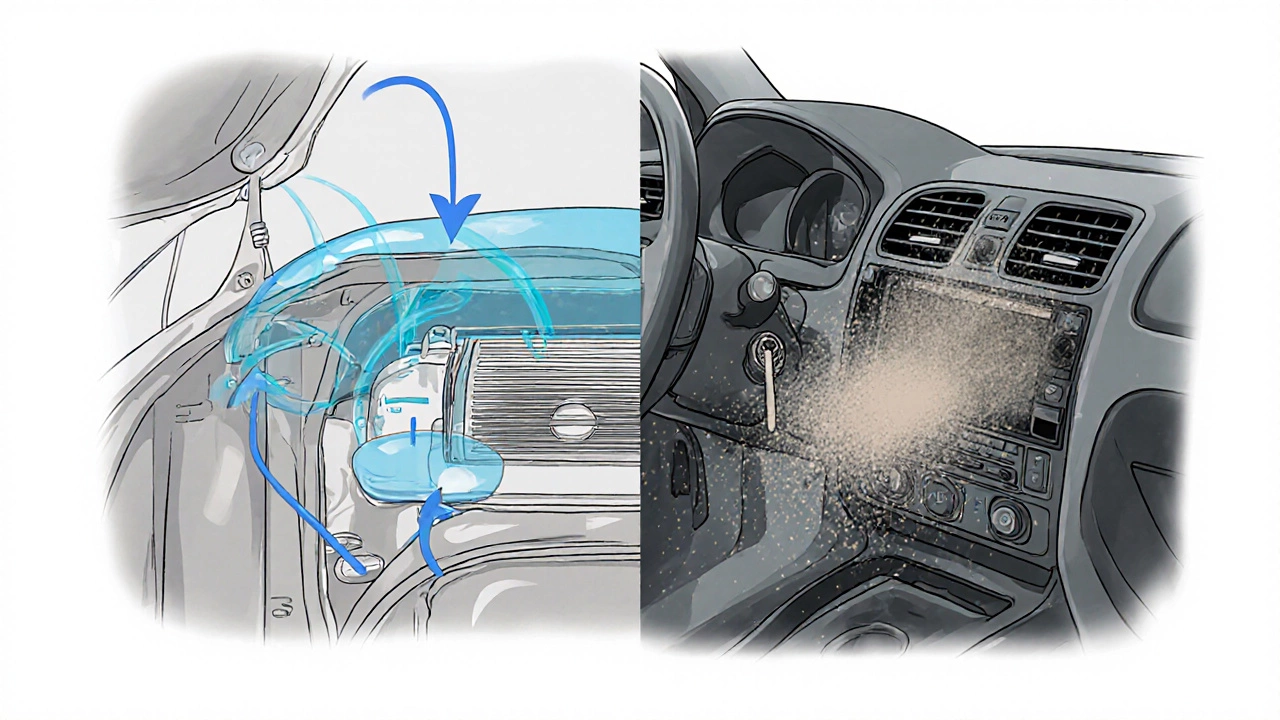
Some cars have cabin air filters that work separately from the engine air filter. But if you’re smelling musty, dusty, or burnt odors inside the car-or you notice more dust settling on your dashboard-it’s a sign that the engine air filter might be so clogged that air is finding other paths. In extreme cases, the filter can break down, letting debris into the intake system. That grit can then make its way into the cabin through the HVAC system. If you’re sneezing more than usual on your commute, or your vents are spitting out fine particles, your air filter might be failing.
It’s been over 12,000 miles or a year since the last change
Don’t wait for symptoms. If you haven’t changed your air filter in over a year-or 12,000 miles-do it now. That’s the general rule for most cars in the UK. But if you drive mostly in the city, on dusty roads, or in heavy traffic, change it every 6,000-8,000 miles. If you live near construction zones or in rural areas with unpaved roads, even more often. Some manufacturers say 25,000 miles, but that’s under ideal conditions. Real-world driving in the UK, with rain, road salt, and pollution, wears filters out faster. Replacing it regularly costs less than £15 and takes less than 10 minutes.
What happens if you ignore it?
Ignoring a dirty air filter doesn’t just waste fuel. It can lead to more serious problems. Dirt that sneaks past a clogged filter can get into the engine. That grit doesn’t just sit there-it grinds against pistons, valves, and cylinder walls. Over time, this causes premature wear. Replacing a damaged engine costs thousands. A new air filter? Less than the price of a good coffee. Also, a dirty filter can overload the mass airflow sensor, leading to costly replacements. And if your car has a turbocharger, dirt in the intake can destroy the blades. Turbo repairs start at £1,500. That’s not a risk worth taking.
How often should you check it?
Make it part of your monthly routine. When you’re checking your tyre pressure or oil level, pull out the air filter too. It takes 30 seconds. Keep a log: note the date and mileage each time you change it. Most filters last between 12,000 and 24,000 miles, but if you drive in bad conditions, don’t wait for the upper limit. If you’re unsure, look up your car’s manual online-it’s free. Search for your make, model, and year + “air filter replacement interval.” You’ll get the official recommendation.
Can you clean it instead of replacing it?
No. Paper and foam air filters are designed to be replaced, not cleaned. You might see ads for “washable” filters, but those are aftermarket products. Even then, cleaning them requires special solutions and drying time-you can’t just rinse it under the tap and pop it back in. If you’re using the factory filter (and most people are), cleaning it does more harm than good. It breaks down the filtering material, letting more dust through. Replace it. It’s cheap. It’s easy. And it protects your engine.
How long does an air filter last in the UK?
In the UK, most air filters last between 12,000 and 24,000 miles, but many drivers should replace theirs every 12,000 miles or once a year-whichever comes first. If you drive in cities, near construction, or on dusty roads, replace it every 6,000-8,000 miles. Wet, salty roads and high pollution levels wear filters out faster than ideal conditions.
Can a dirty air filter cause my car to fail an MOT?
A dirty air filter won’t directly cause an MOT failure, but it can lead to one indirectly. If the filter is severely clogged, it can trigger a check engine light or cause high emissions, both of which are MOT failure points. The MOT tester checks for visible engine faults and emissions levels. A malfunctioning air filter can push your car’s emissions over the limit, especially in diesel models. So while the filter itself isn’t inspected, its effects are.
Is it hard to change an air filter myself?
No, it’s one of the easiest car maintenance tasks. Most air filter housings are held by clips or a few screws. You open the box, remove the old filter, and pop in the new one. No tools are usually needed-just your hands. It takes less than 10 minutes. You can buy the right filter for under £15 at any auto parts store. There are thousands of YouTube videos showing the exact steps for your car model. If you can open a cereal box, you can change your air filter.
Do I need a performance air filter?
For most drivers, no. Performance filters (like cotton gauze filters) are marketed for better airflow and horsepower, but the real-world gains are tiny-usually under 2%. They also cost 3-5 times more than standard filters. They require special cleaning and oiling, which adds maintenance. Unless you race your car or modify the engine, a standard OEM replacement filter is the smart choice. It’s reliable, affordable, and designed for your car’s exact needs.
What happens if I drive without an air filter?
Don’t do it. Driving without an air filter lets dust, dirt, and debris straight into your engine. That grit scratches pistons, valves, and cylinder walls. Even a short drive without a filter can cause permanent damage. You might not notice it right away, but over time, engine compression drops, oil consumption rises, and power fades. The cost to repair that damage can be £2,000 or more. Always keep a filter in place-even a dirty one is better than none.
If you’ve noticed any of these signs-rough idle, poor acceleration, rising fuel bills, or visible dirt-you don’t need to wait. Replacing your air filter is one of the most cost-effective things you can do for your car. It’s cheap, fast, and protects your engine from expensive damage. Do it now. Your wallet and your car will thank you.