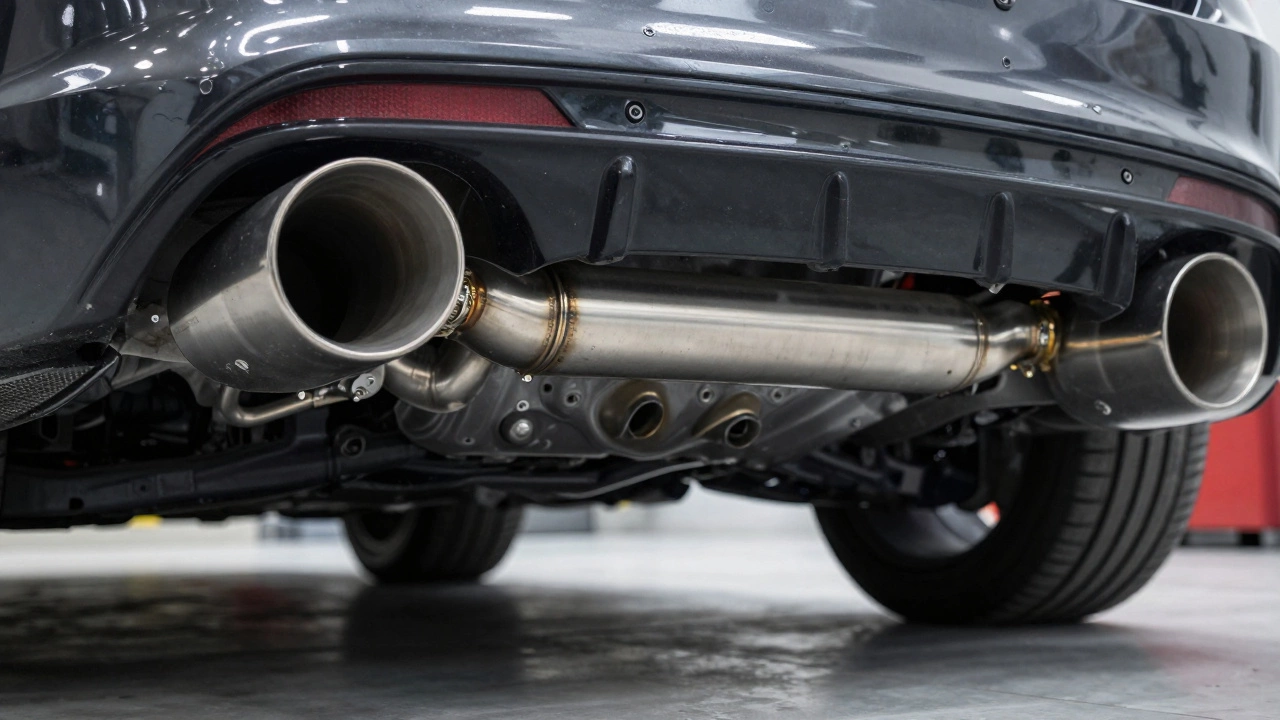
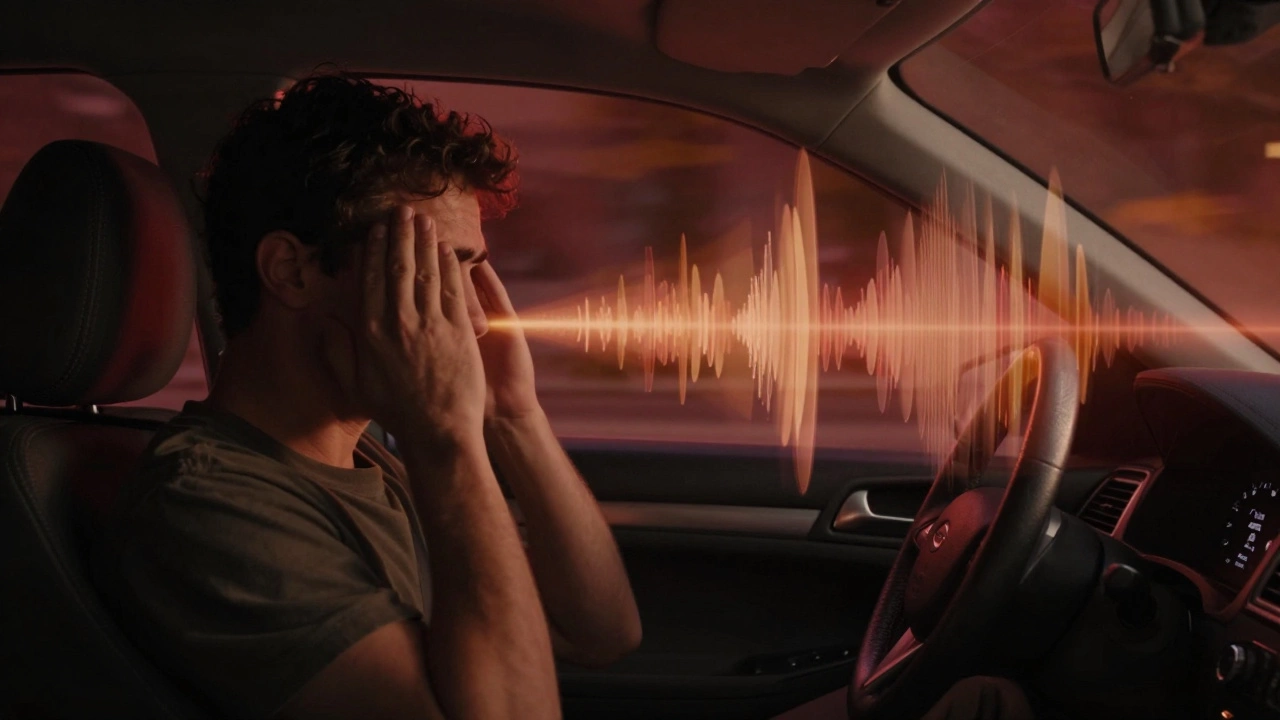
One of the biggest shocks for people installing an aftermarket exhaust is the dreaded drone. A drone is a low-frequency humming sound that happens at specific engine speeds-usually when you are cruising on the highway at 65 or 70 mph. It isn't a roar; it's a vibrating resonance that fills the cabin.
Imagine spending three hours on a road trip with a giant bee trapped in your backseat. That is what a bad exhaust drone feels like. It causes fatigue, makes it impossible to have a conversation without shouting, and can even lead to headaches. Factory engineers spend thousands of hours tuning the muffler and pipe diameter to cancel out these frequencies. Aftermarket brands often prioritize sound at a standstill or wide-open throttle, meaning they ignore the sounds you actually hear during 99% of your drive.
Losing Low-End Torque
Many people think that bigger pipes always equal more power. That is a myth. Your engine needs a specific amount of backpressure to operate efficiently, especially at low RPMs. If you install a system with a pipe diameter that is too large, you effectively lower the velocity of the exhaust gases.
When exhaust gases move too slowly, they don't scavenge the cylinder as effectively. In the real world, this means you might notice a drop in aftermarket exhaust disadvantages like sluggish acceleration when pulling away from a stoplight. You might gain 5 horsepower at 6,000 RPM, but if you lose 10 horsepower at 2,000 RPM, your car actually feels slower in city traffic. This is why a "straight pipe" isn't always the best move for a daily driver.
The Legal and Environmental Headache
Let's talk about the law. Depending on where you live, removing your catalytic converter or installing a high-flow version that isn't certified can land you in hot water. In states with strict smog checks, like California, an unapproved exhaust system will fail an emissions test instantly.
Beyond the smog check, there is the "noise ticket." Police officers might ignore a loud car in a performance-heavy area, but in residential neighborhoods, a loud exhaust is a magnet for attention. If your system lacks a proper resonator, the decibel levels can easily exceed local ordinances, leading to fines that cost far more than the exhaust system itself.
| Feature | OEM (Factory) System | Typical Aftermarket System |
|---|---|---|
| Noise Level | Quiet, refined | Loud, aggressive |
| Cabin Comfort | Low drone, high isolation | Potential for high-RPM drone |
| Low-End Torque | Optimized for daily driving | Can be reduced if pipe is too wide |
| Legality | 100% compliant | Varies (risk of failing emissions) |
| Durability | Varies by brand (some rust) | Often T304 Stainless (very durable) |
Warranty and Resale Value
If your car is still under a manufacturer warranty, be careful. While the Magnuson-Demortem Act in the US protects consumers by saying a manufacturer can't deny a warranty claim unless they can prove the aftermarket part caused the failure, it still creates a friction point. If you have an engine issue, the dealership might try to blame your modified exhaust system to avoid paying for the repair.
Then there is the resale factor. While a loud exhaust might be a selling point for a 19-year-old looking for a project car, it is a red flag for a serious buyer. Most buyers assume that if a car has a loud exhaust, the previous owner drove it hard and fast. This often leads to lower offers or the buyer demanding that you reinstall the original pipes before they buy the car.
Installation Pitfalls and Build Quality
Not all aftermarket parts are created equal. While high-end systems are great, "budget" brands often suffer from poor fitment. You might find that the pipes don't align perfectly with the hangers, leading to vibrations or exhaust leaks. A leak at the flange doesn't just let out noise; it can allow carbon monoxide to seep into the cabin, which is a serious safety hazard.
Even if the fit is okay, some systems use thinner metals that look shiny at first but corrode quickly in salt-heavy winter climates. If you are switching from a heavy-duty factory system to a cheap "cat-back" kit, you might find yourself replacing the hangers and gaskets every few years.

How to Minimize the Downsides
If you still want that better sound but want to avoid the nightmares mentioned above, there are a few strategies you can use. First, look for systems that include a resonator. A resonator doesn't necessarily make the car quieter, but it cleans up the sound and is specifically designed to kill those annoying drone frequencies.
Second, do your homework on pipe diameter. If you have a naturally aspirated 4-cylinder engine, jumping to a 3-inch pipe is usually overkill and will kill your low-end torque. Stick to a size that is only slightly larger than stock. Lastly, consider a "cat-back" system rather than a "full exhaust." By keeping the factory catalytic converters and headers, you maintain better emissions compliance and avoid the most severe torque losses.
Will an aftermarket exhaust void my engine warranty?
Not automatically. In the US, the manufacturer must prove the aftermarket part caused the specific failure. However, it can make the process more difficult if the dealer decides to contest the claim.
Does a louder exhaust always mean more horsepower?
No. While reducing restriction can increase peak horsepower at high RPMs, it can actually reduce low-end torque if the pipe is too large, making the car feel slower in daily traffic.
What is the difference between a muffler and a resonator?
A muffler is designed to reduce the overall volume of the exhaust. A resonator is designed to target and cancel specific frequencies, primarily to eliminate the "drone" sound during highway cruising.
Can I pass emissions tests with an aftermarket exhaust?
Yes, provided you keep your catalytic converters intact and the system is EPA-compliant. If you remove the cats or use "test pipes," you will almost certainly fail a smog check.
Why does my car sound "raspy" after an upgrade?
Raspiness usually happens when there is too much unrestricted flow and not enough sound dampening. Adding a resonator or choosing a muffler with more packing can fix this.
Next Steps for Your Build
If you are undecided, start by researching your specific vehicle's community forums. Look for mentions of "drone" regarding the brands you are considering. If you already installed a system and hate the sound, you don't necessarily have to rip it all out. You can often weld in a high-quality resonator or swap the mufflers for a more restrictive pair to bring back some of that lost low-end torque and cabin quiet.
Popular Posts

AutoZone vs Walmart Windshield Wipers: Price, Quality & Where to Buy
May, 11 2026 / Windscreen Wipers
Windscreen or Windshield: What's the American Way?
Feb, 17 2025 / Windscreen Wipers
Is Cat Back Worth It? Real Performance and Cost Breakdown for Your Exhaust
Dec, 22 2025 / Automotive