Air Filter Symptom Checker
Select symptoms your vehicle is experiencing to determine if a clogged air filter might be the cause.
Results
Recommended next steps:
- Inspect your air filter as described in the article
- Replace with a new filter (costs under £20)
- Check every 6-10,000 miles if driving in dusty conditions
Your car’s air filter doesn’t get much attention-until something goes wrong. It’s hidden away in a plastic box, quietly doing its job: keeping dust, leaves, and road grit out of your engine. But when it gets too dirty, your engine starts to scream in ways you can’t ignore. You might think it’s a fuel problem, a spark plug issue, or even a failing battery. But more often than not, the real culprit is a clogged air filter.
Your engine struggles to breathe
Think of your engine like your lungs. It needs clean air to burn fuel efficiently. When the air filter is full of dirt, it restricts airflow. The engine has to work harder to pull in enough air. That’s when you notice it-sluggish acceleration. You press the gas pedal, and instead of a smooth rush forward, the car hesitates. It feels like driving through syrup. This isn’t just annoying; it’s a sign your engine isn’t getting the air it needs to make power.
Reduced fuel efficiency
A dirty air filter forces the engine to burn more fuel to compensate for the lack of oxygen. You might not notice it at first, but over time, your fuel economy drops. If you’ve been filling up more often without changing your driving habits, check the air filter. In tests by the U.S. Department of Energy, replacing a clogged air filter can improve fuel efficiency by up to 10%. That’s like getting an extra 30 miles out of every tank of petrol. In the UK, where fuel prices stay high, that adds up fast.
Strange engine sounds
When the air filter is blocked, the engine doesn’t just struggle-it makes noise. You might hear a loud sucking or whistling sound coming from under the hood, especially when you accelerate. It sounds like air is being pulled through a straw. Sometimes, it’s more of a rattling or popping noise. These sounds aren’t normal. They mean the engine is trying to pull air past a barrier it can’t overcome. Ignoring this can lead to more serious damage down the line.
Check engine light comes on
Modern cars have sensors that monitor airflow into the engine. If the mass airflow sensor detects less air than it expects, it triggers the check engine light. This doesn’t always mean a sensor is broken-it often means the air filter is clogged. Many drivers panic when the light comes on, assuming it’s something expensive. But a simple air filter replacement fixes the problem in over 60% of cases where the light is triggered by airflow issues. Always check the filter before spending money on diagnostic scans.
Black smoke from the exhaust
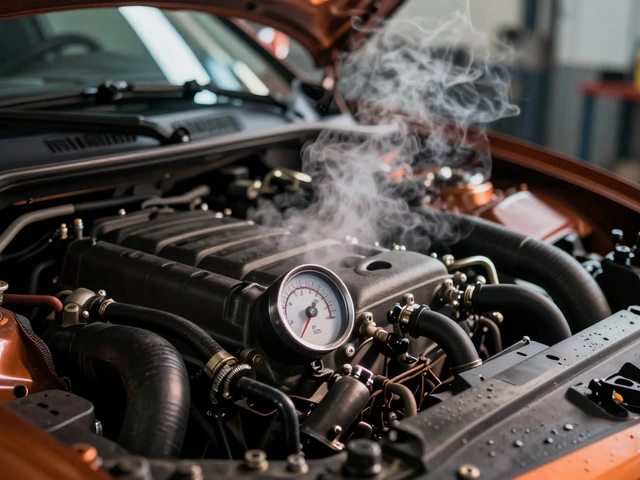
When the engine doesn’t get enough air, it can’t burn fuel cleanly. Instead of producing clean exhaust, it starts spitting out thick, black smoke. That smoke is unburned fuel-wasted money and a sign your engine is running too rich. You’ll notice the smell too: a strong, oily, gasoline odor. This isn’t just an emissions problem. It’s a sign your engine is running inefficiently and could be damaging the catalytic converter, which is expensive to replace.

Hard starting or stalling
Have you noticed your car takes longer to start in the morning? Or maybe it stalls at traffic lights? A dirty air filter can cause both. The engine needs a precise mix of air and fuel to ignite properly. When airflow is restricted, that balance is thrown off. Cold starts become harder because the engine can’t draw in enough air to create the right combustion mix. Stalling happens when the engine suddenly doesn’t get enough air to keep running. These symptoms are often mistaken for battery or fuel pump problems-but they’re far cheaper to fix.
Reduced engine power at high speeds
Ever tried overtaking on the motorway and felt like your car lost power halfway through? That’s not just traffic. A clogged air filter hits hardest at higher RPMs. That’s when the engine needs the most air. If the filter is choked, the engine can’t breathe under load. You’ll feel it when climbing hills or merging onto fast roads. It’s not just inconvenient-it’s dangerous. Your car needs full power when you need it most.
Engine misfires or rough idling
When your car shakes a little at a stoplight, or the RPM needle jumps up and down while idling, that’s a rough idle. It’s caused by uneven combustion. A dirty air filter leads to inconsistent airflow, which throws off the fuel-air mixture. The result? Misfires. You might even feel a slight vibration through the steering wheel or floor. This isn’t just uncomfortable-it wears out spark plugs and oxygen sensors faster. Replace the air filter before you’re replacing those too.
Visible dirt on the filter
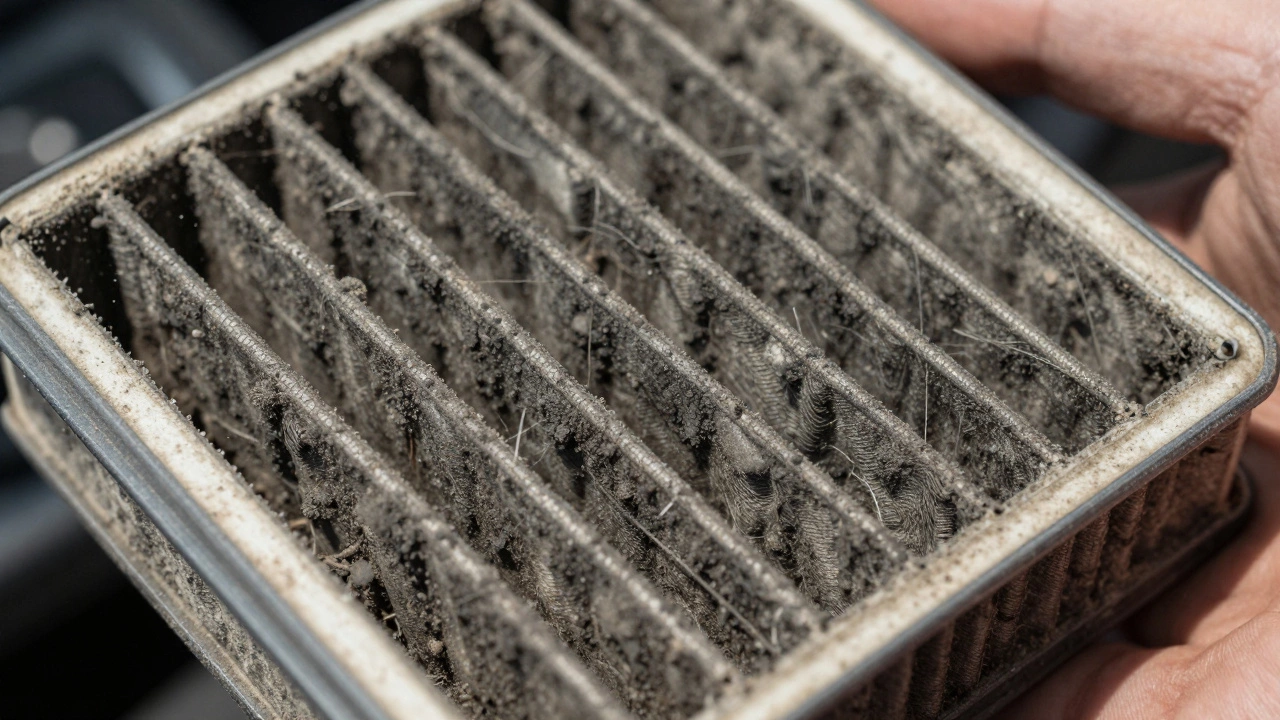
One of the easiest ways to tell if your air filter is bad? Look at it. Open the airbox (usually a black plastic box near the engine). Remove the filter. Hold it up to the light. If you can’t see light through it, it’s too dirty. If it’s covered in thick, black grime, or if you can pinch dust between your fingers, it’s time to replace it. Most filters last 12,000 to 15,000 miles, but if you drive on dusty roads, near construction, or in city traffic, they clog faster. In Manchester, with its mix of urban driving and occasional heavy rain washing dirt into the air intake, filters often need replacing every 10,000 miles.

What happens if you ignore it?
Ignoring a bad air filter doesn’t just hurt performance-it risks your engine. Over time, tiny particles can sneak through the clogged filter and scratch the cylinder walls or damage the pistons. That’s not a small repair. That’s an engine rebuild. You might save £30 on a filter now, but end up spending £2,000 on engine damage later. It’s the same as ignoring a leaky roof-you think you’re saving money, until the whole house collapses.
When to replace your air filter
Check your owner’s manual. Most manufacturers recommend replacement every 12,000 to 15,000 miles. But if you drive in dusty areas, on dirt roads, or in heavy traffic, replace it every 6,000 to 10,000 miles. A good rule of thumb: inspect it every time you get an oil change. If it looks dirty, replace it. Don’t wait for symptoms. A clean air filter is cheap insurance.
How to check your air filter
- Turn off the engine and open the hood.
- Locate the airbox-it’s usually a black plastic box connected to a large hose.
- Unclip or unscrew the cover and pull out the filter.
- Hold it up to a bright light. If you can’t see light through it, replace it.
- Shake it gently. If dust falls out, it’s overdue.
- Compare it to a new one. If it’s dark and thick, it’s done.
Replacing it takes less than 10 minutes. Most filters cost under £20. You don’t need tools-just your hands.
Final thought
A bad air filter doesn’t just make your car slower or thirstier. It’s a silent killer of performance, efficiency, and engine life. The symptoms are clear if you know what to look for. Don’t wait for the check engine light or black smoke. Check your filter every few months. Keep it clean. Your engine will thank you with smoother starts, better fuel economy, and years of reliable service.
Can a dirty air filter cause my car to stall?
Yes. A clogged air filter restricts airflow, which disrupts the fuel-air mixture needed for combustion. This can cause the engine to misfire or stall, especially at idle or when stopping at traffic lights. It’s one of the most common but overlooked reasons for stalling.
How often should I replace my air filter?
Most manufacturers suggest replacing it every 12,000 to 15,000 miles. But if you drive in dusty areas, city traffic, or near construction, replace it every 6,000 to 10,000 miles. In places like Manchester, where wet roads kick up dirt, checking it every oil change is wise.
Can I clean my air filter instead of replacing it?
Only if it’s a reusable performance filter made of cotton or foam. Standard paper filters can’t be cleaned safely. Trying to blow dust out of a paper filter often tears it or pushes dirt deeper into the fibers. Replacement is cheaper and safer.
Does a bad air filter affect emissions?
Yes. A dirty filter causes the engine to run rich-too much fuel, not enough air. This leads to unburned fuel escaping as black smoke and higher levels of carbon monoxide and hydrocarbons. Your car will fail its MOT if emissions are too high.
Will a new air filter improve my car’s performance?
If your current filter is clogged, yes. A clean filter restores airflow, improving acceleration, throttle response, and fuel economy. You won’t turn your car into a sports model, but you’ll notice smoother power delivery and better responsiveness, especially in stop-start traffic.
If you’ve noticed any of these symptoms, don’t delay. A £20 air filter could save you thousands in engine repairs-and a lot of frustration on the road.