Spark Plug Fuel Savings Calculator
Enter Your Current Information
Why This Matters
Bad spark plugs can reduce fuel economy by up to 30% as reported by the UK Vehicle Certification Agency. This calculator shows how much money you're losing by driving with worn spark plugs.
Warning: If you're experiencing misfires or rough idling, you might already be losing fuel efficiency. Ignoring bad spark plugs can lead to costly repairs exceeding £1,000.
Pro Tip: Replacing spark plugs costs $50-$150 for parts and labor. Even with a 10% fuel efficiency loss, you'll recoup costs in under 3 months.
If your car is sputtering, losing power, or refusing to start on a cold morning, it might not be your battery-it could be your spark plugs. These small metal parts are easy to ignore, but they do the heavy lifting in your engine. Every time you turn the key, spark plugs ignite the fuel-air mix in your cylinders. When they wear out, your engine doesn’t just run poorly-it starts to fall apart.
Your engine misfires
Misfiring is the most common sign of bad spark plugs. You’ll feel it as a rough idle or a sudden jerk when accelerating. It’s not just annoying-it’s a signal that one or more cylinders aren’t firing properly. Imagine your car trying to run on three out of four cylinders. That’s what happens when a spark plug fails. The engine stumbles, hesitates, or even stalls at stoplights. This isn’t normal wear and tear. It’s a failure in ignition.
Modern cars will often trigger a check engine light, and a scan tool might show codes like P0300 (random misfire) or P0301-P0308 (specific cylinder misfire). If you’ve seen this light come on and haven’t checked your spark plugs, you’re risking more damage.
Reduced fuel efficiency
Bad spark plugs don’t just make your car feel sluggish-they make it burn more fuel. When the spark is weak or inconsistent, fuel doesn’t burn completely. That means unburned fuel gets pushed out through the exhaust instead of turning into power. You might notice you’re filling up more often than usual, even if your driving habits haven’t changed.
A 2023 study by the UK’s Vehicle Certification Agency found that worn spark plugs can reduce fuel economy by up to 30%. That’s like paying an extra £15 a month on petrol for a car that normally gets 40 mpg. It adds up fast.
Hard starting and rough idling
Try starting your car on a frosty morning. If it turns over but won’t catch, or if it takes three or four tries before it fires up, that’s a red flag. The same goes for idling. A healthy engine hums quietly at a stop. A car with bad spark plugs will shake, vibrate, or even stall when you’re sitting still.
This happens because the spark isn’t strong enough to ignite the mixture reliably. Cold weather makes it worse. The air is denser, the fuel doesn’t vaporize as easily, and weak sparks just can’t keep up.
Loss of power and acceleration
Have you ever pressed the gas pedal and felt nothing happen? That’s not your foot-it’s your spark plugs. When the plugs are worn, the engine loses power across the board. You’ll notice it most when climbing hills, merging onto highways, or towing something. The car feels like it’s dragging behind.
It’s not just about speed-it’s about responsiveness. A car with healthy spark plugs reacts instantly. A car with failing ones feels disconnected. You press the pedal, wait half a second, then it lurches forward. That delay is the spark struggling to ignite the fuel.

Exhaust smoke and unusual smells
If you’re seeing thick black smoke coming from the tailpipe, that’s a telltale sign of incomplete combustion. Bad spark plugs leave fuel unburned, and that fuel turns into soot and smoke. You might also smell gasoline or a rotten egg odor, which means sulfur from unburned fuel is passing through the exhaust system.
White smoke is different-it usually points to coolant leaks. But black smoke? That’s almost always a fuel ignition problem. And if your exhaust smells like a gas station after a spill, it’s time to look under the hood.
Engine knocking or pinging
That metallic clinking sound under heavy load? That’s engine knock. It happens when fuel ignites at the wrong time-often because the spark is too weak or delayed. Instead of a clean burn, the fuel explodes unevenly, creating pressure waves that shake the engine.
Engine knock isn’t just noisy. It can crack pistons, damage valves, or even destroy your catalytic converter. It’s a serious problem that gets worse the longer you drive with bad plugs. Most drivers ignore it until it’s too late.
When to replace spark plugs
Most manufacturers recommend replacing spark plugs every 30,000 to 100,000 miles, depending on the type. Standard copper plugs last about 30,000 miles. Platinum ones go 60,000. Iridium, the most common in modern cars, can last up to 100,000 miles.
But mileage isn’t the only factor. If you drive short trips often, your plugs will wear faster. Short drives don’t let the engine get hot enough to burn off carbon buildup. That’s why city drivers in Manchester often need replacements sooner than highway commuters.
Also, if you’ve had engine overheating, oil leaks, or fuel system problems, your spark plugs may have been damaged even if they haven’t hit their mileage limit.
What happens if you ignore bad spark plugs
Ignoring bad spark plugs doesn’t just mean poor performance. It can cost you thousands.
- Unburned fuel can flood your catalytic converter, melting its internal honeycomb structure. Replacement: £800-£1,500.
- Continued misfires can damage oxygen sensors. Replacement: £200-£400.
- Over time, carbon buildup can foul the cylinder walls, leading to compression loss. Major engine repair: £2,000+.
Spark plugs cost between £10 and £50 each. Labor for replacement? Usually £50-£100. That’s a tiny price to avoid a £1,000+ repair.
How to check your spark plugs
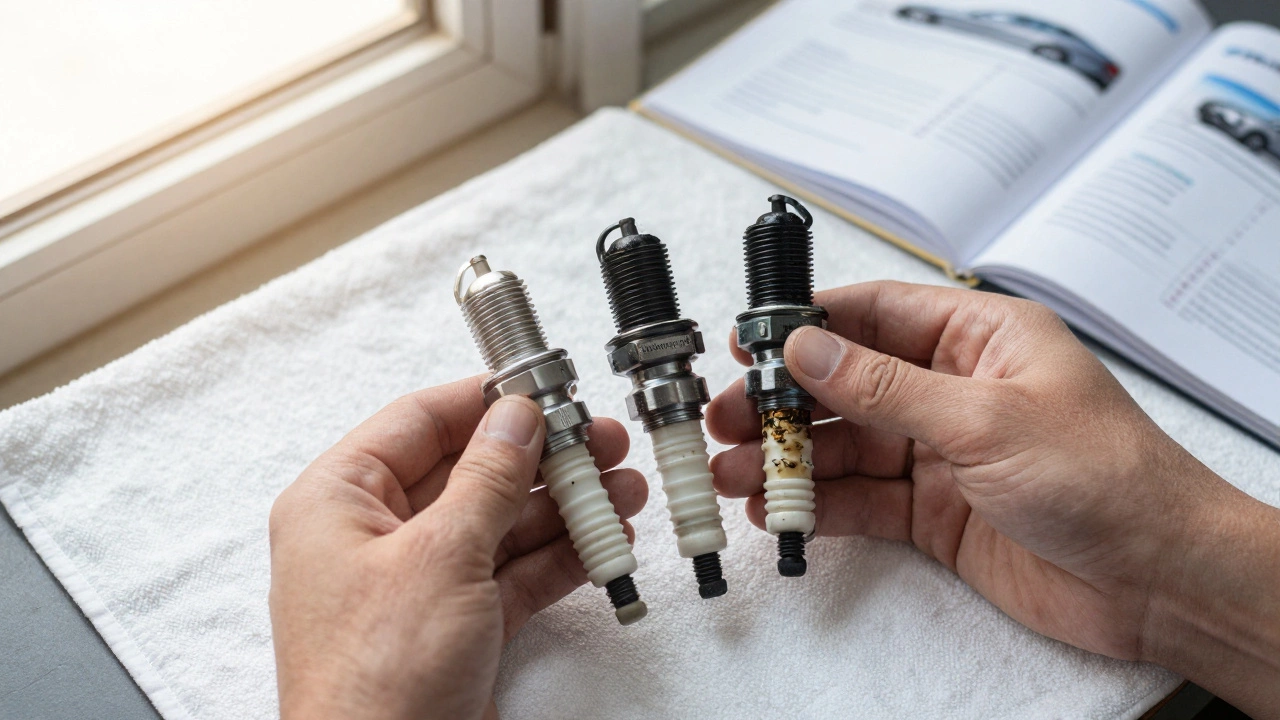
You don’t need to be a mechanic to check them. Remove one (after disconnecting the battery for safety). Look for:
- Black, dry soot → rich fuel mixture or weak spark
- White or blistered electrodes → overheating or wrong heat range
- Worn or eroded electrodes → normal wear, time to replace
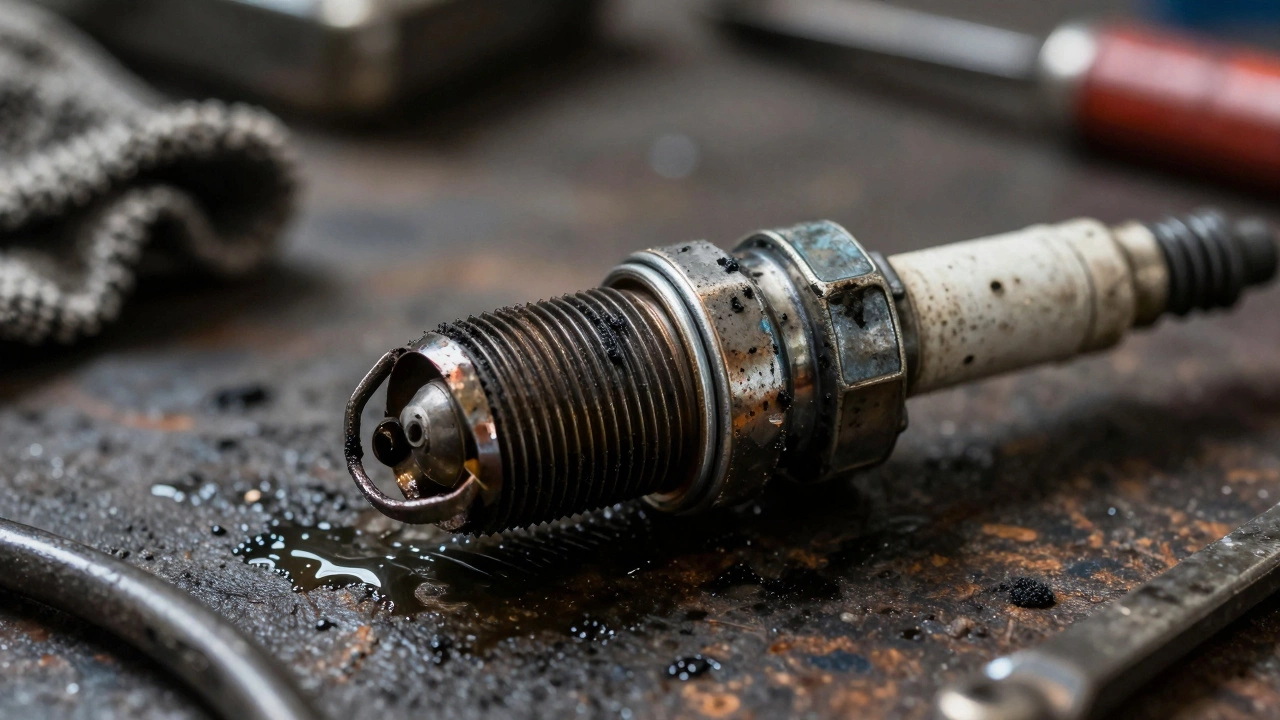
- Oil residue on the plug → leaking valve seals or piston rings
- Cracked porcelain → physical damage or improper installation
If you see any of these, it’s time for new plugs. Even if they look okay, if your car is over 60,000 miles and you haven’t changed them, it’s better to replace them than wait for trouble.
What kind of spark plugs should you use?
Always use the type your car manufacturer recommends. Don’t upgrade to a "premium" plug unless your manual says so. Some high-performance plugs need specific gap settings or heat ranges. Using the wrong ones can cause more harm than good.
For most modern UK cars, iridium is the standard. They last longer and burn cleaner. But if you drive an older model, copper might still be the right choice. Check your owner’s manual or ask your garage for the exact part number.