Brake Repair Cost Estimator
Current Brake Status
- ✔ Pads Replaced
- ✔ Rotors Resurfaced/Saved
- ✔ Standard Labor
- ✖ New Rotors Required
- ✖ Caliper Damage Risk
- ✖ Extended Labor Time
This is the additional cost incurred simply by ignoring the warning signs.
Ready to Calculate?
Select your symptoms on the left to see how much money could be saved by acting now.
That high-pitched squeal coming from your wheels isn’t just annoying-it’s a warning. If you’re wondering whether you can still drive with worn brake pads, the short answer is: yes, but only for a very short distance and at low speeds to get to a mechanic. Driving on them for any longer turns a cheap repair into an expensive disaster.
We’ve all been there. You hear the noise, check your phone, see the nearest garage is closed, and think, “I’ll just drive home.” It feels manageable until it isn’t. Your brakes are the single most critical safety system in your car. When they fail, physics takes over, and you have no control.
The Anatomy of Failing Brakes
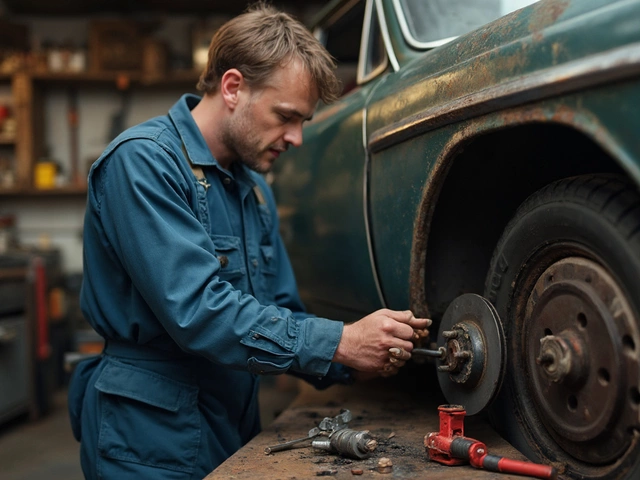
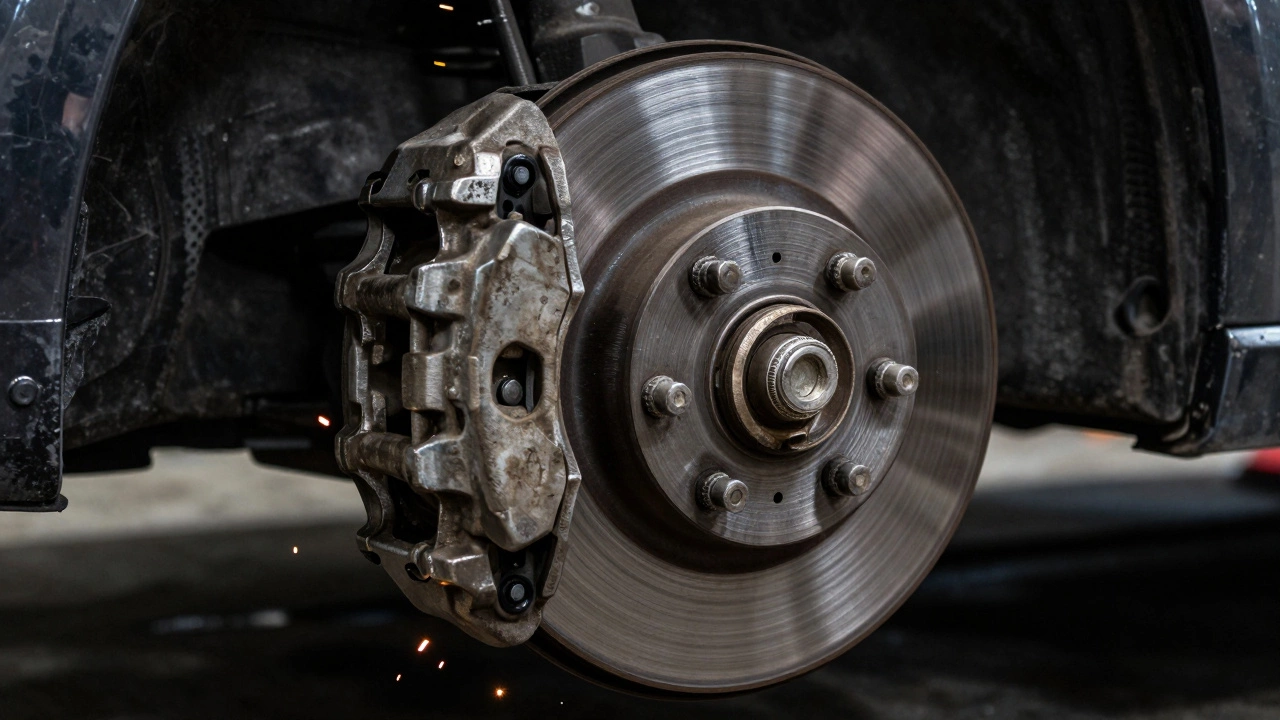
To understand why driving on worn pads is dangerous, you need to know what’s actually happening under the wheel. A brake system relies on friction. When you press the pedal, hydraulic pressure forces the brake caliper to squeeze the brake pads against the rotating brake rotor (or disc). This friction slows the wheel down.
Over time, the friction material on the pad wears away. New pads typically start with about 12mm to 14mm of material. As this wears down, two things happen:
- Reduced Friction Surface: Less material means less grip. The harder you press the pedal, the more the remaining thin layer heats up, leading to brake fade.
- Metal-on-Metal Contact: Once the friction material is gone, the steel backing plate of the pad grinds directly against the cast iron or steel rotor. This creates sparks, loud grinding noises, and severe damage.
Think of it like sandpaper. If you sand a piece of wood with fresh sandpaper, it works well. If you keep going until the paper wears through to the cardboard backing, you stop sanding and start gouging the wood. That’s exactly what happens to your brake rotors.
Signs Your Brake Pads Are Critically Worn
Your car tries to tell you when something is wrong before it breaks completely. Ignoring these signs is how small problems become big bills.
- The Squeal: Most modern cars have a wear indicator-a small metal tab embedded in the pad. When the pad wears down to a certain thickness, this tab scrapes against the rotor, creating a high-pitched squeal. This is your first alert.
- The Grind: If the squeal turns into a harsh, metallic grinding sound, the friction material is gone. You are now driving with metal backing plates touching the rotors. Stop driving immediately.
- Pedal Feel: Does the brake pedal feel softer than usual? Does it sink closer to the floor? This could indicate worn pads, but it might also mean air in the lines or a leak in the master cylinder. Either way, it’s unsafe.
- Vibration: If you feel a pulsation in the brake pedal or steering wheel when braking, your rotors may be warped from overheating due to uneven pad wear.
- Dashboard Warning Light: Many newer vehicles have electronic sensors that trigger a brake warning light on the dashboard when pad thickness drops below a safe limit.
The Hidden Costs of "Just One More Trip"
Why do mechanics always urge you to fix brakes ASAP? Because delaying repairs multiplies the cost. Here is the breakdown of what happens if you ignore worn pads:
| Component | If Replaced On Time | If Ignored Until Metal Grinding |
|---|---|---|
| Brake Pads | Standard replacement cost | Standard replacement cost |
| Brake Rotors | Often resurfaced or left alone if within tolerance | Must be replaced (grooved/warped) |
| Calipers | No issue | May seize due to debris; requires rebuild or replacement |
| Labor | 1-2 hours | 3-5 hours (more parts to remove/install) |
| Total Risk | Low financial risk | High financial risk + Safety hazard |
A set of brake pads might cost £80-£150 including labor. But if you grind the rotors, you add £200-£400 for new discs and more labor. If you damage the caliper piston because metal shavings clog the seal, you’re looking at another £150-£300 per wheel. What started as a £100 job becomes a £600+ bill overnight.
How Far Can You Actually Drive?
There is no safe mileage number for driving on worn brakes, but here are realistic guidelines based on severity:
- Slight Squealing: You likely have 3-5mm of pad life left. You can probably drive 50-100 miles to a shop, provided you drive gently and avoid heavy traffic.
- Loud Grinding: Zero pad life. You should not drive more than 1-2 miles. Every mile risks scoring the rotors beyond repair.
- Soft Pedal / No Braking Power: Do not drive at all. Call a tow truck. Your stopping distance has likely doubled or tripled.
If you must drive to a mechanic, follow these rules to minimize damage:
- Drive Slowly: Keep speeds under 30 mph (50 km/h).
- Anticipate Stops: Use engine braking. Shift to lower gears (or L/B mode) to slow down without using the foot brake.
- Leave Extra Distance: Triple your following distance. Assume you will take twice as long to stop.
- Avoid Hills: Going downhill generates massive heat in brakes. If you live in Manchester and need to go down steep streets like those near Deansgate, consider taking a flatter route or getting a tow.
DIY Check: How to Inspect Your Pads
You don’t need to be a mechanic to check if your pads are worn. You can often see them through the spokes of your alloy wheels.
- Locate the Caliper: Look behind your wheel. You’ll see a large metal disc (the rotor) with a clamp-like structure (the caliper) sitting on top of it.
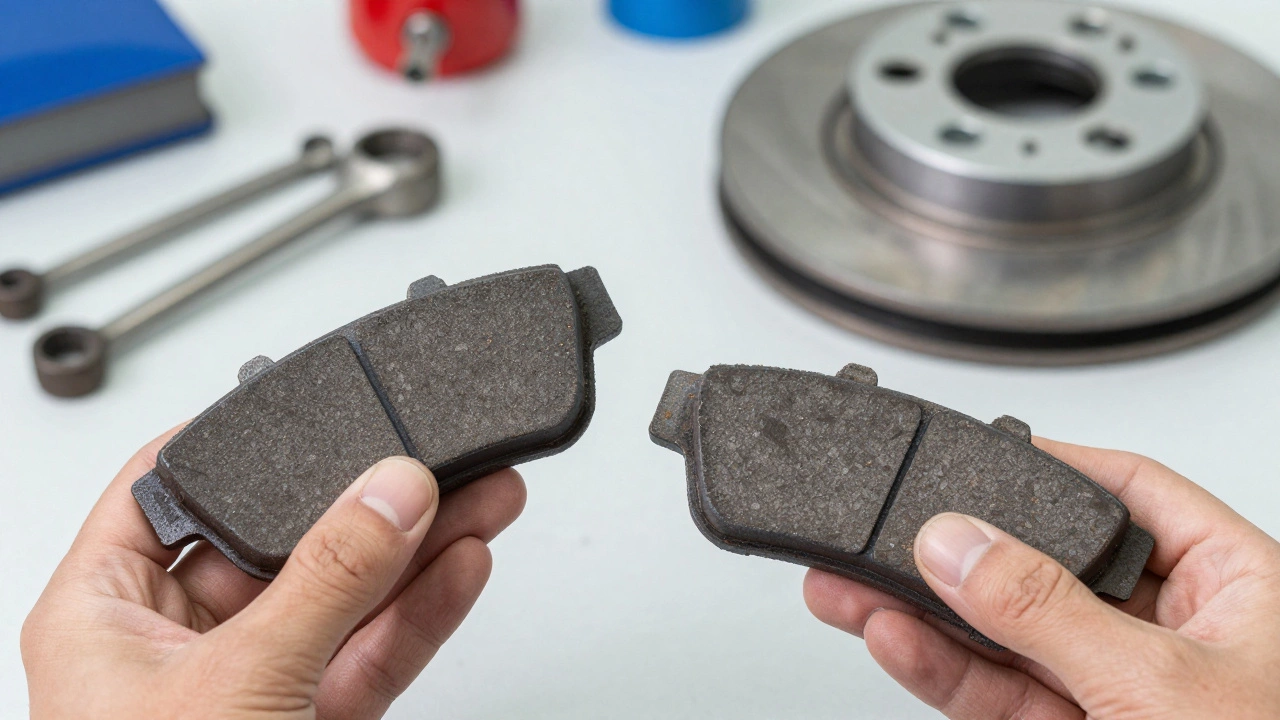
- Find the Pad: Inside the caliper, you’ll see the brake pad sandwiched against the rotor.
- Measure Thickness: Look at the friction material (the dark part). Ignore the shiny metal backing plate. Is the dark material thicker than a quarter-inch (about 6mm)? If it looks thinner than a pencil eraser, it’s time to replace them.
- Check for Even Wear: If one side of the pad is much thinner than the other, your caliper might be sticking, which causes uneven braking and pulling to one side.
If you have steel wheels, you won’t see the pads easily. In that case, listen for the noises mentioned earlier or visit a garage for a visual inspection.
When to Replace Rotors Along With Pads
Many drivers ask, “Do I really need new rotors?” The answer depends on the condition of the existing discs. Rotors should be replaced if:
- Deep Grooves: Run your finger across the rotor surface. If you feel deep ridges or scratches, the rotor is damaged. Smooth rotors provide consistent braking; grooved ones cause vibration and reduced stopping power.
- Blue Spots: Discoloration indicates overheating, which changes the metal’s properties and reduces effectiveness.
- Thickness Below Minimum: Each rotor has a minimum thickness stamped on it. If machining it down to remove grooves would make it thinner than this limit, it must be replaced.
- Age: If your car is over 10 years old and rotors have never been changed, it’s often safer to replace them proactively.
In the UK, where rain is common, rust can also pit rotors. While surface rust washes off, deep pitting compromises structural integrity.
Maintaining Brake Life
Want your next set of pads to last longer? Here are practical tips:
- Avoid Riding the Brake: Keeping your foot resting on the pedal generates heat and wears pads unnecessarily.
- Use Engine Braking: Especially useful in city driving or hilly areas. Downshift early to let the engine slow the car.
- Regular Fluid Checks: Brake fluid absorbs moisture over time, reducing boiling point and efficiency. Flush every 2 years.
- Don’t Ignore Small Noises: Addressing a slight squeal early prevents rotor damage later.
Is it illegal to drive with worn brake pads in the UK?
Yes, it can be. Under the Road Vehicles (Construction and Use) Regulations 1986, vehicles must have efficient braking systems. If your brakes are so worn that they compromise safety, you can fail an MOT test and potentially receive a fixed penalty notice or prosecution if deemed dangerous driving. Always ensure your brakes meet legal safety standards.
How long do brake pads usually last?
On average, brake pads last between 25,000 to 70,000 miles. However, this varies wildly based on driving style. City drivers who stop frequently will wear pads faster than highway commuters. Aggressive driving with hard stops also accelerates wear significantly.
Can I replace brake pads myself?
Yes, replacing brake pads is a common DIY task for experienced hobbyists. It requires basic tools like a jack, wheel brace, and C-clamp to compress caliper pistons. However, if you are unsure about bleeding brakes or handling calipers, professional installation ensures safety and warranty coverage.
What causes brake pads to wear out quickly?
Common causes include frequent stop-and-go traffic, carrying heavy loads, aggressive driving habits, stuck calipers, and low-quality brake materials. Environmental factors like road salt and moisture can also accelerate corrosion and wear.
Should I replace front and rear brake pads at the same time?
Not necessarily. Front brakes handle about 70% of stopping force, so they wear out faster. It’s common to replace front pads while rear pads still have life. However, many mechanics recommend doing all four simultaneously for balanced performance and convenience, especially if rear pads are nearing their end.