Car Radiator Replacement Cost Estimator
Estimated Total Cost
Based on typical industry averages
Key Takeaways on Radiator Costs
- Average total cost typically ranges from $300 to $800 for most passenger vehicles.
- Parts usually cost between $150 and $400, while labor adds another $150 to $400.
- Luxury vehicles or heavy-duty trucks can push total costs over $1,200.
- Ignoring a small leak often leads to engine failure, costing thousands more.
When we talk about a radiator replacement cost is the total expenditure required to swap out a damaged heat exchanger in a vehicle's cooling system. It isn't just the price of the metal part itself; it's a combination of the unit, the fresh fluid, and the technician's time. For most people, the goal is to get back on the road without getting ripped off by a shop.
Breaking Down the Parts: OEM vs. Aftermarket
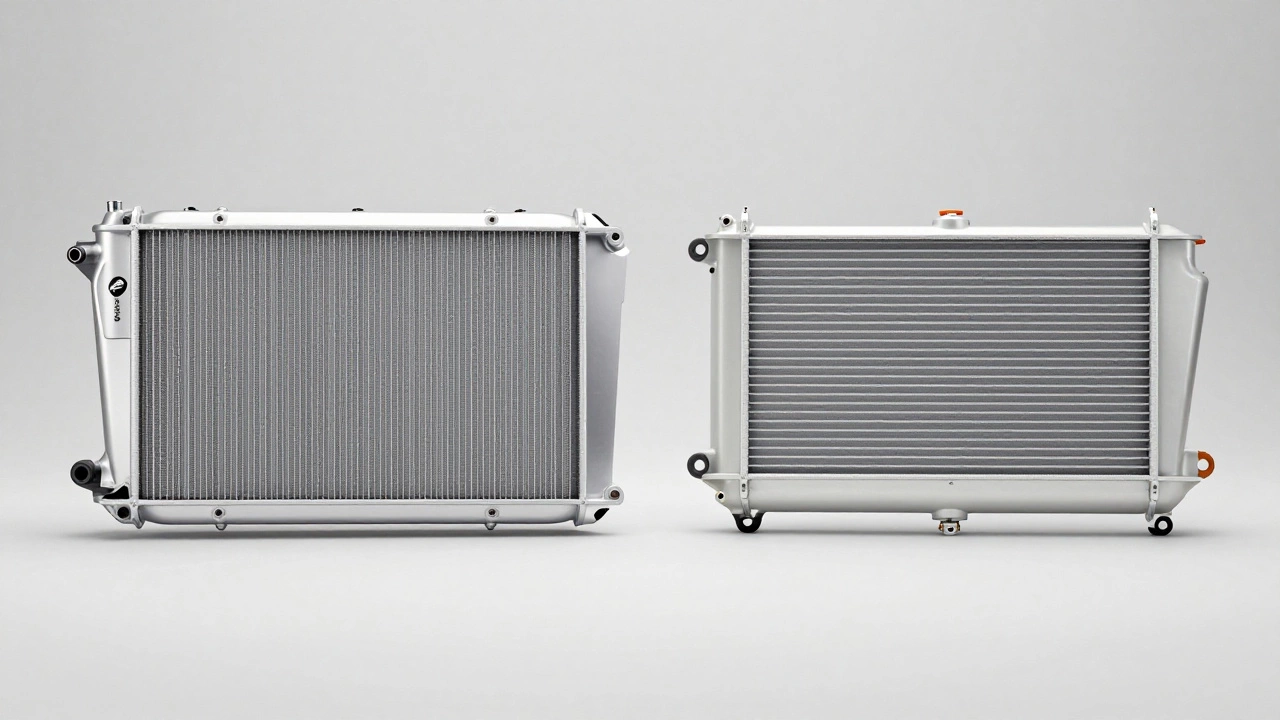
The first decision you'll face is where the new part comes from. You have two main paths: Original Equipment Manufacturer (OEM) or aftermarket parts. An OEM Part is a component made by the vehicle's manufacturer. They fit perfectly and carry the same warranty as your car, but they come with a premium price tag. On the other hand, Aftermarket Parts are made by third-party companies. They are often significantly cheaper and, in many cases, just as durable.
For a standard sedan, an aftermarket radiator might cost you $120, while the OEM version from the dealership could be $350. If you're driving an older car, the aftermarket route is usually the smartest move. However, if you have a high-performance engine, the precision of an OEM part helps prevent overheating during high-stress driving.
| Vehicle Category | Aftermarket Price | OEM Price | Estimated Lifespan |
|---|---|---|---|
| Economy Sedan | $100 - $200 | $250 - $450 | 5-8 Years |
| Mid-size SUV | $180 - $300 | $400 - $700 | 6-10 Years |
| Luxury/Sport Car | $300 - $600 | $800 - $1,500 | 7-12 Years |
| Heavy Duty Truck | $400 - $800 | $1,000 - $2,000 | 10+ Years |
The Labor Equation: Why Prices Vary
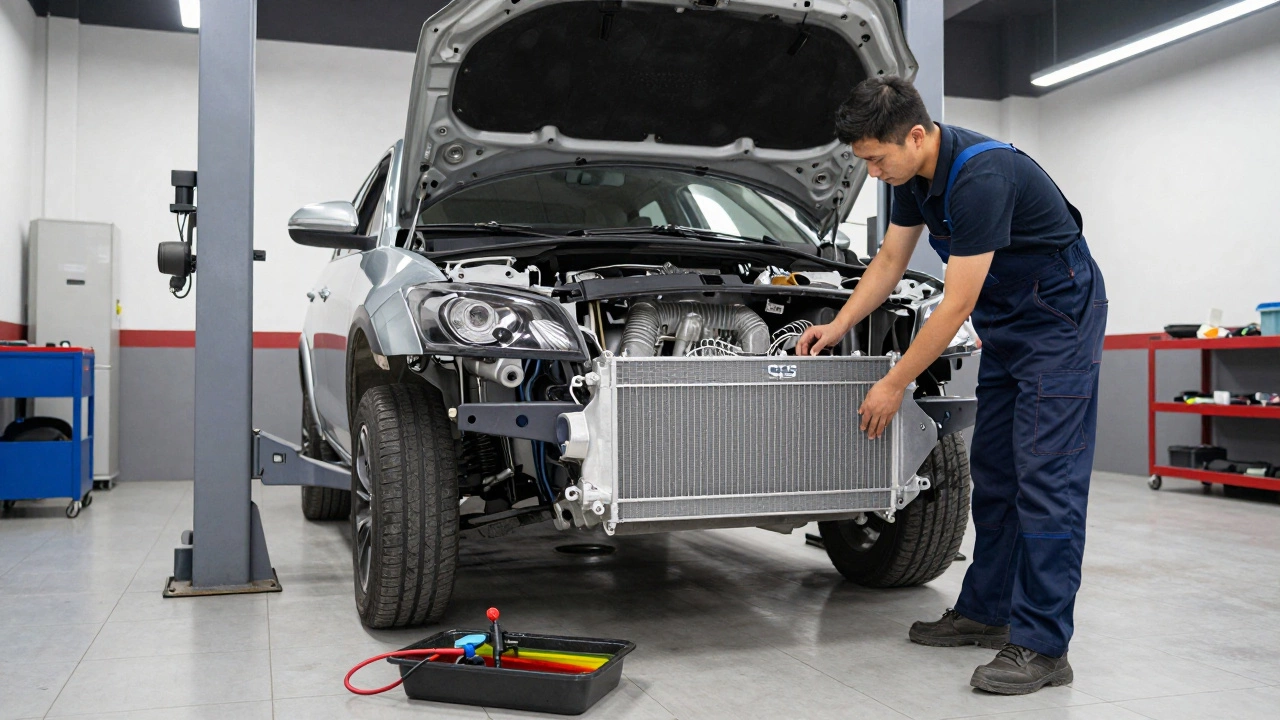
Replacing a radiator isn't always as simple as unscrewing a few bolts. In many modern cars, the Radiator is buried behind other components. A mechanic might have to remove the entire front bumper, the air intake system, and several cooling hoses just to reach the unit. This is where the labor cost spikes.
Most shops charge by the hour, with rates ranging from $90 to $160 per hour depending on your location. A simple job on a small car might take 2 hours, while a complex job on a luxury SUV could take 5 hours. If you take your car to a specialized dealership, expect the labor rate to be on the higher end of that spectrum. Independent shops are usually more flexible and cheaper, but make sure they provide a warranty on the work.
Hidden Costs: Coolant and Related Repairs
You can't just put a new radiator in and call it a day. You need Engine Coolant (also known as antifreeze) to fill the system. Depending on your car, you might need a specific type of coolant-like OAT (Organic Acid Technology) or HOAT (Hybrid Organic Acid Technology). A few gallons of high-quality coolant will add another $30 to $60 to your bill.
While the mechanic is in there, they'll likely find other issues. It's very common for the Radiator Hoses to be brittle or cracked. Replacing these hoses usually costs about $20 to $50 per hose plus a small amount of extra labor. If you skip replacing a bad hose now, you might end up with another leak in three months, meaning you'll have to pay for the labor all over again.
Then there is the Thermostat. This is a small valve that regulates coolant flow. If your radiator failed because the car overheated, the thermostat might have been the original cause. Replacing a failed thermostat typically adds $40 to $100 to the total project. It's a cheap part that prevents a very expensive engine meltdown.
Signs Your Radiator is Actually Dying
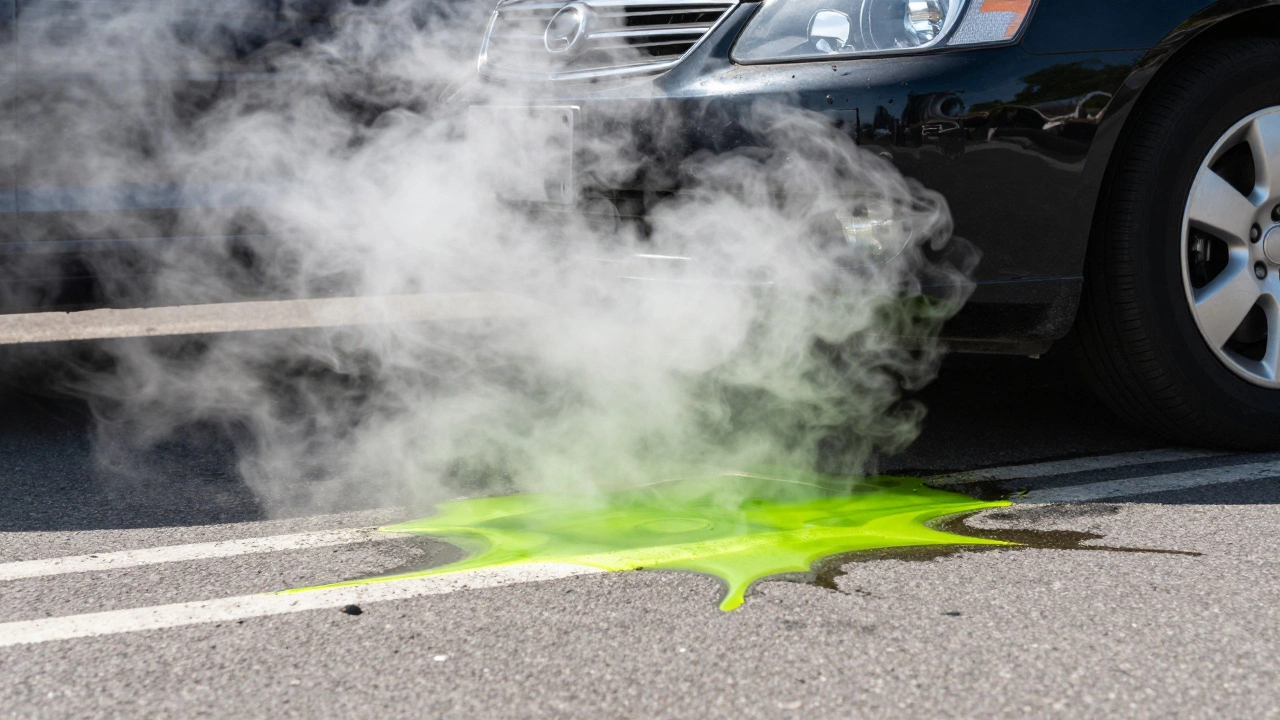
How do you know if you really need a replacement, or if it's just a loose cap? The most obvious sign is a puddle of coolant under the front of your car. Coolant is usually bright green, orange, or pink. If you see that color on your driveway, you have a leak.
Another red flag is the temperature gauge. If the needle is creeping toward the red zone during a normal commute, your Cooling System is struggling. You might also notice a sweet, syrup-like smell coming from the vents-that's the scent of leaking ethylene glycol. If you see bubbles in your coolant overflow tank, it could be a sign of internal corrosion or, worse, a blown head gasket.
DIY vs. Professional Installation
Can you do this in your own driveway? Yes, if you have a basic set of sockets and a drain pan. For a mechanically inclined person, a DIY replacement saves the $200-$400 labor fee. However, there are risks. If you don't properly "bleed" the air out of the system, you'll leave air pockets in the engine. These pockets can cause localized overheating, which can warp your cylinder head and lead to a total engine rebuild.
Professional installation gives you the peace of mind that the system is pressurized and leak-free. Most shops use a pressure tester to ensure the new radiator is sealed tight. For most people, the few hundred dollars spent on labor is a fair trade-off to avoid destroying a $5,000 engine.
Can I just patch a leaking radiator with sealant?
Stop-leak sealants are a temporary "emergency" fix. While they can plug a tiny pinhole, they often clog the narrow passages inside the radiator and can damage the water pump. If you use a sealant, plan to replace the radiator soon, as the chemicals can leave a permanent residue that makes future repairs harder.
Why is my radiator leaking after I just replaced it?
This is usually due to one of three things: a loose hose clamp, a defective new part (rare but possible), or a failure in another part of the system. Often, when a new radiator is installed, the increased pressure reveals a leak in an old, weakened hose that was previously unnoticed.
How long does a radiator replacement typically take?
For a professional mechanic, the actual swap usually takes 2 to 4 hours. This includes draining the old fluid, removing the unit, installing the new one, filling the coolant, and performing a test drive to ensure there are no leaks and the air is bled out.
Does a bad radiator affect fuel economy?
Indirectly, yes. When an engine runs too hot, it doesn't operate at peak efficiency. Furthermore, if your radiator fan has to run constantly to compensate for a clogged radiator, it puts a constant load on the alternator and engine, slightly increasing fuel consumption.
Is it cheaper to repair or replace a radiator?
In almost all modern cars, replacement is the only viable option. Older radiators were made of copper and brass, which could be brazed or soldered. Modern radiators are mostly aluminum with plastic tanks; once the plastic cracks or the aluminum corrodes, there is no reliable way to "patch" it for the long term.
Next Steps and Troubleshooting
If you've decided to move forward with a replacement, start by getting a written quote from two different shops-one dealership and one independent mechanic. This gives you a price baseline. If you notice your coolant level dropping but don't see a puddle, check your oil dipstick. If the oil looks like a chocolate milkshake, you have a blown head gasket, and a new radiator won't fix your problem.
For those choosing the DIY route, make sure you buy a "radiator kit" that includes new clamps and a gallon of the correct coolant. Always perform the work when the engine is completely cold to avoid severe burns from pressurized steam. After the install, let the car idle with the radiator cap off until the thermostat opens (the coolant will start moving) to ensure all air bubbles are purged from the system.