Engine Damage Risk Estimator
Select the symptoms currently occurring in your vehicle to see the estimated risk level and potential mechanical damage.
Select Current Symptom:
Please select a symptom from the list to see the potential impact on your engine.
What Actually Happens Inside Your Engine
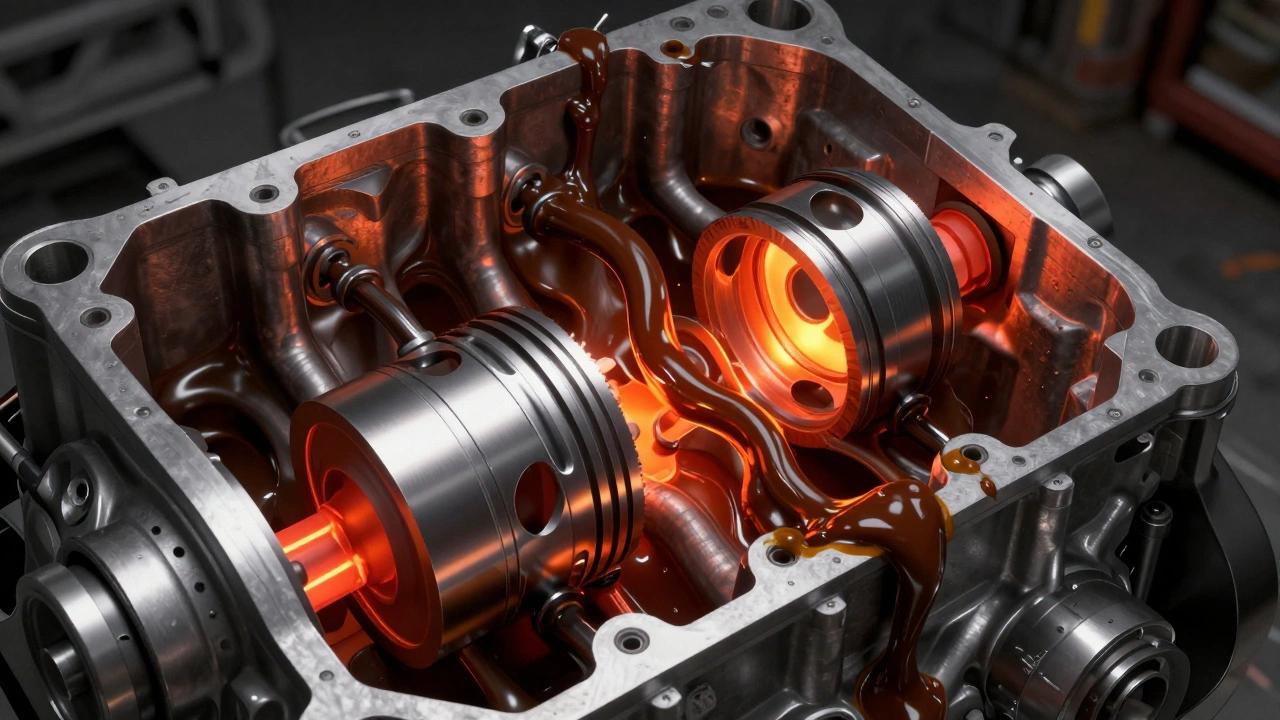
To understand the danger, you have to look at what Engine Oil is actually doing. It isn't just a lubricant; it's a coolant and a cleaner. When the oil level drops too low, the oil pump can't pick up enough fluid to maintain pressure. This means the oil doesn't reach the top of the engine or the critical bearings. The first thing that happens is increased friction. Parts like the Piston Rings and cylinder walls start rubbing against each other without a protective film. This creates intense heat. In a healthy engine, oil carries heat away from the combustion chamber. Without it, the temperature spikes rapidly, often faster than your coolant can handle, leading to localized hotspots that can warp the metal. If you keep driving, you move from "wearing out" your engine to "destroying" it. The most terrifying outcome is Engine Seizure. This happens when the friction creates so much heat that the metal components literally weld themselves together while the car is moving. If your connecting rods or crankshaft seize, the engine stops instantly. In the worst cases, a rod can snap and punch a hole straight through the engine block-a scenario that effectively turns your engine into a very expensive paperweight. Before the total crash, you'll likely experience "sludging." When oil is low, the remaining fluid gets overworked and overheated, causing it to break down and turn into a thick, gooey substance. This sludge blocks the narrow oil passages, meaning that even if you add oil later, it might not actually reach the parts that need it most. Your car usually tries to warn you long before the engine dies. The most obvious sign is the oil pressure warning light. Unlike the "check engine" light, which can be something minor like a loose gas cap, the oil light is an emergency. It means there is a critical lack of pressure in the system. If this light flickers or stays on, you need to stop immediately. Listen for "ticking" or "knocking" sounds. This is often the sound of hydraulic lifters or bearings struggling to stay lubricated. If you hear a rhythmic metallic tapping coming from the top of the engine, your Valvetrain is starving for oil. You might also notice a burning smell coming from the bonnet, which happens as the remaining oil superheats and begins to vaporize.
Depending on how long you drive with low oil, the bills will vary wildly. A simple top-up takes five minutes and costs very little, but delaying it by just a few miles can lead to a full rebuild. Here is how the damage scales: Oil doesn't just vanish; it either burns or leaks. If you find yourself topping up every few weeks, you have a problem. One common culprit is a leaking Valve Cover Gasket. This is the seal at the very top of the engine. If it fails, oil seeps out and often drips onto the hot exhaust manifold, creating that distinct burning smell. Then there's "oil burning." This happens when oil leaks past the piston rings into the combustion chamber and is burned along with the fuel. You'll see a bluish tint to your exhaust smoke. This is often a sign of high mileage or poor maintenance. Another possibility is a failing Oil Filter or a loose drain plug, which can cause a steady leak that leaves a puddle on your driveway every night.
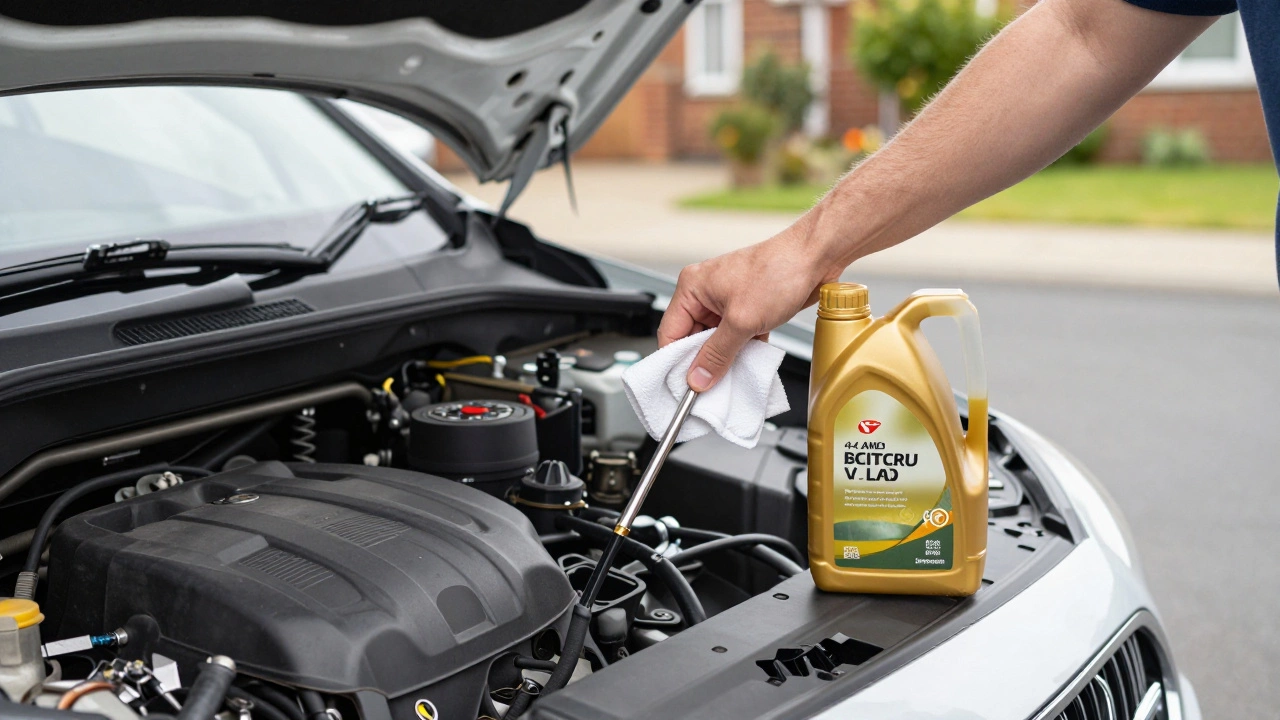
Checking your oil is a skill every driver needs. Don't rely solely on the electronic dipstick or the dashboard sensor. Park your car on a level surface and let the engine cool for at least 10 minutes so the oil settles back into the Oil Pan. A pro tip: always keep a liter of the correct grade of oil in your boot. If you're on a long trip to Scotland or driving through the Peaks, you don't want to be stranded because of a slow leak. Check your owner's manual for the specific viscosity-like 5W-30 or 0W-20-because using the wrong type can affect the flow and pressure of the lubricant. If you've topped up your oil and the warning light still comes on, stop driving immediately. This suggests a failure of the Oil Pump or a severe blockage. No amount of new oil will fix a pump that isn't pushing the fluid through the engine. In this case, towing the car is significantly cheaper than replacing the entire engine. If you notice the oil on your dipstick looks like a milky coffee latte, that's a sign of a blown head gasket, where coolant is mixing with the oil. That's another "stop everything" scenario that requires a professional diagnosis. It is highly discouraged. The oil light indicates a drop in pressure, not just level. This means critical engine components may already be rubbing metal-on-metal. Even a two-mile drive can cause permanent scoring on cylinder walls or bearing failure. The safest move is to pull over and add oil or call a recovery service. No. Adding oil only treats the symptom, not the cause. If your car is consuming oil, you have either an internal leak (burning oil) or an external leak (gaskets/seals). While topping up keeps the engine running, you should have a mechanic find the source of the leak to avoid an unexpected engine failure. Oil level is the volume of oil in the pan. Oil pressure is the force with which that oil is pumped through the engine. You can have enough oil (level) but still have low pressure if the oil pump fails or a filter is clogged. Both are dangerous, but low pressure causes engine damage almost instantly. As engines age, piston rings can wear down and lose their seal. This allows oil to leak into the combustion chamber where it is burned off. Additionally, valve stem seals can harden and leak oil into the cylinders. This is common in high-mileage vehicles and usually requires a partial or full engine overhaul to fix. Overfilling can cause "oil aeration," where the crankshaft hits the oil and whips it into a froth. This foam cannot be pumped effectively, leading to a loss of oil pressure and potentially causing the same damage as having too little oil. It can also force oil into the intake system, leading to heavy smoke and fouled spark plugs.The Slippery Slope to Engine Seizure
Red Flags You Can't Ignore
The Cost of Neglect: A Comparison
Estimated Damage Levels from Low Oil
Stage Symptoms Potential Damage Repair Complexity Minor Low Level Oil light flickers occasionally Increased wear on piston rings Low (Top-up oil) Critical Low Level Loud ticking, oil light stays on Worn bearings, overheating Medium (Flush and Seal) Severe Depletion Engine knocking, loss of power Scored cylinder walls, warped head High (Partial Rebuild) Total Failure Engine stalls, metallic bang Engine Seizure, broken rods Extreme (Full Replacement) Common Reasons Why Oil Levels Drop
How to Properly Check and Manage Your Oil
When to See a Mechanic
Can I drive a few miles if the oil light is on?
Does adding more oil fix a leaking engine?
What is the difference between the oil level and oil pressure?
Why does my car burn oil as it gets older?
What happens if I put too much oil in the engine?