Suspension Health Calculator
How's Your Suspension?
This tool helps you assess the condition of your suspension system based on your vehicle's mileage, driving conditions, and symptoms.
Suspension Assessment
Driving with worn suspension isn’t just uncomfortable-it’s dangerous. If your car bounces like a basketball over speed bumps, leans heavily in turns, or feels loose when you steer, your suspension is failing. And no, you can’t ignore it until it breaks. By January 2026, the UK’s MOT rules are stricter than ever, and worn suspension components are one of the top reasons cars fail inspections. But even if your car passes the test, that doesn’t mean it’s safe.
What Happens When Suspension Wears Out?
Your suspension system isn’t just there to make the ride smooth. It keeps your tires in contact with the road. That’s critical for braking, turning, and avoiding accidents. When shocks or struts wear out, your tires lose grip. Studies from the UK’s RAC show that worn suspension can increase stopping distances by up to 20% on wet roads. That’s the difference between stopping in time and hitting a car that suddenly brakes ahead of you.
Worn control arms, ball joints, or bushings cause uneven tire wear. You might not notice it at first, but by the time your tires need replacing early, you’ve already spent more on replacements than you would’ve on new suspension parts. And those worn parts don’t just hurt your tires-they affect steering. A loose ball joint can make your car pull to one side without you touching the wheel. That’s not a quirk. That’s a failure waiting to happen.
How to Tell If Your Suspension Is Worn
You don’t need a mechanic to spot the signs. Here’s what to look for:
- Bouncing too much after hitting a bump-if your car keeps bobbing up and down, your shocks are done.
- Uneven tire wear-if one side of your tire is bald while the other still has tread, suspension misalignment is likely the cause.
- Nose dive when braking-your front end should dip slightly, but if it dives hard like a diving board, your front shocks are weak.
- Clunking or knocking noises over bumps-this often means worn bushings or loose mounting hardware.
- Steering feels vague-if your car doesn’t respond quickly or feels floaty at highway speeds, your suspension isn’t holding the chassis steady.
There’s also a simple test you can do yourself. Push down hard on each corner of your car and let go. If it bounces more than once or twice, the shock absorbers are worn out. Most manufacturers say shocks last 50,000 to 80,000 miles, but in the UK, where roads are rough and weather is wet, they often fail sooner.
The Hidden Costs of Delaying Repair
Some drivers think, “It’s not broken yet, so why fix it?” But worn suspension doesn’t just fail-it damages other parts. Every time your tire loses contact with the road, it slams back down harder. That stresses your wheel bearings, CV joints, and even your steering rack. Replacing a worn shock might cost £150 per corner. Replacing a damaged CV joint? That’s £400 to £700.
And then there’s the insurance angle. If you’re in an accident caused by poor vehicle maintenance, your insurer could deny your claim. The UK’s Association of British Insurers has confirmed cases where drivers lost payouts because their cars had known mechanical faults-including worn suspension. You don’t need a court ruling to know this: driving with bad suspension is gambling with your safety and your wallet.
What Parts Actually Wear Out?
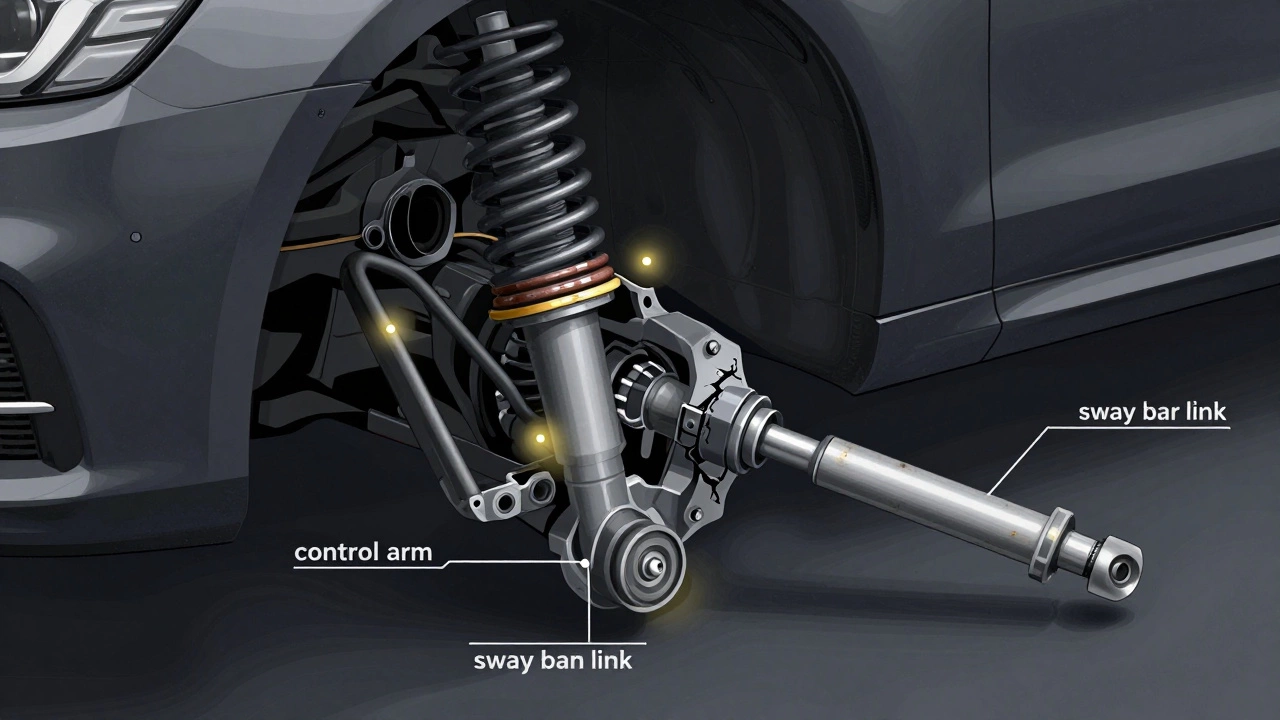
Suspension isn’t one part-it’s a system. Here’s what usually fails first:
- Shock absorbers and struts-these dampen movement. They wear out from constant compression and heat.
- Control arms-they connect wheels to the frame. Ball joints on the ends wear out and become loose.
- Bushings-rubber mounts that absorb vibrations. They crack, harden, and fall apart over time.
- Sway bar links-these keep the car level in corners. When they go, you feel excessive lean.
- Spring coils-less common to fail, but if they sag, your car sits lower, and alignment goes off.
Most people replace shocks and struts together because they wear at the same rate. Replacing just one side creates imbalance, which makes handling worse. Always replace in pairs-front or rear, not just one corner.
When Should You Replace Suspension Parts?
There’s no magic number, but here’s a practical guide based on UK driving conditions:
- 50,000-60,000 miles: Start checking for wear. If you drive mostly on rough roads or in winter, check at 40,000.
- 70,000+ miles: Replace if you notice any symptoms. Don’t wait for a failure.
- 8-10 years old: Even if mileage is low, rubber bushings and seals dry out. Age matters as much as miles.
Winter in Manchester means salt on roads, potholes from freeze-thaw cycles, and wet surfaces that make every bump worse. That’s brutal on suspension. If you’ve owned your car since 2018 and haven’t checked the suspension, you’re overdue.

What Happens If You Ignore It?
Ignoring worn suspension doesn’t lead to a slow decline-it leads to sudden failure. A ball joint can snap while you’re turning. A strut can collapse during an emergency swerve. These aren’t rare events. In 2024, the DVSA reported over 1,200 vehicle defects linked to suspension failure during roadside checks. Many of those drivers had no idea their car was unsafe.
And if you’re caught with visibly worn suspension during an MOT, your car will fail. No second chances. You’ll have to get it fixed and return for a retest. That’s £100+ in extra fees, plus time off work. It’s cheaper and safer to fix it before the test.
What Are the Alternatives?
Some people try to save money by buying cheap aftermarket parts. That’s risky. Low-quality shocks can wear out in under 10,000 miles. Stick with reputable brands like Monroe, KYB, or Bilstein. They’re more expensive upfront but last longer and perform better in wet conditions.
Don’t try to “tough it out” with temporary fixes. Adding air to your tires won’t fix worn shocks. Lowering your car won’t improve handling-it’ll make it worse. Suspension isn’t something you can hack. It’s a safety system.
What Should You Do Next?
If you suspect your suspension is worn, don’t wait. Book a professional inspection. A good garage will check all components-not just the shocks. Ask for a written report with photos. That way, you know exactly what’s wrong and why.
If you’re comfortable doing it yourself, get a repair manual for your car model and check the bushings and ball joints. Look for cracks, play, or grease leaks. But if you’re unsure, get it checked. One mistake during DIY repair can cost you more than a professional job.
Driving with worn suspension isn’t a minor issue. It’s a hidden risk that affects your control, your safety, and your finances. Fix it before it fixes you.
Can I pass my MOT with worn suspension?
No. Worn suspension components like damaged shocks, broken springs, or loose ball joints are automatic MOT failures. The test checks for excessive movement, corrosion, and visible damage. Even if your car drives okay, if the inspector finds worn bushings or leaking struts, it will fail. Don’t risk it-get it checked before your MOT.
How much does it cost to replace suspension parts?
Replacing a pair of shocks or struts typically costs between £200 and £500, including labour. Control arms and bushings can add £100-£300 per side. High-quality parts and labour at a reputable garage will cost more, but you’ll get better performance and longevity. Cheap parts might save £50 now but cost you £300 later.
Do I need to replace all four shocks at once?
Yes. Replacing only one or two shocks creates imbalance. Your car will handle differently on each side, making steering unpredictable and increasing tire wear. Always replace shocks or struts in pairs-front or rear together. For full safety, replace all four if they’re near the same age.
Can worn suspension cause accidents?
Absolutely. Worn suspension reduces tire contact with the road, especially in wet or icy conditions. This increases stopping distances and makes it harder to avoid obstacles. In 2023, the AA reported over 300 accidents in the UK where poor suspension was a contributing factor. Many of those drivers didn’t realize their car was unsafe until it was too late.
How long do suspension parts last in the UK?
In the UK, suspension parts typically last 50,000 to 80,000 miles, but harsh road conditions, salt, and frequent potholes can cut that in half. If your car is older than 8 years, even low mileage doesn’t guarantee good condition-rubber bushings dry out over time. Regular inspections every 10,000 miles are recommended.