AC Air Filter Health Checker
Check the boxes below that match your current vehicle symptoms to get an instant diagnosis.
Select the symptoms you are experiencing and click "Get Diagnosis" to see if your filter needs replacement.
You turn on the A/C, expecting that crisp, cool blast of conditioned air. Instead, you get a lukewarm wheeze and maybe a faint whiff of something old socks left in a gym bag. It’s frustrating, but before you panic about a blown compressor or a refrigerant leak, look at the simplest culprit: your air filter. This small component is the gatekeeper of your vehicle's breathing system, and when it fails, everything else suffers.
Most drivers ignore their filters until they completely stop working. But catching a bad filter early saves money on repairs and keeps your lungs happy. So, how do you actually know if it’s time for a change? Let’s break down the physical signs, the sensory clues, and the simple tests you can do right now.
The Visible Clues: What a Dirty Filter Looks Like
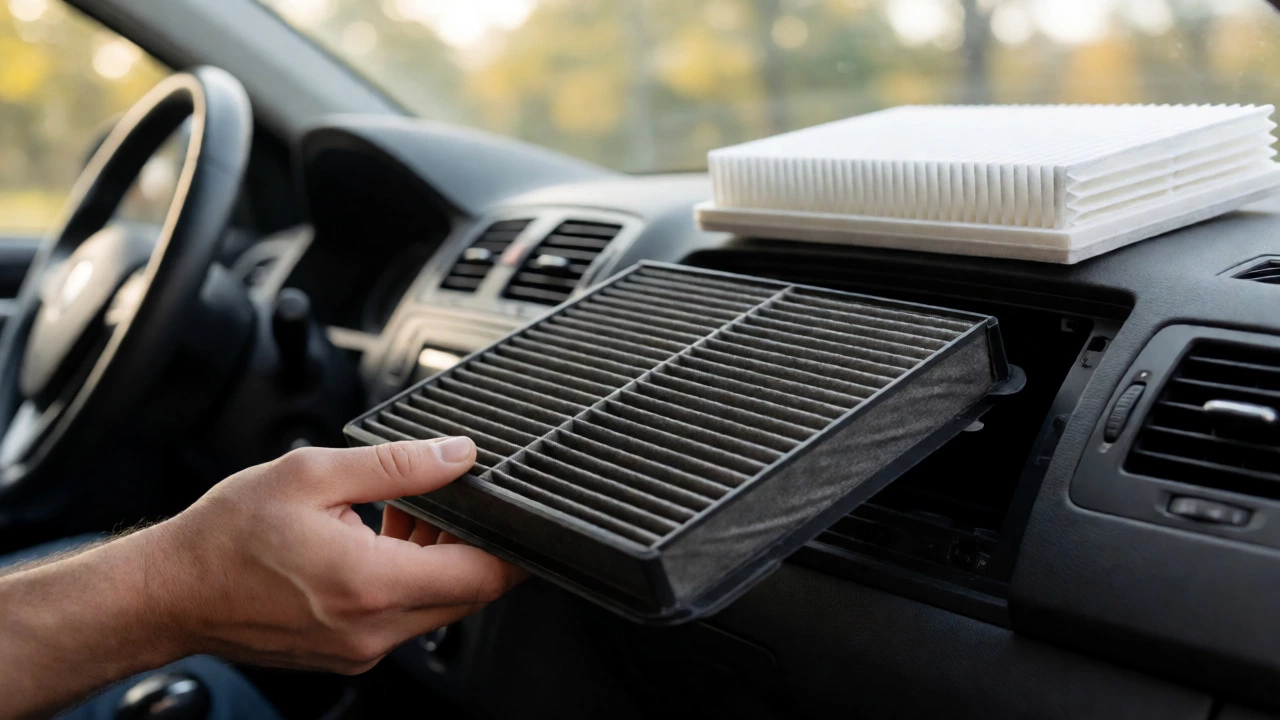
First things first-look at it. You don’t need a mechanic’s degree to spot a disaster. Depending on your car model, the cabin air filter is usually hidden behind the glove box or under the hood near the windshield cowl. Pop it out and hold it up to the light. A healthy filter looks like clean, white paper mesh. A bad one? It’s gray, brown, or black. If you see clumps of dirt, leaves, or insect debris stuck in the pleats, that’s a clear signal.
But visual inspection isn't just about color. Check for structural damage. Are the cardboard edges crumbling? Is the mesh torn? Even a small tear matters because unfiltered dust bypasses the barrier and coats your evaporator coil. Once that coil gets dirty, cleaning it becomes a nightmare, often requiring professional service that costs hundreds of dollars instead of the twenty bucks for a new filter.
Airflow Drop: The Physical Test
If the filter doesn’t look obviously destroyed, test the airflow. This is where most people miss the problem because the decline is gradual. Start by turning your fan to the highest setting with the A/C off (just fan mode). Hold your hand in front of the vent. Does the air feel powerful, or does it struggle to push past the dashboard?
| Condition | Fan Setting | Hand Sensation | Likely Cause |
|---|---|---|---|
| Healthy Filter | High | Strong, steady wind pressure | System functioning normally |
| Moderately Dirty | High | Noticeable drop in force compared to lower settings previously | Partial clogging; replacement recommended soon |
| Clogged Filter | Max | Weak breeze; sounds like vacuum struggling | Severe blockage; immediate replacement needed |
Another quick trick: remove the filter temporarily and run the fan. If the airflow instantly improves significantly, your filter is definitely the bottleneck. Don’t drive long distances without the filter, though-you’re just inviting dirt into your HVAC system.
The Smell Factor: Musty, Moldy, or Stale
Your nose knows before your eyes do. A dirty cabin filter acts as a breeding ground for mold, mildew, and bacteria. When moisture from the A/C condenses on the damp, dusty filter media, organic matter starts to grow. The result? That distinct "wet dog" or sour milk smell that hits you the moment you turn on the climate control.
This isn't just annoying; it’s a health hazard. If you or your passengers suffer from allergies or asthma, a smelly filter can trigger sneezing fits inside the car. Replacing the filter often eliminates the odor entirely. If the smell persists after a swap, the issue might be deeper in the evaporator core, but start with the cheap fix first.

Weird Noises and Foggy Windows
Listen closely. A restricted air filter forces the blower motor to work harder. You might hear a low humming or whining noise coming from behind the dashboard, especially at higher speeds. The motor is literally straining to pull air through the dense mat of grime.
Then there are the windows. Have you noticed your windshield fogging up faster than usual? Defrosting relies on dry, moving air. If the filter blocks airflow, the dehumidification process slows down. In rainy weather, this becomes a safety issue. You’re spending precious seconds waiting for visibility to return while other cars zoom past. A fresh filter restores the rapid defog capability your car was designed to have.
How Often Should You Replace It?
There’s no universal mileage rule because it depends heavily on where you drive. The general guideline from manufacturers is every 15,000 to 30,000 miles. But let’s be real-if you live in a city with heavy construction dust, or you frequently drive on unpaved roads, you might need to check it every 10,000 miles.
- Urban Drivers: Check annually. City air is thick with particulate matter from brakes and tires.
- Rural/Dusty Areas: Check every 6 months or 10,000 miles. Dirt and pollen accumulate quickly.
- Allergy Sufferers: Consider changing it twice a year, even if it doesn’t look terrible. Freshness matters more than visible dirt here.
Don’t wait for a warning light. Most cars don’t have a sensor for the cabin filter. It’s purely a maintenance schedule item. Treat it like an oil change: regular intervals prevent bigger headaches later.
DIY Replacement: Quick Steps
You can save labor costs by doing this yourself. It takes about ten minutes.
- Locate the Housing: Check your owner’s manual. Common spots are behind the glovebox (squeeze sides to drop it) or under the plastic cowl at the base of the windshield.
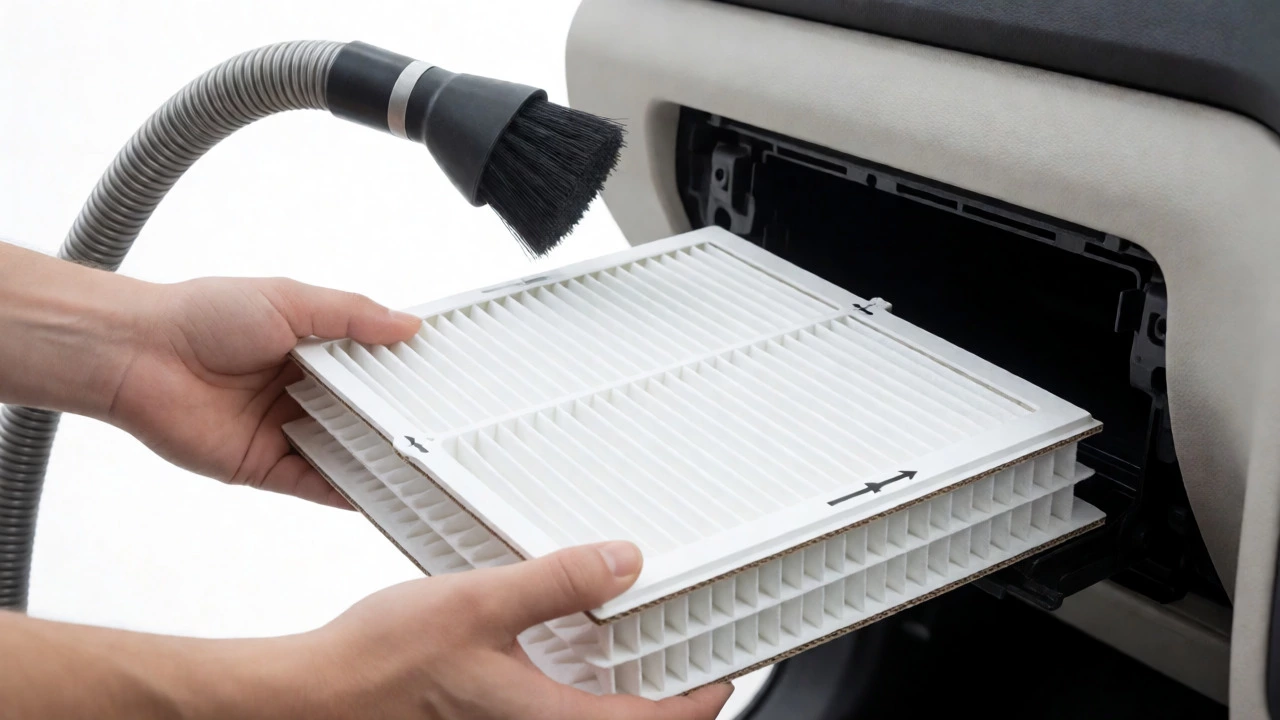
- Remove Old Filter: Note the direction of airflow arrows printed on the frame. Pull the old filter out gently so you don’t dump dirt into the housing.
- Clean the Slot: Use a vacuum with a brush attachment to suck out loose debris from the empty slot. Wipe away any remaining dust with a damp cloth.
- Insert New Filter: Align the airflow arrow correctly (usually pointing down toward the floor or toward the engine, depending on design). Push it in firmly to ensure no gaps around the edges.
- Reassemble: Snap the cover back on. Test the fan to ensure no rattles.
Pro tip: Wear a mask when removing the old filter. You’re disturbing a concentrated cloud of allergens and pollutants.
When It’s Not Just the Filter
Sometimes, replacing the filter doesn’t solve the problem. If airflow remains weak after installing a brand-new part, look elsewhere. A failing blower motor resistor could limit speed options. A blocked drain tube might cause water accumulation, leading to mold smells regardless of filter status. Or, your A/C system might genuinely be low on refrigerant, which reduces cooling efficiency but not necessarily airflow volume.
However, always rule out the filter first. It’s the cheapest, easiest variable to eliminate. Statistics from auto repair shops show that nearly 40% of "weak A/C" complaints stem from neglected cabin filters, not mechanical failures.
Can I clean my AC air filter instead of replacing it?
You can vacuum light dust off standard paper filters, but deep cleaning isn't recommended. Paper fibers trap particles internally, and washing can ruin the structure, causing them to collapse and block airflow. Activated carbon filters cannot be cleaned at all-they lose effectiveness once saturated. Always replace rather than reuse.
Does a dirty air filter affect gas mileage?
Indirectly, yes. While the cabin filter doesn't touch the engine, a clogged filter makes the blower motor work harder, drawing more electrical power from the alternator. This slight increase in load can marginally impact fuel economy. More importantly, a clogged engine air filter (under the hood) directly hurts mileage and acceleration.
What happens if I drive with a broken air filter?
Short-term, you’ll breathe poor-quality air and experience reduced comfort. Long-term, dirt bypasses the filter and accumulates on the evaporator coil. Cleaning a contaminated evaporator is expensive and difficult. Additionally, debris can enter the blower motor fan blades, potentially causing imbalance or premature wear.
Are HEPA filters worth the upgrade?
For allergy sufferers, yes. HEPA (High-Efficiency Particulate Air) filters capture smaller particles like pollen and pet dander better than standard filters. However, they restrict airflow slightly more. Ensure your car’s blower motor is strong enough to handle the resistance; otherwise, you might trade clean air for weak airflow.
Why does my car smell like vinegar after changing the filter?
This usually indicates bacterial growth on the evaporator coil itself, not the filter. Some aftermarket filters contain antibacterial agents that react with existing mold spores, producing a temporary acidic smell. Run the fan on high for 10 minutes with windows open to dissipate it. If it persists, the evaporator needs professional cleaning.