You walk into your home on a sweltering afternoon, hit the thermostat, and listen for that familiar hum. But have you ever stopped to wonder what’s actually happening inside that wall-mounted or window box? Specifically, how many filters does an AC unit have? It sounds like a simple question, but the answer trips up plenty of homeowners. Some think there’s just one. Others assume every component needs its own separate cartridge.
The short answer is: usually just one primary air filter per system. However, depending on your setup-whether it’s a central forced-air system, a split-system mini-split, or a standalone window unit-the location, type, and even the number of filtration stages can vary wildly. Getting this wrong means clogged coils, higher energy bills, and air that feels stale rather than fresh.
Quick Answer: How Many Filters Are in My System?
Most residential central air systems have one main return air filter. Ductless mini-splits often have two washable mesh filters (one for each indoor head). Window units typically have one slide-out mesh screen. High-end setups may add a secondary UV or HEPA stage, bringing the total to two distinct filtration points.
The Central Air System: The One-Filter Standard
If you have a traditional central heating and cooling system with ducts running through your walls, you’re likely looking at a single point of entry for filtration. This is the most common setup in UK homes with modern HVAC installations, as well as in North American housing stock.
In these systems, air is pulled from your living spaces back into the return ducts. Before that air reaches the sensitive evaporator coil or the furnace heat exchanger, it passes through a filter slot. This slot is almost always located in one of three places:
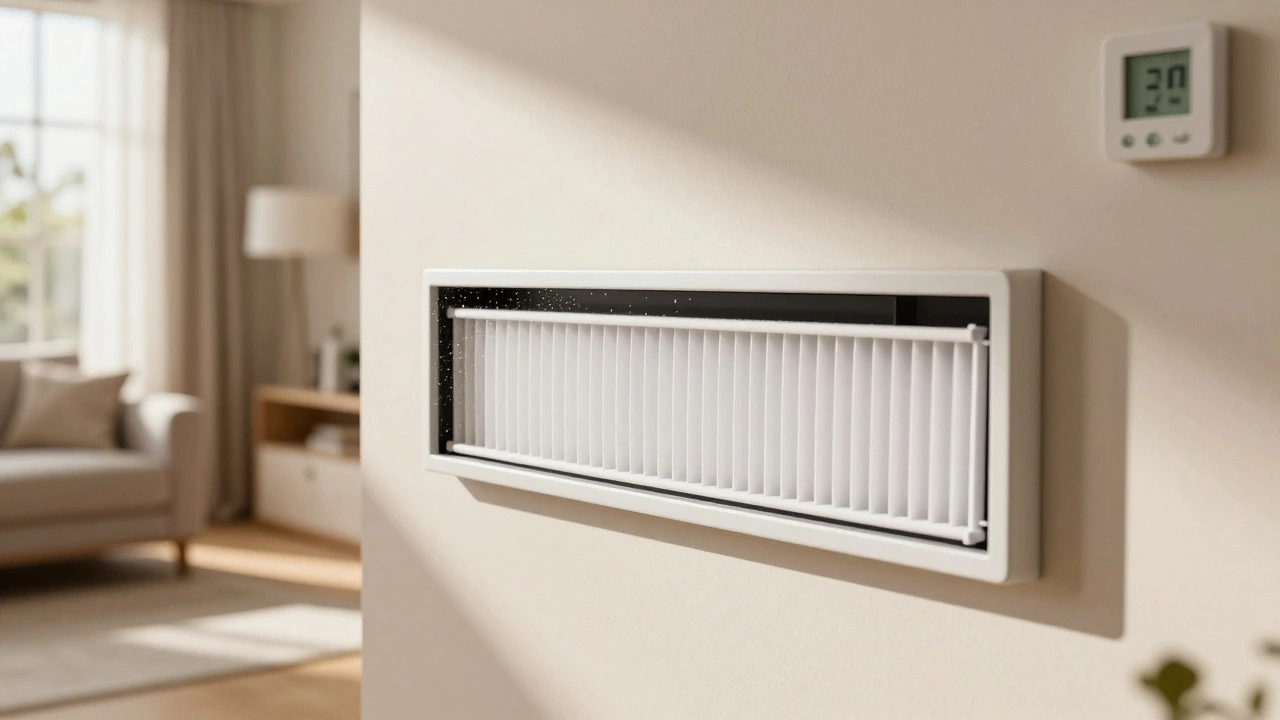
- The Return Air Grille: Look at the large vent on your wall or ceiling. If you remove the cover, you might find a thin pleated filter tucked behind it. This is common in older homes or apartments where space around the furnace is tight.
- The Furnace/Air Handler Cabinet: Open the service panel on your furnace or air handler. You’ll usually see a sliding track holding a rigid frame filter. This is the industry standard because it protects the blower motor and coils more effectively.
- A Dedicated Filter Rack: In newer constructions, builders sometimes install a standalone filter cabinet in the attic or crawlspace near the return plenum.
Regardless of where it sits, there is only one primary filter doing the heavy lifting. Why? Because airflow resistance is critical. Every filter adds "static pressure" to the system. Stack too many filters in series without proper engineering, and your blower motor has to work overtime, burning more electricity and potentially failing prematurely. So, while you might *want* multiple layers of protection, physics says stick to one high-quality filter unless your manufacturer specifies otherwise.
Ductless Mini-Split Systems: Two Filters Per Head
Here’s where things get interesting. If you’ve installed a ductless mini-split system-popular in rooms where ductwork isn’t feasible-you’re dealing with a different beast entirely. These units don’t pull air from a central return; they recirculate air within the specific room they’re mounted in.
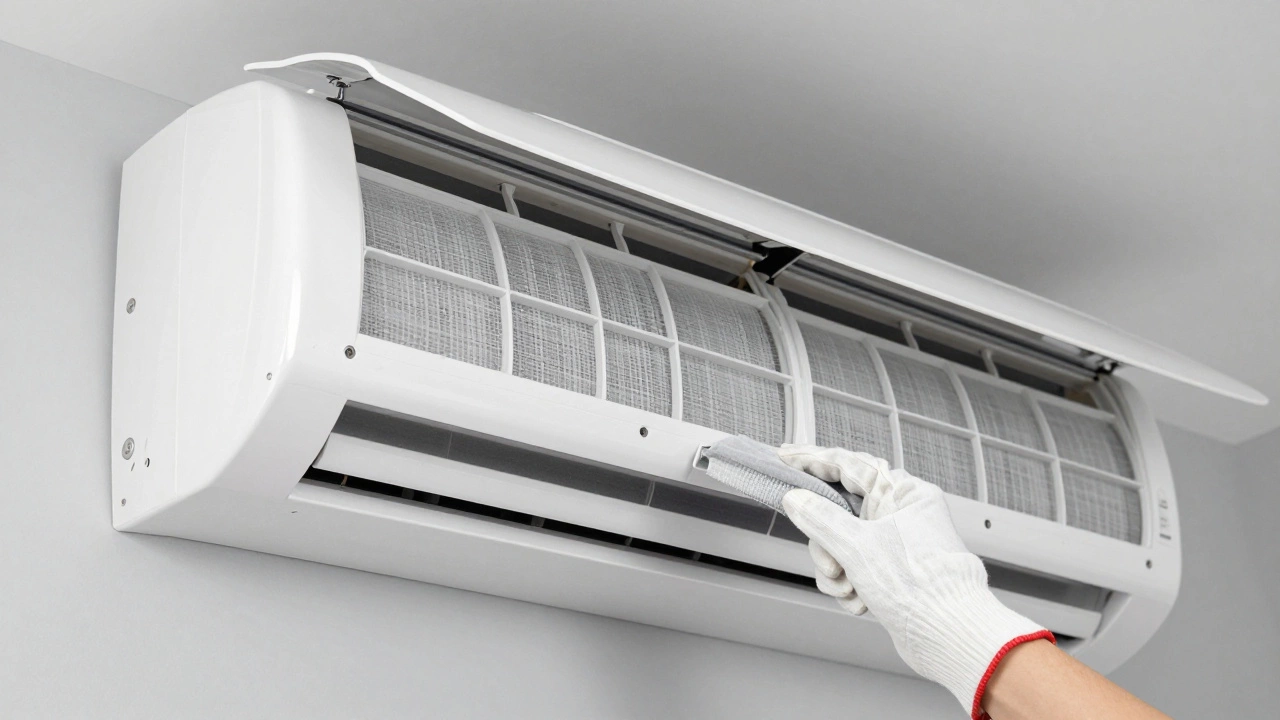
Each indoor wall-mounted head contains its own filtration assembly. When you lift the front panel of a typical mini-split, you’ll usually find two washable mesh filters. Yes, two. They sit side-by-side or stacked vertically, covering the entire intake area.
Why two? It’s largely about structural integrity and ease of cleaning. These filters are made of fine plastic mesh designed to catch dust, pet dander, and larger particulates. They aren’t meant to be replaced annually like their pleated cousins; instead, you rinse them with water every month or two. Having two smaller filters makes them easier to handle and ensures that if one gets slightly misaligned during reinstallation, the other still provides coverage. Plus, splitting the intake area reduces the velocity of air hitting each individual filter strand, improving capture efficiency for coarse particles.
Important note: Do not confuse these mesh screens with true HEPA filters. Most standard mini-splits do not come with medical-grade filtration out of the box. If you need hospital-level air cleanliness, you’d need to look for specialized models with added electrostatic or carbon stages, which would increase the complexity of the internal assembly.
Window and Portable Units: The Single Slide-Out Screen
For renters or those needing temporary cooling, window and portable AC units offer simplicity. These self-contained boxes have a very straightforward design. Inside the chassis, behind the front grille, sits a single aluminum or plastic mesh screen.
This filter serves a dual purpose: it keeps debris out of the condenser fan and prevents large insects from entering the unit. Unlike the pleated filters in central systems, this screen doesn’t trap microscopic allergens effectively. Its job is mechanical protection. You should vacuum or hose it off every few weeks during peak summer usage. Clogging this single filter will cause the unit to freeze up rapidly, as airflow over the evaporator coil is restricted.
When Do You Have More Than One? Advanced Filtration Stages
So far, we’ve established that the baseline is one filter per system. But what if you have severe allergies, live near a highway, or want to eliminate viruses and bacteria? That’s when the count goes up.
Some high-end central air systems feature secondary filtration stages. These aren’t always traditional "filters" in the sense of a disposable cartridge, but they act as additional barriers. Here’s how the count changes:
- Pre-Filter + Main Filter: Some commercial or industrial setups use a coarse pre-filter to catch hair and lint, followed by a finer MERV 13+ filter. In residential homes, this is rare due to cost and airflow issues, but some DIYers install a cheap fiberglass filter upstream of a premium pleated one. Warning: This often voids warranties and strains motors.
- UV-C Light Chambers: Not a filter per se, but often installed in the return duct after the main filter. It uses ultraviolet light to kill mold and bacteria that slip past the physical barrier. Technically, this is a fourth component in the air purification chain.
- Whole-House HEPA Units: Brands like AprilAire or Trane CleanEffects install a dedicated HEPA chamber in the return duct. This acts as a second, highly efficient filter stage. In this scenario, you have your standard pre-filter (if present) plus the massive HEPA cell block. That’s two distinct filtration entities working together.
If you have one of these advanced setups, you now have two maintenance schedules: changing the primary filter every 1-3 months, and inspecting/replacing the HEPA cells annually.
Identifying Your Filter Type and Location
Knowing *how many* filters you have is useless if you can’t find them. Let’s play detective. Grab a flashlight and check these spots based on your system type.
| System Type | Typical Filter Count | Common Location | Filter Material |
|---|---|---|---|
| Central Forced-Air | 1 | Furnace intake or return wall grille | Pleated synthetic or fiberglass |
| Ductless Mini-Split | 2 (per indoor head) | Behind the front panel of the wall unit | Washable plastic mesh |
| Window Unit | 1 | Inside the front casing | Metal or plastic screen |
| Portable AC | 1 | Side or rear intake vent | Mesh screen |
| Advanced Whole-House | 2+ | Main slot + dedicated HEPA chamber | Pleated + HEPA media |
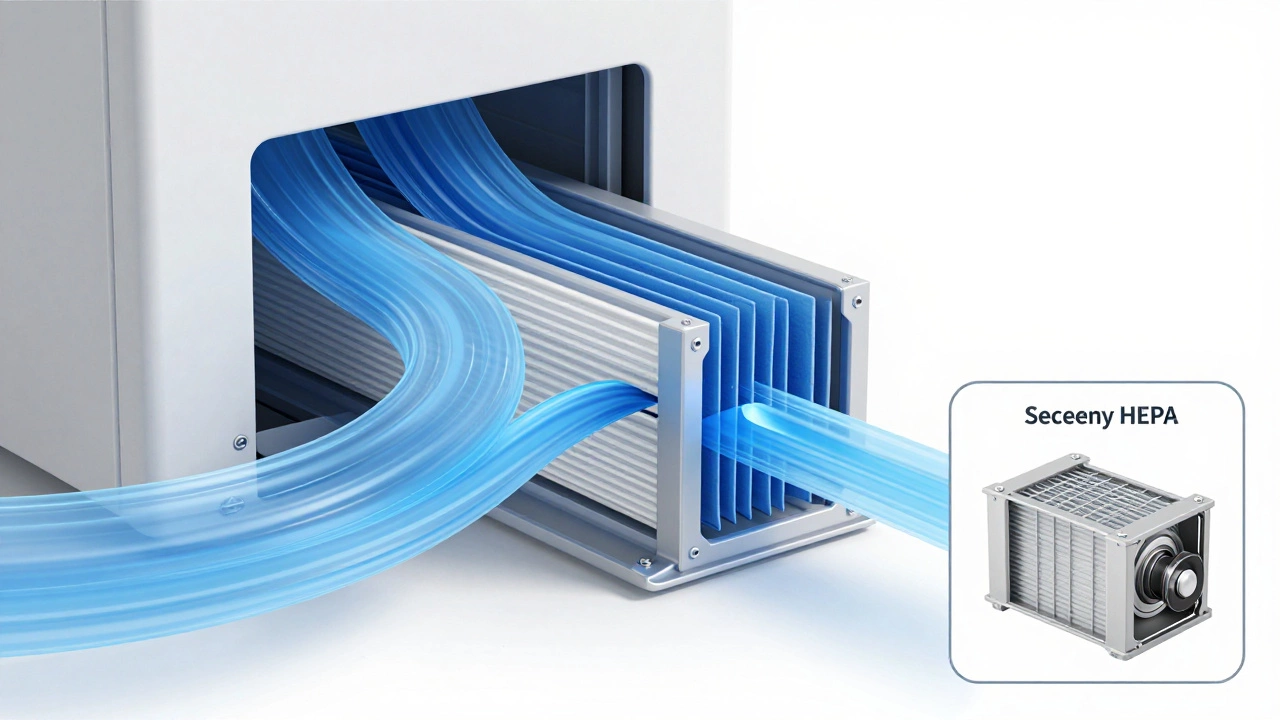
Once you locate the filter, look for the arrow printed on the frame. It indicates airflow direction. Installing it backward is the #1 mistake people make. The arrow must point toward the furnace/blower motor, not away from it. If the air hits the stiff backing of the filter first, dust will blow right through the media, rendering it useless.
Why Filter Count Matters for Efficiency
You might think, "If one filter works, why not add another for extra clean air?" It’s a logical thought, but it ignores the laws of thermodynamics and fluid dynamics. Every filter creates resistance. Engineers call this "external static pressure."
Your AC unit’s blower motor is calibrated to push a specific volume of air (CFM - Cubic Feet per Minute) against a specific amount of resistance. If you add an unauthorized second filter, you increase that resistance. The motor struggles. The airflow drops. When airflow drops, the evaporator coil gets too cold. Ice forms on the coil. The system shuts down. You’re left with no cooling and a repair bill.
Furthermore, a dirty single filter is worse than no filter at all. A clogged filter restricts airflow just like adding a second one would. That’s why the frequency of replacement matters more than the quantity. For a standard 1-inch pleated filter, check it monthly. Replace it every 90 days. If you have pets or live in a dusty area, swap it every 60 days. For thicker 4-5 inch media filters, you can stretch it to 6-12 months.
Common Mistakes Homeowners Make
I’ve seen enough HVAC service calls to know where people go wrong. Avoid these pitfalls:
- Buying the Wrong Size: Don’t guess. Measure the opening width, height, and depth. A filter that’s too small lets unfiltered air bypass the media. One that’s too big won’t fit and can damage the blower wheel.
- Ignoring the MERV Rating: MERV stands for Minimum Efficiency Reporting Value. For most homes, MERV 8-11 is the sweet spot. It catches pollen and dust mites without choking the system. MERV 13+ requires a professionally sized system. Don’t buy a MERV 16 for a standard home AC; you’ll regret it.
- Leaving the Slot Empty: Running an AC without a filter seems harmless until a feather, a mouse, or a clump of drywall dust lands on your evaporator coil. Cleaning a frozen, dirty coil costs hundreds. Replacing a $15 filter costs nothing.
- Confusing Furnace and AC Filters: In combined systems, the furnace and AC share the same air handler and thus the same filter. You don’t need separate ones for heating and cooling seasons. Keep it filtered year-round.
Final Thoughts: Simplicity Wins
So, how many filters does an AC unit have? For 90% of households, the answer is one. It’s a single, humble rectangle that deserves your attention twice a year. Whether it’s tucked behind a wall grille or sitting in your furnace closet, that one filter is the guardian of your indoor air quality and your equipment’s lifespan.
If you have a mini-split, remember to wash those two mesh screens regularly. If you’ve invested in a whole-house HEPA system, respect the two-stage process. But resist the urge to overcomplicate. More filters don’t mean better air-they mean broken compressors and higher bills. Stick to the manufacturer’s specs, change the filter on schedule, and enjoy cool, clean air all summer long.
Can I put two filters in my AC unit for better filtration?
Generally, no. Adding a second filter increases static pressure, restricting airflow. This can cause the evaporator coil to freeze, reduce cooling efficiency, and burn out the blower motor. Only add a second stage if your system was specifically designed for it (e.g., a whole-house HEPA insert).
How often should I replace my AC filter?
Standard 1-inch pleated filters should be replaced every 90 days. If you have pets, allergies, or a dusty environment, check monthly and replace every 60 days. Thicker 4-5 inch media filters can last 6-12 months. Always follow your manufacturer's guidelines.
What happens if I run my AC without a filter?
Dust and debris will accumulate on the evaporator coil and blower motor. This reduces efficiency, causes the coil to freeze, and leads to costly repairs. It also circulates unhealthy particles throughout your home.
Do mini-split AC units have replaceable filters?
Most mini-splits have washable mesh filters, not disposable ones. You should remove and rinse them with water every 1-2 months during heavy use. Some high-end models include optional activated carbon or electrostatic filters that may need replacement.
Which way does the AC filter arrow point?
The arrow on the filter frame indicates the direction of airflow. It should always point toward the furnace or air handler blower motor. If you're unsure, look for an "Air Flow" label on the unit itself.