Brake Pad Diagnostic Tool
Select the symptoms you are experiencing to determine if your front or rear brake pads need attention.
Please select at least one symptom above to see recommendations.
General Safety Reminder
This tool provides a preliminary diagnosis. If you hear grinding, stop driving immediately. Front brakes typically handle 70-80% of stopping force and wear out 2-3x faster than rears. Always replace pads in pairs (both fronts or both rears) to ensure even braking.
You’re cruising down the M60, and suddenly you hear it. That sharp, metallic squeal that makes your stomach drop. Or maybe it’s a grinding noise that feels like someone is dragging a chain across your wheel. You know something is wrong with your brakes, but which ones? Is it the front brake pads doing all the heavy lifting, or are the rear pads finally giving up on you?
Here’s the thing: guessing wrong costs money. If you replace the wrong set, you’ve wasted cash on parts you didn’t need and labor hours you could have saved. Worse, if you ignore the real issue because you thought it was just the other axle, you might end up with warped rotors or even a safety hazard. Let’s figure out exactly what your car is trying to tell you.
Why Front Brakes Wear Out Faster Than Rear Brakes
Before we diagnose the noise, let’s look at the physics. When you hit the pedal, your car’s weight shifts forward. This phenomenon, known as weight transfer, dumps about 70-80% of the vehicle’s stopping force onto the front wheels. Because they do most of the work, front brake pads typically wear out two to three times faster than their rear counterparts.
This isn’t just a theory; it’s why mechanics often quote different replacement intervals for each axle. In a typical UK city driving scenario-stop-start traffic, roundabouts, hills-the front pads might need changing every 30,000 miles, while the rears could last upwards of 60,000 or more. So, statistically speaking, if one set fails before the other, it’s almost always the fronts. But statistics don’t help when you’re standing in your driveway looking at four wheels.
The Visual Check: What to Look For
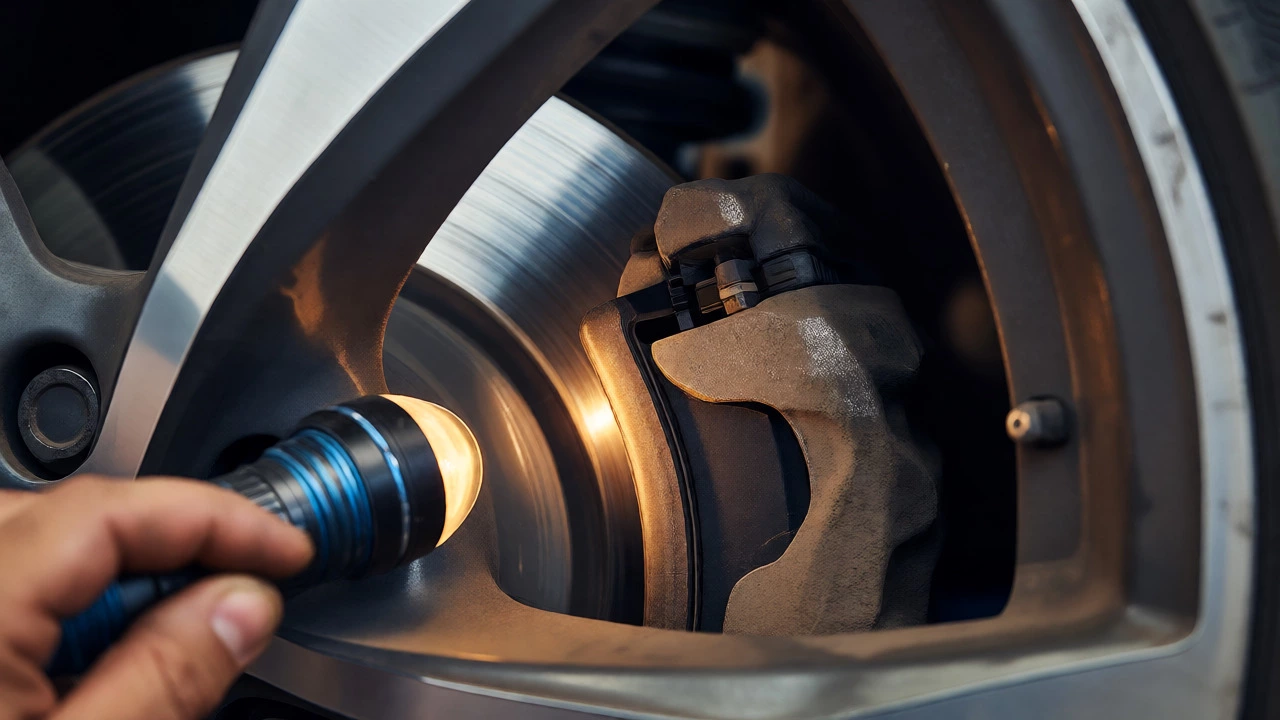
The easiest way to spot trouble is by looking. You don’t need to jack up the car immediately, though that gives the best view. Start by peering through the spokes of your alloy wheels. You’re looking for the thickness of the friction material on the caliper assembly.
- New Pads: Usually around 10-12mm thick.
- Replace Soon: Below 4mm. Many manufacturers include a metal "wear indicator" tab that starts scraping the rotor at this point.
- Critical: Below 2mm. The metal backing plate is getting dangerously close to the rotor surface.
If you can see significantly less material on the front wheels compared to the back, you’ve found your culprit. However, visual checks can be tricky if you have dark alloys or poor lighting. A flashlight helps, but sometimes you need to get hands-on.
Listening to the Sounds: Decoding Noises
Noise is your car’s primary alarm system. Different sounds point to different problems, and location matters.
| Sound | Likely Location | What It Means |
|---|---|---|
| High-pitched squeal | Often Fronts | Wear indicators touching the rotor, or glazed pads. |
| Deep grinding/growling | Either (Check Both) | Metal-on-metal contact. Immediate danger. |
| Squeaking when braking lightly | Rears (often) | Corrosion buildup from sitting, common in humid UK weather. |
| Vibration in pedal | Fronts | Warped front rotors due to heavy use. |
A high-pitched squeal is the most common complaint. While it can happen on any axle, the heat generated by front brakes makes them more prone to glazing (where the pad surface hardens and becomes slippery). If the noise happens only when you apply light pressure, check the rears. Rears often sit idle longer, allowing rust to form on the rotor surface overnight. A few firm stops usually clear this up.
Feel the Pedal: Tactile Clues
Your foot knows more than your eyes sometimes. Pay attention to how the brake pedal behaves during normal driving.
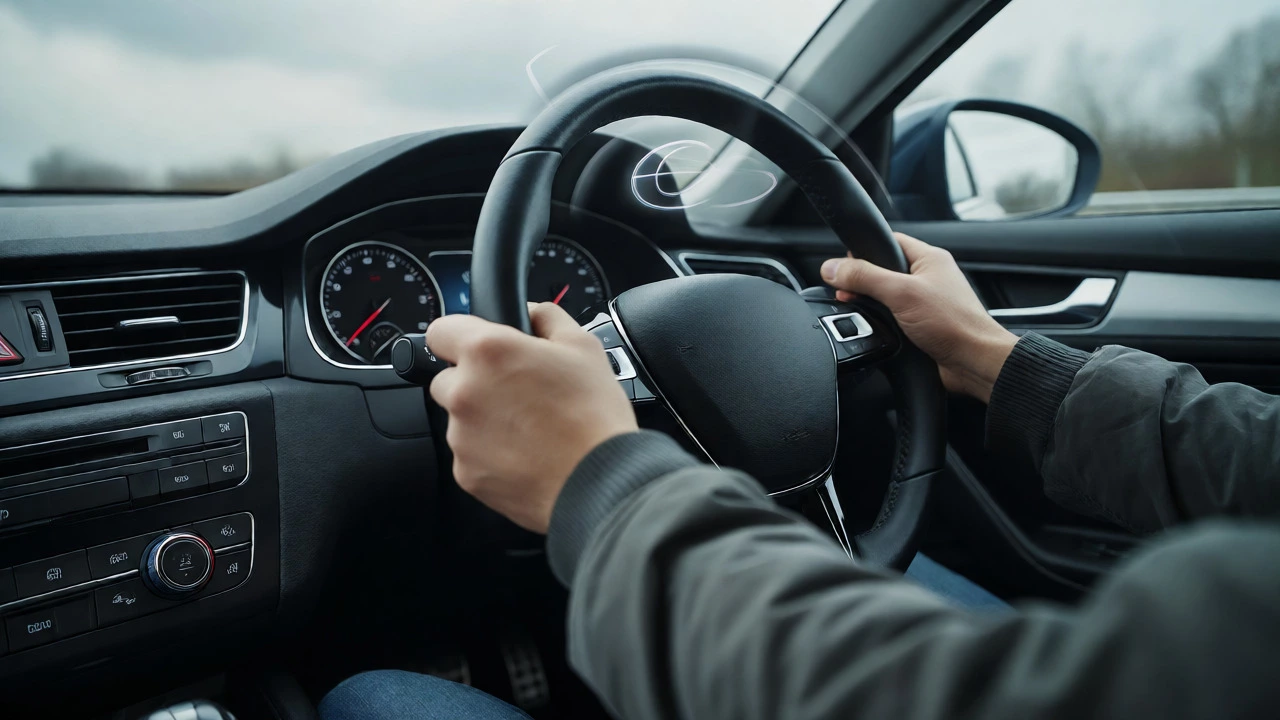
If you feel a pulsation or shudder in the steering wheel and the brake pedal when coming to a stop, the problem is almost certainly in the front brakes. Warped front rotors cause the pads to grab and release rapidly as the wheel turns. Since the front brakes handle the bulk of the deceleration, any unevenness there translates directly into vibration you can feel through the chassis.
Conversely, if the car pulls to one side under braking, it indicates a stuck caliper or uneven pad wear. If it pulls left, the right front brake might not be applying enough force, or vice versa. This is rarely a rear-only issue unless you have a specific mechanical fault like a seized handbrake cable on one side.
The Handbrake Test: Isolating the Rear Brakes
Most cars use drum-in-hat or small disc systems for the rear brakes that double as the parking brake. This gives you a unique diagnostic tool: the handbrake test.
- Find a safe, flat, empty road or large car park.
- Accelerate gently to about 15-20 mph.
- Pull the handbrake lever (or press the electronic button) firmly but briefly.
If the car slows down noticeably and the rear end squats slightly, your rear brakes are engaging correctly. Now, listen. If you hear a grinding noise or feel a jerk specifically during this maneuver, the rear pads are likely worn or contaminated. If the handbrake feels loose or doesn’t hold the car on a slight incline, the rear shoes/pads are too thin to make proper contact.
Note: Do not rely on this test alone if your car has electronic parking brakes integrated into the main hydraulic system, as some modern setups share components differently.
When to Replace vs. When to Clean
Not every noise means replacement. Before you buy new pads, consider these factors:
- Dust Buildup: Heavy brake dust can cause squealing. A thorough cleaning of the calipers and rotors might solve it.
- Glazed Pads: If the pads are still thick but shiny/smooth, they may have overheated. Replacing them is usually better than trying to sand them down yourself.
- Rotor Condition: Never put new pads on badly scored or warped rotors. Measure rotor thickness. If it’s below the manufacturer’s minimum specification, you must replace or resurface the rotors along with the pads.
In the UK, MOT testers will fail your car if the brake lining is visible as less than 1.5mm thick. Don’t wait for the MOT reminder. If you suspect wear, check it now.
Frequently Asked Questions
Can I drive with worn front brake pads?
It depends on how worn they are. If you hear squealing, you have some time, but should book a service soon. If you hear grinding, stop driving immediately. Grinding means the metal backing plate is eating away at the rotor, which doubles the repair cost and compromises safety.
Why do my rear brakes squeak after rain?
This is very common in the UK. Moisture causes a thin layer of rust to form on the cast iron rotors overnight or after wet drives. As you brake, this rust is scraped off, causing temporary squeaking. It usually disappears after a few stops. If it persists, the pads may be glazed or contaminated.
Do I need to change both front pads at once?
Yes, always replace brake pads in pairs (both fronts or both rears). Replacing just one side can cause uneven braking force, leading to pulling and potentially damaging the suspension components over time.
How long do brake pads last on average?
There is no single answer. City driving wears pads faster (20,000-30,000 miles for fronts) than highway driving (50,000+ miles). Aggressive driving, towing, and hilly terrain also reduce lifespan significantly.
Is it cheaper to replace front and rear pads together?
Labor-wise, yes. If you’re already having the mechanic lift the car and remove wheels, adding the second axle saves setup time. However, if your rears have plenty of life left, replacing them early wastes part life. Weigh the labor savings against the cost of unused parts.
Next Steps: What To Do Now
You’ve listened, looked, and felt. Here is your action plan based on what you found:
- Squealing + Thin Fronts: Order front pads and inspect rotors. Book a garage appointment within the week.
- Grinding Noise: Stop driving if possible. Tow the car to a garage. Expect rotor replacement alongside pads.
- Handbrake Issues: Inspect rear pads and adjust the handbrake cables if adjustable. Often a simple adjustment fixes minor issues.
- Vibration: Check front rotor runout. Likely needs new front rotors and pads.
Remember, brakes are the single most important safety feature on your car. When in doubt, err on the side of caution. A quick inspection now beats a roadside breakdown later.