Your car’s radiator doesn’t make noise when it’s failing. It doesn’t flash a warning light like a check engine light. It just slowly stops doing its job-until one day, your engine overheats on the highway, and you’re stranded. By then, it’s too late to save the engine. The good news? You don’t have to wait for disaster. There are clear, early signs your radiator is failing, and you can catch them before it costs you thousands.
Is Your Engine Overheating?
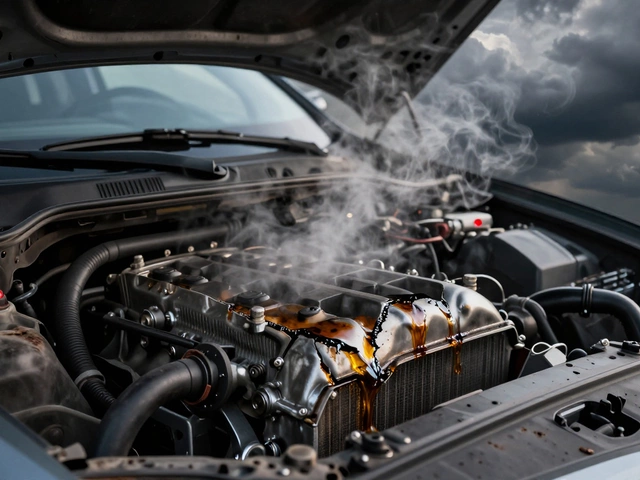
If your temperature gauge regularly climbs into the red zone, or the warning light comes on, your radiator is likely struggling. But don’t jump to conclusions. Overheating can also come from a bad thermostat, low coolant, or a broken water pump. So check the basics first: Is the coolant level low? Are there puddles under the car? If you top off the coolant and it drops again within days, you’ve got a leak. That’s usually the radiator-or a hose, or the cap. But if you’re constantly refilling and the gauge still climbs, the radiator’s cooling fins are probably clogged or cracked.
Real-world example: A 2018 Honda Civic came in with a recurring overheating issue. The owner kept adding coolant every week. The mechanic found the radiator’s top tank had a hairline crack-barely visible without pressure testing. The coolant was leaking slowly into the engine bay, evaporating before it hit the ground. Replacing the radiator fixed it. No more overheating.
Do You Smell Sweet, Syrupy Odors?
Coolant has a distinct, almost candy-like smell. If you notice a sweet, sticky odor inside your car, especially when the heater is on, coolant is leaking into the cabin. That usually means the heater core is bad-but sometimes, it’s because the radiator is cracked and spraying coolant onto hot engine parts, which then vaporizes and gets pulled into the ventilation system.
This is a red flag. Even small leaks can lead to big problems. Coolant isn’t just water-it’s a mix of ethylene glycol and corrosion inhibitors. When it burns off, it can coat your heater core, clog the radiator, and even damage your engine’s head gasket over time. If you smell coolant but don’t see any puddles, the radiator is a likely suspect.
Is Your Coolant Discolored or Gritty?
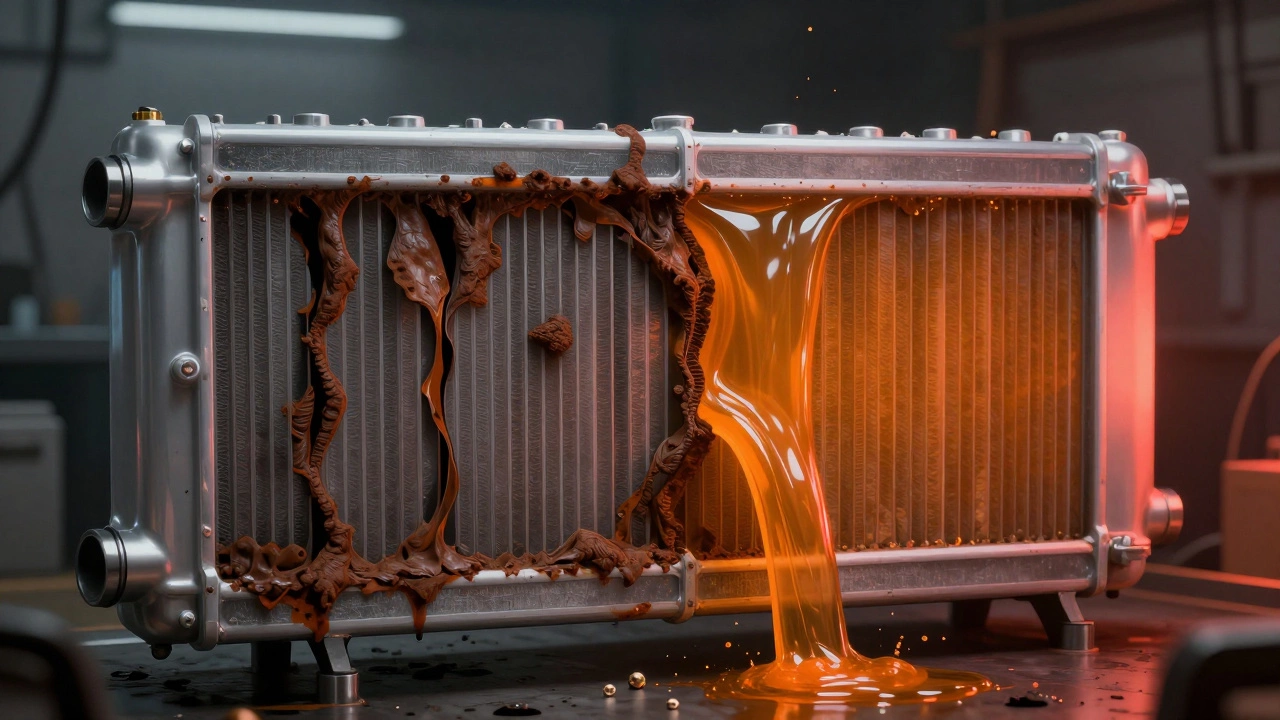
When you open the coolant reservoir, what do you see? Fresh coolant is usually bright green, orange, pink, or red-depending on the type. If it’s brown, rusty, or looks like muddy sludge, your radiator is corroding from the inside. This happens when coolant isn’t changed on schedule. Over time, the anti-corrosion additives break down, and metal particles from the radiator, engine block, or water pump start floating around.
These particles don’t just sit there. They clog the radiator’s tiny cooling passages. Once they do, coolant can’t flow properly. Heat builds up. The engine overheats. And if you keep driving, you risk warping the cylinder head or blowing the head gasket. A simple coolant flush might fix it-if the radiator isn’t already damaged. But if the coolant is thick, gritty, or has flakes in it, the radiator is probably beyond saving.
Are There Visible Leaks or Puddles?
Look under your car after it’s been parked for a few hours. Coolant leaks leave behind a bright, sticky residue-often green, orange, or blue. It might look oily, but it’s not engine oil. Oil is darker and smells like burning. Coolant smells sweet. If you see a puddle under the center of your car, near the front, it’s likely the radiator. Check the radiator itself: Look for wet spots, rust stains, or dried coolant crusts around the seams, hoses, or the plastic end tanks.
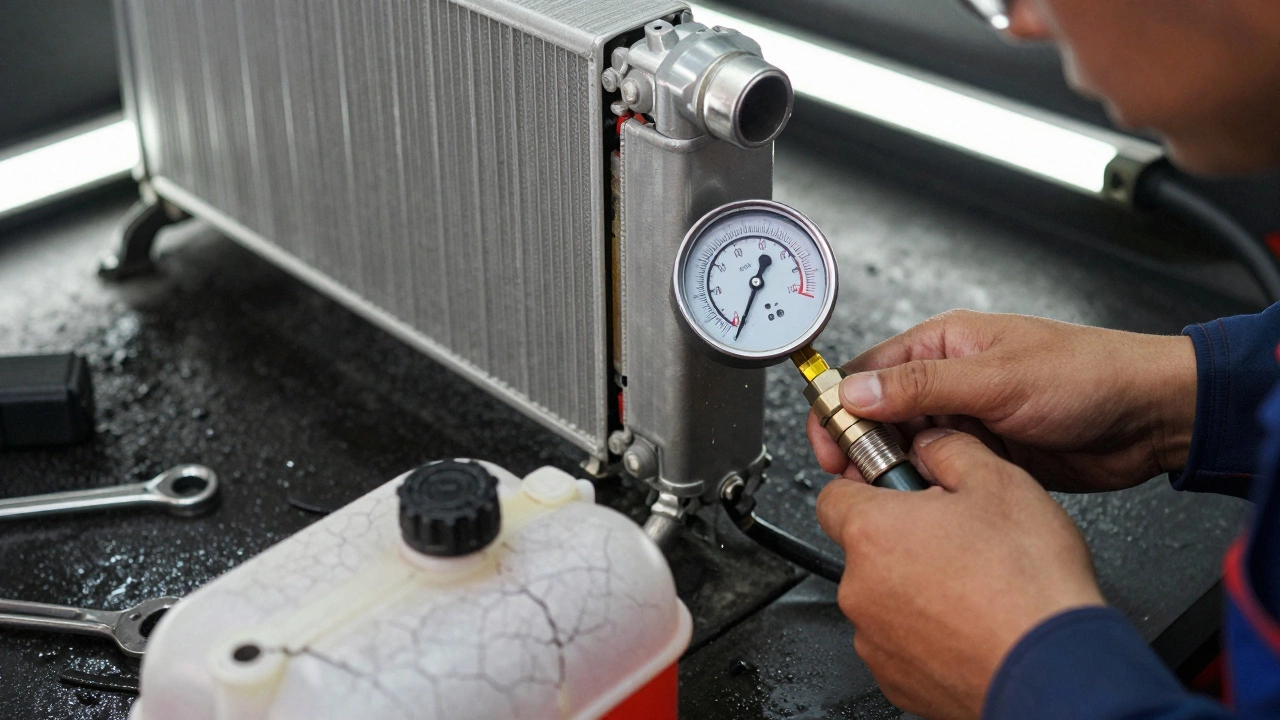
Plastic end tanks are the weak point in most modern radiators. They crack from heat cycling-especially in older cars. You might not see a drip until the crack widens under pressure. A pressure test by a mechanic can catch these hidden leaks. If your radiator is more than 8 years old and has even a small leak, replacement is cheaper than repeated repairs.
Is the Radiator Visibly Damaged?
Take a close look at the radiator’s front fins. These thin metal strips are designed to pull heat out of the coolant. If they’re bent, crushed, or covered in bugs and debris, airflow is blocked. That’s why you need to clean your radiator every few years-especially if you drive on gravel roads or in dusty areas.
But if you see dents, cracks, or holes in the metal core or tanks, it’s done. Even a small hole can turn into a major leak under pressure. Some people try to patch radiators with sealants. They might work for a week. But sealants clog the cooling passages. They make the problem worse. If the radiator is physically damaged, replacement is the only real fix.
Is Your Car Losing Power or Running Rough?
Overheating doesn’t just hurt the radiator-it hurts the engine. If your radiator is failing, the engine runs too hot. That causes the air-fuel mixture to ignite early (knocking), reduces efficiency, and can even trigger the engine’s limp mode. You might notice sluggish acceleration, misfires, or the engine cutting out under load.
One driver reported his 2016 Ford F-150 losing power on hills. The temperature gauge stayed normal, but the engine felt weak. A scan showed no codes. Then, a pressure test revealed the radiator was leaking internally-coolant was mixing with engine oil. That’s a sign of a cracked head or block, but in this case, the radiator’s internal tubes had corroded through. Replacing it restored full power.
How Long Do Radiators Last?
Most radiators last 8 to 12 years, or 100,000 to 150,000 miles. But that’s if you maintain your coolant. Changing coolant every 30,000 to 50,000 miles (or every 2-3 years) keeps the anti-corrosion chemicals active. If you skip this, the radiator corrodes faster. Aluminum radiators, common since the 2000s, are lightweight but more vulnerable to chemical breakdown than old copper-brass ones.
Driving in extreme heat, towing heavy loads, or frequent stop-and-go traffic also shortens radiator life. If you do any of those regularly, inspect your radiator every 2 years-even if nothing seems wrong.
What Happens If You Ignore It?
Ignoring a bad radiator doesn’t just mean overheating. It means expensive repairs. An overheated engine can warp the cylinder head, crack the block, or blow the head gasket. Those repairs cost $1,500 to $5,000. A radiator replacement? $300 to $800, depending on the car.
One mechanic told me about a Toyota Camry that overheated on the freeway. The owner drove it home-another 10 miles. By the time it got to the shop, the head gasket was blown, the engine was mixing oil and coolant, and the pistons were scored. Total repair: $4,200. A new radiator would’ve been $450.
Don’t gamble. If you see any of these signs, get it checked. A radiator is a simple part. But when it fails, it takes your engine with it.
What Should You Do Next?
If you suspect your radiator is failing, here’s what to do:
- Check coolant level and color. If it’s dirty or low, top it off and watch for drops.
- Look under the car for leaks. Smell for sweet odors.
- Inspect the radiator fins for damage or blockage.
- Have a mechanic pressure-test the cooling system. It takes 15 minutes and costs $50-$100.
- If the radiator is over 8 years old and shows any signs of wear, replace it-even if it’s not leaking yet.
Prevention is cheaper than repair. Replace your radiator before it kills your engine. It’s not a luxury-it’s basic car maintenance.
Can a radiator be repaired instead of replaced?
Sometimes, small leaks can be temporarily sealed with radiator stop-leak products. But these are not permanent fixes. They clog cooling passages, reduce efficiency, and can cause overheating later. If the radiator is cracked, corroded, or has damaged fins, replacement is the only reliable solution. Repairs rarely last more than a few months.
How much does a new radiator cost?
A new radiator costs between $300 and $800, depending on your car’s make and model. Labor adds another $150 to $300. OEM parts cost more than aftermarket ones, but they’re built to the same specs. For older cars, aftermarket radiators are usually fine. For newer models with complex cooling systems, OEM is recommended.
How often should I flush my coolant?
Flush your coolant every 30,000 to 50,000 miles, or every 2 to 3 years. Some long-life coolants claim 100,000 miles, but if you drive in hot climates or tow often, flush every 50,000 miles. Old coolant loses its anti-corrosion protection, which leads to radiator damage.
Can a bad radiator cause the check engine light to come on?
Yes. If the engine overheats, the computer will trigger a code-usually P0128 (coolant temperature too low) or P0217 (engine overheating). Even if the temperature gauge looks normal, a failing radiator can cause inconsistent readings, which confuse the engine’s sensors. Always check the cooling system if the check engine light comes on and you’ve had overheating issues.
Is it safe to drive with a leaking radiator?
No. Even a small leak can cause your engine to overheat within minutes, especially under load or in hot weather. Driving with low coolant risks permanent engine damage. If you notice a leak, stop driving and get it towed. A $50 tow is cheaper than a $4,000 engine rebuild.