Suspension Diagnostic Assistant
What is the most noticeable issue?
Select the symptom that best describes what you are experiencing.
Describe the specific behavior
Help us narrow it down further.
Likely Culprit Identified
Description goes here.
Severity Level
Recommended Action:
- Action item goes here.
That weird clunking noise when you hit a pothole? The way your car feels like it’s surfing on waves after a simple speed bump? It’s annoying, sure, but it’s also a warning. Your suspension system is the unsung hero of your drive, keeping your tires glued to the road and your back from developing a permanent hunch. When it starts failing, it doesn’t usually announce itself with a dashboard light. Instead, it whispers-then shouts.
Figuring out exactly which part is acting up can feel like trying to find a needle in a haystack while riding that same bumpy car. Is it the shocks? The struts? Maybe the control arms or bushings? You don’t need to be a mechanic to narrow it down. By paying attention to how your car behaves, sounds, and looks, you can pinpoint the trouble before it turns into a safety hazard or an expensive tow truck ride.
The Bounce Test: Checking Shocks and Struts
The most common culprits for a rough ride are shock absorbers and struts. While they do similar jobs-controlling the movement of the springs-they wear out differently. Here is a quick, free test you can do in your driveway.
- Park on level ground and turn off the engine.
- Go to one corner of your car (say, the front left).
- Push down hard on the bumper or fender and let go quickly.
- Watch how the car reacts.
If the car bounces more than once or twice before settling, your shocks or struts are likely shot. A healthy suspension should dampen the bounce almost immediately. If it keeps bobbing up and down like a pogo stick, the fluid inside has degraded or leaked out, losing its ability to absorb energy.
Pay close attention to leaks too. Look at the bottom of your shock or strut. If you see oily residue or actual dripping fluid, that component is dead. Replace it ASAP. Driving with leaking shocks compromises braking distance and tire contact, especially on wet UK roads.
Listening for Clunks: Control Arms and Bushings
If your car makes a hollow "clunk" or "knock" sound when going over bumps, stop looking at the shocks and start listening to the joints. This noise usually comes from worn-out control arm bushings or ball joints.
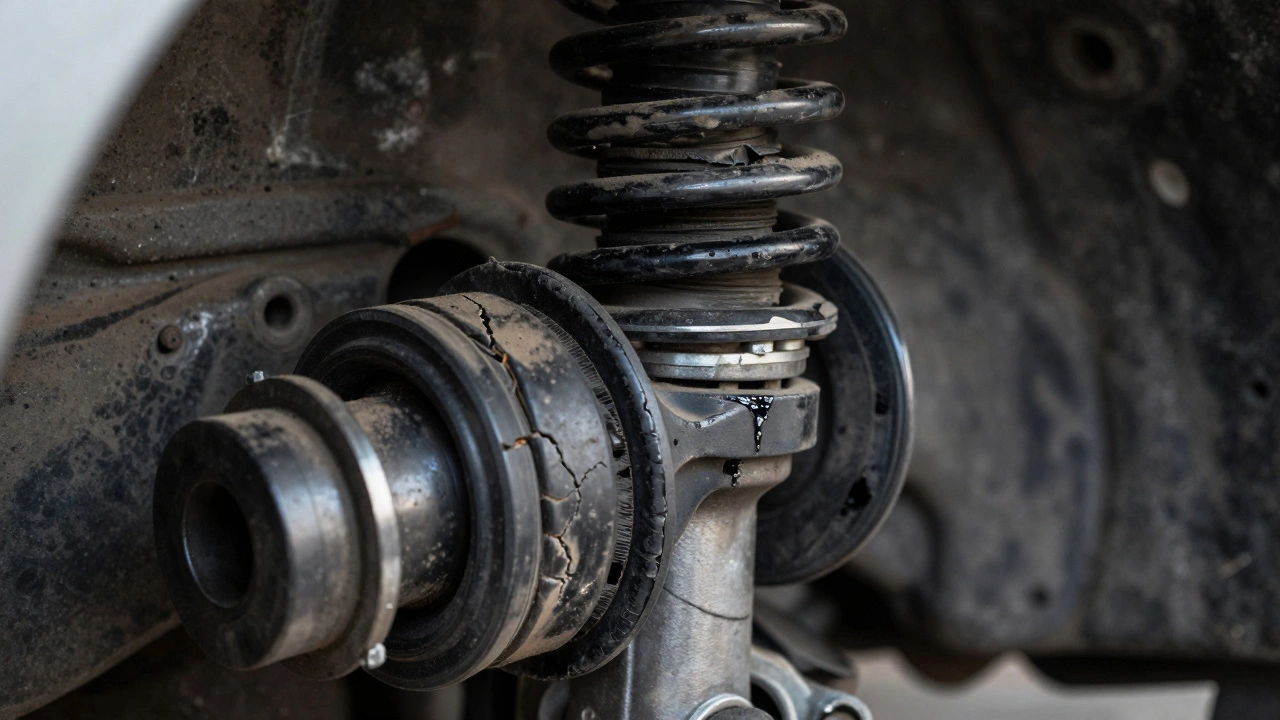
Bushings are rubber cushions that sit between metal parts. They’re designed to absorb vibration and allow slight movement. Over time, rubber cracks, dries out, and crumbles. When the rubber goes, metal hits metal. That’s the clunk you hear.
To check this, look under the car near the wheel well. Do you see any black rubber pieces hanging loose or cracked open? If so, those bushings are toast. Ball joints connect the control arms to the steering knuckles. If they’re worn, your wheel might wobble slightly when turning. This is dangerous because a failed ball joint can cause the wheel to detach entirely.
A simple check for ball joints involves jacking up the car safely and trying to wiggle the tire by hand at the 12 o’clock and 6 o’clock positions. Any play or looseness means the ball joint needs replacement.
Uneven Tire Wear: Sway Bars and Alignment
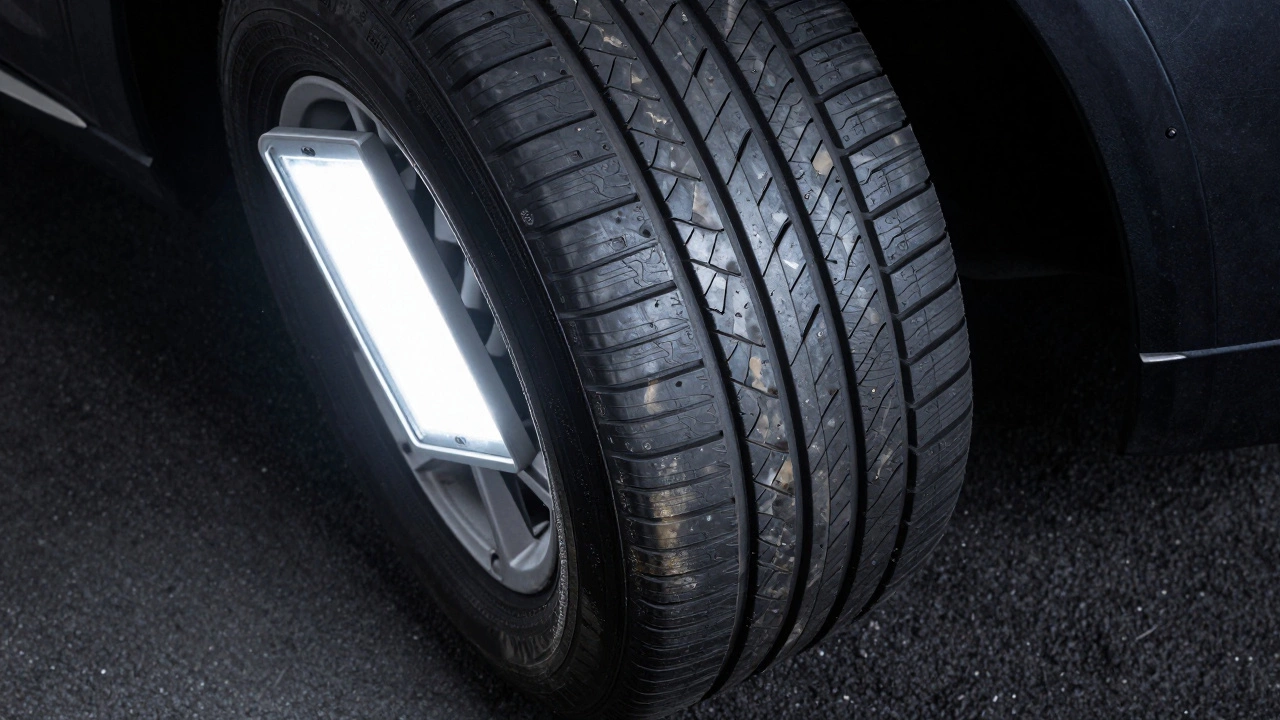
Your tires tell a story about your suspension. Grab a flashlight and inspect your tread patterns. Are you seeing excessive wear on the inside edges of your front tires? This often points to issues with sway bar links or misalignment caused by bent suspension components.
Sway bars (or anti-roll bars) reduce body roll during cornering. They are connected to the suspension via small rods called sway bar links. These links have ball joints at both ends that wear out frequently. When they fail, you’ll hear a rattling noise over small bumps, and your car will lean more sharply in turns.
If your tires are cupped-meaning there are dips and peaks across the tread surface-it’s a classic sign of worn shocks or struts. The tire isn’t staying flat against the road; it’s hopping. This not only ruins your tires faster but also reduces grip significantly.
Steering Play: Tie Rods and Rack Issues
Does your steering wheel feel vague? Like you have to turn it a bit left and right just to keep the car straight? This "play" in the steering often stems from worn tie rod ends. Tie rods connect your steering rack to the wheels, telling them where to point.
When tie rod ends wear out, the connection becomes loose. You might notice your car pulling to one side even when the road is straight. Check for grease leakage around the tie rod boots. If the rubber boot is torn, dirt gets in, grinding away the joint. This is a critical safety issue because precise steering control depends on these parts being tight.
Visual Inspection Checklist
| Symptom | Likely Faulty Part | Severity |
|---|---|---|
| Excessive bouncing after bumps | Shocks / Struts | High |
| Clunking noise over bumps | Control Arm Bushings / Ball Joints | Critical |
| Rattling noise in corners | Sway Bar Links | Medium |
| Uneven inner tire wear | Alignment / Tie Rods | High |
| Steering wheel vibration | Wheel Bearings / CV Joints | Medium |
| Car pulls to one side | Tie Rod Ends / Brake Calipers | High |
When to See a Professional
While you can diagnose many issues yourself, some require specialized tools. If you suspect problems with your steering rack or if you’ve replaced parts but the alignment is still off, head to a garage. Modern cars often require computerized alignment machines to reset the angles correctly. Driving with bad alignment wears out new tires in months instead of years.
Also, consider professional help if you’re unsure about lifting the car safely. Working under a vehicle supported only by a jack is incredibly risky. Use jack stands rated for your car’s weight, and always double-check stability.
Cost Considerations for 2026
Repair costs vary widely depending on whether you replace individual parts or entire assemblies. For example, replacing just a sway bar link might cost £30-£50 for parts plus labor, whereas rebuilding a strut assembly could run £150-£300 per corner. Always ask for quotes that include disposal fees for old parts, as environmental regulations in the UK require proper recycling of oil-filled shocks.
Don’t ignore minor symptoms. A small leak today can become a blown seal tomorrow, leading to secondary damage to other components like mounts or brackets. Prevention is cheaper than emergency repairs.
How long do suspension parts typically last?
Most suspension components last between 50,000 to 100,000 miles, depending on driving conditions. Rough roads, frequent heavy loads, and aggressive driving shorten their lifespan. Rubber parts like bushings degrade faster due to heat and UV exposure.
Can I drive with a broken suspension part?
It depends on the part. A noisy sway bar link isn’t immediately dangerous, but a failed ball joint or shock absorber is. Never drive with severe bouncing, clunking, or steering instability. It risks losing control of the vehicle.
Do I need to replace all four shocks at once?
Yes, it’s recommended. Replacing shocks in pairs (both front or both rear) ensures balanced handling. Mixing old and new shocks creates uneven damping, which can stress other suspension components and make the car handle unpredictably.
What causes suspension to fail prematurely?
Hitting curbs, driving over deep potholes, carrying excessive weight, and neglecting regular inspections accelerate wear. Corrosion from road salt in winter also eats away at metal parts and rubber seals.
Is it better to buy OEM or aftermarket suspension parts?
OEM (Original Equipment Manufacturer) parts guarantee fit and performance matching the factory specs. Aftermarket parts can offer improvements like sportier handling or durability, but quality varies. Stick to reputable brands if choosing aftermarket.