Exhaust Upgrade Advisor
Your Priorities
Recommendation
Select your preferences and click "Get Recommendation" to see our analysis.
There is nothing quite like the sound of a well-tuned engine. But when you are standing in a garage or scrolling through online catalogs, choosing an exhaust system can feel like navigating a maze of technical jargon and conflicting advice. Do you want more power? A deeper tone? Or just something that passes your next MOT without setting off the noise alarm?
Picking the wrong part can cost you hundreds of pounds and leave you with a drone that makes long drives unbearable. The good news is that you don’t need to be a mechanic to make the right choice. You just need to understand what each component does and how it affects your specific vehicle.
Understanding Your Current Setup
Before you spend a penny, look under your car. Most modern vehicles come from the factory with a complex arrangement of pipes, mufflers, and catalytic converters. This isn't just about moving gas out of the way; it's about managing pressure waves inside the engine cylinders.
The stock system is designed for three things: meeting strict emissions laws, keeping noise within legal limits, and ensuring the engine runs smoothly across all speeds. When people say their new exhaust sounds "tinny" or "droney," it’s usually because they removed components that were actually helping to cancel out unwanted frequencies. Understanding this baseline helps you decide what you actually want to change.
Why does my stock exhaust sound so quiet?
Manufacturers tune stock systems to minimize noise pollution and meet global emission standards. They use heavy baffling and restrictive designs to keep decibel levels low, often at the expense of raw power and sporty sound.
Defining Your Goal: Sound vs. Power
This is the most critical decision point. Are you buying an exhaust for the auditory experience, or do you genuinely want to squeeze extra horsepower out of your engine? These two goals often pull in opposite directions.
If sound is your priority, you are looking for a system that changes the tone. A deep, aggressive rumble at idle and a sharper note on acceleration is desirable to many enthusiasts. However, if you prioritize power, you need an exhaust that reduces backpressure. Backpressure is the resistance the engine faces when trying to push exhaust gases out. Lowering this resistance allows the engine to breathe better, which can improve throttle response and mid-range torque.
Be careful here. Many aftermarket systems claim to offer both maximum sound and maximum power. In reality, there is a trade-off. A very free-flowing exhaust might add a few horsepower but could result in a loud, harsh drone at motorway speeds. Conversely, a system tuned for a pleasant street tone might retain some backpressure, limiting potential power gains.
Types of Exhaust Upgrades Explained
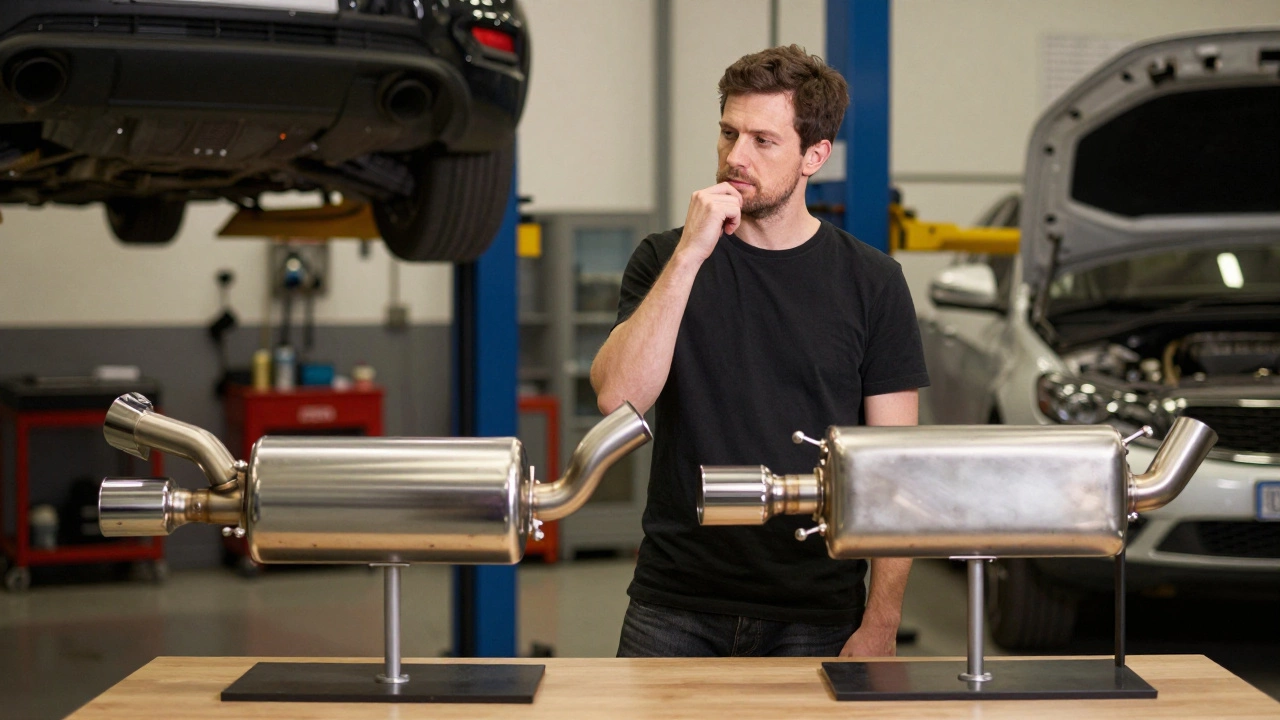
Not all exhaust replacements are created equal. The scope of the upgrade determines both the cost and the impact on your vehicle.
| Upgrade Type | Description | Power Gain | Noise Change | Cost Range (UK) |
|---|---|---|---|---|
| Performance Muffler | Replaces only the final silencer/muffler. | Minimal | Moderate increase in volume/tone | £100 - £300 |
| Cat-Back System | Replaces everything from the catalytic converter rearwards. | Moderate (improves flow) | Significant change in tone and volume | £400 - £900 |
| Header-Back System | Replaces the entire exhaust from the engine manifold. | High (requires tuning) | Dramatic change; requires professional install | £800 - £2,500+ |
| Downpipe | Replaces the section connecting turbo/cat to the mid-pipe. | High (especially for turbos) | Very loud; may trigger check engine lights | £300 - £700 |
A Cat-Back System is the most popular choice for everyday drivers. It leaves the catalytic converter and front piping alone, meaning it is generally easier to install and less likely to cause issues with emissions testing. For those seeking serious performance, a header-back system offers the greatest reduction in backpressure but often requires an ECU remap to function correctly.
Material Matters: Steel, Stainless, and Titanium
The material your exhaust is made from affects its lifespan, weight, and even its sound quality. Here is what you need to know about the common options available in the UK market.
- Mild Steel: This is the cheapest option. It’s heavy and prone to rust, especially in our damp British climate. Unless you are on a tight budget, avoid mild steel. It will likely corrode within two to three years.
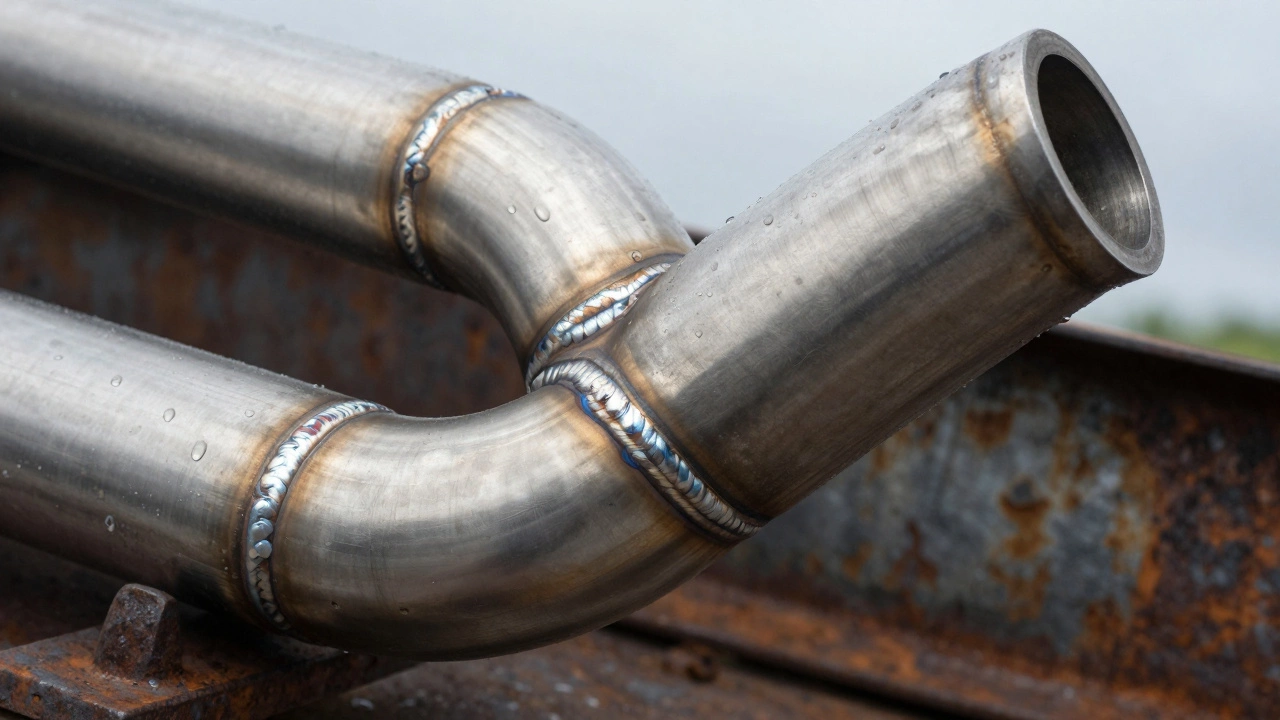
- Stainless Steel (304 Grade): The industry standard for aftermarket exhausts. It resists corrosion well, lasts for many years, and provides a clean, bright sound. Look for TIG-welded joints, which are stronger and smoother than MIG welds.
- Titanium: Used primarily in high-end motorsport. It is incredibly light and strong, and it has a unique acoustic property that produces a higher-pitched, cleaner note. However, it comes with a premium price tag that is rarely justified for daily drivers.
For most UK drivers, high-quality 304 stainless steel offers the best balance of durability, sound, and value. It withstands road salt and rain far better than cheaper alternatives.
Legal Considerations and the MOT Test
In the United Kingdom, modifying your exhaust is not illegal per se, but it must meet specific regulations. The Vehicle Excise and Registration Act sets strict guidelines on noise and emissions.
During an MOT test, the examiner will check that your exhaust is secure, free of excessive leaks, and not producing abnormal smoke. More importantly, they will measure the noise level. If your modified exhaust is significantly louder than the manufacturer's specification, you can fail the test. There is no fixed decibel limit written in stone for every car, but the tester uses a reference database. If your car sounds "abnormal" or excessively noisy compared to a similar unmodified vehicle, it will be flagged.
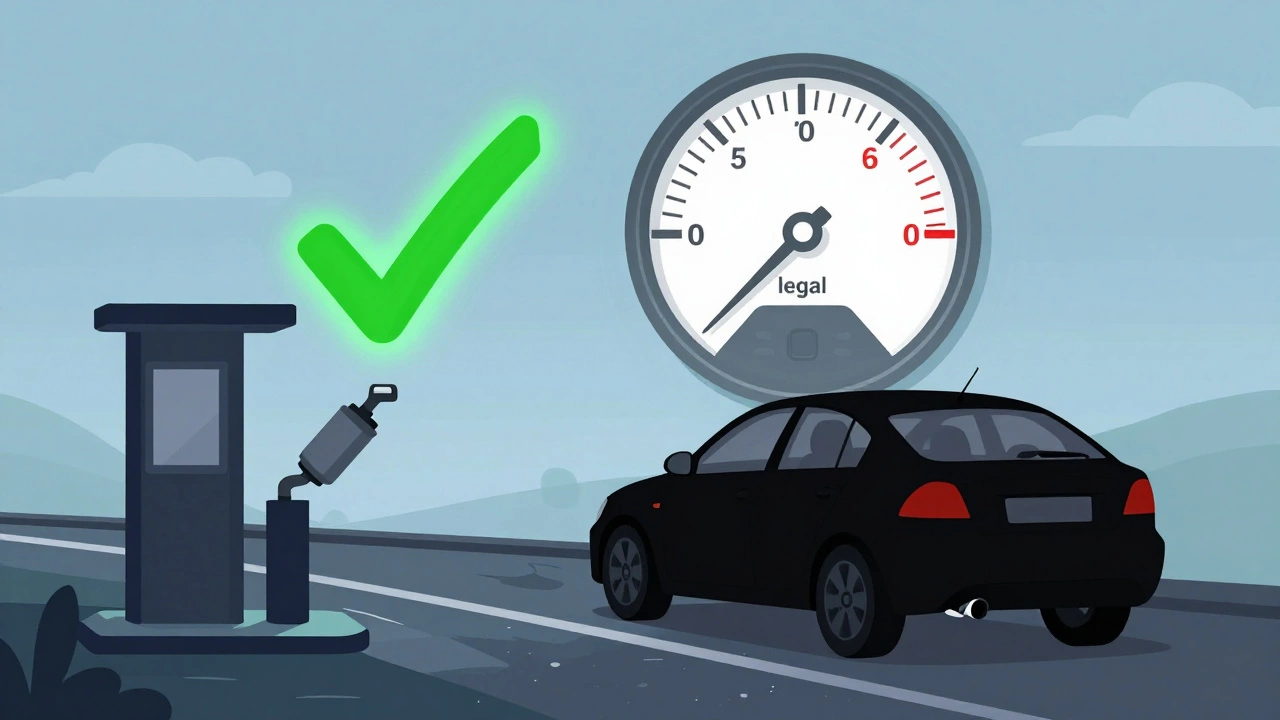
Also, be aware of the Catalytic Converter. Removing or bypassing your catalytic converter is illegal on public roads. It increases harmful emissions and will cause you to fail your MOT immediately. Always choose a system that retains the catalyst or uses a high-flow, legal replacement if you are going for extreme performance.
Fitting and Installation
Can you fit it yourself? If you have basic mechanical skills, a jack, stands, and some penetrating oil, replacing a cat-back system is manageable. However, rusted bolts are a common enemy. In Manchester winters, exhaust components can seize tightly to the chassis.
Professional installation ensures proper sealing. An improperly fitted exhaust can lead to rattles, vibrations inside the cabin, and even exhaust leaks that allow carbon monoxide into the passenger area. If you are unsure, pay for a professional fit. It also gives you peace of mind regarding warranty coverage on the parts.
Common Mistakes to Avoid
Many enthusiasts make the same errors when upgrading their exhaust. Avoid these pitfalls to save money and frustration.
- Ignoring Resonators: Some cars rely heavily on resonators to cancel out low-frequency drone. Removing them can make the car unpleasant to drive at cruising speeds. Check reviews specifically mentioning "highway drone" for your model.
- Buying Universal Kits: Universal exhausts require cutting and welding. They rarely fit perfectly and often compromise ground clearance or aesthetics. Always buy a direct-fit kit designed for your specific make, model, and year.
- Overlooking Insurance: Inform your insurance provider about any modifications. While an exhaust change is minor, failing to declare it could invalidate your policy in the event of an accident.
Final Thoughts on Choosing Your System
Choosing an exhaust system is personal. It depends on whether you value a subtle enhancement or a bold statement. Start by defining your primary goal: sound, power, or a mix of both. Then, select a reputable brand that specializes in your vehicle type. Stick to stainless steel materials for longevity, and always ensure your modification remains legal for UK roads.
Remember, the best exhaust is one that you enjoy driving every day without worrying about noise complaints or failed inspections. Take your time, read user experiences from owners of your specific car, and listen to audio clips before committing to a purchase.
Will a new exhaust void my car warranty?
In the UK, the Consumer Rights Act protects you. A dealer cannot void your entire warranty simply because you changed the exhaust. However, if they can prove the exhaust caused damage to another component (like the engine sensors), they may deny coverage for that specific repair. Always keep receipts and install professionally.
Does a larger exhaust pipe mean more power?
Not necessarily. Larger pipes reduce backpressure, which can help at high RPMs. However, if the pipes are too large for your engine's displacement, you lose exhaust velocity, which can hurt low-end torque and throttle response. Match the pipe size to your engine's capabilities.
How much horsepower can I expect from a new exhaust?
On a naturally aspirated stock engine, gains are minimal, typically 2-5 horsepower. On turbocharged engines, removing restrictions in the downpipe and cat-back can yield 10-20 horsepower, especially when combined with an ECU remap. Don't expect miracles from exhaust alone.
What is the difference between straight pipes and mufflers?
Straight pipes offer zero restriction and maximum noise, often resulting in a harsh, rattling sound. Mufflers use chambers and baffles to reduce noise while maintaining flow. For street use, a quality muffler is almost always preferable to straight pipes for comfort and legality.
Are active exhaust valves worth it?
Active exhaust systems use electronic valves to open or close paths depending on driving mode. They offer versatility-quiet for commuting, loud for spirited driving. However, they are more expensive and add electrical complexity that can fail over time. They are best for luxury or high-performance sports cars.