Spark Plug Health Diagnostic Tool
Select any issues you are experiencing while driving.
What does the electrode look like? (If unsure, select 'Unknown')
Did you know?
A failing spark plug can cause catalytic converter damage costing thousands to fix, whereas replacement plugs cost under £50.
Diagnostic Result
Your car hesitates when you press the accelerator. The engine rough idle sounds worse than usual. Fuel consumption has climbed up by 15%. These signs point toward one component more often than you'd expect: spark plugs that have gone bad. A failing spark plug doesn't just drain your wallet-it risks damaging your catalytic converter and reducing engine efficiency dramatically.
I've tested hundreds of spark plugs across different vehicle types, and the pattern never changes. When these small components fail, they send clear signals. You can catch them before serious problems develop by understanding exactly what to look for and how to test properly.
Signs Your Spark Plugs Need Testing
Before grabbing any tools, notice what your car is actually telling you. An engine misfire feels like a stumble during acceleration-your dashboard might show the check engine light blinking rather than staying steady. This difference matters because a flashing light means active misfiring.
Listen closely during cold starts. Fresh vehicles ignite cleanly within seconds, while worn spark plugs cause hesitation lasting several heartbeats. The exhaust note becomes rougher too. You're hearing incomplete combustion happening inside the cylinders.
Fuel economy changes provide another clue. If you normally get 40 miles per gallon but suddenly see 35 gallons to the tank, something's burning inefficiently. Carbon deposits on spark plugs prevent complete fuel burn, wasting gasoline without delivering power.
Hesitation under load shows up differently based on driving conditions. When climbing hills or towing, weak spark energy can't ignite the compressed air-fuel mixture quickly enough. The engine stumbles instead of pulling smoothly through the gear change.
Essential Testing Equipment You Need
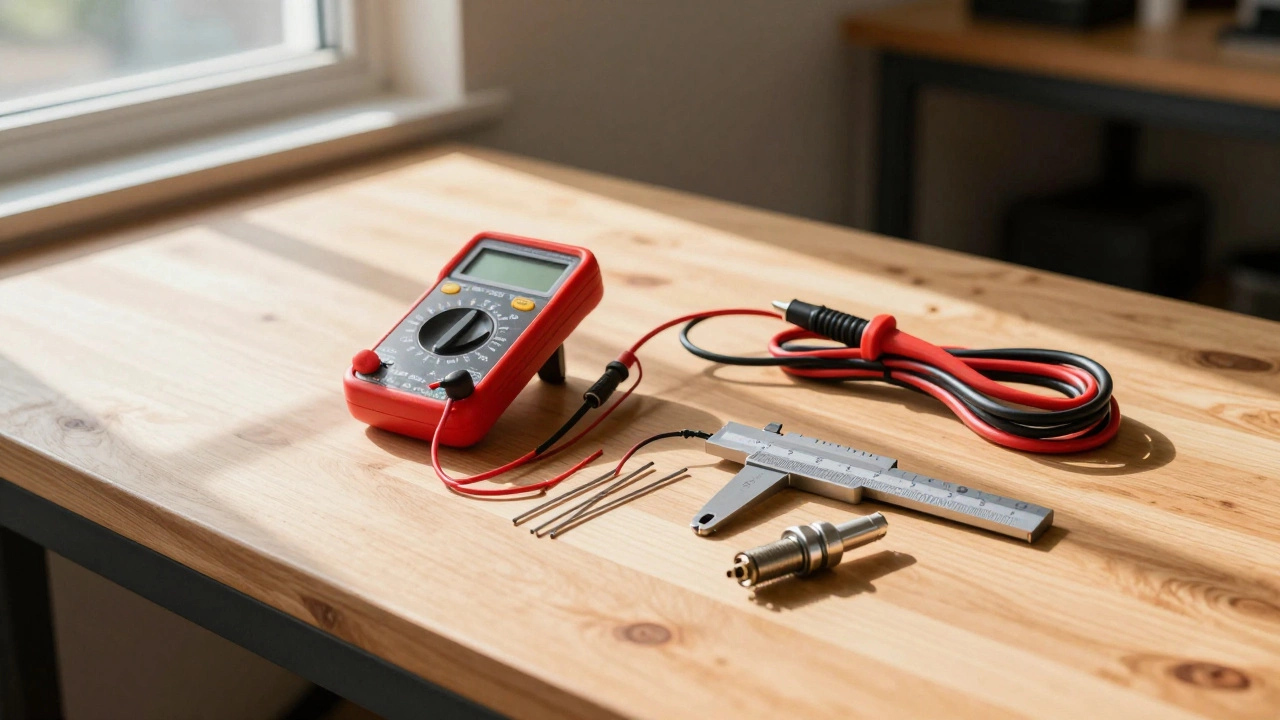
You don't need expensive diagnostic computers to find spark plug problems. Three basic tools handle most home testing scenarios effectively.
| Tool | Primary Use | Cost Range | Precision Level |
|---|---|---|---|
| Digital Multimeter | Resistance measurements | £25-£80 | High accuracy |
| Spark Plug Tester | Spark intensity check | £15-£40 | Voltage simulation |
| Feeler Gauge Set | Gap measurement | £10-£25 | 0.05mm precision |
A digital multimeter measures electrical resistance, which reveals internal issues you can't see visually. Quality units measure ohms accurately, showing whether the resistor inside the spark plug maintains proper values.
Spark plug testers apply controlled voltage to reproduce firing conditions. They're safer than holding plugs near metal surfaces while cranking the engine-a common method that damages both ignition coils and your hands.
Gap gauges come in flat blade and wire ring styles. Wire ring versions prevent accidental electrode damage during measurement. Standard gaps range from 0.7mm to 1.2mm depending on your vehicle's specifications.
Safety Precautions Before Testing
The ignition system produces over 20,000 volts during normal operation. Direct contact causes painful shocks even when the engine runs off. More concerning is the risk to electronic control modules if you work on live circuits.
Always disconnect the battery ground terminal before removing spark plug wires. This prevents accidental shorting when handling ignition cables and keeps ECU systems protected from voltage spikes.
Remove spark plugs individually, not all at once. Each cylinder needs separate inspection, and swapping out four plugs simultaneously invites debris into open combustion chambers. One dropped bolt can scratch the cylinder head surface beyond easy repair.
Cold engines compress differently than hot ones. Wait until the vehicle reaches ambient temperature before removal. Hot threads cross-thread easily as metal expands and softens under heat stress.
Visual Inspection Method Step-by-Step
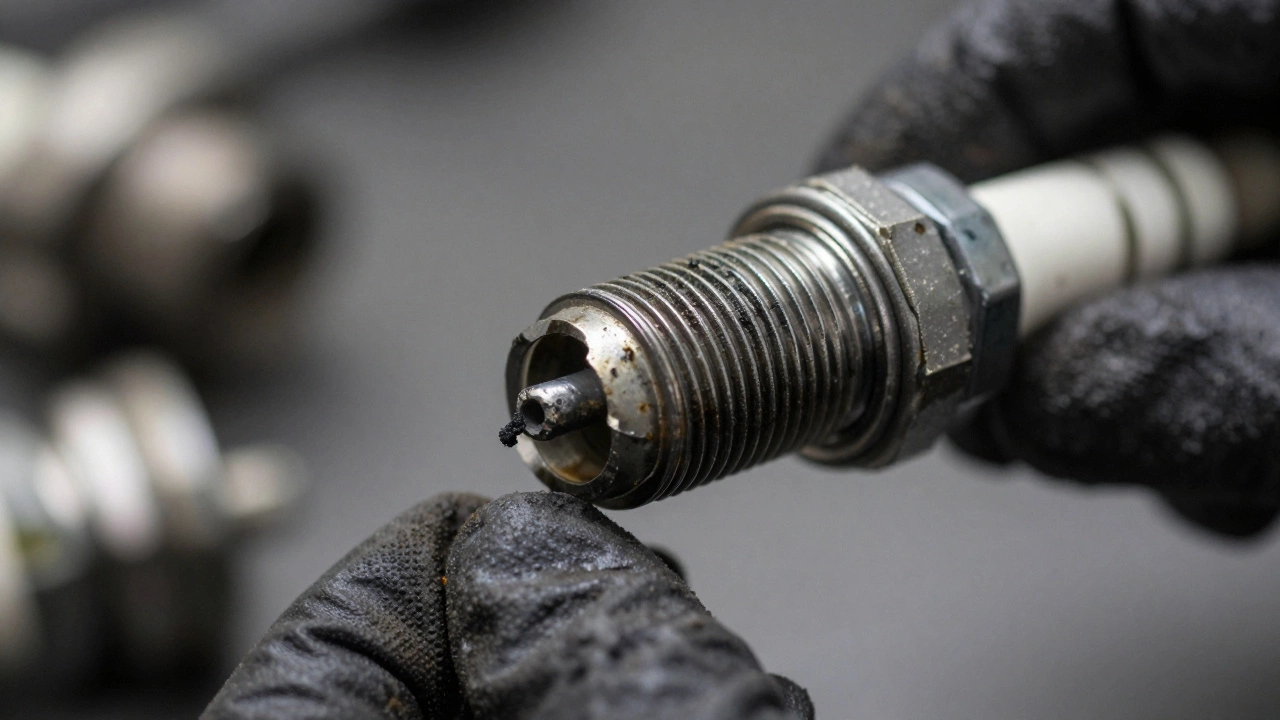
Remove each spark plug using the correct socket size-usually 5/8" or 16mm for most vehicles. Hold it steady and examine the electrode tip first. Normal wear shows slight bluing around the firing tip, indicating consistent spark transfer.
Black carbon deposits coat electrodes that run too cool. Rich air-fuel mixtures create this condition, leaving unburned fuel residue after combustion cycles. Light brown color indicates ideal operating temperature, while white ash suggests lean running conditions.
Oil contamination appears as wet black deposits between the ceramic insulator and metal shell. This typically points to valve guide seals or piston ring leaks entering the combustion chamber. Oil fouling won't improve unless the source gets fixed.
Electrode erosion creates wider gaps over time. Measure against manufacturer specs using the feeler gauge. If gaps exceed tolerance by more than 0.3mm, replacement becomes necessary regardless of remaining thread life.
The center electrode should remain intact. Cracked porcelain insulators leak compression and kill spark effectiveness instantly. Even hairline cracks let combustion gases escape during the power stroke, reducing engine output measurably.
Resistance Testing With Multimeter
Set your multimeter to ohms scale and probe positions carefully. Touch one lead to the metal ground strap and the other to the threaded metal shell. Most modern spark plugs contain resistors rated between 3,000 and 15,000 ohms.
Readings outside this range indicate compromised internal connections. Inaccessible resistance readings often mean failed resistors blocking current flow. Open circuits show infinite resistance while shorts display near-zero values.
Test each removed spark plug individually. Don't compare readings between old and new plugs-the baseline reference must come from manufacturer data sheets. OEM specifications vary widely between brands and model years.
Record results for each cylinder number sequentially. Cylinder numbering differs between engine designs. V-shaped engines count cylinders differently than inline configurations. Proper documentation helps identify patterns during diagnosis.
Spark Strength Testing Procedure
Connect the spark plug tester according to manufacturer instructions. These devices simulate ignition coil firing without risking ECU damage from stray voltages. The tester applies controlled pulses to demonstrate actual spark quality.
Hold the tester near grounded metal while engaging its trigger mechanism. Bright blue sparks mean adequate ionization occurring inside the spark gap. Faint orange discharge indicates weak energy delivery that struggles under high compression loads.
No spark at all suggests either faulty spark plugs or deeper ignition system faults. Before condemning all plugs immediately, verify coil packs and wiring harness integrity. Single-plug failures differ significantly from systematic ignition problems.
Document spark intensity for each cylinder position. Some testers rate performance on scales from 1 to 10. Numbers below five suggest immediate replacement regardless of visual appearance. Weak spark doesn't always show obvious external damage.

What Test Results Mean
Normal spark plugs display consistent readings across multiple test parameters. Visual inspection shows minimal erosion, resistance falls within spec ranges, and spark strength rates above seven on intensity scales. These indicators confirm healthy operation.
Mixed results require deeper investigation. If one spark plug tests poor while others pass, focus attention on that specific cylinder's ignition path. Wiring problems sometimes affect individual cylinders without impacting neighbors.
Consistently weak spark across all cylinders points toward ignition module failure or voltage supply issues. Battery voltage drops below specification levels cause marginal spark performance throughout the entire system.
Different failure modes reveal root causes. Fouled electrodes trace back to oil consumption or fuel mixture problems. Overheated spark plugs indicate timing errors or lean running conditions causing excessive cylinder temperatures.
When to Replace Instead of Test
Age alone warrants replacement consideration. Most spark plugs maintain optimal performance for 25,000 to 100,000 miles depending on construction materials. Copper core plugs last fewer miles while platinum and iridium tips extend service intervals considerably.
Performance changes justify pre-emptive replacement regardless of mileage. Racing applications experience higher cylinder pressures requiring fresh spark plugs every few thousand miles. Modified engines push beyond factory tolerances faster than stock vehicles.
Replacement costs less than damaged catalytic converters caused by prolonged misfiring. Unburnt fuel reaching exhaust treatment systems overheats precious metal catalysts. A £20 part protects equipment worth thousands downstream.
Installation time varies by vehicle layout. Easily accessible spark plugs take minutes while rear-cylinder access on transverse engines requires additional disassembly work. Factor labour hours into total maintenance costs.
Common Mistakes During Spark Plug Testing
Rushing through removal invites dropped hardware into cylinders. Always clean the area around spark plug wells before starting removal. Compressed air removes dirt particles that otherwise fall onto exposed cylinder head surfaces during extraction.
Torquing new spark plugs incorrectly damages sealing surfaces. Under-tightening allows combustion leakage while over-tightening stretches threads permanently. Follow manufacturer torque specifications precisely using a calibrated torque wrench.
Wrong plug types cause timing conflicts with modern ignition systems. Extended reach spark plugs protrude too far into combustion chambers, causing physical collision with moving pistons during operation.
Ignoring thermal characteristics leads to overheating failures. Heat range determines how quickly spark plugs dissipate combustion chamber temperatures. Running cooler plugs reduces pre-detonation risk while warmer variants handle richer fuel mixtures better.
Skipping verification steps wastes replacement investment. Install new spark plugs only after confirming root causes were addressed. Otherwise, identical failure conditions destroy replacement plugs within weeks.
Proper testing prevents unnecessary parts purchases and catches developing engine problems early. Regular spark plug maintenance improves reliability, fuel economy, and overall engine performance. Simple testing procedures save money compared to emergency repairs later.
How often should I test my spark plugs?
Visual inspection works best every 12 months or during oil changes. Formal resistance and spark strength testing happens when symptoms appear-engine misfires, reduced fuel economy, rough idle conditions, or check engine lights activate.
Can I test spark plugs without removing them?
No reliable testing occurs with spark plugs installed. External diagnostics show symptom presence but cannot evaluate actual spark plug condition. Removal provides access for comprehensive visual, electrical, and spark quality assessment.
What does it cost to replace spark plugs professionally?
Professional services charge between £80-200 total including parts and labour. Prices depend on vehicle complexity, accessibility factors, and regional workshop rates. Premium spark plugs increase material costs accordingly.
Do spark plugs affect emissions?
Worn spark plugs significantly increase harmful exhaust emissions. Poor combustion leaves unburnt hydrocarbons in the exhaust stream, raising pollution output and potentially failing MOT emissions testing standards.
Can dirty spark plugs cause engine damage?
Prolonged misfiring from severely fouled spark plugs damages catalytic converters through overheating from unburnt fuel. Extended operation worsens cylinder imbalance, creating vibration damage over time.