Exhaust System Performance Calculator
Calculate Your Potential Gains
Estimated Performance Gains
Horsepower
(Based on 5-15% increase typical for full systems)
Torque
(Typically 5-10% improvement)
Fuel Economy
(Potential 2-5% improvement with efficient driving)
Real-World Impact
Important: Actual results depend on proper installation, ECU tuning, and driving habits. Turbocharged engines typically see 10-15% gains while naturally aspirated engines see 5-10%. Read about ECU tuning importance
Ever looked at a car with a deep, throaty rumble and wondered if that sound came from just a simple exhaust tip-or something bigger? If you're thinking about swapping out your stock exhaust for a full system, you’re not alone. But before you hand over your cash, you need to know what you’re really getting into. A full exhaust system isn’t just a louder pipe. It’s a chain of components that affects how your engine breathes, how much power it makes, and even how much fuel it uses. And no, louder doesn’t always mean better.
What exactly is a full exhaust system?
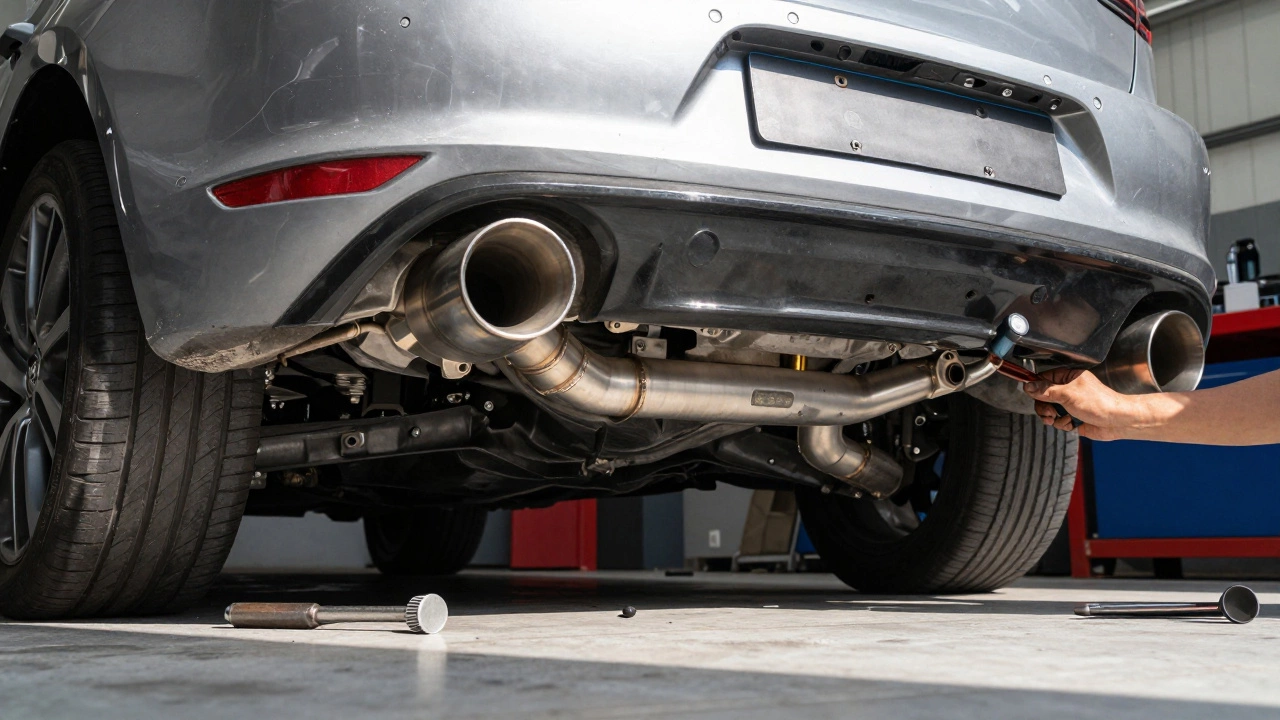
A full exhaust system replaces every part of your car’s original exhaust-from the headers (or exhaust manifold) all the way to the tailpipe. That includes the catalytic converter, mid-pipe, muffler, and resonator. It’s not just an upgrade; it’s a complete overhaul. Most people think of exhaust upgrades as "cat-back" systems (starting after the catalytic converter), but those only touch the last half. A full system changes the entire flow path.
Stock exhausts are designed for cost, noise control, and emissions compliance-not performance. They use narrow pipes, tight bends, and heavy mufflers to keep things quiet and meet regulations. A full system strips all that out and replaces it with smoother, larger-diameter tubing, fewer bends, and high-flow components. The goal? Reduce backpressure so exhaust gases leave the engine faster and more efficiently.
How does it actually improve performance?
Engines are like lungs. If you restrict how well they can exhale, they can’t inhale well either. When exhaust gases can’t escape quickly, they pile up and push back against the incoming air-fuel mixture. That’s called backpressure. Too much of it kills power, especially at higher RPMs.
A full exhaust system reduces that resistance. Think of it like replacing a clogged drain with a wide, smooth pipe. The engine doesn’t have to work as hard to push exhaust out. That frees up energy. In real-world terms, most cars see a 5-15% increase in horsepower and torque, especially in the mid-to-high RPM range. Turbocharged engines benefit even more because the turbo spins more freely when exhaust flows smoothly.
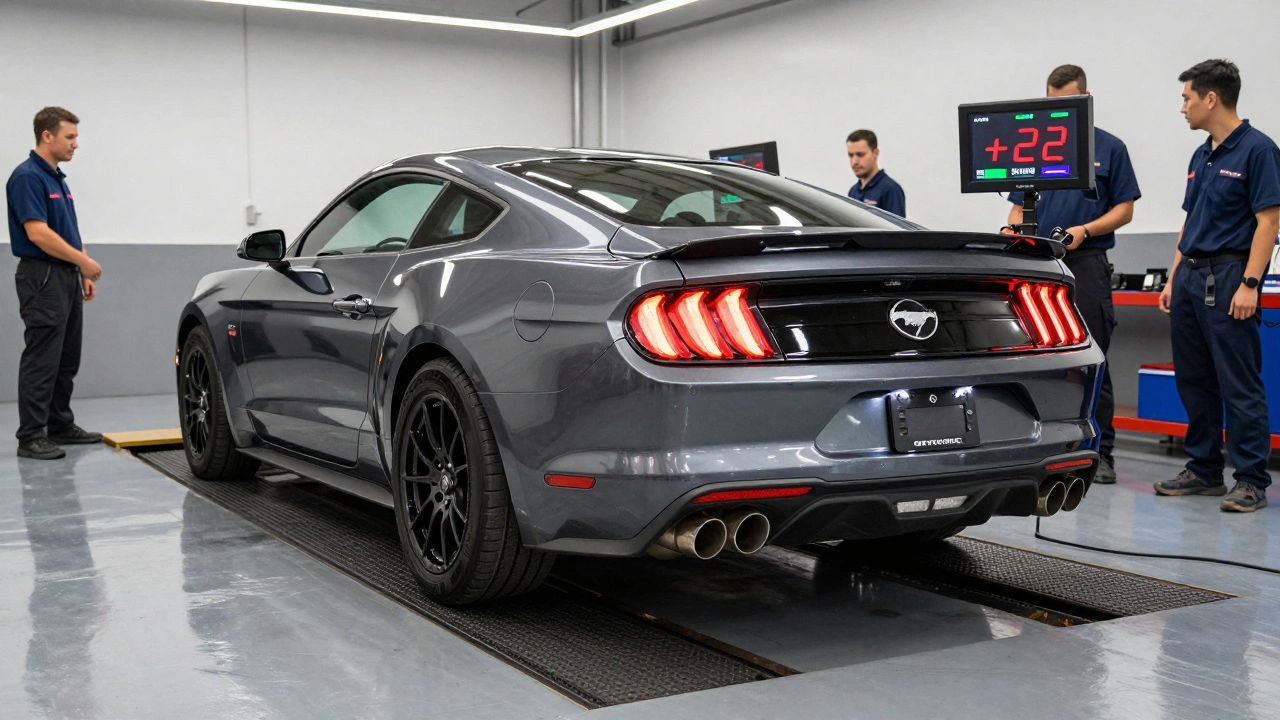
For example, a 2023 Ford Mustang EcoBoost with a full stainless steel exhaust system gained 22 horsepower and 18 lb-ft of torque on a dyno test, according to a 2025 report from Performance Car Magazine. That’s not just a number-it’s noticeable acceleration, especially when merging onto a motorway or overtaking on a twisty B-road.
Does it save fuel?
It sounds counterintuitive, but yes-sometimes. A smoother exhaust lets the engine run more efficiently. Less effort means less fuel burned to produce the same power. In steady highway driving, many drivers report a 2-5% improvement in fuel economy after installing a full system. But here’s the catch: if you drive more aggressively because it sounds better, you’ll burn more fuel. The system doesn’t magically make your car efficient. It just gives you the potential to be.
One owner of a 2021 Volkswagen Golf GTI in Manchester tracked his fuel use for six months after installing a full titanium exhaust. He saw a 3.7% drop in average fuel consumption-but only because he stopped revving the engine unnecessarily. When he drove the same way he always had, the numbers didn’t change.
What about the sound?
Let’s be honest-that’s why most people do it. A full exhaust system changes the tone, not just the volume. Stock systems are muffled. Full systems let the engine’s natural sound come through: a deep growl, not a buzz. The right setup can sound aggressive without being obnoxious. But bad setups? They turn your car into a lawnmower with a megaphone.
Quality full systems use performance mufflers with internal baffles or chambers that tune the sound, not just delete it. Brands like Akrapovič, Milltek, and Scorpion (popular in the UK) offer systems that are loud enough to feel exciting but still quiet enough to avoid noise fines. In the UK, there’s no legal decibel limit for road cars, but police can still pull you over if your exhaust is "excessively noisy" under the Road Vehicles (Construction and Use) Regulations 1986. A poorly designed system could get you fined or fail your MOT.
What’s the catch?
There’s always a trade-off.
- Cost: A full exhaust system can cost between £800 and £2,500, depending on materials (stainless steel vs. titanium) and brand. Installation adds another £200-£400.
- Warranty: Modifying the exhaust can void parts of your manufacturer’s warranty, especially if the catalytic converter is removed or replaced with a non-compliant unit.
- EMISSIONS: In the UK, your car must pass an MOT emissions test. Removing or tampering with the catalytic converter is illegal and will cause an automatic fail. Full systems designed for road use keep the catalytic converter intact.
- Drone: At highway speeds, some systems create a low-frequency vibration in the cabin that becomes tiring over time. This is called "exhaust drone." It’s common with straight-through mufflers and poorly tuned systems.
Some drivers regret their upgrade not because it’s slow, but because it’s too loud on long drives. Others regret it because they didn’t realize how much work went into tuning the system to match their engine. A full exhaust on a 1.5L turbo isn’t the same as one on a 3.0L V6. Matching the system to your engine’s characteristics matters more than brand names.
Who should do it?
Not everyone needs a full exhaust. Here’s who benefits most:
- You’ve already done other performance mods (intake, ECU tune, turbo upgrade).
- You drive on back roads or track days and want more throttle response.
- You’re willing to spend time and money on proper installation and tuning.
Here’s who should skip it:
- You mostly drive in the city and hate loud engines.
- You’re on a tight budget and need reliable daily transport.
- You plan to sell the car soon-you won’t recoup the cost.
If you’re unsure, start with a cat-back system. It’s cheaper, easier to install, and still gives you noticeable gains. Save the full system for when you’re ready to go all-in.
What materials matter?
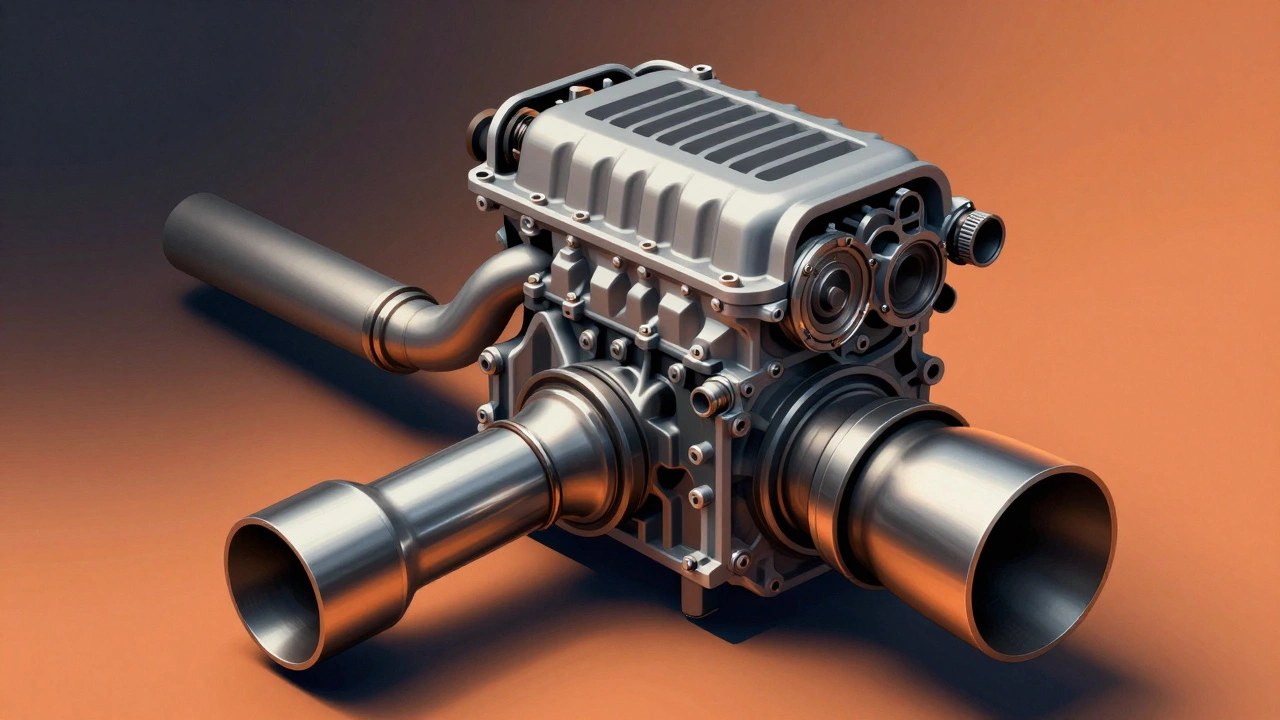
Not all exhausts are created equal. The material affects weight, durability, and sound:
- Stainless steel: Most common. Resists rust, lasts 10+ years, good balance of cost and performance. Around £1,000-£1,800.
- Titanium: Lighter, stronger, and more expensive. Used in race cars. Costs £2,000+. Perfect if you care about weight savings and don’t mind the price.
- Aluminized steel: Cheaper but rusts faster. Avoid unless it’s a temporary fix.
For UK drivers, stainless steel is the smart choice. Wet winters and road salt eat away at cheaper materials. A titanium system might sound sexy, but unless you’re racing, the extra cost rarely pays off.
Installation and tuning
Installing a full exhaust isn’t a weekend project for most people. It requires lifting the car, removing old parts, aligning new components, and often re-tuning the ECU. Why? Because changing exhaust flow affects air-fuel ratios. Without a tune, your car might run lean (too much air, not enough fuel), which can damage the engine.
Many UK shops offer "full system + ECU tune" packages. Expect to pay £1,200-£2,000 total. Don’t skip the tune. A dyno test after installation proves you got real gains, not just noise.
Final verdict
Is it better to get a full exhaust system? It depends.
If you want more power, better throttle response, and a sound that turns heads-and you’re willing to pay for quality parts, professional installation, and a tune-then yes. It’s one of the most effective upgrades for performance cars.
If you just want a louder car, or you’re on a budget, or you drive mostly in traffic? Stick with a cat-back system. Or better yet, leave it stock. A full exhaust isn’t a magic bullet. It’s a tool. And like any tool, it only works if it fits your needs.
Will a full exhaust system pass my MOT?
Yes-if the system keeps the original catalytic converter and meets emissions standards. Removing or replacing the catalytic converter with a non-compliant part will cause an automatic MOT failure. Always choose a road-legal full exhaust system designed for your specific model. Reputable brands like Milltek and Akrapovič offer UK-compliant versions.
Can I install a full exhaust myself?
You can, but it’s not recommended unless you have experience with car lifts, welding, and exhaust alignment. Modern exhaust systems are precision-fit and often require custom hangers or brackets. A poor installation can lead to rattles, leaks, or even damage to the chassis. Most people save time and money by paying a specialist-especially since a bad install can void warranties.
Does a full exhaust make a car faster?
It can, but not on its own. A full exhaust reduces backpressure, which helps the engine breathe better. This usually adds 5-15% more horsepower, especially at higher RPMs. But if your car has a stock ECU tune, the gains might be smaller. For maximum benefit, pair the exhaust with an ECU remap. Turbocharged engines see the biggest improvements.
Is titanium worth the extra cost?
For most daily drivers, no. Titanium is lighter and more corrosion-resistant, but it costs 2-3 times more than stainless steel. The weight savings (usually 5-10kg) won’t make a noticeable difference on the road. It’s best for track-focused cars or collectors who value longevity and aesthetics. For UK conditions, stainless steel offers better value.
How long does a full exhaust system last?
Stainless steel systems typically last 10-15 years under normal driving conditions. Titanium lasts even longer. Cheaper aluminized steel may rust within 3-5 years, especially in wet climates like Manchester. Regular inspections for cracks or rust at the joints are recommended. Avoid cheap no-name brands-they often fail sooner than expected.