Car Radiator Symptom Checker
Select the symptoms you are noticing in your vehicle to get a preliminary diagnosis and urgency level.
Analysis Results:
Disclaimer: This tool is for educational purposes. Please consult a certified mechanic for a professional diagnosis to ensure vehicle safety.
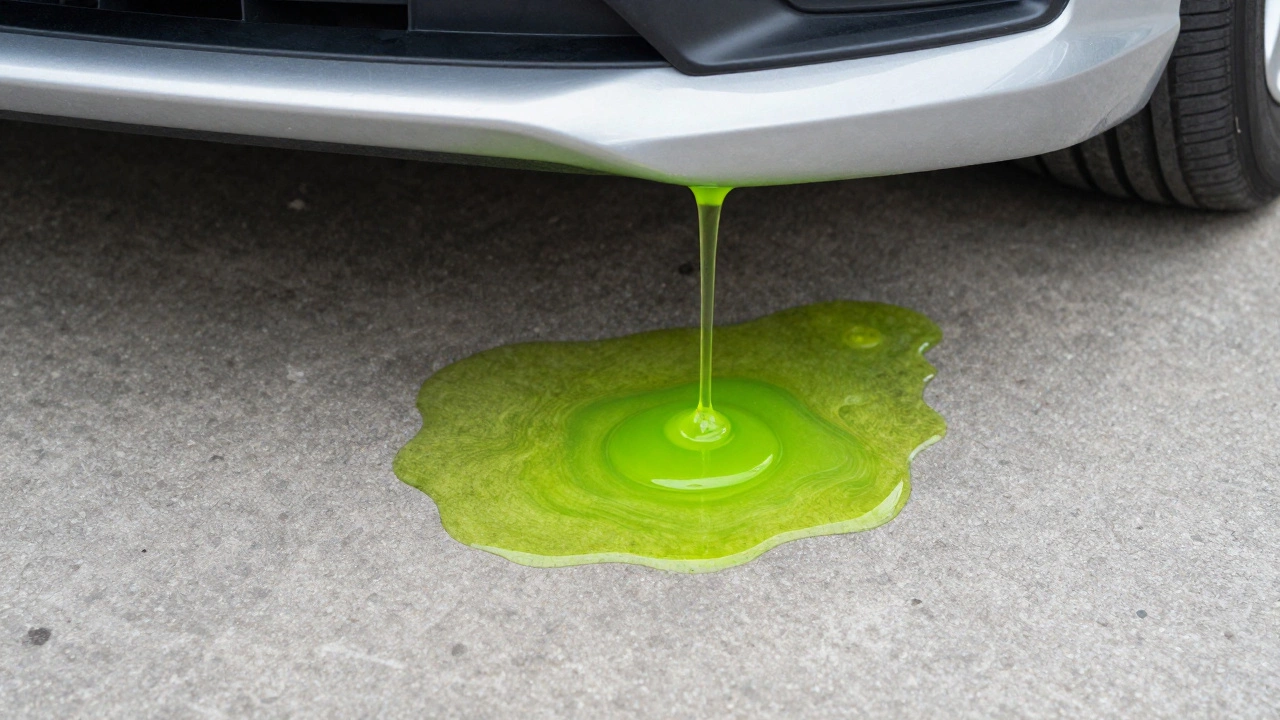
- Watch for coolant puddles under the car (green, orange, or pink fluid).
- Check for a rising temperature gauge or overheating warning lights.
- Look for "milky" engine oil or bubbles in the coolant reservoir.
- Listen for a loud cooling fan that never shuts off or a strange humming noise.
- Notice if your heater stops working while the engine is hot.
The Obvious Red Flags of a Dying Radiator
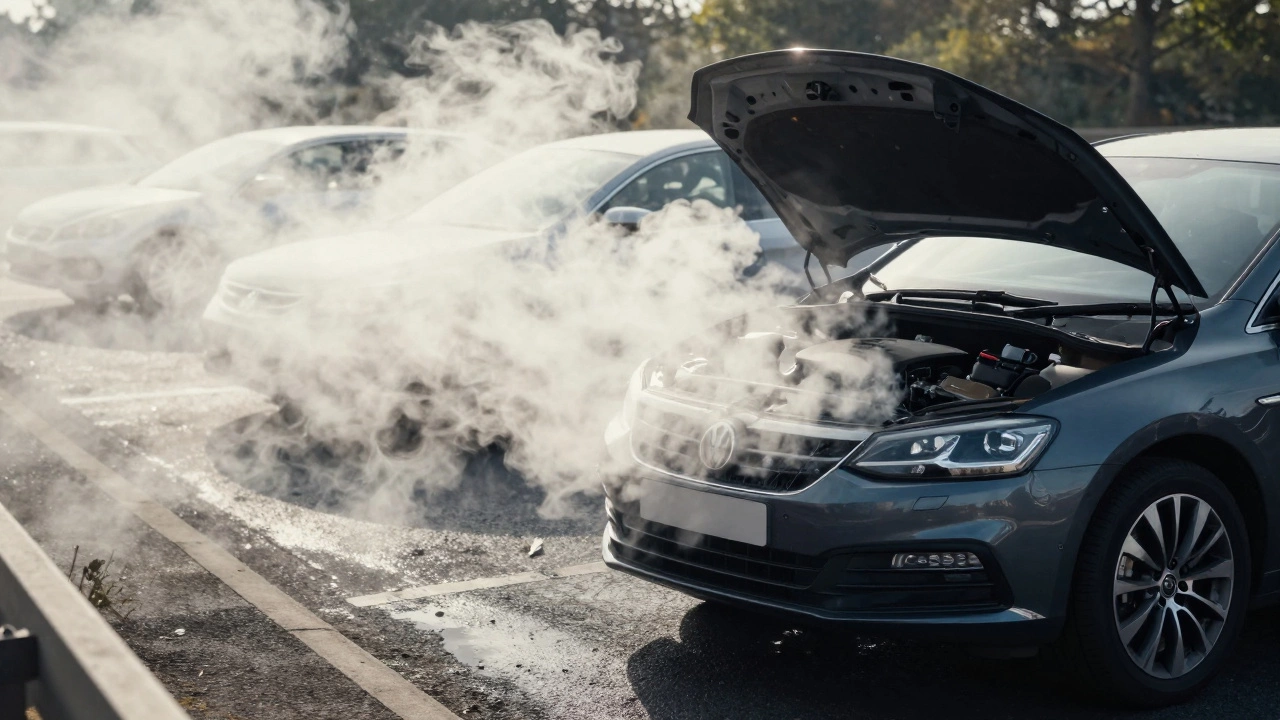
The most immediate sign of a problem is overheating. If your temperature gauge is climbing higher than usual during a normal commute, you have a problem. A Radiator is a heat exchanger used to transfer heat from the engine coolant to the outside air, and when it fails, that heat stays trapped in the engine. If the coolant cannot flow or the fins are clogged, the engine temperature spikes rapidly.
Then there is the smell. Have you ever noticed a sweet, almost syrup-like scent after parking your car? That is the smell of Ethylene Glycol, the primary chemical component in most engine coolants. When it leaks and hits a hot engine block, it vaporizes, creating that distinct sweet aroma. If you smell this, you likely have a pinhole leak in the radiator core or a loose hose clamp.
You should also look at the ground. If you see a puddle of bright green, orange, or pink fluid beneath the front of your car, your radiator is likely leaking. Unlike oil, which is brown or black, coolant is dyed specifically so you can identify it quickly. A small drip might just be a loose hose, but a steady stream usually means the radiator tank has cracked due to age or corrosion.
How to Check for Internal Failures
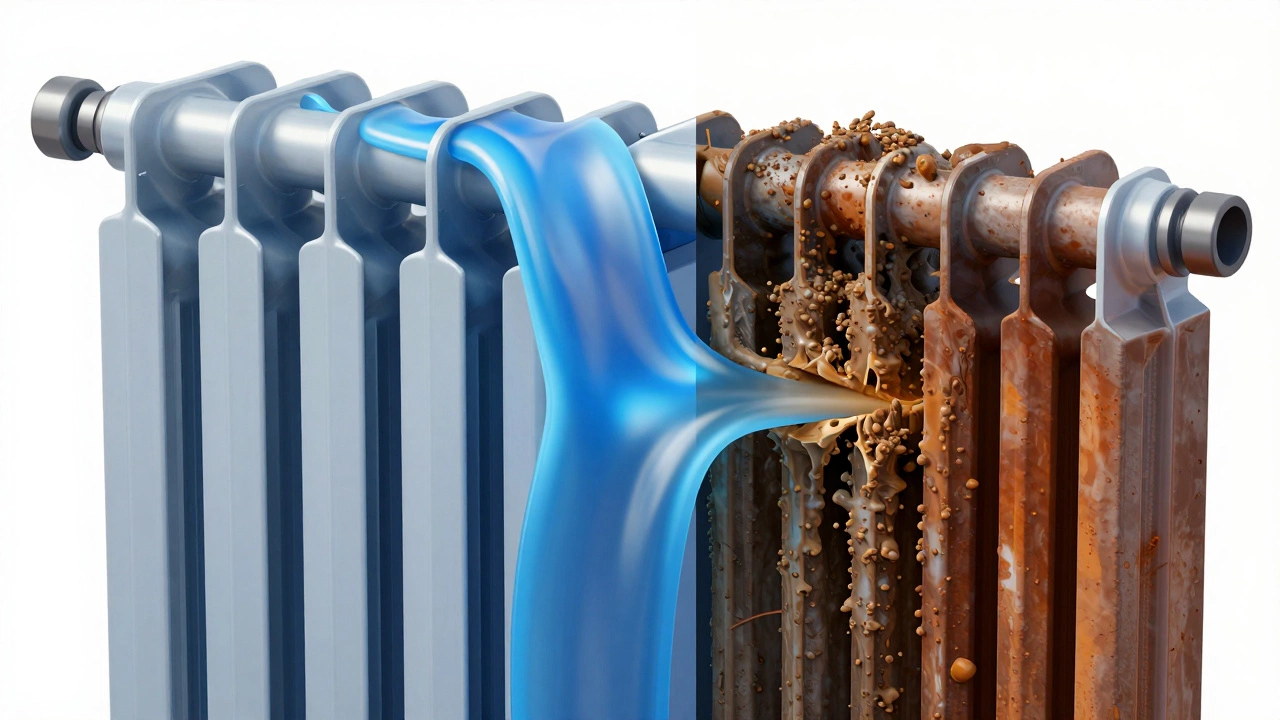
Not all radiator failures are visible from the outside. Sometimes the problem is internal, like a clogged core. Over time, minerals in the water can build up, creating a "sludge" that blocks the tiny passages inside the radiator. This means the Coolant, the heat-transfer fluid that circulates through the engine cannot move fast enough to keep the engine cool.
One way to test this is the "touch test" (only do this when the engine is warm, not scalding hot). Carefully feel the radiator surface in different spots. If some areas are hot and others are cold, you have a blockage. A healthy radiator should have a consistent temperature across its surface.
Another subtle clue is the performance of your cabin heater. If you turn the heat on full blast in the middle of winter and only lukewarm air comes out, your radiator might be the culprit. This often happens because of air pockets in the system or a lack of coolant pressure, which prevents the Heater Core, a small radiator that provides heat to the car interior, from getting enough hot fluid.
| Symptom | Likely Cause | Urgency |
|---|---|---|
| Bright colored puddles | Radiator leak / Cracked tank | High |
| Sweet smell after driving | Slow coolant leak | Medium |
| Temp gauge in the red | Clogged core / Failed pump | Critical |
| Milky brown oil | Blown head gasket (coolant in oil) | Critical |
| Weak cabin heat | Low coolant / Air lock | Medium |
The Role of the Radiator Cap and Cooling Fan
It is easy to blame the whole radiator when the problem is actually a 10-pound piece of plastic and metal: the Radiator Cap, a pressure-regulating valve that prevents coolant from boiling over. If the seal on the cap is worn out, the system cannot maintain pressure. Without pressure, the boiling point of the coolant drops, and you will see fluid overflowing into the reservoir tank even if the radiator itself isn't leaking.
Then there is the Cooling Fan, an electric or mechanical fan that pulls air through the radiator fins. If you notice your car stays cool while driving on the motorway but overheats the moment you hit traffic or a red light, your fan is likely dead. When the car is moving, the wind does the work. When you stop, the fan must take over. If it doesn't kick in, the radiator just sits there holding hot liquid with no way to cool it down.
Check the fan by popping the bonnet while the engine is running and the AC is on. You should hear the fan roar to life. If it's silent while the engine is hot, you've found your problem. This could be a blown fuse, a bad relay, or a burnt-out fan motor.
Connecting the Dots: Radiators and Engine Health
A bad radiator symptoms checklist isn't just about the radiator; it's about how the whole system interacts. For example, if you find yourself topping up the coolant every few days, you have a leak. While the radiator is the most common source, you should also check the Water Pump, the centrifugal pump that circulates coolant through the engine and radiator. If the pump impeller is worn down, the coolant just sits still, and the radiator can't do its job regardless of how new it is.
The most dangerous scenario is when a bad radiator leads to a Blown Head Gasket, a failed seal between the engine block and cylinder head caused by extreme overheating. This happens when the metal in the engine expands so much from the heat that it warps the gasket. If you see white smoke coming from the exhaust or "chocolate milk" looking sludge under your oil fill cap, the damage has moved past the radiator and into the heart of the engine.
To avoid this, keep an eye on your Coolant Reservoir, the plastic overflow tank that holds extra fluid for the system. If it is bone dry or overflowing, something is wrong. Regular flushing of the system every two to five years prevents the mineral buildup that clogs those internal passages in the first place.
When to Repair vs. Replace
If you have a small leak in a plastic side tank, some shops offer a solder or epoxy repair. However, these are usually temporary fixes. Modern radiators are often made of aluminum with plastic tanks crimped on. Once that plastic cracks, it's almost impossible to seal permanently because of the constant heat cycles and pressure.
If the core is clogged, you can try a chemical flush. This involves running a cleaning agent through the system to dissolve scale and rust. It works about 50% of the time. If the internal walls have completely collapsed or the corrosion is too deep, a flush is just a waste of money. In that case, a full replacement is the only way to ensure your engine doesn't melt down on a hot July afternoon.
Replacing a radiator is generally straightforward for a mechanic, but it requires a full system bleed. This is the process of removing air bubbles from the cooling lines. If air is left in the system, it creates "hot spots" in the engine, and you could still overheat even with a brand new radiator installed.
Can I just add more water to a leaking radiator?
In an emergency, yes, but doing this long-term is a mistake. Pure water boils faster than coolant and, more importantly, it causes rust and corrosion inside your engine block. Always use a 50/50 mix of distilled water and the specific coolant recommended in your owner's manual to prevent internal damage.
Why is my car overheating but the coolant level is full?
If the fluid is there but the engine is hot, you likely have a flow problem. This could be a stuck thermostat that isn't opening to let coolant into the radiator, a failed water pump, or a dead cooling fan. It could also be a severely clogged radiator core that is preventing the fluid from actually cooling down.
How often should I replace my radiator?
Radiators don't have a set expiration date, but they typically last 10 to 15 years. The lifespan depends on how well you maintain the coolant. If you never change your coolant, the acids build up and eat through the aluminum from the inside out. Regular flushing can make a radiator last the life of the car.
Is it dangerous to drive with a small radiator leak?
Yes, it is a gamble. A "small" leak can turn into a total burst at any moment due to the high pressure inside the system. If you lose too much coolant too quickly, the engine will overheat in minutes, potentially warping the cylinder head or seizing the engine entirely.
What does the coolant color tell me?
The color identifies the type of corrosion inhibitors used. Green is common in older cars, orange/pink is often used in modern European and Asian vehicles (OAT technology), and blue is common in some imports. Never mix different colors, as they can react and form a gel-like sludge that blocks your radiator.
Next Steps and Troubleshooting
If you suspect your radiator is bad, start with a visual inspection of the hoses and the ground. If you see leaks, check the radiator cap first; it's the cheapest part to replace. If the leaks are coming from the aluminum core itself, start shopping for a replacement.
For those who are handy, you can perform a pressure test. You can rent a cooling system pressure tester from most auto parts stores. This tool pumps air into the system to simulate operating pressure, making it very easy to see exactly where the coolant is spraying out.
If you are experiencing overheating but see no leaks, check your thermostat. A thermostat that is stuck closed is a common failure that mimics a bad radiator. If the top radiator hose is cold while the engine is overheating, the thermostat is likely the culprit, not the radiator.