Exhaust Upgrade Decision Tool
Answer the questions below to determine which exhaust upgrade is right for your riding style and budget.
Exhaust systems are one of the most debated upgrades in the motorcycle community. You want better sound, maybe a bit more power, or just that clean look. But standing in the garage with two options-a simple slip-on muffler and a complex full cat-back system-can feel overwhelming. The choice isn't just about budget; it’s about what you actually want your bike to do.
The Core Difference: What Are You Actually Changing?
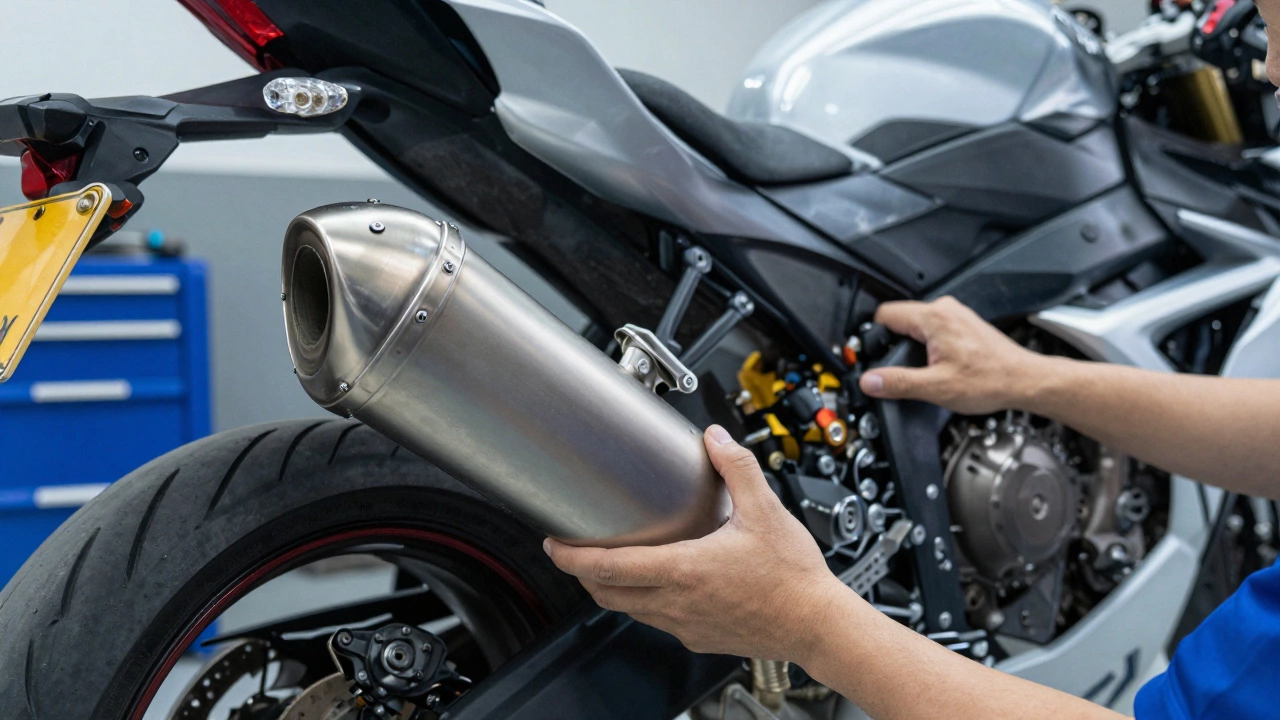
To make this decision, you need to understand exactly what each part does. A slip-on exhaust replaces only the muffler section-the part at the very back of your bike. It bolts onto your existing header pipes and catalytic converter. Think of it as swapping the speaker on a stereo while keeping the amplifier and wiring the same.
A full exhaust system, often called a "cat-back" or "header-to-muffler" system, replaces everything from the engine’s exhaust ports all the way to the tailpipe. This includes the header pipes (the tubes connected directly to the engine cylinders), the catalytic converter (if present), and the muffler. You are changing the entire pathway for gases to leave your engine.
This distinction matters because gas flow is physics, not magic. If you swap the muffler but keep restrictive stock headers, you hit a ceiling on performance gains. If you change the whole system, you change how the engine breathes entirely.
Performance Gains: Real Power or Just Noise?
Let’s talk numbers, because that’s usually why people upgrade. Stock exhausts are designed for emissions compliance, fuel economy, and reliability across all conditions-not peak performance. They restrict flow to ensure the catalytic converter works efficiently.
A slip-on typically offers modest gains. On a modern sportbike like a Yamaha R6 or Honda CBR600RR, you might see 1-3 horsepower gain at the rear wheel. For larger bikes, like a Harley-Davidson Street Bob, the gain might be negligible in raw numbers but noticeable in throttle response due to reduced weight. However, without an ECU remap, many modern fuel-injected bikes will run too lean with just a slip-on, potentially causing overheating or poor idle.
A full exhaust system removes the restrictions of the stock headers. High-flow stainless steel or titanium headers allow gases to exit the combustion chamber faster. This can yield 5-10+ horsepower gains, depending on the bike. On a Kawasaki Ninja ZX-10R, a full system paired with a proper tune can add significant mid-range torque and top-end power. The key here is that the engine needs to be retuned. A full exhaust changes the air-fuel ratio significantly; running stock maps with a full system is risky for engine longevity.
| Feature | Slip-On Exhaust | Full Exhaust System |
|---|---|---|
| Horsepower Gain | 1-3 HP (without tune) | 5-10+ HP (with tune) |
| Torque Improvement | Minimal | Significant mid-range boost |
| Weight Reduction | Light (2-5 lbs saved) | Moderate to Heavy (5-15 lbs saved) |
| ECU Remap Required? | Recommended for safety | Mandatory for optimal performance |
| Installation Complexity | Easy (DIY friendly) | Hard (Professional install advised) |
Sound Quality: The Emotional Factor
If you ride for fun, sound is huge. A slip-on gives you a deeper, slightly louder note than stock. It retains some of the original character but adds aggression. Brands like Akrapovič or SC Project offer slip-ons that provide a crisp, metallic tone without being excessively loud.
A full exhaust changes the voice completely. By replacing the headers, you alter the pulse of the exhaust gases hitting the muffler. This often results in a baritone growl on cruisers or a high-pitched scream on supersports. If you love the idea of your bike sounding like it belongs on a track, a full system delivers that visceral experience. However, be aware of noise regulations. In the UK, exceeding 80 decibels can lead to fines and failed MOT tests. Many full systems come with removable baffles to help you stay legal when needed.
Cost Breakdown: Budgeting Your Upgrade
Money talks. A quality slip-on from brands like Termignoni or Brembo (yes, they make exhausts too) usually costs between £400 and £800. Installation is cheap if you do it yourself, or around £100-£150 at a local shop.
A full exhaust system is a different ballgame. Premium carbon fiber or titanium systems from Arrow or Yoshimura can range from £1,200 to £2,500+. Add in the cost of an ECU flash (£150-£300) or a piggyback controller like Power Commander (£400+), and your total investment easily exceeds £2,000. For a commuter bike, this ROI might not make sense. For a dedicated weekend warrior, it’s worth every penny.
Legal and Maintenance Considerations
In the UK, legality is a major factor. Most slip-ons are sold as "road legal" if they retain the catalytic converter. Since you aren’t removing the cat, passing an MOT is straightforward. Check the label: if it says "Not for Road Use," you cannot legally ride it on public roads.
Full exhaust systems often remove the catalytic converter or replace it with a high-flow version. While many riders ignore this, strictly speaking, removing a mandated cat makes the bike illegal for road use in the UK. You would need to reinstall the stock cat for inspections. Additionally, full systems require more maintenance. Header pipes are exposed to heat and road debris. Inspect gaskets regularly to prevent leaks, which can kill performance and damage sensors.
Who Should Choose Which?
Choose a slip-on if:
- You want a cosmetic upgrade and a slight sound improvement.
- You commute daily and need reliability.
- Your budget is under £1,000.
- You don’t want to deal with tuning or ECU flashes.
- You live in an area with strict noise ordinances.
Choose a full exhaust if:
- You track your bike or ride aggressively on weekends.
- You want maximum horsepower and torque gains.
- You are willing to invest in professional tuning.
- You prioritize weight reduction for handling.
- You have the budget for the system and installation.
Final Verdict: Start Small, Dream Big
If you’re unsure, start with a slip-on. It’s a low-risk way to test the waters. You’ll get better looks and a nicer sound without breaking the bank. If you find yourself craving more power and noticing the limitations of your stock headers, then upgrade to a full system later. Many manufacturers design their slip-ons to integrate seamlessly with their full systems, so you won’t waste money.
Remember, an exhaust is only as good as the tune behind it. Never install a high-performance full system on a stock ECU and expect miracles. Get it tuned, respect the laws, and enjoy the ride.
Can I install a slip-on exhaust myself?
Yes, installing a slip-on is generally considered a beginner-friendly DIY task. You usually need a socket set and basic wrenches. Remove the stock muffler, slide on the new one, and tighten the clamps or bolts. Always check the manufacturer's torque specifications to avoid stripping threads.
Will a slip-on void my warranty?
In the UK and EU, consumer protection laws often protect you against blanket warranty voids. However, if the dealer can prove the slip-on caused specific engine damage (like overheating due to lean running), they may deny coverage for those parts. It’s safer to stick with reputable brands that offer road-legal, catalytic-compliant units.
Do I need to remap my ECU with a slip-on?
It depends on the bike. Older carbureted bikes might not need it. Modern fuel-injected bikes have oxygen sensors that adjust fuel mix automatically. A slip-on usually doesn’t change airflow enough to break these adjustments, but a light tune can optimize idle quality and throttle response. A full system absolutely requires a remap.
Is a titanium exhaust worth the extra cost?
Titanium is lighter and more durable than stainless steel, resisting heat discoloration better. If you’re chasing every ounce of weight savings for track days, yes, it’s worth it. For street riding, high-quality stainless steel offers nearly identical performance at a lower price point.
How much louder is a full exhaust compared to stock?
A full exhaust can increase noise levels by 10-20 decibels, depending on the design. This is a significant jump. Always measure your bike with a decibel meter app or device to ensure you stay within local legal limits, especially in the UK where enforcement is strict.