Fuel Pump Risk Calculator
How likely is your fuel pump to fail?
Enter your driving habits and vehicle conditions to determine your risk level. This tool helps you understand if you need to address potential fuel pump issues before they leave you stranded.
Ever pulled into a petrol station, filled up, and then your car sputtered to a stop right after? You turn the key again. Nothing. Not even a cough. That’s not magic. It’s probably your fuel pump giving out. And yes - bad fuel pump is one of the most common reasons a car suddenly refuses to run, even when it had gas minutes before.
What a fuel pump actually does
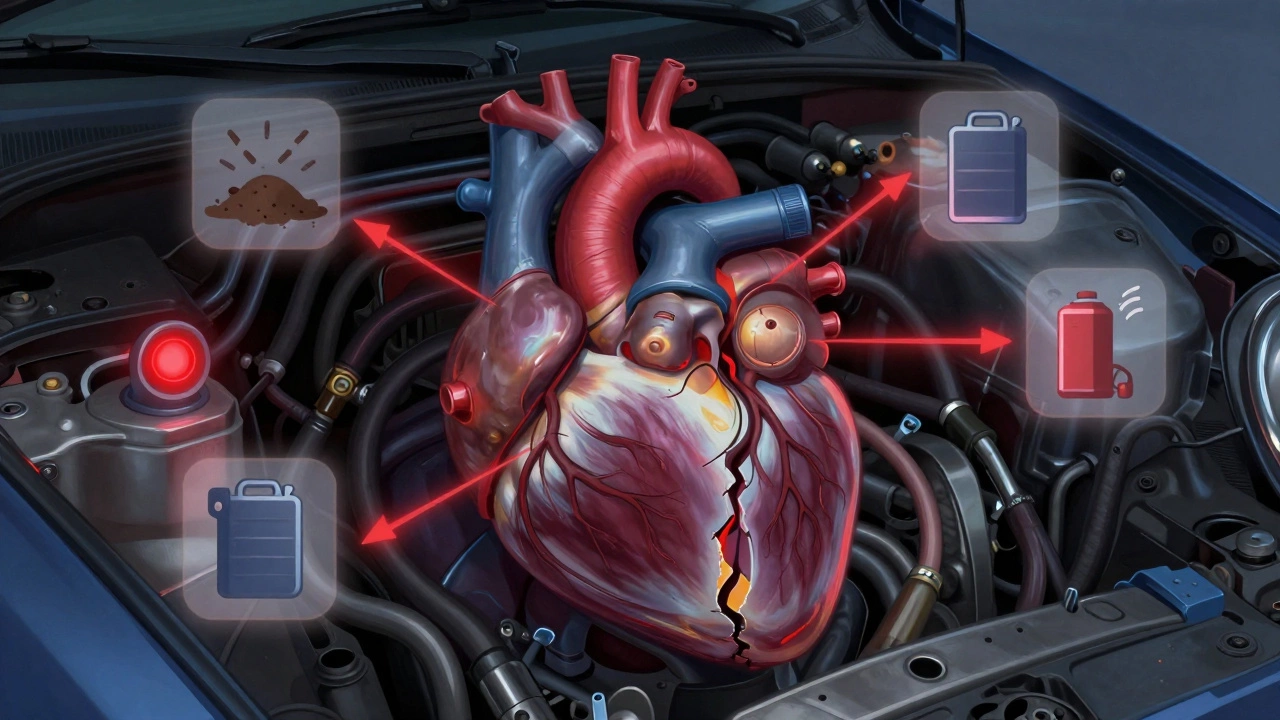
Your fuel pump isn’t just a little motor tucked under the tank. It’s the heart of your fuel system. It pulls petrol from the tank, pushes it through the lines, and delivers it to the engine at the right pressure. Modern cars need steady pressure - usually between 30 and 60 psi - for the injectors to spray fuel properly. If the pump can’t keep up, the engine doesn’t get what it needs to burn.
It’s not like a water pump in your radiator that just slows down. A failing fuel pump doesn’t trickle - it drops off a cliff. One minute you’re cruising, the next, your car chokes like it’s gasping for air. And once it dies completely, your engine won’t restart until the pump is fixed.
Can a car still run with a bad fuel pump?
Technically, yes - but only for a little while, and only if the damage isn’t total. Think of it like a heart attack. Your heart might still beat for a few seconds after it starts failing, but you’re not going to run a marathon.
Early-stage failure shows up as hesitation. You press the accelerator, and the car responds slowly. Or it stumbles when you climb a hill. Maybe it cuts out at idle, then comes back after you turn it off and on again. These are warning signs, not emergencies - but they’re not normal either.
As the pump weakens, the pressure drops. The engine control unit notices the lean mixture and tries to compensate. But it can only do so much. Eventually, the fuel delivery becomes too inconsistent. The engine misfires. Then it stalls. And if you try to restart it, you’ll hear the fuel pump whine once - then nothing. That’s the sound of it giving up.
What happens when the fuel pump dies completely
When the fuel pump fails fully, your car won’t start. No cranking issue. No clicking. Just silence. Turn the key, and the engine turns over - but it doesn’t catch. That’s because there’s no fuel reaching the cylinders. The spark plugs are firing. The battery’s fine. The starter’s working. But without fuel, nothing burns.
Some people think it’s the battery or the spark plugs. But if you’ve got fresh fuel and the pump is dead, none of that matters. You can try tapping the tank lightly with a rubber mallet - sometimes a stuck pump will jolt loose temporarily. But that’s a trick, not a fix. It might start once, maybe twice. Then it’s done for good.
Signs your fuel pump is failing (before it dies)
You don’t have to wait for the car to die to know something’s wrong. Here’s what to watch for:
- Engine sputtering at high speeds - especially on the motorway
- Loss of power when accelerating or climbing hills
- Engine stalling at idle, then restarting after a few seconds
- Difficulty starting, especially after the car’s been sitting
- Loud whining noise coming from the fuel tank area when you turn the key to ‘on’
- Check Engine Light with codes like P0190 (fuel pressure sensor) or P0087 (fuel system pressure too low)
If you hear that whine - and it’s louder than usual - get it checked. A new fuel pump costs between £250 and £550 in the UK, depending on your car. But if you ignore the noise, you might end up stranded on the M6 with a tow bill that’s twice as much.
Why fuel pumps fail
Fuel pumps don’t just wear out randomly. They die because of what you do - or don’t do - behind the wheel.
- Running on empty - The fuel cools the pump. When the tank’s low, the pump overheats. Do this often, and you’ll shorten its life by years.
- Dirty fuel - Dust, rust, or water in the tank grinds down the pump’s internal parts. Even a little dirt can clog the filter and force the pump to work harder.
- Old fuel - Petrol breaks down after 3-6 months. If your car sits unused for too long, the fuel turns to varnish and gums up the pump.
- Bad electrical connections - Corroded wires or a failing relay can starve the pump of power, making it act like it’s broken when it’s just not getting enough juice.
Most fuel pumps last 100,000 to 150,000 miles. But if you regularly drive with a quarter-tank or less, you’re cutting that in half.
What to do if your fuel pump fails
If your car dies and you suspect the fuel pump:
- Check the fuel level. Yes, really. A completely empty tank can mimic pump failure.
- Listen for the pump. When you turn the key to ‘on’ (before starting), you should hear a brief hum from the rear of the car. If you hear nothing, the pump isn’t getting power - or it’s dead.
- Check the fuse and relay. These are cheap fixes. A blown fuse is easy to replace. A bad relay is often swapped with another one (like the horn relay) to test.
- If those are fine, don’t guess. Get it diagnosed. A mechanic can hook up a fuel pressure gauge to the fuel rail. If the pressure is below spec, the pump is the culprit.
Don’t waste money replacing parts you don’t need. A bad fuel pump is usually the problem - but it’s not always the problem. A clogged fuel filter or a faulty pressure sensor can look identical.

Can you drive with a failing fuel pump?
Technically, yes - but you shouldn’t. Driving with a failing pump is like driving with a tire that’s slowly going flat. You might make it to the next exit. But you’re risking a sudden breakdown in the middle of nowhere.
And here’s the catch: if the pump fails while you’re on the motorway, you might not just be stranded. You could cause an accident. A car that loses power without warning is dangerous. Especially in heavy traffic.
It’s not worth the risk. If you’re seeing symptoms - hesitation, stalling, strange noises - book a diagnostic. Fix it before it leaves you stranded in the rain on the A34.
How to prevent fuel pump failure
Prevention is cheaper than repair. Here’s how to make your fuel pump last:
- Never run your tank below a quarter full. Keep it above 20% - it keeps the pump cool and clean.
- Use quality fuel. Cheap petrol often has more contaminants. Stick to major brands.
- Replace the fuel filter every 30,000-40,000 miles. Most modern cars have the filter built into the pump, but older models don’t. If yours is separate, change it regularly.
- If you store your car for long periods, add a fuel stabiliser before you park it.
- Don’t ignore warning signs. That whine? That hesitation? Don’t wait for it to get worse.
It’s not glamorous. But keeping your tank half full and using good fuel costs you nothing. And it can save you £500 and a day of chaos.
Final thought: It’s not a ‘maybe’ - it’s a ‘when’
A bad fuel pump doesn’t heal itself. It doesn’t get better with time. It only gets worse. And once it dies, your car stops. No exceptions.
If you’re hearing odd noises, struggling to accelerate, or your car won’t start after refuelling - don’t hope it’ll fix itself. Don’t wait for the next breakdown. Get it checked now. Because when your fuel pump fails, it doesn’t ask for your schedule. It just quits.
Can a car start with a bad fuel pump?
Sometimes, yes - but only if the pump is failing slowly. You might hear the engine crank but not catch, because fuel isn’t reaching the cylinders. If the pump is completely dead, the car won’t start at all. A weak pump might let you start the car after a few tries, but it’ll stall again under load.
How long does a fuel pump last?
Most fuel pumps last between 100,000 and 150,000 miles. But if you frequently drive with less than a quarter tank, run cheap fuel, or let your car sit for months without use, it could fail as early as 60,000 miles.
Can a fuel pump fail without warning?
Rarely. Most fuel pumps give signs before they die: sputtering, hesitation, whining noises, or trouble starting. But if the pump fails due to an electrical fault - like a broken wire or bad relay - it can stop suddenly without prior symptoms.
Is it safe to drive with a bad fuel pump?
No. A failing fuel pump can cause your car to lose power unexpectedly, especially at high speeds. This is dangerous in traffic. It’s not worth risking an accident or being stranded on a busy road.
How much does it cost to replace a fuel pump in the UK?
Replacement costs between £250 and £550, depending on your car model. Labour usually makes up most of the cost, since the pump is inside the fuel tank. Parts alone can be £100-£300. Always get a quote before agreeing to the job.