Spark Plug Fuel Savings Calculator
Calculate Your Fuel Savings
See how replacing worn spark plugs could improve your fuel economy and save you money
Most people think spark plugs are just there to get the engine started-like a one-time push to wake up a sleeping car. But if you believe that, you’re missing the whole picture. Spark plugs don’t just turn on the engine. They’re working non-stop the moment your car is running, and they’re one of the most critical parts keeping your engine alive.
What spark plugs actually do
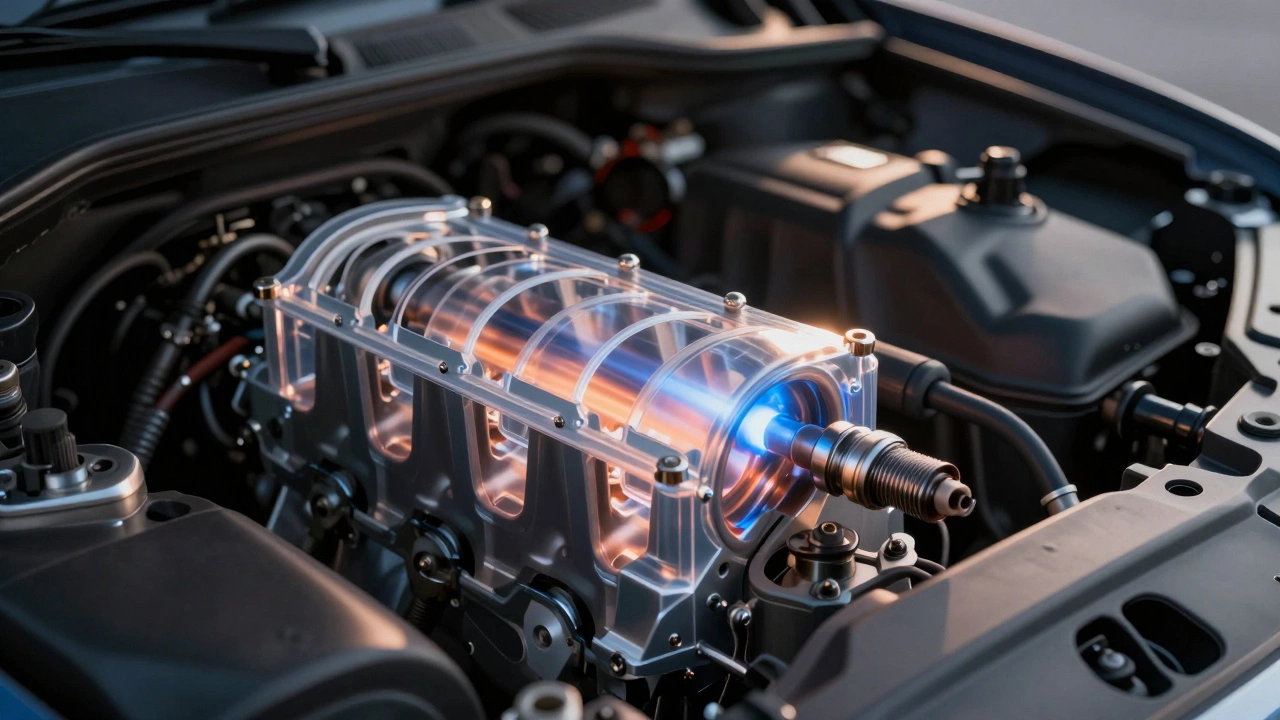
Spark plugs don’t just create a spark once at startup. They fire over 1,000 times per minute in a typical four-cylinder engine running at idle. At highway speeds, that number can jump to over 3,000 sparks per minute. Every single one of those sparks ignites the fuel-air mixture inside the combustion chamber. That’s what makes the pistons move, the crankshaft turn, and your car go forward.
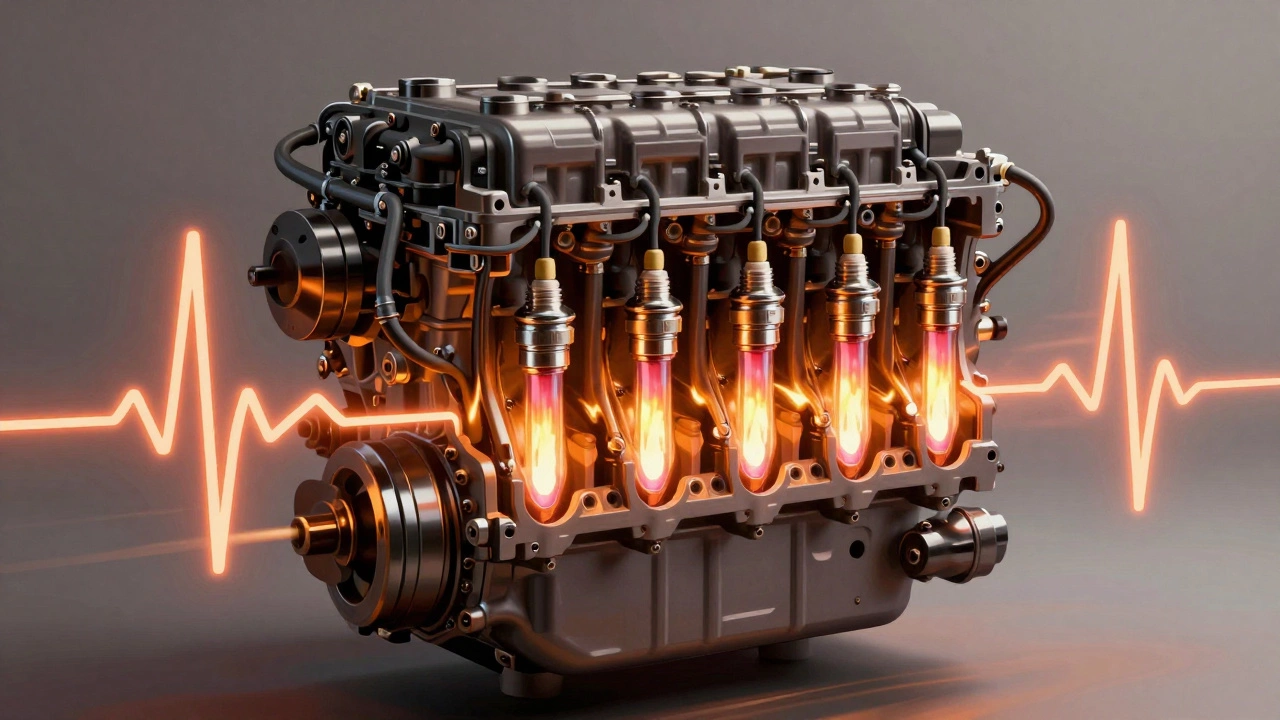
Think of it like this: your engine is a series of tiny, controlled explosions. Each explosion needs a spark at the exact right moment. If the spark doesn’t happen, the fuel doesn’t burn. That’s when you feel the engine misfire-rough idle, hesitation, or loss of power. So spark plugs aren’t just for starting. They’re the heartbeat of your engine’s combustion cycle.
Why people get confused
The confusion comes from how we experience cars. When you turn the key or press the start button, the engine cranks for a few seconds. That’s when you hear the starter motor working hard. It’s loud. It’s obvious. You see the engine come to life. But once it’s running, everything quiets down. The spark plugs keep doing their job silently, invisibly, and constantly.
It’s like breathing. You don’t notice it until you can’t. Spark plugs are the same. You only notice them when they fail.
What happens when spark plugs wear out
Spark plugs aren’t designed to last forever. Most manufacturers recommend replacing them every 30,000 to 100,000 miles, depending on the type. Standard copper plugs wear out faster. Platinum and iridium plugs last longer but still degrade over time.
When they start to fail, you don’t just have trouble starting the car. You get:
- Hard starts-even when the engine is warm
- Engine misfires, especially under load
- Reduced fuel efficiency-you might suddenly be going 5 miles per gallon less
- Increased emissions, which can cause a failed MOT
- Check Engine light with codes like P0300 (random misfire) or P0301-P0304 (cylinder-specific misfires)
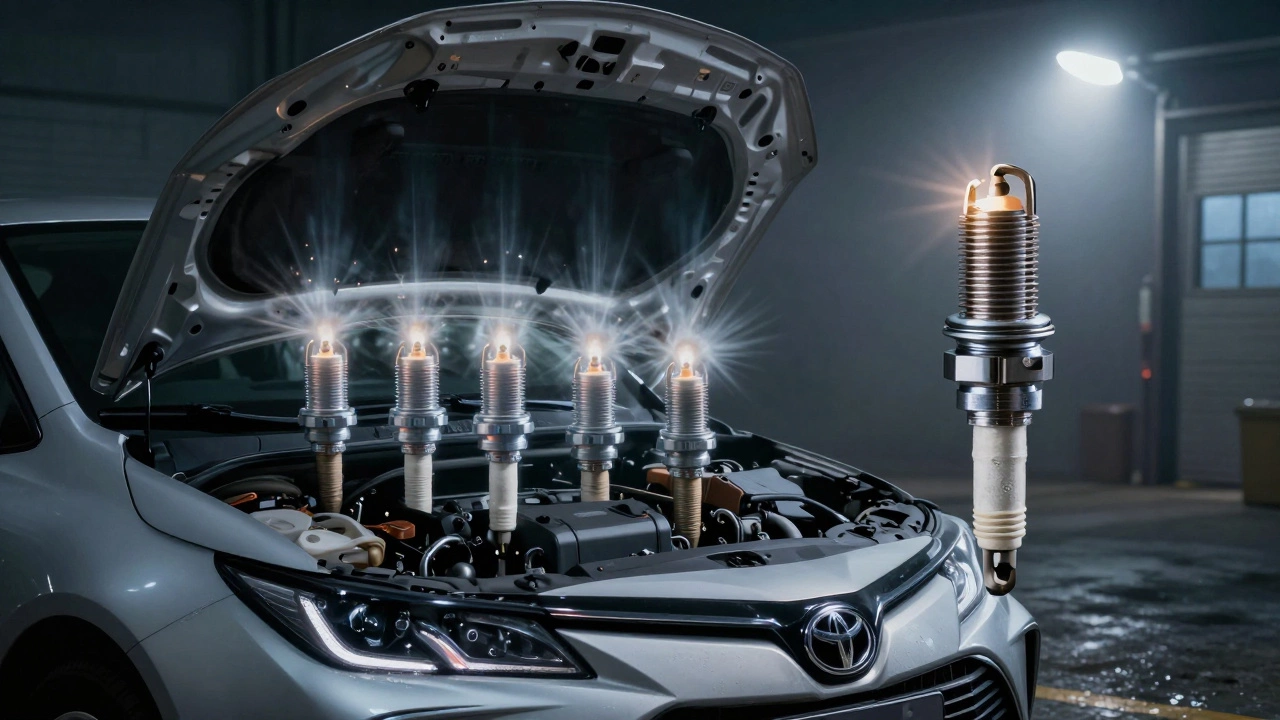
One real-world example: a 2020 Toyota Corolla in Manchester came in for a rough idle. The owner thought it was the fuel system. Turns out, the spark plugs were over 80,000 miles old. The electrodes had eroded, the gap had widened, and the spark couldn’t jump reliably. After replacing them, fuel economy jumped back up by 7%, and the idle smoothed out instantly.
Modern engines rely on precise spark timing
Modern engines don’t just need a spark-they need it at the exact microsecond. The engine control unit (ECU) adjusts spark timing based on load, temperature, fuel quality, and even altitude. If the spark plug is weak or fouled, the ECU can’t compensate enough. That’s why worn plugs don’t just make the car harder to start-they make it run poorly even after it’s running.
Even in hybrid cars, where the engine turns on and off frequently, spark plugs are still firing every time the gasoline engine runs. They’re not just for the initial start-they’re essential every single time the engine fires up during driving.
What about diesel engines?
Here’s a common point of confusion: diesel engines don’t use spark plugs. They use compression ignition. The air is squeezed so hard it gets hot enough to ignite the fuel without a spark. So if you’re thinking about spark plugs in a diesel, you’re looking at the wrong part. But if your car is gasoline-powered-over 95% of cars on UK roads-then spark plugs are doing their job every second you’re driving.
How to know if yours are failing
You don’t need a diagnostic tool to spot trouble. Here are simple signs:
- Engine hesitates when you press the accelerator
- It takes longer than usual to start, even on a warm morning
- You hear a rattling or popping noise from the engine
- Your fuel tank doesn’t last as long as it used to
- The engine runs rough at idle but smooths out at higher RPMs
If you notice even one of these, it’s worth checking your spark plugs. They’re inexpensive to replace, and the payoff in performance and fuel savings is immediate.
Myth busted: spark plugs don’t just start the engine
So no, spark plugs are not just for starting. They’re active participants in every single combustion cycle. They’re not a one-time use part. They’re a continuous, high-performance component that works harder than most people realize.
Ignoring them until the car won’t start is like waiting for your heart to stop before you check your cholesterol. By then, it’s too late to avoid damage.
Replace your spark plugs on schedule. Don’t wait for failure. Your engine will thank you with better performance, better fuel economy, and fewer surprises on the road.
Do spark plugs wear out faster in cold weather?
Cold weather doesn’t make spark plugs wear out faster, but it makes their job harder. When it’s freezing, the fuel doesn’t vaporize as easily, so the spark has to work harder to ignite the mixture. That puts more stress on older or weak plugs. That’s why many people notice starting problems or rough idling in winter-even if the plugs were fine in summer.
Can I drive with a bad spark plug?
You can, but you shouldn’t. Driving with a misfiring cylinder can damage your catalytic converter, which is expensive to replace. It can also cause unburned fuel to wash down the cylinder walls, diluting your engine oil. That leads to increased wear on pistons and rings. A single bad plug might not stop you from driving, but it’s setting up bigger, costlier problems down the line.
How often should I replace spark plugs?
It depends on the type. Standard copper plugs last about 30,000 miles. Platinum plugs can go 60,000 to 80,000 miles. Iridium plugs, which are common in newer cars, often last up to 100,000 miles. Always check your owner’s manual. Some manufacturers, like Honda and Toyota, recommend 100,000-mile intervals. Others, like older Ford models, suggest 30,000. Don’t guess-follow the schedule.
Do premium spark plugs improve performance?
If your car originally came with iridium or platinum plugs, then yes-using the same type improves reliability and longevity. But if your car came with standard copper plugs, upgrading to premium won’t give you more power or better fuel economy. It just means they’ll last longer. Don’t pay extra for performance gains that don’t exist in your engine’s design.
Can spark plugs cause the check engine light?
Absolutely. A misfiring cylinder due to a bad spark plug is one of the most common reasons the check engine light comes on. The ECU detects the misfire and stores a code like P0300 or P0302. Replacing the plug often clears the light. But if the light stays on after replacement, there may be another issue-like a bad coil or fuel injector-that needs checking.