Engine Oil Level Safety Calculator
Oil Level Status
Enter engine capacity and current oil level to check safety
- Never overfill - More than 0.5L over max can cause foaming and engine damage
- Check when cold - Hot oil gives false readings
- Always diagnose the cause - Adding oil without finding the leak is dangerous
- Regular checks matter - Check every 1,000 miles or monthly
Ever looked under the hood, saw the oil light flicker, and thought, "I’ll just pour in a bit more oil"? You’re not alone. Millions of drivers do it every year. But here’s the truth: adding more oil without knowing why your level dropped is one of the most common mistakes that leads to expensive engine damage.
Why Your Oil Level Drops Isn’t Always Simple
Engine oil doesn’t just vanish. If your dipstick shows low oil, something’s wrong. It could be a slow leak from a worn gasket. Maybe your engine is burning oil because the piston rings are worn out. Or it could be a cracked oil cooler in a turbocharged engine. In older cars-especially those over 100,000 miles-it’s normal to burn a bit of oil. But if you’re topping up every 500 miles, that’s not normal. That’s a warning sign.Adding oil without fixing the root cause is like putting a bandage on a broken bone. You might feel better for a few days, but the damage keeps growing.
Too Much Oil Is Just as Dangerous as Too Little
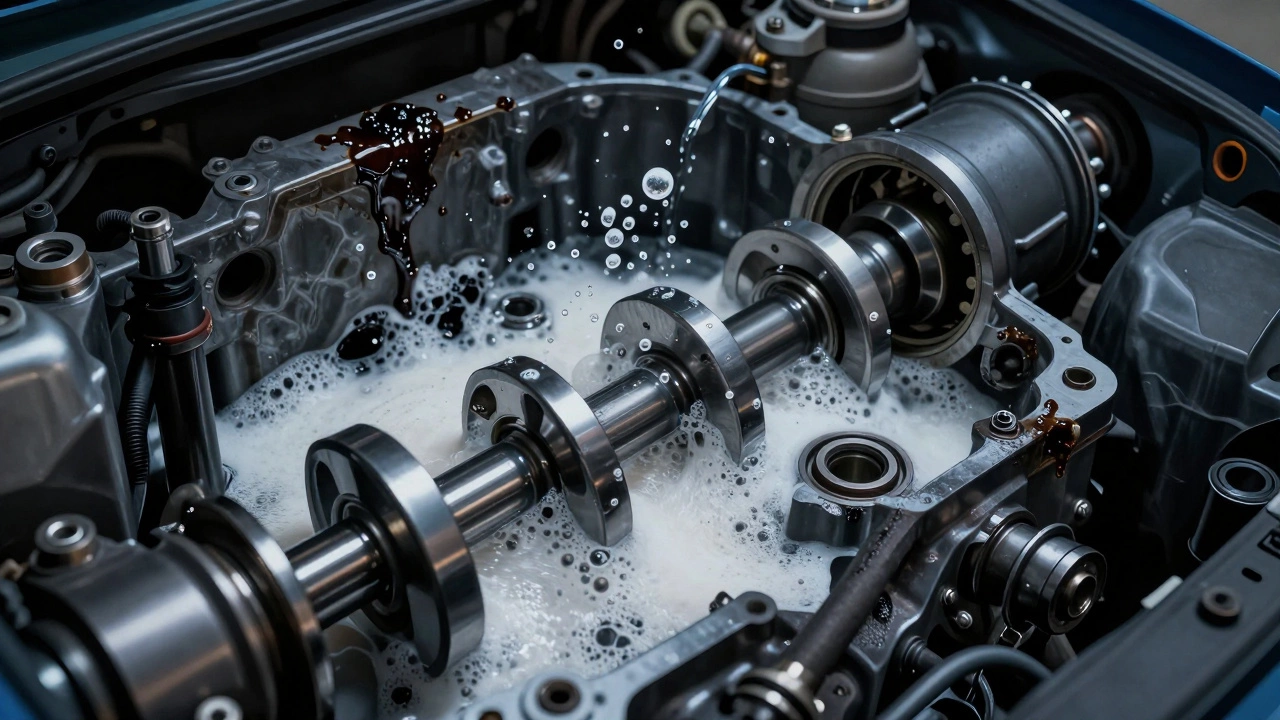
Most people think the only risk is running out of oil. But overfilling can wreck your engine just as fast.When you add too much oil, the spinning crankshaft whips it into a froth. This isn’t just foam-it’s air bubbles mixed with oil. And air doesn’t lubricate. That means your bearings, camshafts, and valve train aren’t getting the protection they need. The result? Metal-on-metal grinding, scoring on cylinder walls, and eventually, a seized engine.
Also, excess oil gets sucked into the PCV system and into the combustion chamber. That leads to carbon buildup on valves, fouled spark plugs, and even catalytic converter failure. A clogged converter can cost over £1,200 to replace in the UK.
Most engines hold between 4 and 7 litres. The dipstick has two marks: minimum and maximum. Going even half a litre over the max line is risky. In a small 1.5-litre engine, that extra half-litre can be enough to cause foaming.
What You Should Do Instead
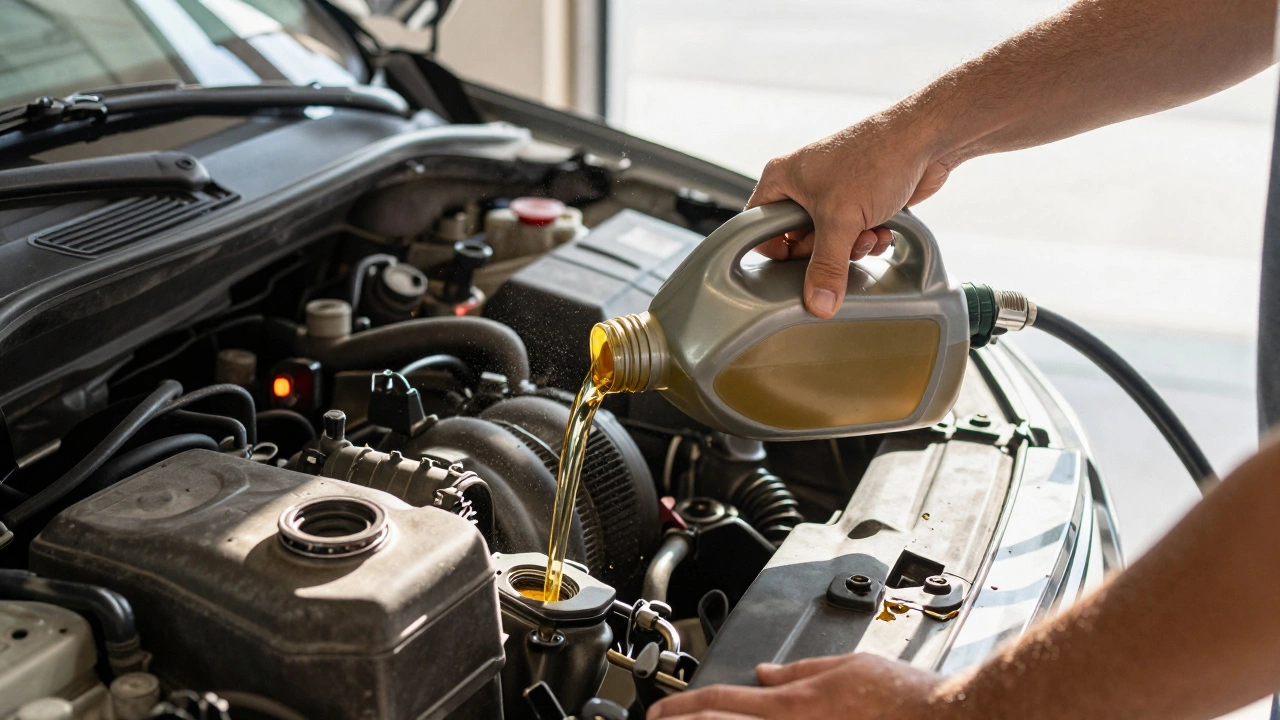
If your oil is low, don’t just pour. Follow these steps:- Turn off the engine and wait 5-10 minutes. Oil needs to settle back into the pan.
- Pull out the dipstick, wipe it clean, reinsert it fully, then pull it out again.
- Check the level. If it’s below the minimum mark, you’re low.
- Check the colour. Black, gritty oil? It’s overdue for a change.
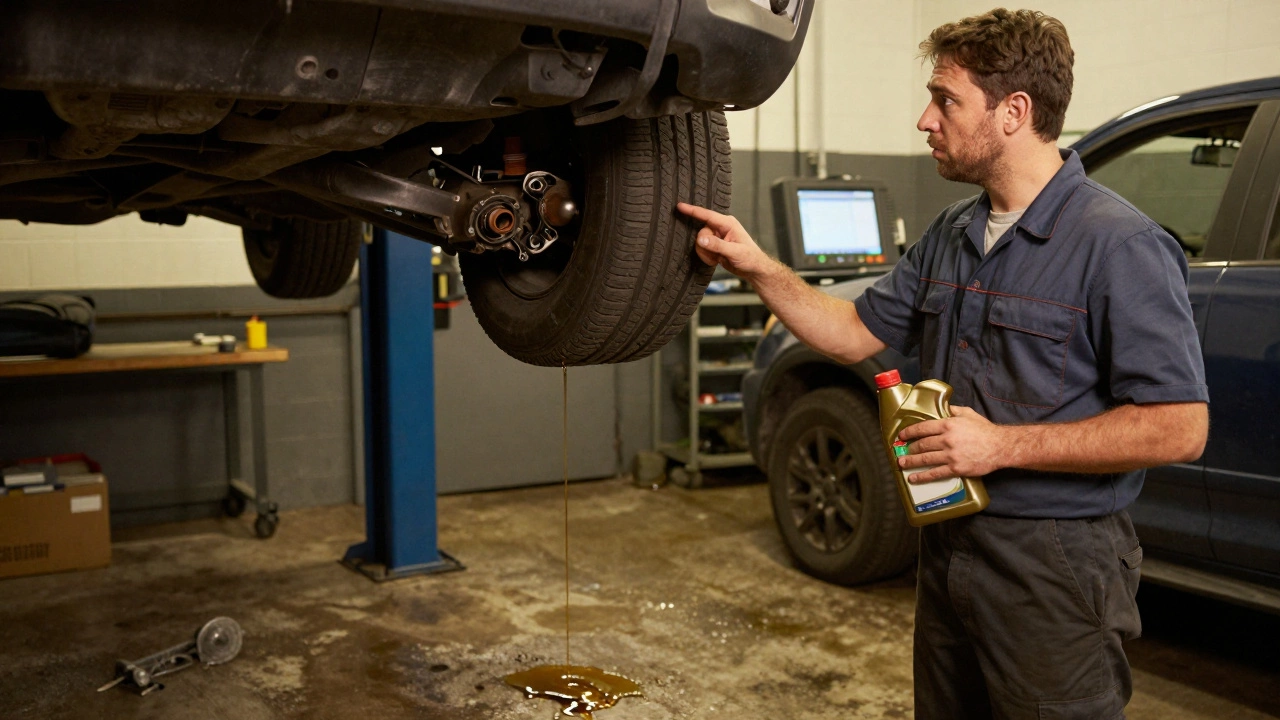
- Look under the car. Any wet spots? Stains on the driveway? That’s a leak.
- Only add oil if you’re below the minimum. Use the exact type your manual says-5W-30, 10W-40, etc.
- Add a quarter litre at a time. Recheck after each addition.
Never add oil just because you think "it might help." Only add what’s missing. And if you’re adding oil more than once between oil changes, get the car checked.
When to Skip the DIY and Call a Mechanic
Here are red flags that mean you need professional help-not more oil:- You’re adding oil every 800 miles or less.
- The oil smells like burnt fuel or looks milky (that’s coolant mixing in).
- You see blue smoke from the exhaust-sign of oil burning.
- The oil light stays on even after topping up.
- You’ve noticed a drop in performance or unusual engine noise.
These aren’t "minor" issues. In the UK, 42% of engine failures linked to oil neglect are from drivers who kept topping up instead of diagnosing. That’s according to the AA’s 2025 vehicle breakdown report.
How Often Should You Really Check Your Oil?
Modern cars have oil life monitors, but they’re not magic. They estimate based on driving patterns, not actual oil condition. If you drive in stop-and-go traffic, tow trailers, or live in a cold climate like Manchester, your oil degrades faster.Check your oil every 1,000 miles or once a month-whichever comes first. Make it part of your weekly routine, like checking your tyre pressure. Keep a small bottle of the right oil in your boot. That way, if you’re low, you can top up safely. But remember: topping up is a temporary fix. Not a solution.
What Happens If You Ignore It?
Let’s say you keep adding oil every week. You think you’re saving money. But here’s what really happens:- After 3 months: Carbon builds up on valves. Engine loses power.
- After 6 months: Oil sludge forms. Oil pump clogs.
- After a year: Bearings wear out. Engine knocks. Repair costs hit £2,000-£5,000.
Compare that to a £45 oil change and a £120 inspection. The math is clear.
Some drivers say, "My old car’s just worn out. I’ll keep it running." That’s fine-if you’re prepared for the cost. But pretending low oil is normal? That’s how you end up stranded on the M6 with a dead engine.
Final Rule: Oil Isn’t a Fuel
You don’t add petrol when your tank’s low because you think it’ll make the car run better. You add it because it’s empty. Oil works the same way. It’s not a magic additive. It’s a lubricant that gets used up-or lost.If your oil level drops, don’t guess. Don’t assume. Don’t pour. Find out why. A mechanic can diagnose oil consumption in under 30 minutes. It’s cheaper than a tow truck. And it might just save your engine.
Can I add oil if the engine is still warm?
It’s safer to wait 5-10 minutes after turning off the engine. Hot oil expands and gives a false reading. You might think you’re low when you’re actually at the right level. Adding oil to a hot engine can lead to overfilling, which causes foaming and damage.
What happens if I use the wrong type of oil?
Using oil with the wrong viscosity-like 10W-40 instead of 5W-30-can cause poor flow in cold weather or inadequate protection at high temperatures. It can also trigger the oil pressure warning light. Always follow your owner’s manual. Mixing different brands is fine, but never mix different grades.
Is it normal for older cars to burn oil?
A small amount is normal in high-mileage engines-up to a litre every 3,000 miles. But if you’re adding a full litre every 1,000 miles or less, that’s excessive. Worn piston rings or valve seals are likely the cause. It doesn’t mean you should just keep topping up. It means you need to plan for a repair or consider the engine’s long-term health.
Can I mix synthetic and conventional oil?
Yes, you can mix them in an emergency. But it’s not ideal. Synthetic oil has better heat resistance and cleaner additives. Mixing them dilutes those benefits. If you’re topping up, try to use the same type. If you don’t know what’s in there, it’s better to drain and replace the oil completely.
Why does my oil level drop so fast after an oil change?
If your oil level drops sharply right after a service, the mechanic may have underfilled it-or there’s a leak. Always check the level yourself after a service. If it’s below the minimum within 200 miles, go back. A reputable garage will fix it for free if they made the mistake.