Radiator Health Calculator
This tool helps you determine your radiator's risk of failure based on maintenance history and driving conditions. Use it to decide when to schedule a coolant flush or radiator inspection.
When your car starts overheating, especially on a cold morning in Manchester, the last thing you want to do is pull over and guess what’s wrong. More often than not, the culprit isn’t the engine itself-it’s the radiator. Radiators are simple in design but critical in function. They keep your engine from turning into a melted mess by circulating coolant and pulling heat away. But they don’t last forever. And when they fail, it’s rarely because of one random thing. There are three main causes that account for over 90% of radiator failures in everyday cars.
Corrosion and Internal Buildup
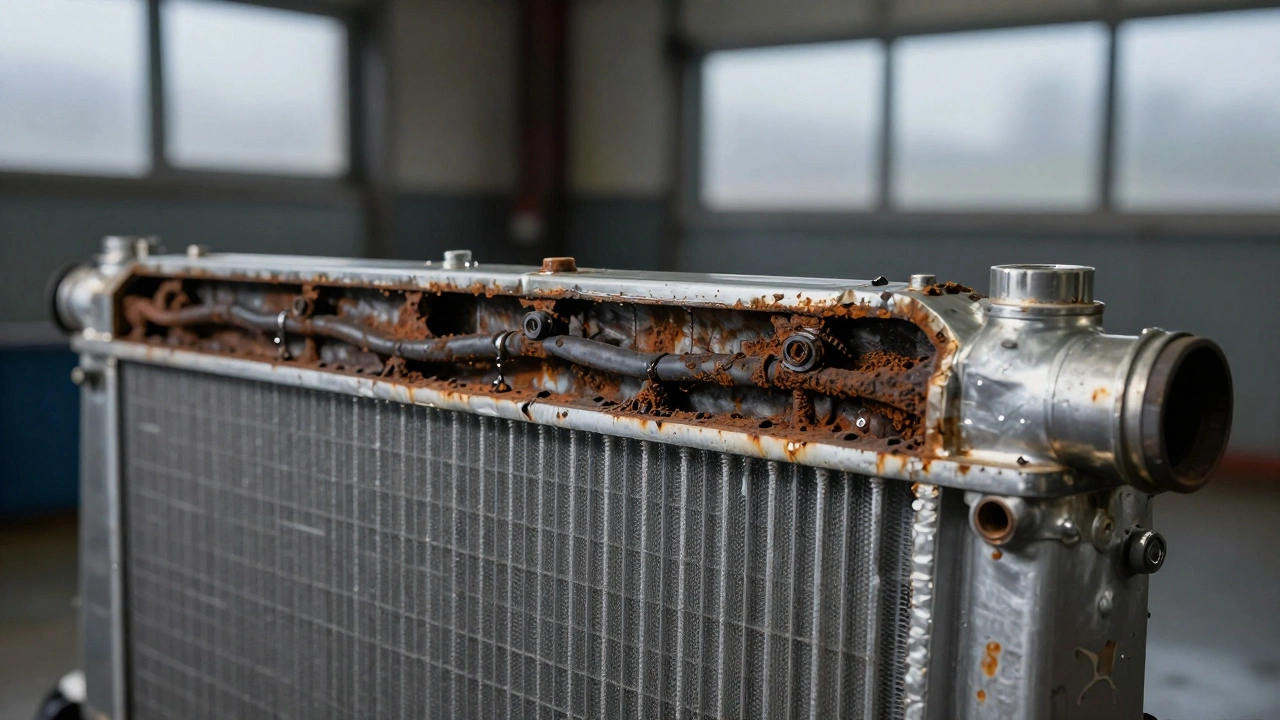
The most silent killer of radiators is corrosion. Inside the cooling system, coolant mixes with metal parts-copper, brass, aluminum, and steel. Over time, if the coolant isn’t changed regularly, it turns acidic. This eats away at the thin walls of the radiator tubes, especially where they connect to the end tanks. You won’t see it coming. No warning lights. No strange noises. Just gradual thinning until a tiny hole forms.
Older cars with copper-brass radiators are especially vulnerable. Even modern aluminum radiators can suffer if you use tap water instead of proper coolant. Tap water has minerals that build up as scale, clogging narrow passages. This doesn’t just reduce cooling-it traps heat in places it shouldn’t, causing hot spots that warp or crack the metal. A 2023 study by the Society of Automotive Engineers found that radiators with more than 50,000 miles and no coolant flush in the last 3 years were 7 times more likely to develop internal corrosion.
Coolant Leaks
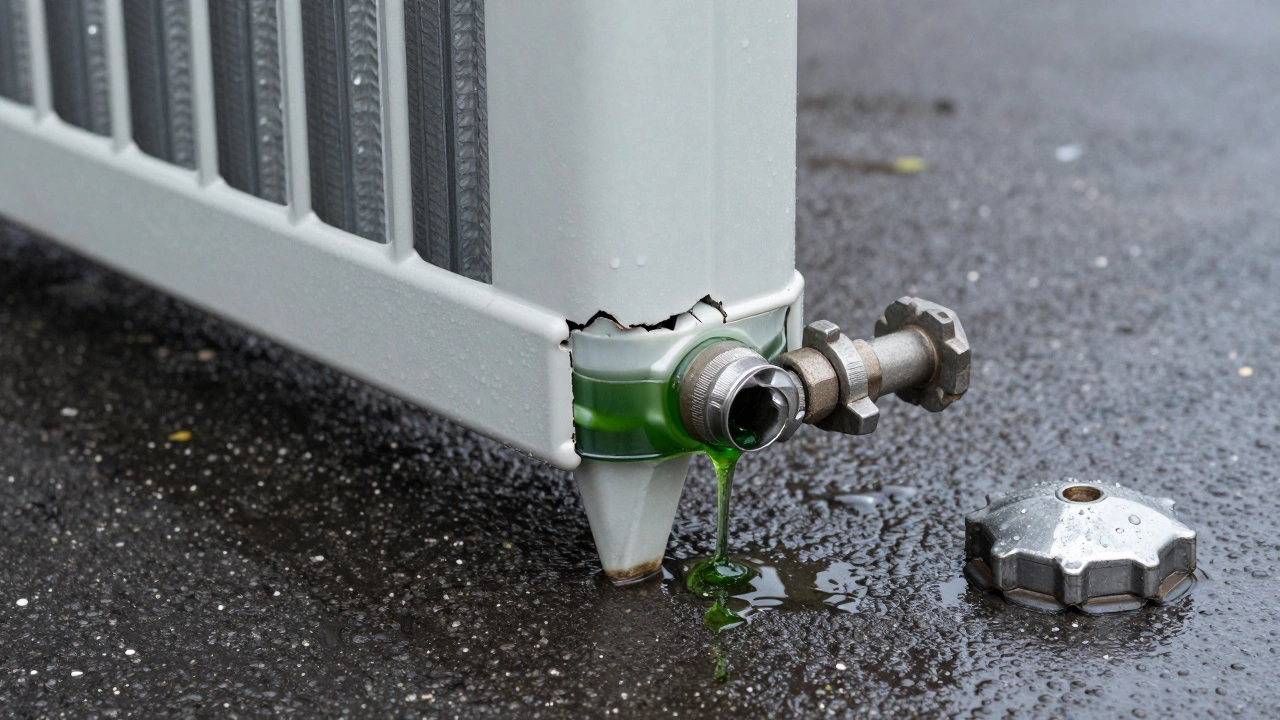
Leaking coolant is the most visible sign of radiator trouble. But it’s not always the radiator itself that’s to blame. Hoses, clamps, gaskets, and even the water pump can leak. The problem is, once coolant starts dripping, the system loses pressure. That’s when the radiator gets stressed. Without enough fluid, the engine heats up, and the radiator can’t do its job. The heat causes metal to expand. Then, when the engine cools down, it contracts. This repeated stress cracks welds and seams.
Look under your car after it’s been parked. A green, orange, or pink puddle? That’s coolant. Check the radiator cap, the top tank, and the lower hose connections. A small drip near the seam where the plastic tank meets the metal core is classic. It’s not a crack you can fix with epoxy. It’s a sign the plastic has become brittle from heat and age. Most radiators last 8-12 years, but if you drive in stop-and-go traffic or haul heavy loads, that clock ticks faster.
Physical Damage and Debris
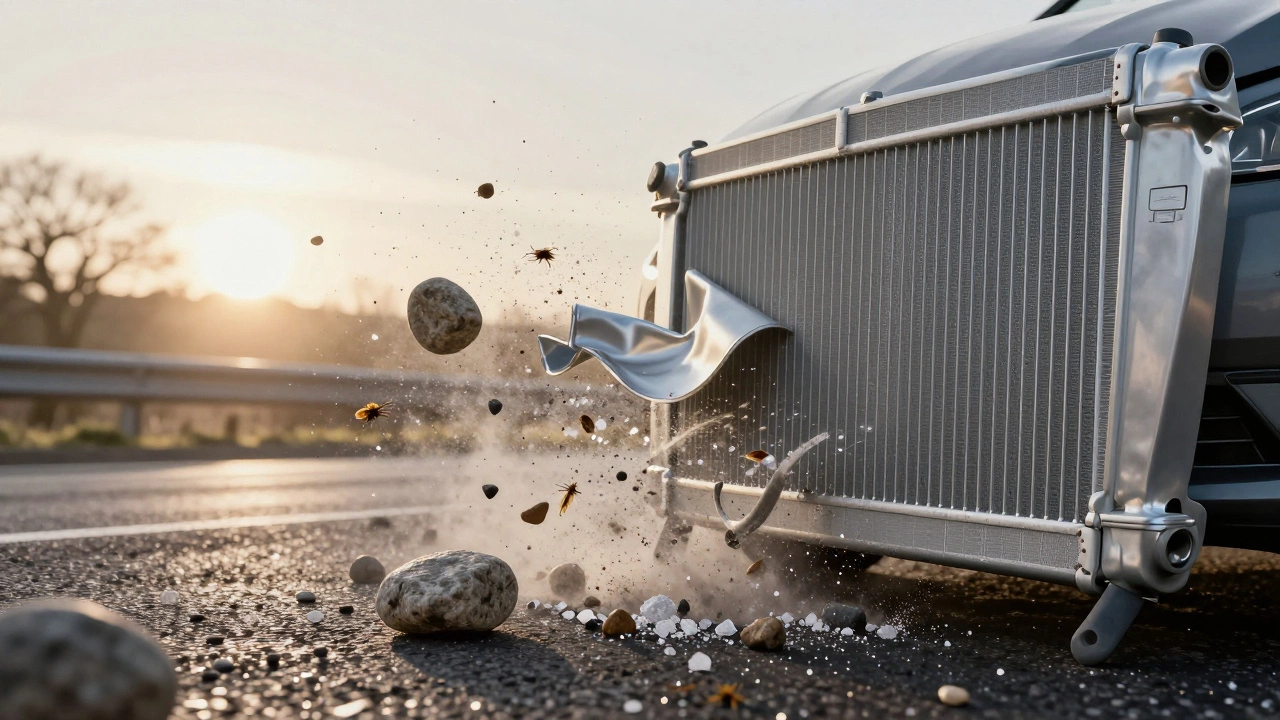
Think about where your radiator sits-right in front of the engine, behind the grille. It’s the first thing that hits road debris. A stone kicked up by a truck. A piece of metal from a damaged guardrail. Even a large insect swarm can clog the fins over time. These aren’t just cosmetic issues. The radiator’s thin aluminum fins are designed to transfer heat, not absorb impacts. A single dent can collapse several rows of cooling tubes, blocking coolant flow.
On UK roads, especially in winter, salt and grit from road treatment accelerate corrosion. Combine that with the constant vibration from rough surfaces, and you’ve got a perfect storm. Many drivers don’t realize their radiator is damaged until the engine starts overheating on the motorway. By then, the damage is done. Regular visual checks-looking for bent fins, cracks, or oil stains near the radiator-can catch this early. A quick rinse with a garden hose in spring helps remove built-up grime before it turns into corrosion.
Why These Three Causes Matter More Than Others
You might hear about thermostat failures, water pump issues, or fan malfunctions. Those can cause overheating, yes. But they’re not radiator failures-they’re symptoms of a larger cooling system problem. The radiator itself fails because of corrosion, leaks, or physical damage. Fixing the thermostat won’t help if your radiator is full of rust sludge. Replacing the water pump won’t stop a leak from a cracked tank.
That’s why knowing these three causes changes how you maintain your car. Instead of waiting for the engine to overheat, you start looking at the radiator like a maintenance checkpoint. Every oil change? Check the coolant level and color. Every 30,000 miles? Flush the system. Every 5 years? Inspect the radiator for signs of wear. It’s not expensive. A coolant flush costs under £60. A new radiator? Around £200-£400 depending on the model. But if you wait too long, you risk head gasket failure, warped cylinders, or a seized engine-all repairs that cost over £2,000.
How to Prevent Radiator Failure
- Use the correct coolant type for your car. Check the owner’s manual. Mixing types can cause chemical reactions.
- Flush the cooling system every 3 years or 40,000 miles, whichever comes first. Don’t wait for problems.
- Never use plain water. Even distilled water lacks the anti-corrosion additives.
- Inspect the radiator for leaks, bent fins, or stains every time you fill up.
- Keep the front grille clean. Dirt and bugs block airflow, forcing the radiator to work harder.
- If you drive in heavy traffic or tow trailers, consider an auxiliary transmission cooler. It takes pressure off the radiator.
What Happens If You Ignore It
Ignoring a failing radiator doesn’t just mean a hot engine. It means a domino effect. Overheating warps the cylinder head. That leads to a blown head gasket. Coolant leaks into the oil. Oil loses its lubricating power. The engine starts to seize. At that point, you’re not replacing a radiator-you’re replacing the whole engine.
One mechanic in Manchester told me about a customer who drove for three weeks with a slow leak. He kept topping up with water. The radiator corroded from the inside. By the time he brought it in, the engine block had cracked. The repair bill? £3,800. The radiator? £280. The difference? Time and awareness.
| Sign | Most Likely Cause | What to Do |
|---|---|---|
| Overheating, no visible leak | Internal corrosion or clogged tubes | Flush system, replace radiator if sludge is present |
| Green or orange puddle under car | Coolant leak from tank, hose, or seal | Inspect connections, replace radiator if leak is at seam |
| Bent or dirty radiator fins | Physical damage or debris buildup | Clean gently with water, replace if airflow is blocked |
| Rusty coolant or sludge in reservoir | Old or contaminated coolant | Flush entire system, refill with fresh coolant |
| Steam from engine, no warning light | Pressure loss from leak or faulty cap | Test radiator cap pressure, check for hairline cracks |
When to Replace vs. Repair
Can you fix a radiator? Sometimes. If it’s a small leak from a loose hose clamp, yes. If the plastic end tank is cracked, no. Most modern radiators are one-piece units. The tank and core are welded together. There’s no practical way to repair a crack without replacing the whole thing. Even epoxy repairs rarely last more than a few months.
Replace it if:
- You see coolant leaking from the tank-to-core seam
- There’s visible corrosion inside the coolant reservoir
- The fins are bent more than 30% across the width
- The car overheats even after a flush and new thermostat
Repair it only if:
- A hose clamp is loose
- The radiator cap is faulty
- The electric cooling fan isn’t turning on
Don’t waste money on radiator sealants. They’re a band-aid. They clog the system and make future repairs harder.
Can a bad thermostat cause radiator failure?
No, a bad thermostat doesn’t cause radiator failure. It causes the engine to overheat, which can lead to radiator damage over time. But the radiator itself fails because of corrosion, leaks, or physical damage-not because the thermostat is stuck. Replacing a faulty thermostat can prevent overheating, but it won’t fix a radiator that’s already corroded or cracked.
How often should I flush my radiator?
Flush your radiator every 3 years or 40,000 miles, whichever comes first. Some manufacturers say 5 years, but that’s for newer cars with long-life coolant. In real-world driving-especially in stop-and-go traffic or cold climates like Manchester-coolant breaks down faster. If your coolant looks rusty or cloudy, don’t wait for the schedule. Flush it now.
Can I use water instead of coolant in an emergency?
Yes, in a true emergency, you can add distilled water to keep the engine from overheating long enough to reach a garage. But never drive more than a few miles with just water. It boils at a lower temperature and doesn’t protect against corrosion. As soon as you can, drain the water and refill with the correct coolant mixture. Using water for more than a day can permanently damage your radiator.
Why do radiators fail more often in winter?
Radiators don’t fail more often in winter-they fail because of winter conditions. Salt and grit from roads speed up corrosion. Short trips mean the engine never fully warms up, so coolant doesn’t circulate properly. This leads to sludge buildup. Also, if coolant is diluted by water from snow or ice, its freezing point rises, making it less effective. The real issue is neglect. Winter just makes the damage obvious.
Is a plastic radiator better than a metal one?
Plastic tanks with aluminum cores are standard today because they’re lighter and cheaper. But they’re more prone to cracking than all-metal radiators. Plastic becomes brittle over time, especially with repeated heating and cooling cycles. Metal radiators last longer but are heavier and more expensive. The trade-off is cost vs. longevity. For most drivers, a modern plastic radiator is fine if maintained properly. If you drive in extreme conditions, consider upgrading to a heavy-duty aluminum unit.
Final Thought
Your radiator is one of the least glamorous parts of your car. You never see it. You rarely think about it. But it’s the reason your engine doesn’t turn into scrap metal. Treat it like a silent partner-not something to ignore until it breaks. Check it. Clean it. Flush it. Replace it when needed. That’s not maintenance. That’s common sense.