Spark Plug Health & Cost Estimator
Enter your vehicle details to determine if your spark plugs need replacement now or later, and see the financial impact of ignoring them.
Estimated costs based on UK market averages (£).
You’re driving down the M60, the radio’s playing, and everything feels normal. Then you hit a hill, press the gas, and the car hesitates. Or maybe your fuel gauge drops faster than usual, and you’re wondering if you’ve developed a lead foot overnight. Here is the blunt truth: yes, you absolutely need spark plugs. They are not optional accessories; they are the spark that starts the fire in your engine. Without them, your internal combustion engine is just a heavy block of metal sitting in your driveway.
But the real question isn’t whether they exist-it’s whether you need to replace them right now, or if you can push it another few thousand miles. Mechanics often quote expensive service packages that bundle things you might not need yet. Let’s cut through the noise and look at what spark plugs actually do, how to spot when they’re failing, and why ignoring them costs more than replacing them.
The Critical Role of Ignition Components
To understand why you can’t skip these parts, you have to look at what happens inside your engine cylinders. Your car mixes air and fuel, compresses it, and then needs a way to ignite that mixture. This is where the ignition system comes in. The spark plug is the final link in this chain. It receives high-voltage electricity from the ignition coil, jumps across a tiny gap (usually between 0.7mm and 1.1mm), and creates a controlled explosion.
This explosion pushes the piston down, turning the crankshaft, which eventually turns your wheels. If one spark plug fails, that cylinder stops firing. You lose power, efficiency, and smoothness. If multiple fail, the engine shakes violently or won’t start at all. Think of spark plugs like lighters for a gas stove. If the lighter doesn’t click, the gas builds up unburnt. In a car, unburnt fuel doesn’t just smell bad; it washes oil off the cylinder walls, leading to premature wear on expensive components like pistons and rings.
Signs Your Spark Plugs Are Dying
Symptoms don’t always come with a warning light. Sometimes, the car just feels “off.” Here are the specific signs that your spark plugs are reaching the end of their life:
- Rough Idling: When you’re stopped at a traffic light in Manchester city centre, does the steering wheel vibrate? Does the RPM needle bounce around instead of staying steady? A healthy engine hums; a struggling engine shudders. This is often the first sign of weak sparks.
- Difficulty Starting: If you turn the key and the engine cranks longer than usual before catching, the spark might be too weak to ignite the cold fuel-air mixture efficiently.
- Poor Fuel Economy: Have you noticed you’re visiting petrol stations more often? Incomplete combustion means you’re burning fuel without getting full energy out of it. A set of worn plugs can reduce mileage by up to 30%.
- Engine Misfires: This feels like a sudden jerk or hesitation when accelerating. It’s the engine skipping a beat because a cylinder failed to fire. Under load, like overtaking on the motorway, this becomes very noticeable.
- Check Engine Light: Modern cars monitor oxygen sensors and exhaust temperature. If a cylinder isn’t firing correctly, the computer detects the anomaly and triggers the check engine light. Codes P0300 through P0308 usually indicate random or specific cylinder misfires.

Types of Spark Plugs: Copper vs. Platinum vs. Iridium
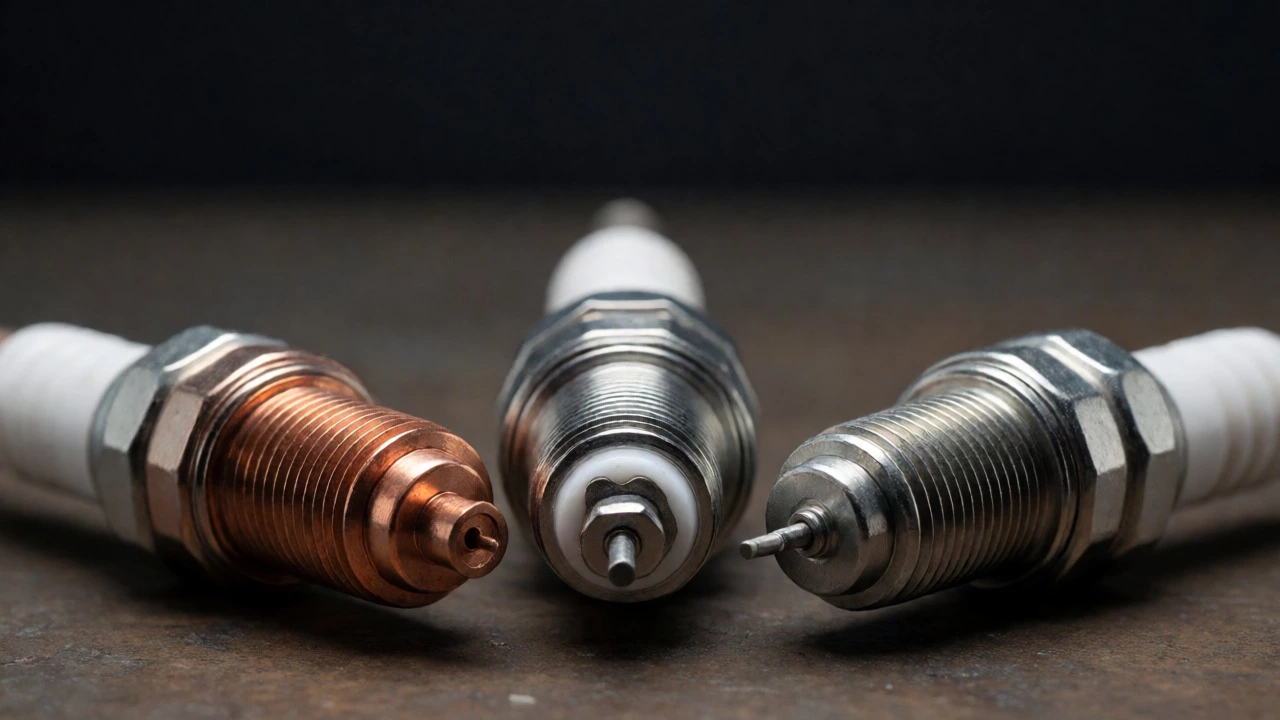
Not all spark plugs are created equal. Choosing the wrong type can lead to poor performance or short lifespan. The material of the electrode determines how long the plug lasts and how well it conducts electricity.
| Material | Lifespan (Approx.) | Performance | Cost | Best For |
|---|---|---|---|---|
| Copper Core | 20,000 - 30,000 miles | Good conductivity, wears quickly | Low | Older vehicles, budget repairs |
| Platinum | 50,000 - 60,000 miles | Better durability, consistent spark | Medium | Modern daily drivers |
| Iridium | 60,000 - 100,000+ miles | Superior hardness, finer tip for sharper spark | High | Turbocharged engines, long-term savings |
If your car came from the factory with iridium plugs, do not downgrade to copper unless you plan to change them every year. The finer tip of an iridium electrode requires less voltage to jump the gap, making it ideal for modern, high-compression engines. Using copper plugs in a turbocharged car can lead to fouling and misfires under boost pressure.
Can You Drive With Bad Spark Plugs?
You can drive with one bad spark plug for a short distance, but it’s risky. The immediate danger isn’t that the car will stop dead; it’s that unburnt fuel gets dumped into the exhaust system. This raw fuel hits the catalytic converter, which is designed to clean gases, not soak up liquid petrol. Over time, the excess fuel overheats the converter, melting its internal ceramic structure.
A new catalytic converter costs between £400 and £800 in the UK. A set of spark plugs costs £20 to £60. Driving with a known misfire to save £40 today could cost you £500 next month. Furthermore, severe misfires can damage the oxygen sensors located upstream and downstream of the converter. These sensors rely on precise exhaust chemistry readings; flooding them with unburnt fuel ruins their ability to regulate the air-fuel ratio.
Maintenance Intervals and DIY Tips
Check your owner’s manual. It’s boring, but it holds the answer. Some manufacturers recommend replacement at 30,000 miles, others at 100,000. However, these intervals assume ideal conditions. City driving with frequent stop-start traffic puts more stress on ignition components than highway cruising. If you do lots of short trips where the engine never fully warms up, consider changing plugs earlier.
If you decide to change them yourself, here are three rules to avoid disaster:
- Wait for the Engine to Cool: Aluminum heads expand when hot. Removing plugs from a hot engine can strip the threads in the head. A stripped thread repair costs hundreds; waiting 30 minutes costs nothing.
- Use a Torque Wrench: Overtightening cracks the porcelain insulator. Undertightening allows compression to leak past the plug, causing pre-ignition sounds. Follow the manufacturer’s torque spec exactly.
- Gap Check Before Installation: Even new plugs can get knocked out of alignment during shipping. Use a feeler gauge to ensure the gap matches your vehicle’s specification. Adjusting the ground electrode gently ensures a strong, reliable spark.
Replacing spark plugs is one of the most rewarding DIY jobs. It improves throttle response immediately. You’ll notice the car pulls away smoother from lights. It’s cheap insurance against major engine repairs.
Frequently Asked Questions
How long do spark plugs last?
It depends on the material. Copper plugs typically last 20,000 to 30,000 miles. Platinum plugs last around 50,000 to 60,000 miles. Iridium plugs, which are standard in most modern cars, can last 60,000 to 100,000 miles or more. Always check your vehicle's specific maintenance schedule.
What happens if I don't change my spark plugs?
Ignoring worn spark plugs leads to engine misfires, reduced fuel efficiency, and rough idling. More critically, unburnt fuel can enter the exhaust system, damaging the catalytic converter and oxygen sensors. Replacing a catalytic converter is significantly more expensive than replacing spark plugs.
Can I replace spark plugs myself?
Yes, for many cars, replacing spark plugs is a straightforward DIY task requiring basic tools like a socket wrench and a torque wrench. However, some engines have complex access points or use coil-on-plug systems that require careful handling. If you are unsure about accessing the plugs or applying the correct torque, consult a professional mechanic.
Do spark plugs affect horsepower?
Worn spark plugs do not directly reduce the engine's maximum potential horsepower, but they prevent the engine from achieving it. A misfiring cylinder reduces total output, making the car feel sluggish. Fresh plugs restore the engine to its designed performance level by ensuring complete combustion in every cycle.
Why is my check engine light on after changing spark plugs?
This can happen if a spark plug wire or coil connector wasn't seated properly, if a plug was cross-threaded, or if the gap was incorrect. It can also occur if the old fault codes haven't cleared from the ECU memory. Disconnecting the battery for 15 minutes can sometimes reset the system, but scanning the codes is the best diagnostic step.