Brake Health Estimator
Visual Thickness Check
Drag the slider to match the thickness you see through your wheel spokes. Measure in millimeters.
Do you hear these sounds?
Select all that apply. "Grinding" triggers immediate alert.
Diagnosis Result
Check Status
Adjust the sliders above to analyze your brake health.
Recommended Action:
- Enter your details to see specific advice.
Health Score: 100%
The Silent Risks Hiding in Your Wheel Wells
You might think your car is running fine until you hear that high-pitched scream coming from the wheels. By then, the damage could already be done. Brake Pads are the friction components that clamp onto your brake discs to stop your vehicle. Also known as Friction Pads, they are consumable parts designed to wear away over time. In fact, the average driver ignores these warnings until metal meets metal. This guide cuts through the confusion and tells you exactly what to listen for, see, and feel when driving around Manchester or anywhere else.
Safety isn't just about buying a new pair; it's about timing. Replacing them too early wastes money, but waiting too long risks severe damage to your Brake Discs, which are rotating steel plates that the pads press against to slow the car. These rotors are much more expensive to fix than the pads themselves. Understanding the lifecycle of your braking system saves hundreds of pounds in the long run. Let's look at the specific signals your vehicle is giving you right now.
Decoding the Sounds: Squealing vs. Grinding
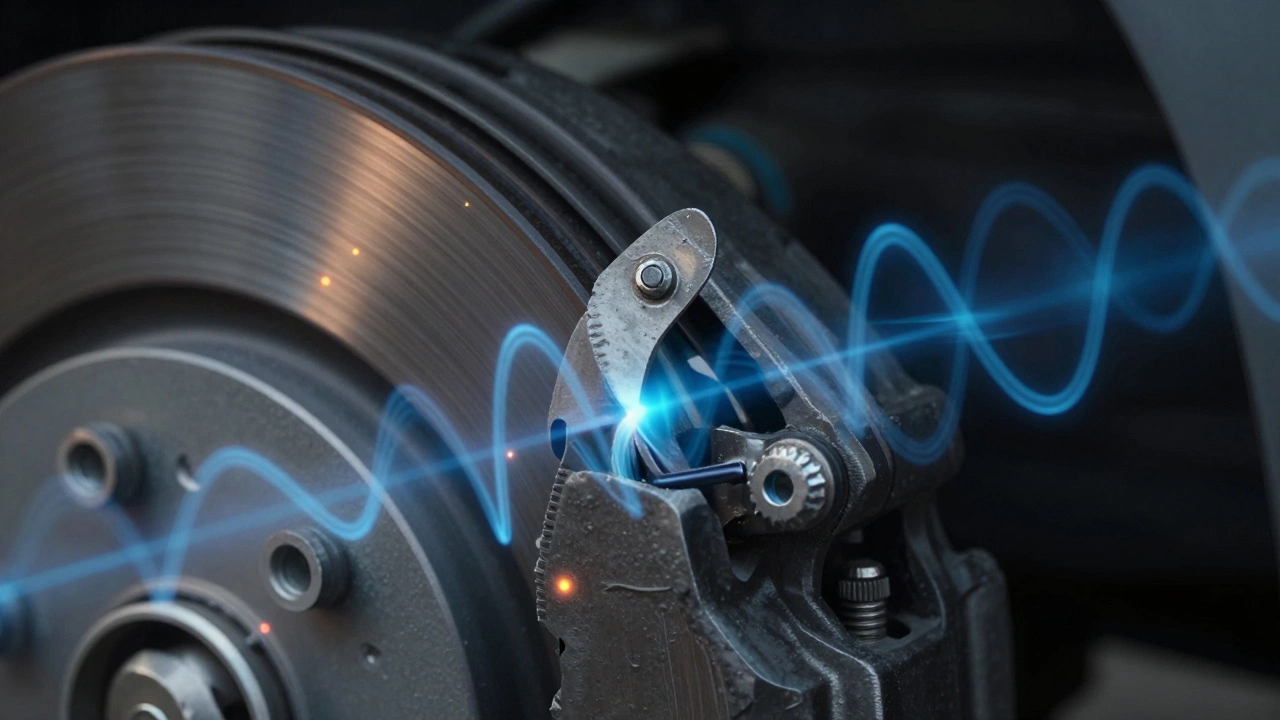
Noise is the first and most obvious indicator. However, not every sound means immediate failure. Many modern cars come equipped with Wear Indicators, which are small metal tabs attached to the brake pad. When the pad material gets too thin, this tab touches the disc. It creates that high-pitched squeal specifically designed to wake you up. If you hear this consistently during braking, schedule a check immediately.
- Mild Squeaking: Often caused by dust or humidity. Clean the area or spray some penetrating oil on the caliper slides before worrying.
- Persistent Squealing: Usually the wear indicator doing its job. You have about 1,000 to 2,000 miles left before full contact.
- Grinding or Growling: This is the worst sound. It means the pad is gone, and the backing plate is scraping the rotor. Stop driving and tow the vehicle if necessary to prevent destroying the axle housing.
It is worth noting that cold mornings often bring squeaks that go away once the parts warm up. If the sound changes when you hit the accelerator rather than the brakes, it might be your suspension bearings, not your brakes. Always isolate the variable by testing while moving versus stopped.
The Visual Check: Thickness and Texture
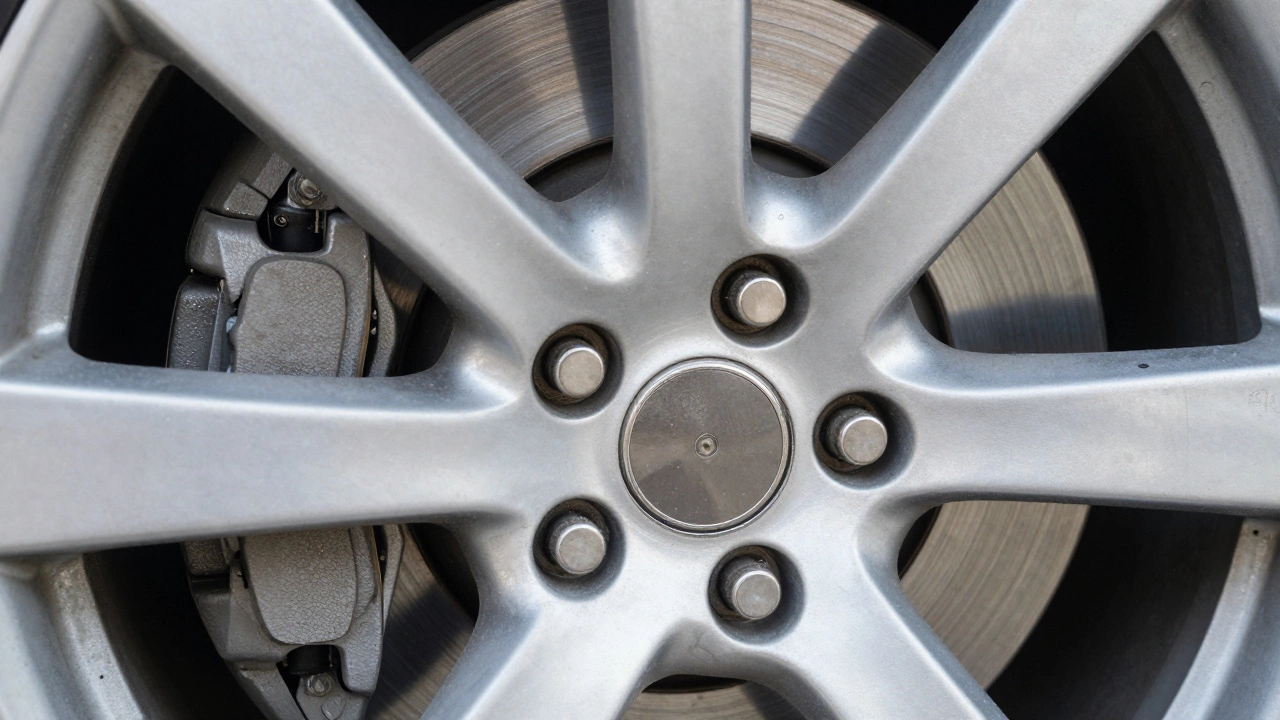
You do not always need to lift the car to know the state of your pads. Look through the gaps in your alloy wheel spokes. You want to see the pad lining sitting flush against the rotor. If you can measure the remaining friction material, here is the standard rule of thumb: anything less than three millimetres requires replacement.
New pads typically start at 10 to 12 millimetres thick. As they wear down, the backing plate becomes more visible. If you can barely distinguish the grey rubbery surface from the silver metal backing, you are in danger territory. While measuring, also look for uneven wear. If one side of the pad is much thicker than the other, your brake caliper pistons might be sticking. A stuck caliper leads to rapid overheating and potential brake fade.
| Condition | Thickness (mm) | Action Required |
|---|---|---|
| Excellent | 10mm+ | No action needed |
| Average | 5mm - 9mm | Monitor at next service |
| Critical | 3mm - 4mm | Book replacement soon |
| Failing | Below 3mm | Replace immediately |
In 2026, with stricter emission standards and the rise of hybrid vehicles, visual checks take on new importance. Some electric vehicles use Regenerative Braking, which captures kinetic energy and feeds it back to the battery. This system slows the car without using the friction pads very often. Consequently, EV drivers might ignore their mechanical brakes for years, leading to seized discs if they are never lubricated or exercised. Even if your mileage is low, a physical check is vital.
Tactile Feedback: Feeling the Difference
Your foot feels more than you think. Pay attention to how the Brake Pedal behaves when you step on it. Healthy brakes feel solid and consistent. If the pedal goes deeper toward the floor than usual, it suggests air in the lines or low fluid, but it can also mean the pads are completely worn out and the caliper piston has extended fully.
Vibration is another sign. If your steering wheel shakes violently when you brake at speed, your brake discs are likely warped. Warped discs transfer the vibration directly to the chassis. This is different from engine vibration which happens when accelerating. Brake vibration is strictly tied to deceleration. Additionally, a pulsing feeling under your feet often indicates that the anti-lock braking system (ABS System) is activating because the wheel is locking up, which can sometimes be a secondary symptom of uneven pad pressure.
The Dashboard Warning Light
While sounds and feelings give clues, the car's computer is definitive. Most modern dashboards feature a specific red brake light. Do not confuse this with the orange 'Engine Check' light. The brake light looks like a circle with parentheses around it or simply says "BRAKE". Sometimes it appears alongside the parking brake icon.
If this light comes on while driving, stop safely. It indicates that the sensor embedded in the pad has been triggered by the wear wire touching the rotor. Some luxury models include individual wheel sensors that tell you exactly which corner is wearing faster. Older cars might just flash a generic warning. Never ignore this red light; it overrides any judgment calls you make about thickness. Ignoring it leads to hydraulic failure and a complete loss of stopping power.
Lifespan Variations: Material Matters
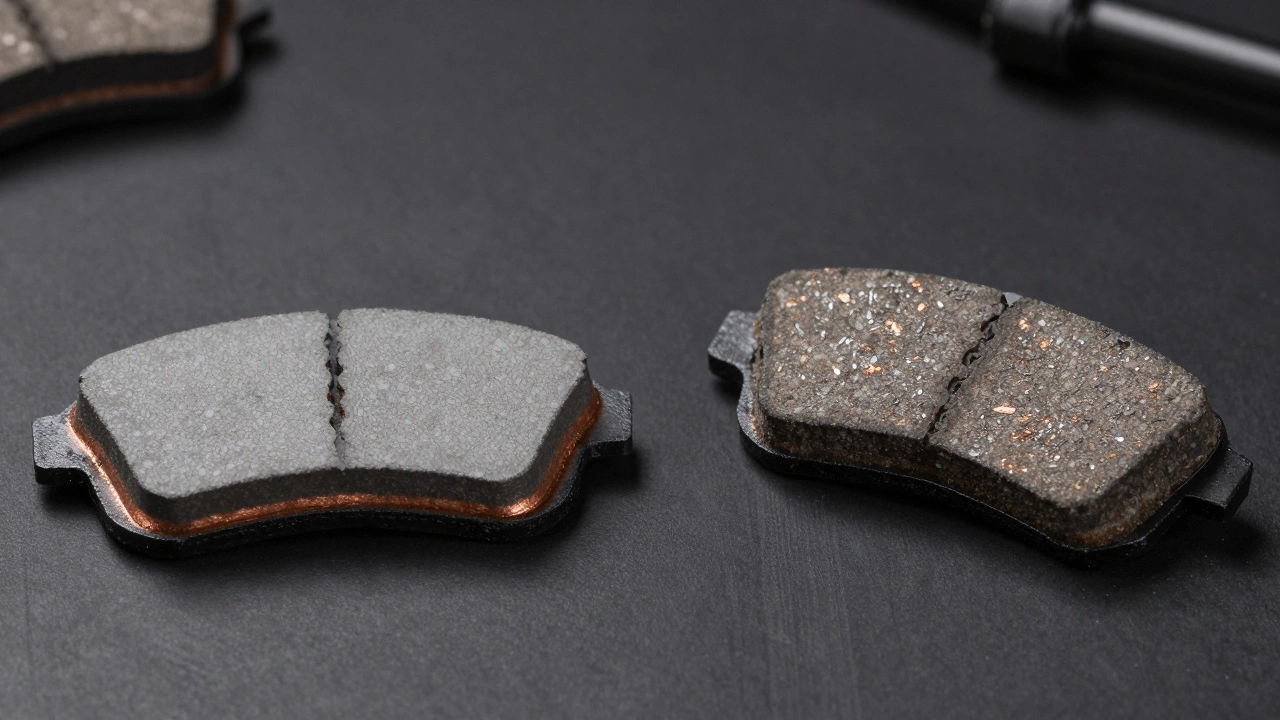
Not all brake pads last the same amount of time. The material composition dictates longevity. There are two main types available on the market: ceramic and semi-metallic. Ceramic Brake Pads are made from ceramic fibres and copper fillers. They produce less dust and last longer, making them ideal for family cars and city driving. They are quieter but more expensive upfront.
Semi-Metallic Brake Pads contain steel, iron, and copper particles. They offer better heat dissipation, making them suitable for heavy loads or aggressive towing. However, they wear the brake discs faster and create more noise. If you drive aggressively or carry heavy cargo, semi-metallic pads might wear out in 20,000 miles, whereas ceramic ones could hit 50,000 miles. Matching the pad type to your driving style prevents premature replacement costs.
When to Seek Professional Help
In Manchester, you have access to many garage options. But do you really need one for simple pads? If you have the tools and basic knowledge, changing front pads is manageable. However, bleeding the brakes or fixing seized calipers requires professional equipment. If you notice pulling to one side, it is safer to pay a mechanic. They have lifting ramps and diagnostic computers to pinpoint issues.
For safety-critical systems, DIY mistakes are costly. A loose bolt on a caliper can separate from the hub while driving. If you hear a clunk, get checked. Furthermore, remember that in the UK, the annual MOT test will fail your car if there is visible rust on pads or uneven wear across an axle. Ensuring your brakes pass MOT inspection is a legal requirement, not optional.
Can I replace brake pads myself?
Yes, front pads are generally easy to replace with basic hand tools. Remove the wheel, slide out the old pads, and push the caliper piston back in. Rear pads often require specialized tools to retract electronic park brakes, making professional help recommended for those.
Do I need to replace pads on all four wheels?
Ideally, replace pads in pairs (both front or both rear) to ensure even braking performance. Mixing new and old pads on the same axle can cause uneven pressure distribution and vehicle pull.
Why does my car smell burning after braking?
A slight chemical smell is normal when hot pads cool down, but a strong, acrid smoke indicates overheated brakes or a stuck caliper forcing the pad against the disc continuously.
How often should brake pads be replaced?
There is no fixed rule, but typically between 40,000 and 60,000 kilometres depending on driving conditions. City drivers with frequent stop-and-go traffic often wear them faster than highway commuters.
Is it safe to drive with thin pads?
Driving with pads thinner than 3mm is unsafe. The structural integrity is compromised, increasing stopping distances significantly. You risk damaging the expensive brake discs permanently.